

Tencent and Yikuyun Forge Strategic AI Partnership to Accelerate Clinical Transformation and Innovation in Healthcare
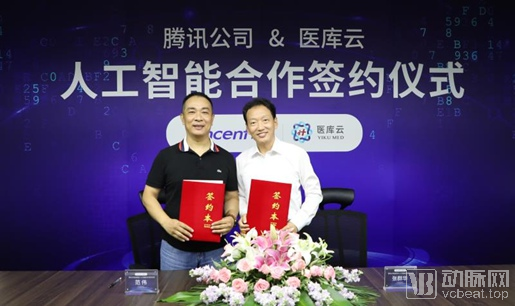
Artificial intelligence has become a national development strategy, with healthcare serving as a key area for research and application within the AI industry. On August 30, 2019, coinciding with the World Artificial Intelligence Conference, Tencent and Yiku Cloud signed a framework agreement on AI collaboration. The two parties will engage in in-depth cooperation across multiple domains, including the research and development of medical AI products, clinical applications, and technological innovation. Their goal is to provide hospitals, physicians, and patients with richer, more precise, and higher-quality AI-powered solutions, while accelerating the translation and adoption of these technologies in clinical practice.
This collaboration actively responds to the guiding principles outlined in the recently issued “Work Plan for Pilot Programs on the Construction of Regional Medical Centers,” which advocates “fully leveraging advanced technologies such as artificial intelligence and big data to promote the clustered development of high-quality medical resources and better meet the public’s healthcare needs.” It aims to foster innovative development in medical AI and play a pivotal role in the healthcare industrial internet.
As a leading internet enterprise in China, Tencent provides stable and high-quality services to hundreds of millions of users. In recent years, Tencent has made frequent strides in entering the field of medical artificial intelligence, taking the lead in undertaking key AI projects under the National Key R&D Program, and playing a pioneering role in the medical AI industry.
Dr. Fan Wei, Dean of the Tencent Medical AI Research Institute, stated, “We are delighted to deepen our ongoing collaboration with Yiku Cloud, aiming to further leverage our respective strengths in AI technology and medical resources. By integrating AI technology with cross-disciplinary clinical expertise through an innovative R&D service model, we seek to provide physicians with digital assistants and deliver more valuable services to patients.”
Yiku Cloud is China’s first open platform dedicated to AI R&D for complex and rare diseases, as well as a platform for precision pharmaceutical manufacturing. It boasts a robust network of academicians, nearly 1,000 top-tier cross-disciplinary physicians, AI experts from China and the United States, and extensive clinical big data. The company has made significant achievements in developing practical and innovative medical AI products that are designed based on clinical needs and ultimately applied back in clinical settings. Some of its AI products have already been deployed at scale, achieving industrialization and commercialization. Notable accomplishments include the world’s first AI-based identification system for medical fungi, a globally leading AI clinical decision support system for liver cancer, and the world’s first multimodal AI system for identifying traditional Chinese medicine materials.
Professor Zhang Qunhua, Founder and CEO of Yiku Cloud, stated: “By partnering with the Tencent AI Team, we aim to align with global technological frontiers and address critical clinical pain points and essential needs. Our medical AI products are focused on enhancing the diagnostic and treatment capabilities of primary care hospitals, thereby facilitating the implementation of the tiered diagnosis and treatment policy.”
The core of AI application R&D lies in the integration of deep learning with the expertise and experience of top clinical specialists. Under the agreement, Tencent and Yiku Cloud have joined forces to explore collaborations in the field of medical AI, covering areas such as women’s and children’s health, oncology, and cardiovascular and cerebrovascular diseases. This initiative establishes interdisciplinary and cross-regional cooperation led by cross-boundary physicians, driven by AI engineers, and involving public participation. By leveraging the internet-based medical consortium model, it aggregates a substantial number of physicians to unleash their professional expertise, thereby achieving “three improvements” and “one promotion.” Specifically, this entails enhancing clinicians’ diagnostic and treatment capabilities, advancing the level of clinical basic research, and improving patient satisfaction with medical experiences. It also promotes standardized, scientific, and refined hospital management. The goal is to develop medical AI products with Chinese characteristics and advance the Healthy China initiative.