

WAIC 2019 Highlights AI in Healthcare: DeepEcho Medical Discusses Future Trends, Challenges, and Commercialization Pathways
Subtle Medical
Medical Imaging Software Developer
On August 29, one of the most prestigious events in the AI industry officially opened on the banks of the Huangpu River in Shanghai. At the 2019 World Artificial Intelligence Conference (WAIC), top AI scientists, entrepreneurs, and investors from around the world flocked to attend. The roster of speakers included domestic and foreign dignitaries, representatives of international organizations, leading scientists—including Turing Award laureates—and heads of major AI enterprises both in China and abroad.
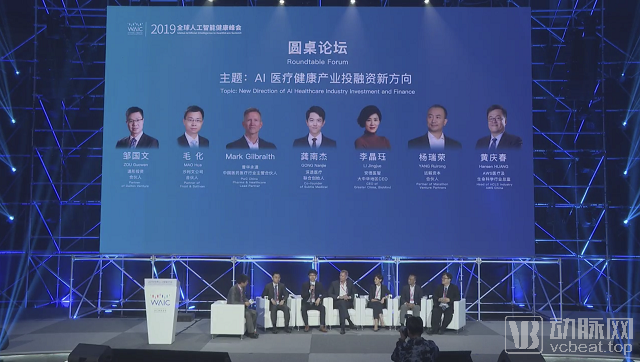
Dr. Gong Nanjie, Co-Founder and President of Subtle Medical and Head of Subtle Medical Asia-Pacific, was invited to participate in the main forum of the World Artificial Intelligence Conference (WAIC)—the 2019 Global AI Health Summit. He joined a roundtable discussion titled “From an Investment and Financing Perspective: Where Lie the Future Opportunities and Challenges in AI+Healthcare? What New Mindsets Are Required for Investment and Financing in the AI+Healthcare Industry?” alongside Huang Qingchun, Healthcare Industry Director for Amazon AWS China; Mark Gilbraith, Greater China Managing Partner for Healthcare and Pharmaceuticals at PwC; and Mao Hua, Partner at Frost & Sullivan. The panel discussed technological innovation hurdles in the AI+Healthcare sector and explored new development pathways for integrating with capital markets.

Dr. Gong Nanjie, Co-founder and President of Shentou Medical Technology, and Head of Subtle Medical Asia-Pacific
In recent years, the AI+healthcare sector has remained a hot investment trend. However, many companies face challenges such as homogeneous competition, lengthy approval processes, slow implementation of applications, and weak monetization capabilities. Moreover, the development of medical products is often time-consuming and labor-intensive, requiring substantial capital investment.
“For instance, in new drug development, the lengthy timeline and high costs mean that any misstep across stages—from discovery and preclinical research to late-stage clinical trials and eventual market launch—can drive up expenses. Technologies such as AI-driven big data analytics, natural language processing, and model-based analysis can enhance efficiency,” noted Mao Hua, Partner at Frost & Sullivan. He pointed out that due to differences in national policies, the integration of AI with healthcare in Europe and the United States has already made significant strides in new drug development, whereas in China this area is just getting started, leaving substantial room for future growth.。
“However, in 2018, the Hong Kong Stock Exchange introduced a new policy allowing pre-profit biotechnology companies to go public, which is highly attractive for companies in an industry characterized by long R&D cycles and initial profitability challenges. ‘The favorable policy provides AI healthcare companies with a clearer exit pathway, which is good news for entrepreneurs, investors, and the industry as a whole,’ said Mark Gilbraith, Greater China Healthcare and Pharmaceuticals Leader at PwC.”
“In China, medical imaging is one of the largest application areas for AI, whereas in Europe and the United States, new drug development and medical imaging are advancing side by side. In addition, health management represents another significant future concept, and early screening is a field vigorously promoted by the government.”
As competition in the AI-plus-healthcare sector intensifies, a company’s technical development capabilities, its ability to integrate with existing healthcare systems, and its capacity for commercial implementation have become critical thresholds determining its future.
“For startups facing a more sober capital market, it is essential to grasp core value, leverage team strengths, identify promising technological entry points, and establish effective pathways for commercial implementation, thereby achieving an organic and healthy cycle of self-sustaining growth,” said Dr. Gong Nanjie.
Taking Subtle Medical as an example, through an analysis of industry demands, the company selected the “upstream” segment of the medical imaging field—image reconstruction and optimization—as its entry point. “The lack of structured and standardized data is a bottleneck for the development of the entire AI healthcare sector, and our image reconstruction and optimization solutions lay the foundation for high-quality data.”
The other two key points highlighted by Dr. Gong are leveraging team strengths to address real industry challenges and identifying appropriate pathways for commercial implementation.。
For the former, Subtle Medical boasts a large team of world-class scientists in AI and medical imaging, hailing from renowned AI and medical research laboratories at prestigious institutions such as Stanford and Berkeley. This expertise enables the company to provide medical imaging solutions that accelerate processing by more than fourfold;
For the latterOptimization of medical imaging can directly help hospitals increase patient throughput and boost economic returns, thereby making Subtle Medical’s commercialization path more streamlined and smooth. It is reported that Subtle Medical’s first product, SubtlePET, leverages deep learning technology to accelerate PET (positron emission tomography) imaging while reducing radiation exposure. The product has obtained FDA clearance and European CE marking, entered the markets in the United States, Europe, and the Asia-Pacific region, and is being used clinically on a paid basis by multiple hospitals and imaging centers.
SubtlePET enables hospitals and third-party imaging centers to perform PET scans (including PET-CT and PET-MR) more rapidly, serving more patients within a single day. PET is a common imaging test in cancer treatment, neurology, and cardiology, which visualizes patients' functional status at the molecular level by detecting radiotracers. In the United States, the average cost of a PET scan is approximately $3,000 or higher, and the procedure typically takes 30–60 minutes.
“As Dr. Gong mentioned, technological advantages are crucial in this context. The unicorns that ultimately survive will certainly possess distinct competitive strengths.” — Huang Qingchun, Healthcare Industry Director, Amazon Web Services (AWS) China
On the other hand, he also mentioned that more robust platforms and ecosystems can help startups reduce the cost of trial and error. Amazon’s AWS is one such platform, serving thousands of healthcare-related companies.
In addition, he believes that entrepreneurs in the healthcare sector should focus on business models, data, and practical applicability: “Many successful startups bring together talent from diverse fields—medical, IT, and marketing experts—to form a venture capable of real-world implementation. Moreover, AI should not be perceived as something lofty or detached. Physicians focus on clinical diagnosis and treatment, while pharmaceutical professionals concentrate on bioinformatics; they are not IT specialists. Therefore, it is essential to consider whether these stakeholders can understand and accept new technologies and solutions from their respective perspectives.”
For example, the solutions provided by Subtle Medical. Subtle’s technology is primarily based on deep learning algorithms and can seamlessly integrate with scanning machines from any equipment manufacturer as well as PACS (Picture Archiving and Communication Systems). It enhances image quality during the scanning process without interrupting or affecting the medical image acquisition workflow.
This also means that SubtlePET can significantly enhance the quality of images obtained from short-duration scans, a feature that is particularly important for children who are unable to remain still during testing and for patients who require frequent PET scans. Additionally, SubtlePET helps reduce radiation exposure associated with PET scanning, offering substantial benefits to radiation-sensitive populations such as pregnant women and infants, as well as individuals undergoing health check-ups or long-term follow-up examinations.
Subtle Medical, founded in 2017, is an AI medical imaging company based in Silicon Valley. Leveraging AI-powered medical imaging, deep learning, and image reconstruction technologies, the company transforms data acquired through time-consuming, low-quality, and high-risk (high radiation dose) methods into efficient, high-quality, and safer diagnostic-grade medical images.
Subtle Medical’s second AI-powered imaging product for MRI (magnetic resonance imaging) is expected to receive regulatory approval and launch in 2019. It is currently undergoing clinical testing at top-tier hospitals such as the University of California, San Francisco (UCSF), as well as within RadNet, the largest medical imaging center network in the United States.
Since its inception, Subtle Medical has been conducting early-stage testing with dozens of leading medical schools, hospitals, and third-party imaging centers in the United States, including Stanford University, the University of California San Francisco (UCSF) School of Medicine, MD Anderson Cancer Center, and Mayo Clinic. In China, it has established scientific research collaborations with top-tier hospitals such as the Chinese PLA General Hospital (301 Hospital), Beijing Tiantan Hospital, and Shanghai Ninth People’s Hospital. Additionally, the company is collaborating with renowned enterprises—including NVIDIA, Intel, GE Healthcare, Neusoft Medical, Philips China, and Siemens—to jointly develop AI technologies.