

Junlin Healthcare Global New Drug Insights Weekly – Issue 20
Sep 02, 2019 10:15
CST Updated
10:15

August 26–September 1, 2019: A total of 9 new drug data entries were recorded this week, including 3 for CNS diseases, 2 for cardiovascular diseases, 2 for dermatological conditions, and 1 each for immunology and respiratory diseases.
❖AZ Announces That IFN Receptor Antibody Anifrolumab Met Its Primary Endpoint in a Pivotal Phase III Trial for the Treatment of Systemic Lupus Erythematosus (SLE)Although SLE represents a large market, its pathogenesis is complex, resulting in a very low success rate for new drugs. Countless drug candidates have failed, including those from Biogen, Xencor, and Sanofi. Over the past 60 years, only one product has been approved, and its efficacy has been modest. AZ’s anifrolumab also experienced a tortuous development path. It initially failed spectacularly when the endpoint was set as complete improvement in specific organs. Later, by aligning with the approval endpoint used for GSK’s Benlysta—requiring partial improvement across all organ systems—the drug ultimately gained approval.
❖AbbVie announced the failure of its Phase 3 trial evaluating Rova-T as first-line maintenance therapy for small cell lung cancer (SCLC), resulting in a $5.8 billion write-off. Over the past two years, antibody-drug conjugates (ADCs) have gained significant international momentum, with success stories from Immunomedics and Daiichi Sankyo raising high expectations for the ADC field. However, one must not focus solely on the successes while ignoring the setbacks; the failure of Rova-T serves as a cautionary tale. Currently, although the FDA has approved six ADC products, none except those targeting HER2—a uniquely promising target—have come close to achieving blockbuster status. In China, ADC development is heavily concentrated on the HER2 target. Given the intense competition in this area, companies seeking significant valuation premiums in the capital markets may need to achieve breakthroughs in alternative targets.
Novartis Announces Humanized CD20 Antibody Ofatumumab for the Treatment of Patients with Relapsing Multiple Sclerosis
met the primary endpoint in its Phase 3 clinical trial
Novartis Announces That Its Humanized CD20 Antibody Ofatumumab Met the Primary Endpoint in a Phase 3 Clinical Trial for Patients with Relapsing Multiple Sclerosis (RMS)
Ofatumumab is a fully humanized CD20 antibody. By binding to CD20 on the surface of B lymphocytes, it can clear B cells from the blood.
Phase 3 trial involving 1,882 patients with multiple sclerosis (MS) over a 30-month period: A head-to-head comparison of the safety and efficacy of ofatumumab versus teriflunomide in adult patients with MS
Ofatumumab met the primary clinical endpoint of reducing the annualized relapse rate (ARR) in multiple sclerosis (MS) compared with the active control group. The key secondary endpoint of delaying disease progression was also met.
The U.S. FDA Grants Breakthrough Therapy Designation to SpringWorks’ Nirogacestat,
For the treatment of desmoid tumors or deep fibromatosis
SpringWorks Therapeutics Announces FDA Breakthrough Therapy Designation for Nirogacestat for the Treatment of Recurrent or Refractory, Unresectable Desmoid Tumors or Deep Fibromatosis
Nirogacestat is an oral, specific small-molecule inhibitor of γ-secretase.
Phase I and II clinical trials: 24 patients with desmoid tumors were enrolled
Nirogacestat treatment demonstrated a 100% disease control rate; due to the lack of disease progression in patients, the median progression-free survival had not been reached at the time of trial data publication.
Esperion’s Investigational Drug Combination for Lowering Low-Density Lipoprotein Cholesterol (LDL-C) in
Met the primary and key secondary endpoints in the Phase II clinical trial
Esperion’s investigational drug combination of bempedoic acid and ezetimibe for lowering low-density lipoprotein cholesterol (LDL-C) met the primary and key secondary endpoints in a Phase 2 clinical trial involving patients with both hypercholesterolemia and type 2 diabetes.
The company’s drug portfolio includes bempedoic acid (BA)/ezetimibe (EZE), where BA is an ATP citrate lyase (ACL) inhibitor that reduces cholesterol biosynthesis, while EZE inhibits the activity of the cholesterol transporter NPC1L1, thereby decreasing gastrointestinal cholesterol absorption and its transport to the liver.
A total of 179 patients with concurrent hypercholesterolemia and type 2 diabetes participated in this 12-week, randomized, double-blind, Phase II clinical trial. These patients were receiving stable antidiabetic medication but had discontinued other lipid-lowering therapies.
Compared with the placebo group, patients in the BA/EZE treatment group exhibited a significant 40% reduction in LDL-C levels. Nearly 40% of the total patient population achieved either an LDL-C level <70 mg/dL or a reduction in LDL-C of more than 50%.
The bempedoic acid/ezetimibe drug combination can significantly reduce LDL-C levels.
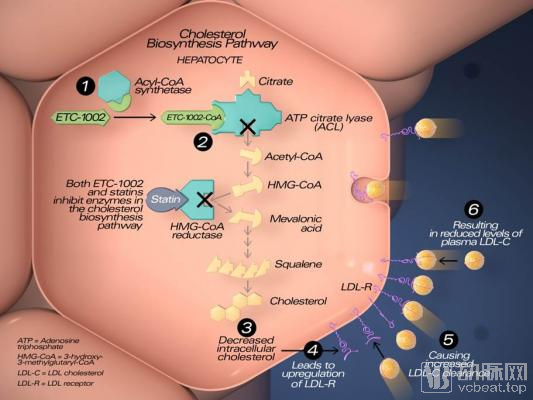
Source: Esperion
AstraZeneca's Triple Therapy in Phase 3 for Treating Patients with COPD
In the ETHOS clinical trial, the primary endpoint was met
AstraZeneca Announces That Its Triple Therapy PT010 Met the Primary Endpoint in the Phase 3 ETHOS Trial in Patients with Moderate to Very Severe Chronic Obstructive Pulmonary Disease (COPD)
PT010 is a fixed-dose triple combination therapy consisting of budesonide (ICS), glycopyrronium bromide (LAMA), and formoterol fumarate (LABA). It utilizes Aerosphere delivery technology, enabling administration via a single inhaler.
More than 8,500 patients with moderate-to-severe COPD participated in a randomized, double-blind trial. These patients had experienced at least one moderate-to-severe exacerbation within the previous year and had received at least two types of inhaled maintenance therapy prior to enrollment.
PT010 Met the Primary Clinical Endpoint of the Trial. At both standard and low ICS doses, PT010 significantly reduced the rate of disease exacerbations in patients with moderate-to-severe COPD compared with active-control dual therapy, while demonstrating a safety and tolerability profile consistent with that of dual therapy.
U.S. FDA Accepts Viela Bio’s Anti-CD19 Monoclonal Antibody
Inebilizumab BLA for the Treatment of Patients with Neuromyelitis Optica Spectrum Disorder
Viela Bio Announces FDA Acceptance of Biologics License Application (BLA) for Inebilizumab, an Anti-CD19 Monoclonal Antibody, for the Treatment of Patients with Neuromyelitis Optica Spectrum Disorder (NMOSD)
Inebilizumab is a humanized monoclonal antibody with high affinity for CD19.
A total of 231 patients were randomly assigned to receive inebilizumab monotherapy or placebo. These patients included individuals with neuromyelitis optica spectrum disorder (NMOSD), regardless of their anti-aquaporin-4 (AQP4) antibody status.
Inebilizumab Met the Primary Endpoint of the Trial, Reducing the Risk of NMOSD Relapses by 77% Compared with Placebo in Patients Positive for Anti-AQP4 Antibodies (HR: 0.227; p<0.0001)
U.S. FDA Approves Kyowa Kirin's Innovative Drug Nourianz for Market Launch,
As an Adjunctive Therapy for PD Patients Experiencing "Off" Periods
U.S. FDA Announces Approval of Nourianz (istradefylline), an Innovative Drug Developed by Kyowa Kirin Co., Ltd., as an Adjunctive Therapy to Levodopa/Carbidopa for the Treatment of Adult Patients with Parkinson’s Disease Experiencing “Off” Episodes
Istradefylline is an orally administered selective adenosine A2A receptor antagonist. The adenosine A2A receptor is a G protein-coupled receptor present in the basal ganglia.
In four placebo-controlled clinical trials, a total of 1,143 patients were enrolled, all of whom were receiving levodopa/carbidopa.
Patients treated with istradefylline experienced a statistically significant reduction in daily "off" time compared with the placebo group.
Inclisiran, an RNAi therapy requiring only two subcutaneous injections per year,
Achieved Primary and Secondary Endpoints in Phase 3 Clinical Trials for LDL-C Reduction
The Medicines Company announced that inclisiran, an RNAi therapy requiring only two subcutaneous injections per year, met all primary and secondary endpoints in pivotal Phase 3 clinical trials for lowering low-density lipoprotein cholesterol (LDL-C).
Inclisiran is the first RNAi therapy to lower LDL-C. It directly binds to the mRNA encoding the PCSK9 protein, reducing mRNA levels through RNA interference.
In a randomized, double-blind, placebo-controlled pivotal Phase 3 clinical trial, enrolled patients had atherosclerotic cardiovascular disease (ASCVD) or uncontrolled LDL-C levels despite treatment with maximally tolerated statin therapy.
Inclisiran met all primary and secondary endpoints of the trial, with efficacy comparable to that observed in previous Phase 1 and Phase 2 clinical trials. Previously released trial results demonstrated that inclisiran reduced LDL-C levels by 51% and maintained this effect for at least 210 days.
Eli Lilly and Incyte Jointly Announce JAK Inhibitor for the Treatment of Moderate to Severe
Phase 3 Clinical Trial in Patients with Atopic Dermatitis Achieves Primary Endpoint
Eli Lilly and Company and Incyte jointly announced that the JAK inhibitor Olumiant (baricitinib), in combination with topical corticosteroids, met the primary endpoint in a Phase 3 clinical trial for the treatment of patients with moderate-to-severe atopic dermatitis.
Baricitinib is a once-daily oral JAK inhibitor.
In pivotal Phase 3 placebo-controlled clinical trials, patients with moderate-to-severe atopic dermatitis received baricitinib in addition to standard topical corticosteroid therapy. These patients were enrolled from Asia, Europe, South America, and Australia.
When baricitinib was combined with standard therapy, it significantly improved disease severity, with a significantly higher proportion of patients achieving clear or almost clear skin symptoms (vIGA = 0, 1) compared to the placebo group.
Aliskiren for the Treatment of Systemic Lupus Erythematosus (Investigational)
Monoclonal Antibody Drug Anifrolumab Met Primary Endpoints in Pivotal Phase 3 Clinical Trials
AstraZeneca announced that its investigational monoclonal antibody anifrolumab, for the treatment of systemic lupus erythematosus (SLE), met the primary endpoint of significantly improving disease outcomes in the pivotal Phase 3 TULIP-2 clinical trial.
Anifrolumab can bind to subunit 1 of the type I interferon receptor, thereby antagonizing all activities associated with type I interferons (IFN-α, IFN-β, and IFN-ω).
373 patients with moderate-to-severe SLE participated in the TULIP-2 trial, where they were randomized into two groups to receive either 300 mg of anifrolumab or placebo via injection every 4 weeks, in addition to standard therapy.
Anifrolumab significantly improved the British Isles Lupus Assessment Group-based Composite Lupus Assessment (BICLA) index, bringing statistically significant and clinically meaningful remission to patients' conditions.
Mechanism of Action of Anifrolumab
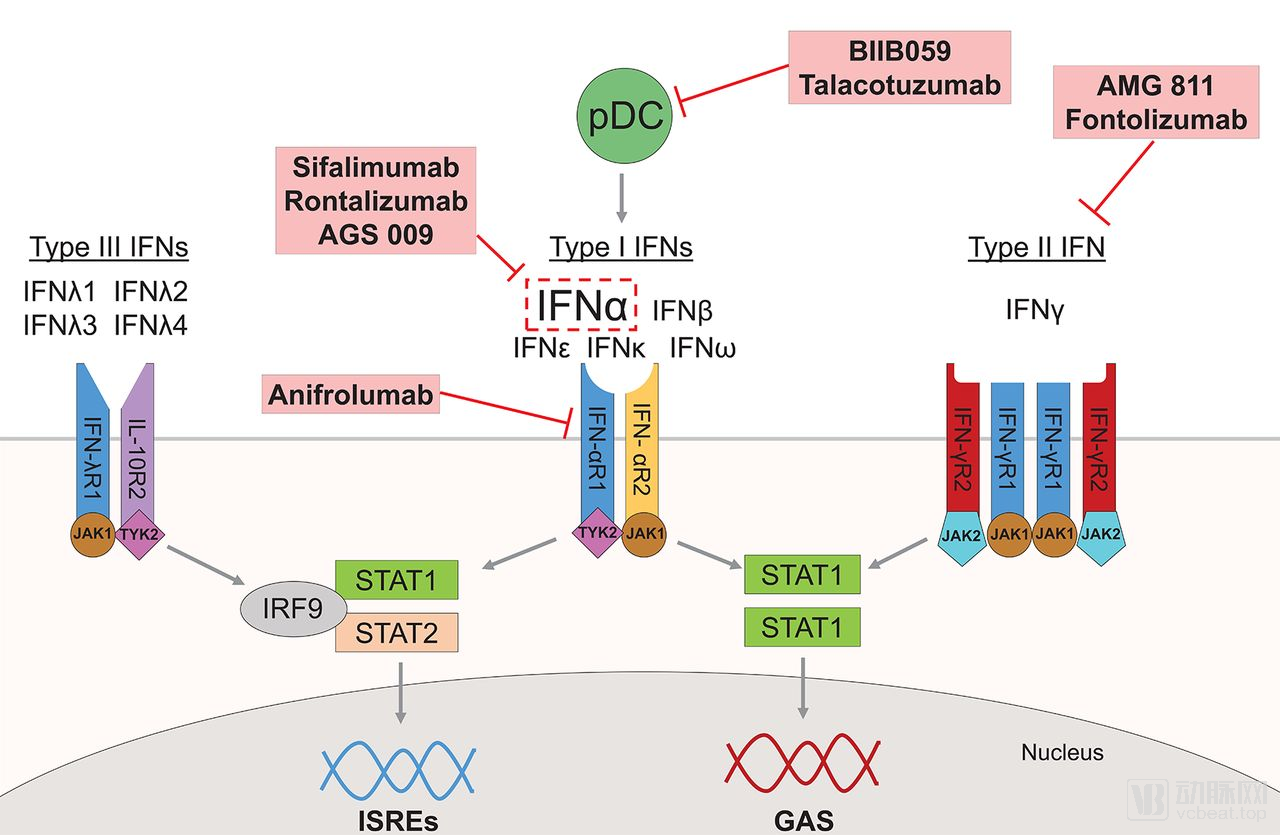
Data source: rheumatic disease
❖AbbVie Announces That Interim Analysis of Phase III MERU Study Shows No Significant Improvement in Survival for Patients with Advanced Small Cell Lung Cancer Treated with Antibody-Drug Conjugate Rova-T (rovalpituzumab tesirine) as First-Line Maintenance Therapy Compared to Placebo, with Safety Results Consistent with Previous Data; AbbVie Also Announces Formal Termination of Rova-T Development Program, Writing Off $5.8 Billion
❖AbbVie also announced that it had accepted the recommendation of the Independent Data Monitoring Committee to terminate the MERU study, and the development program for Rova-T was formally discontinued at the same time. Ionis Pharmaceuticals, a company focused on developing antisense oligonucleotide (ASO) drugs targeting RNA, announced that GlaxoSmithKline (GSK) would exercise its option to obtain the development and commercialization rights to two investigational therapies, IONIS-HBVRx and IONIS-HBV-LRx, based on positive results from Phase 2 clinical trials in patients with chronic hepatitis B (CHB).
❖Amgen announced that it has reached an agreement with Celgene and Bristol-Myers Squibb (BMS) to acquire Otezla (apremilast) for $13.4 billion. Otezla is the only oral, non-biologic therapy for the treatment of psoriasis and psoriatic arthritis.
❖ The registration status of two applications for AstraZeneca’s blockbuster lung cancer drug Tagrisso (osimertinib mesylate tablets, AZD9291) has been updated to “Approval Completed – Pending Certificate Issuance.” Based on historical precedent, this is tantamount to an unofficial early announcement of approval. Reportedly, the indication sought in this Tagrisso registration is for first-line treatment of EGFR mutation-positive locally advanced or metastatic non-small cell lung cancer.
❖Shanghai Yangguang Procurement Network released the “Centralized Drug Procurement Document for Alliance Regions,” which outlines the alliance regions, procured drug varieties, and agreed procurement volumes. The 25 procured varieties include atorvastatin oral immediate-release formulations, among others. This is regarded as an indication that the plan to expand the scope of the “4+7” centralized drug procurement pilot is about to be formally implemented.