

Auscon Biopharma Seizes CDMO Growth Opportunities Amid Full Implementation of China's MAH System

Thousand Oaks
Biopharmaceutical R&D and Production Service Provider
On August 26, 2019, the newly revised Drug Administration Law was reviewed and approved at the 12th Session of the Standing Committee of the 13th National People's Congress, and will come into effect on December 1 this year.
Notably, the newly revised Drug Administration Law explicitly states thatThe state implements the Marketing Authorization Holder (MAH) system for drug administration. The marketing authorization holder shall be legally responsible for the safety, efficacy, and quality controllability of drugs throughout the entire process of drug research and development, production, distribution, and use.The full implementation of the MAH system undoubtedly presents a significant development opportunity for CDMO companies such as Thousand Oaks Biopharmaceuticals.
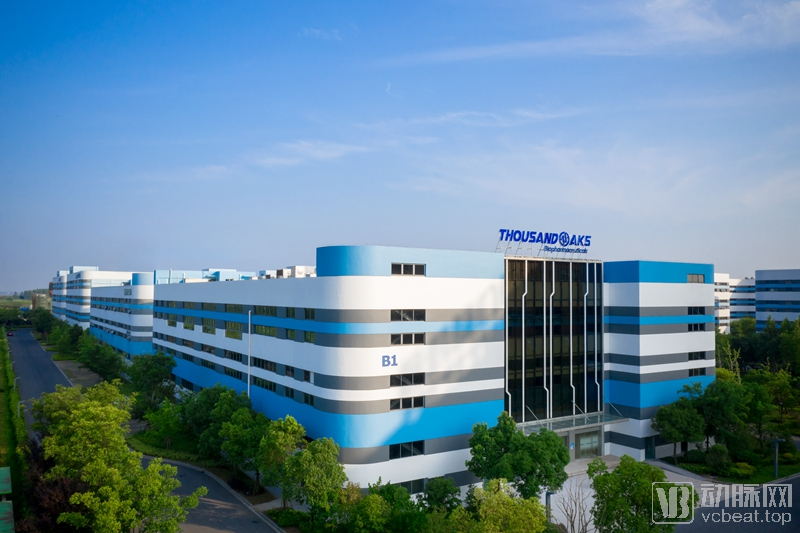
Thousand Oaks Biopharmaceuticals is located in the Linjiang New Area of Haimen, Jiangsu Province (Photo provided by the company)
As a young company founded in 2017, Thousand Oaks Biopharmaceuticals completed its Series A financing of over RMB 300 million in early 2019, rapidly emerging as a rising star in the CDMO industry. How did the CDMO sector rise? What is the current state of the domestic market? Leveraging the opportunities presented by the Marketing Authorization Holder (MAH) system, how will Thousand Oaks Biopharmaceuticals secure a competitive edge? In light of these questions, VCBeat conducted an exclusive interview with Dr. Luo Shun, Founder and Chairman of Thousand Oaks Biopharmaceuticals.
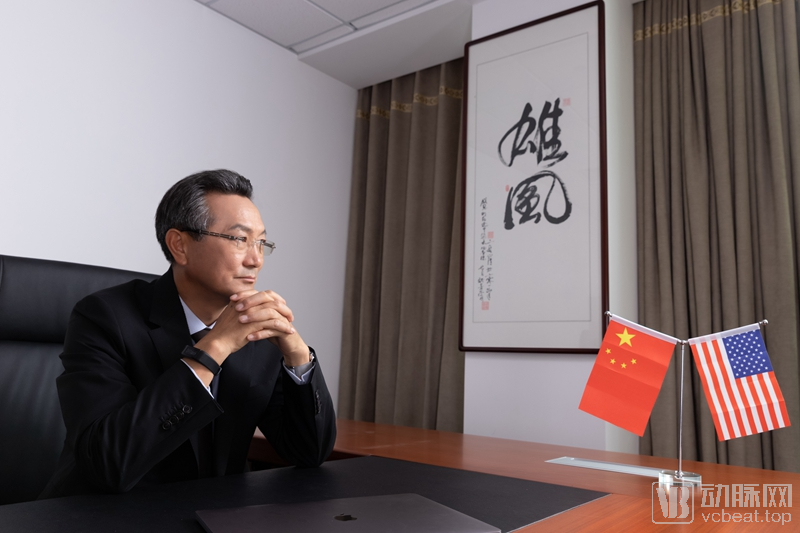
Dr. Shun Luo: Chinese-American, top-tier expert, founder of Thousand Oaks Biopharmaceuticals and Jianshun Biotechnology (photo provided by the company)
In the early stages, biopharmaceutical companies were primarily engaged in the independent research, development, and production of drugs. By the 1980s, many countries had designated the biotechnology sector as a strategic industry for priority development and formulated corresponding development plans. For instance, the United States identified the biopharmaceutical industry as a driver of economic growth and implemented proactive policies to support the biotechnology industry; Japan adopted the strategy of “building a nation on the bio-industry”; and the European Union allocated 45% of its R&D budget under the Sixth Framework Programme for Research and Technological Development to the biopharmaceutical field.
Driven by national strategies, pharmaceutical companies are increasingly pursuing high-efficiency, low-cost manufacturing processes. They have begun outsourcing numerous production and sales operations to mitigate investment risks in facility production, reduce operational costs, and enhance competitiveness. In this context, Contract Manufacturing Organizations (CMOs) have emerged. By accepting commissions from pharmaceutical enterprises, CMOs provide support for process development and formulation design for drug manufacturing. Their services primarily include custom manufacturing and production for clinical trial materials, intermediate manufacturing, active pharmaceutical ingredient (API) production, dosage form manufacturing, and packaging. CMOs generate revenue from these contracted services in accordance with agreed-upon terms.
Pharmaceutical companies’ pursuit of efficiency and cost reduction is endless. Moreover, as pharmaceutical firms shift their research focus from small-molecule drugs to large-molecule drugs, contract manufacturing organizations (CMOs) that merely provide toll manufacturing services can no longer meet the demands, withHigh-Tech Service Export CapabilityCDMO companies are gradually gaining favor.
CDMOs can leverage their proprietary technologies to optimize the entire R&D and manufacturing process when providing production services to pharmaceutical companies, helping them develop or improve processes, enhance production efficiency, and reduce manufacturing costs.. Compared with the traditional CMO business model, the CDMO business model features higher comprehensive barriers in areas such as technological innovation and project management, is capable of providing integrated services from preclinical research to commercial-scale manufacturing, and thus aligns better with future development trends.
Currently, global CDMO orders are gradually shifting toward emerging countries. The market share of CMO/CDMO in Europe and the United States declined from 76.87% in 2011 to 70.64% in 2017. Meanwhile, the market share of emerging markets such as China and India has continued to rise, with China’s CMO/CDMO market share reaching 7.91% in 2017. According to RootsAnalysis estimates, the Asia-Pacific CMO/CDMO market share will reach 34% by 2028.
Compared with Europe and the United States, China’s CDMO market started later but holds immense growth potential. In 2015, China began piloting the Marketing Authorization Holder (MAH) system in ten provinces and municipalities. In October 2017, the National Medical Products Administration issued the Draft Amendment to the Drug Administration Law of the People’s Republic of China for Public Comment, which explicitly established the implementation of the MAH system. By August 2019, the full rollout of the MAH system further stimulated enthusiasm for new drug research and development in China.
Compared with the previous model that bundled marketing authorization and manufacturing licenses, the MAH system separates marketing authorization from manufacturing licensing. This grants CDMOs the qualification to undertake production orders and enables R&D institutions without manufacturing credentials to complete production through CDMOs.
A series of policies successively introduced by the government have spurred the rapid development of China’s pharmaceutical industry. An increasing number of talents have begun to launch startups in the biopharmaceutical sector, and the contract development and manufacturing organizations (CDMOs) that support them have also seized this opportunity for growth. In November 2015, Haoyang Biologics was established in Hangzhou; in March 2017, Thousand Oaks Biopharmaceuticals was founded in Haimen, Jiangsu Province; in June 2017, Suzhou Bridge Bio was established in Jiangsu Province; and in March 2018, Kailai Biologics was launched……
In terms of financing, the amount of capital raised by CDMO companies in recent years has been remarkable, as evidenced by the financing activities of selected CDMO firms in 2019.

VCBeat Graphic
VCBeat has learned that most companies use their financing proceeds to purchase instruments and equipment, which has also driven the development of instrument, equipment, and consumables companies, enabling them to reap substantial profits. Currently, China’s CDMO enterprises rely largely on imports for instruments, equipment, consumables, and culture media development.However, one CDMO has taken the lead in breaking this monopoly by achieving an integrated solution that combines high-quality cell culture media raw materials, process technology development, and single-use bioreactor equipment and consumables. This company is Thousand Oaks Biopharmaceuticals.
Thousand Oaks Biopharmaceuticals, founded by Dr. Luo Shun, aims to provide industrialization services for biopharmaceutical R&D in China. The company’s ability to break the monopoly held by foreign enterprises in biopharmaceutical instruments and culture media is closely tied to another company established by Dr. Luo—Jianshun Biotechnology.
Dr. Luo Shun was responsible for product development and large-scale manufacturing at JRH, a world-renowned producer of serum-free cell culture media. During his tenure at Genentech, Dr. Luo established an automated, high-throughput platform for optimizing pilot-scale production of antibody and protein therapeutics. At Amgen, the CHO cell culture pilot department led by Dr. Luo gained industry recognition for achieving the highest medicinal protein yields. In 2011, Dr. Luo returned to China and founded Jianshun Bio, focusing on the research, development, and production of serum-free cell culture media and related technical products.
Serum-free cell culture media is one of the most critical raw materials in the research and development of biopharmaceuticals. Biopharmaceutical products absolutely require culture media to support their growth. The composition of the culture medium cannot be altered arbitrarily; for a given cell line under identical process conditions, the absence or excess of any specific component can lead to drastically different expression profiles of the target product.
Dr. Luo Shun stated, “Before I returned to China, there was not a single company in the country engaged in the development of serum-free cell culture media.” The products and technologies of Jianshun Biologics have filled the industrial technology gap in China’s serum-free cell culture media sector. Today, Jianshun Biologics has become the leading enterprise in China’s serum-free cell culture media industry.
In 2015, as the Marketing Authorization Holder (MAH) system began its pilot program, Dr. Luo Shun recognized that the opportunity for CDMO enterprises had arrived. Thus, Thousand Oaks Biopharmaceuticals was naturally born.
In addition to Jianshun Biotech’s proprietary serum-free personalized culture media, Thousand Oaks Biopharmaceuticals has simultaneously innovated its operational model by integrating cell culture equipment, perfusion single-use bioreactors, single-use consumables, and other resources such as solution preparation and transfer instruments, all of which are owned with independent intellectual property rights. This breakthrough has ended the reliance of CDMOs on foreign instrument and consumable suppliers, establishing Thousand Oaks as a true one-stop, low-cost, and high-efficiency solution provider from DNA to IND.
Thousand Oaks Biopharmaceuticals is committed to becoming an industry leader in China's biopharmaceutical sector, integrating raw material supply, technical services, and contract manufacturing. With a top-tier team in the biopharmaceutical industry, it provides customers with “R&D - Process Technology - Production - Logistics - Technical Support - After-sales Service"Personalized, end-to-end customized services, including cell line development, media optimization, cell culture process development, purification process development, formulation process development, establishment and optimization of analytical methods, outsourced testing services, pilot-scale non-GMP and GMP manufacturing for preclinical and clinical study samples, regulatory submission support, and end-to-end technical consulting."
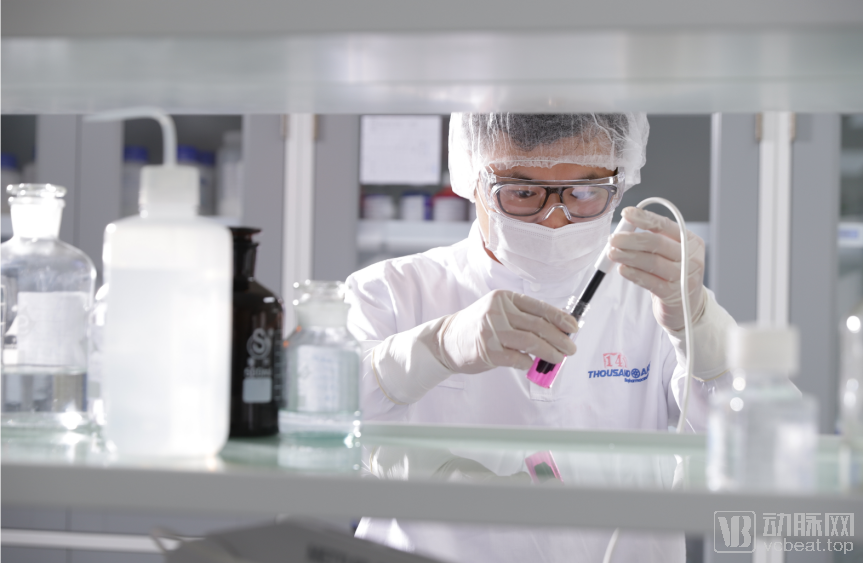
Image provided by the company
Dr. Luo Shun stated, “The focal point of competition among CDMOs lies in enhancing efficiency and reducing costs. Unless Chinese CDMOs can break the monopoly held by foreign companies in serum-free culture media, single-use bioreactors, and consumables, they will be unable to minimize costs and thus cannot compete with their international counterparts.”
Shortly after its establishment, Thousand Oaks Biopharmaceuticals commenced construction and began production, achieving a launch speed far exceeding that of CDMO companies founded during the same period. Currently, Thousand Oaks Biopharmaceuticals has established collaborative relationships with numerous renowned pharmaceutical companies, with multiple preclinical, Phase I, Phase II, and Phase III clinical projects underway, earning it a strong reputation in the industry.
Regarding the current competitive landscape of the global CDMO industry, Dr. Luo Shun categorizes CDMO companies into three tiers based on market share, company size, and technological competitiveness. The leading CDMO enterprises, Lonza and Boehringer Ingelheim (BI), undoubtedly belong to the first tier. Currently, no Chinese enterprises have entered the first tier. However, Dr. Luo Shun stated, “I believe that Thousand Oaks Biopharmaceuticals will certainly secure a place in the first tier in the future.”
However, breaking into the global CDMO industry is no easy feat. Dr. Luo Shun stated, “Currently, the biopharmaceutical industry remains dominated by Europe and the United States. CDMOs such as Lonza and Boehringer Ingelheim (BI) maintain deep-rooted ties with established Western biopharmaceutical companies. Chinese CDMOs can only hope to compete with these global incumbents and subsequently partner with worldwide biopharmaceutical firms by reducing costs, improving production efficiency, and evolving into truly ‘innovative Chinese enterprises.’”
China enjoys unique advantages in cost reduction. Dr. Luo Shun stated, “In the biopharmaceutical industries of Europe and the United States, the production cost per gram of protein ranges from $300 to $400. By integrating high-quality Chinese-made culture media and single-use reaction vessels, Thousand Oaks Biopharmaceuticals will continue to push the limits of production costs.”
“Given equivalent quality and efficiency, biopharmaceutical companies both in China and abroad will naturally be drawn to lower manufacturing costs. In the future, foreign biopharmaceutical companies will become as dependent on Thousand Oaks Biopharmaceuticals as Apple is on Foxconn in China,” said Dr. Luo Shun confidently.