

RenDong Medicine Files IPO Prospectus: A Deep Dive into Tumor Immunology with '1cm Width, 1km Depth' Strategy
Gloriousmed
Provider of Comprehensive Genetic Testing Solutions
Zhao Guodong first came into contact with NGS technology in 2006. At that time, Illumina had not yet acquired Solexa, the clinical value of PD-1 had not yet been validated, and cost constraints made the commercialization of NGS seem very distant.
“In 2012, the cost of next-generation sequencing (NGS) began to decline rapidly, and industry players started exploring the application of NGS technology in oncology genetic testing. ‘Major hospitals such as Ruijin Hospital and Zhongshan Hospital were already engaged in this work. At that time, there were few established domestic companies, and even overseas firms like Foundation Medicine were just getting started,’ recalled Zhao Guodong. Compared with traditional immunodiagnosis and pathological diagnosis, public understanding of NGS was still limited. Zhao Guodong, who was then at Thermo Fisher Scientific, was among the first batch of R&D professionals in China.”
This period is also known as the accumulation phase of NGS commercialization. The concept of precision medicine was first proposed during this stage, and both disease diagnosis and treatment began to shift from universal approaches toward personalized solutions. Testing a broader range of genes and implementing personalized therapy have become major trends in disease diagnosis and treatment.
Also in 2012, Bristol Myers Squibb (BMS) released the first clinical trial data for PD-1 inhibitors, sending shockwaves through the industry. Until then, PD-1 had been more of a legend, with its efficacy largely unknown. In the aftermath, pharmaceutical giants such as BMS, Merck & Co., Pfizer, Roche, AstraZeneca, and Eli Lilly rapidly entered the field, while Chinese companies like Junshi Biosciences, Innovent Biologics, and Hengrui Medicine began to establish their own pipelines. Related drugs were gradually approved and launched in the following years, ushering in a transformative era in oncology treatment.
“Few targets have attracted as many pharmaceutical companies as PD-1, with over a hundred firms rushing into the space,” revealed Jin Ge, CEO of Gloriousmed, in an interview. Zhao Guodong served as Co-founder and CTO when Gloriousmed was first established. Due to close early ties with a pharmaceutical company involved in immunotherapeutics, and after conducting extensive medical research, Gloriousmed identified tumor immunology as its strategic direction. A few years later, the diagnostic segment of tumor immunotherapy became a highly contested battleground for genetic testing companies.
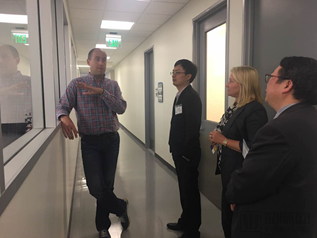
In early 2016, Zhao Guodong visited the U.S.-based company Human Longevity.
After decades of development, cancer immunotherapy has achieved remarkable success in the past decade. With the widespread clinical adoption of immune checkpoint inhibitors, represented by antibodies such as anti-PD-1, the development of cancer immunotherapy has entered a fast track.
“The therapeutic approach for biologics differs significantly from that of targeted therapies.” This was how Zhao Guodong described his initial impression of tumor immunotherapy when asked. Targeted therapy typically requires only verification of specific mutations in a few relevant genes, whereas tumor immunotherapy is also associated with the mutations and status of the entire tumor and immune cells. “It involves broader dimensions; our medical team has conducted extensive research,” he added. By observing immune pathway status at the RNA level, identifying additional sites and biomarkers, and conducting cohort studies using both single and multi-dimensional indicators, they are employing various methods to more precisely determine how to stratify patients with greater accuracy.
Undoubtedly, compared with molecular targeted therapy, cancer immunotherapy is more universally applicable. As a treatment modality with substantial clinical value, it has attracted a surge of interest from numerous pharmaceutical companies both in China and abroad. However, the current immunotherapy market still faces many challenges, one of which is the low response rate to these drugs.
“The objective response rate (ORR) in cancer patients is typically only around 20%, and some patients may experience immune resistance and hyperprogressive disease (HPD) during treatment,” Zhao Guodong explained to VCBeat. How to more effectively stratify treatment-naïve patients at the molecular testing level is a key challenge that current oncology companion diagnostic companies are striving to address.
In this regard, in addition to conventional biomarkers such as TMB, MSI, dMMR, IO Pros/Cons, PD-L1, and CD8+, Gloriousmed has incorporated more complex metrics, including GEP, clonal TMB, and indel TMB, covering indicators related to the tumor microenvironment and tumor mutational landscape. Researchers aim to determine the stratification efficacy of individual biomarkers for immunotherapy by investigating the relationship between each metric and immunotherapeutic response.
To address the limitations of single-indicator predictive performance, the R&D team has developed a more in-depth multi-dimensional indicator prediction model. Although this multi-dimensional approach is more complex than its predecessor, breakthroughs in algorithms by the bioinformatics team have enabled Gloriousmed to achieve overall average PPV (Positive Predictive Value) and AUC (Area Under the Curve) values exceeding 90%.
On the other hand, compared with other treatment modalities, immunotherapy has a relatively slower onset of action. Following immune cell infiltration, disease progression assessment may be confounded by pseudoprogression, making differentiation challenging. Determining appropriate testing strategies to identify pseudoprogression during treatment represents another business avenue that companion diagnostic companies can penetrate.
Zhao Guodong revealed to VCBeat that Gloriousmed has selected four dimensions to monitor the efficacy of immunotherapy, including fragment size, TMB, driver mutations, and tumor fraction. He told VCBeat that immune activation takes time; even with prior patient stratification, it takes longer for immunotherapy to demonstrate therapeutic effects compared to targeted therapies. During this process, some patients may benefit, while others may develop resistance, and some may even experience hyperprogressive disease. These multi-dimensional monitoring strategies are designed to detect immune resistance earlier and identify pseudoprogression, enabling patients to select appropriate treatment regimens at an earlier stage.
Centered on patient stratification and monitoring, Gloriousmed provides comprehensive services throughout the “diagnosis” phase for patients. The low response rate to PD-1 inhibitors is a challenge at the drug development level; as a testing service provider, it is difficult for the company to directly address this issue. However, data holds significant value. Leveraging its years of accumulation in the field of tumor immunology, Gloriousmed aims to harness the power of its data to uncover deeper clinical needs. To this end, Gloriousmed launched the “Ten-Thousand-Patient Tumor Immunology Ark Project” in 2017, with the goal of helping physicians and experts establish a real-world tumor database and realize the true value of data. It is reported that the Ark Project has currently accumulated over 1,000 cases with complete datasets, including clinical phenotype data, omics data, and clinical efficacy data of immunotherapeutic agents.
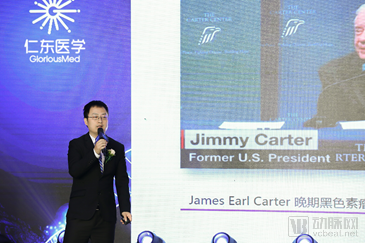
2017In October, Gloriousmed held a press conference in Beijing, officially launching the “Ten-Thousand-Person Tumor Immunity Ark Program.”
“R&D of neoantigens and common neoantigens is primarily conducted in collaboration with third-party companies,” Zhao Guodong revealed to VCBeat. To establish a closed-loop, end-to-end oncology diagnosis and treatment ecosystem for cancer patients, Gloriousmed has also ventured into the field of tumor vaccine therapy. “Preliminary proof-of-concept (PoC) studies in mice have demonstrated promising overall therapeutic efficacy,” he added. Peptide and mRNA vaccines were designed based on neoantigen prediction, and mouse PoC experiments indicated that the entire system performed well. He aims to provide targeted treatment for patients who are insensitive to PD-1 antibodies through personalized combination immunotherapy.
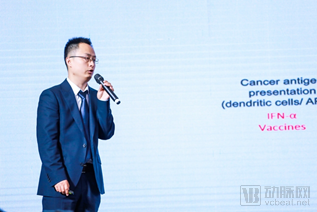
At the 2019 NGS Developers Conference, Zhao Guodong shared “Applications of GSA-Pipe in Tumor Immunotherapy and Vaccine Therapy” with the audience.
The core of this layout revolves around the current status and clinical pain points of immunotherapy. Its comprehensive molecular testing, along with its proprietary S-type and UMT technologies and the GSA-pipe analysis system, provide substantial support for product development. Empowered by this technological platform, the R&D team can capture more precise and comprehensive tumor and immune information, thereby facilitating more efficient and accurate clinical treatment decisions.
It is also worth noting that the strength of the medical team should not be underestimated.
Among Gloriousmed’s R&D team of nearly 90 members, there is a specialized medical unit comprising 40 professionals. Through this team, Gloriousmed has been able to align its product design more closely with clinical and real-world needs. After the medical team conducted in-depth research into clinical pain points, Gloriousmed incorporated more clinical decision-making considerations into its product development process, thereby providing greater support to clinicians and end patients.
“The team’s characteristics are closely aligned with the company’s strategy. Gloriousmed focuses on expanding within specific cancer subtypes, providing in-depth testing and clinical interpretation for every patient,” stated Zhao Guodong. Furthermore, the bioinformatics team has made significant advancements in algorithms, enabling personalized product design through refined analytical pipelines. “Our product design philosophy is driven by clinical needs and applications, with high sensitivity and specificity serving as prerequisites to address these requirements,” he added.
The R&D team, comprising professionals in medicine, laboratory science, bioinformatics, and algorithms, accounts for half of the company’s total workforce. The R&D department typically organizes its personnel into several specialized lines based on their respective roles. These teams conduct in-depth exploration of clinical pain points, diagnostic and treatment pathways, and specific testing needs within each pathway. Zhao Guodong refers to this approach as the “trinity” of clinical translational development.
In addition to its deep engagement in the tumor immunology market, Gloriousmed has also made significant strides in research on urological cancers. It was among the first companies in China to focus specifically on diagnostic testing for urological tumors. “Many types of urological cancers lack standardized treatment guidelines, and most clinical drug regimens are based on empirical evidence. Stratifying patients through molecular testing would be highly meaningful for their care,” explained Zhao Guodong, when asked why the company chose to focus on urological oncology.
It is reported that Gloriousmed has launched three major product series in the field of urologic oncology, including QianlieanTM, YoukeanTM, Shen Shi'anTM, providing comprehensive lifecycle management guidance for prostate cancer, urothelial carcinoma, and renal cell carcinoma, covering prognosis, medication selection, monitoring of recurrence and progression, and genetic risk assessment. Unlike other NGS companies, we offer specialized product portfolios tailored to each cancer type, aligning with clinical diagnostic and treatment pathways to support clinical decision-making.
Gloriousmed is currently building China’s largest prostate cancer database, encompassing somatic mutation profiles, tumor stage-specific profiles, and data on patient medication and clinical management. “It includes follow-up and testing data, which holds significant value for drug development and clinical evidence-based practice,” Zhao Guodong explained to VCBeat. “This is a major undertaking that took us a year to integrate.”
The project was officially launched in 2017, and within two and a half years, the team has established cohort study data for more than 3,500 participants.
As oncology immunotherapies were successively launched in the Chinese market, tumor testing companies of all sizes began to position themselves in the field of companion diagnostics for immunotherapy. Consequently, this sector quickly became characterized by homogeneous competition. However, due to its early entry and focused strategy, Gloriousmed has managed to establish a differentiated presence amidst this homogenized competitive landscape.
The advantages of its technological platform, the multidimensional richness of its products, and its vast data accumulation coupled with in-depth mining have built an industry moat for Gloriousmed, earning the trust and recognition of leading experts in the field. “This is our advantage,” stated Zhao Guodong.
However, he also emphasized that Gloriousmed is not merely a standalone genetic testing company; rather, it aims to provide patients with integrated oncology diagnosis and treatment services. “Testing is only one component,” explained Zhao Guodong. Leveraging clinical and follow-up data mining as well as tumor cohort studies, Gloriousmed seeks to ensure that the value of these data extends beyond individual patient treatment. The company has partnered with multiple pharmaceutical enterprises to utilize these data in supporting clinical drug development and facilitating patient screening and enrollment for clinical trials. It aims to enable real-world studies to more accurately reflect drug efficacy and uncover the mechanisms underlying disease onset and treatment. Data serves as the core driver of this approach. Based on this logic, Gloriousmed is committed to empowering the entire oncology diagnosis and treatment workflow, thereby enhancing overall clinical capabilities in cancer care.
“Our core mission is to assist experts in clinical decision-making and diagnosis by providing additional information,” he told VCBeat. In recent years, Gloriousmed has established extensive collaborations with experts and accumulated substantial data resources. He hopes that these data will ultimately be translated into clinical services and support pharmaceutical companies in drug development.
Final Thoughts
In less than an hour of conversation, it became evident that Zhao Guodong is not a traditional scientific researcher, but rather an R&D professional dedicated to translational research grounded in basic science. This distinction lends a unique character to Gloriousmed’s overall R&D team. Centered on clinical needs, they have leveraged a multidisciplinary team to build a translational bridge between basic research and clinical products, enabling precise alignment with every detail of clinical demands and product development. Bringing together comprehensive talent to focus intensely on a single mission and execute it to perfection—this is the deepest impression Gloriousmed has left on us.