

VoxelCloud CEO Ding Xiaowei: Patient-Centric Innovation Drives Medical AI Research
VoxelCloud
Developer of Intelligent Imaging Systems
The capital market in the field of medical artificial intelligence in 2019 was not calm, but its patterns were clear enough.
According to VCBeat’s statistics on AI financing during the first eight months of 2019, there were a total of 107 global medical AI financing events, with total funds raised amounting to RMB 13.958 billion (excluding financing events with undisclosed investment amounts). Among these, only 20 events occurred at the angel and Series A stages, whereas Series B financings numbered 49 and Series C financings reached 70, indicating that mature enterprises captured the vast majority of resources.
In the field of medical imaging AI, domestic capital has flowed almost exclusively to companies with substantial existing accumulations. VoxelCloud is one of the few imaging AI enterprises that secured funding during this period. The diversity of its team has enabled VoxelCloud to expand beyond the domestic healthcare market and establish a significant presence in overseas markets.
As one of the leading companies in AI-powered medical imaging, what has VoxelCloud’s development trajectory looked like this year? How is it navigating survival amid the capital winter? What is the status of its Class III medical device certification approval? With these questions in mind, VCBeat and other media outlets interviewed Ding Xiaowei, CEO of VoxelCloud, at the 2019 World Artificial Intelligence Conference. Below is the transcript of the interview.
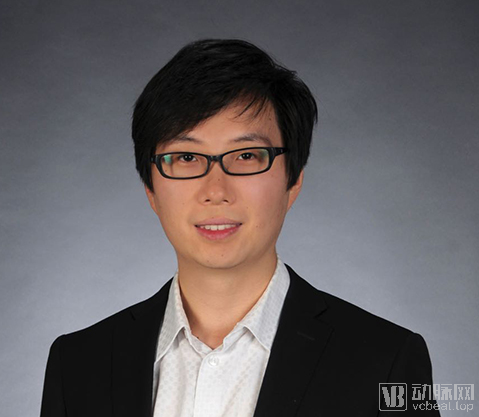
VoxelCloud CEO Ding Xiaowei
Q: It has been eight months since VoxelCloud secured its Series B financing. What new developments has VoxelCloud achieved during this period?
A:For a long time, the industry has been dominated by single-disease AI solutions. While developing AI for all diseases is more challenging, it better aligns with market demand. Therefore, we aim to equip our products with sufficient diagnostic insight. Taking ophthalmology as an example, VoxelCloud strives to identify all diagnosable ocular conditions from a single ophthalmic imaging examination.
To date, VoxelCloud has successively launched its full-disease product portfolio for various anatomical regions, with deployment at domestic non-public medical institutions scheduled to begin in September.
VoxelCloud has also developed new products, such as those for pediatric visual impairment and autism screening. These products will be used in pediatric health examination centers to help parents and doctors identify children with visual impairments or autism at an early stage through passive analysis of pediatric behavior, thereby facilitating early detection and early intervention.
Q: How do you view the capital winter in the AI industry?
A:In 2017, investors were eager to enter the market, and many projects received funding without undergoing in-depth due diligence. By 2018, they had become more cautious. Judging from the current situation, investors are not indifferent; rather, they have gained sufficient understanding of the sector.
There are two reasons for this. First, investors are seeking companies with genuine potential for breakthroughs, rather than continuing to focus on firms that boast a large number of partner hospitals but struggle to achieve profitability. Mere numerical milestones do not constitute true breakthroughs; the market needs imaginative companies to break through this constraint.
Second, healthcare is inherently a slow-moving industry, where investment cycles of eight to ten years represent the normal pace of development. However, most investors currently entering the medical AI space, as well as entrepreneurs launching healthcare ventures, predominantly come from internet backgrounds. Both parties tend to have high expectations for the industry’s pace, which may not necessarily be a positive development.
Therefore, whether a company is growing slightly faster or slower, or generating more or less profit, is not the key metric for assessing its development. If revenue must be considered, investors will not scrutinize marginal differences among companies with revenues in the tens of millions.
Q: Given that angel rounds and IPOs have been relatively scarce in this year’s investment landscape, how should we interpret this trend?
A:If the open market exhibits this state, it is evident that the barriers to entry in this industry are exceptionally high. As previously mentioned, the accumulation of capabilities by healthcare enterprises cannot be achieved overnight; rather, it requires gradual progress within a comprehensive system. While AI healthcare may appear to be solely about software development, it fundamentally necessitates mastering clinical data science.
Before artificial intelligence can be realized, it is indispensable to have extraordinary “human labor” provided by physicians; this foundational work has established the deep competitive moat for medical AI. Once leading companies seize the current opportunity and establish a comprehensive system, emerging enterprises will find it difficult to identify viable opportunities.
Q: How do you view the perspective that Class III certification is a prerequisite for the commercialization of AI?
A:When formulating standards, regulatory authorities prioritize product safety and ethical compliance over the commercialization of AI products. Therefore, a Class III certification represents the state’s evaluation and endorsement of the safety and efficacy of AI-based diagnostic devices, but it is not equivalent to a company’s commercial value. Many certified medical devices have struggled with dismal sales; some products that attracted significant attention before certification have since been met with little market interest.
So, is it valuable to obtain a Class III medical device certificate for AI? Absolutely! It demonstrates an AI company’s execution capability and proves that the AI-assisted diagnosis market is viable. However, in the long run, the Class III certificate is not directly linked to a company’s revenue, nor does it reflect its strategic direction. Therefore, AI companies still need to focus their efforts on the product itself.
Q: There has been a surge in submissions from Chinese scholars to various top-tier journals this year. How should this phenomenon be viewed?
A:I come from an academic background and continue to uphold academic practices. However, I believe that while the volume of publications can reflect the development trends of an entire industry, it should not be used to evaluate the scientific research capabilities of individuals or enterprises. Taking higher education institutions as an example, both in China and the United States, student performance is often assessed by the number of papers published. Yet, it has long been recognized that this is a one-dimensional metric that incentivizes the production of low-quality, filler content.
Therefore, truly valuable research in the world—research that genuinely benefits patients and is conducted responsibly—depends not on quantity, but on quality.
In this regard, VoxelCloud adheres to two principles: first, research outcomes must directly benefit patients; second, they should benefit physicians and healthcare institutions. Conflicts of interest sometimes exist between healthcare institutions and patients. While over-treatment may benefit healthcare institutions, it can harm patients. As a company, we should not seek profits from over-treatment.
Second, when conducting research, scientists at VoxelCloud should not write articles for the sake of novelty or sensationalism; their starting point should be to explore the value of AI in clinical research.
Many top-tier conferences accept new papers, a practice that is valuable to scientific research because conferences cannot exclusively accept articles with commercial or clinical value while rejecting those featuring innovation. However, as a company, we cannot devote all our resources to exploring the unknown; therefore, our primary focus is on creating social value.
In other words, I hope that VoxelCloud’s research endeavors can provide tangible guidance for clinical practice, enabling physicians to benefit from and refine their diagnostic and treatment approaches, rather than holding value solely in the eyes of engineers or algorithm scientists.
Q: VoxelCloud has been active in the U.S. market; what is its current strategic layout?
A:This year, VoxelCloud has entered into a deep collaboration with the U.S. Department of Veterans Affairs (VA). Specifically, VoxelCloud will assist the VA in quality control for CT examinations and end-to-end management of the image interpretation workflow. As the largest integrated healthcare and hospital system in the United States, the VA upholds exceptionally high medical standards. Therefore, this partnership essentially signifies recognition of VoxelCloud by the U.S. medical device industry.
Because the VA’s health insurance and hospital control are centralized, it places great emphasis on medical efficiency and cost containment, striving to improve efficiency and reduce healthcare expenditures through various technologies—goals that are fully aligned with those of VoxelCloud.
On the other hand, our collaboration with Mayo Clinic is also under negotiation, primarily focusing on dermatology and ophthalmology. Currently, the partnership in ophthalmology has been finalized, with VoxelCloud’s products deployed in select Mayo Clinic ophthalmology centers to assist in image interpretation.
In the field of dermatology, VoxelCloud will collaborate with Mayo Clinic to empower family physicians in the United States.
Family physicians in the United States have relatively weak capabilities in diagnosing and treating dermatological conditions. This is because, during their three-year medical residency training, they receive only half a day of specialized training in dermatology. This knowledge gap prevents physicians from providing optimal care to patients, leading to significant waste of medical resources. Naturally, this also indicates substantial potential for cost containment in this area.
Q: Does VoxelCloud possess sufficient advantages to compete with rivals in expanding its overseas markets?
A:In the United States, only a handful of AI companies are comprehensively addressing fields such as family medicine, fundus imaging, and dermatology. The development of AI in the U.S. mirrors that of China, focusing on creating efficiency-enhancing products tailored to the needs of radiologists. For instance, these tools help emergency departments rapidly identify patients with pulmonary embolism or cerebral hemorrhage, thereby preserving critical treatment time for emergency cases.
VoxelCloud primarily addresses the issue of waste in medical insurance resources, with a greater focus on improving patient prognosis. In this way, VoxelCloud helps healthcare institutions reduce unnecessary surgical expenses and avoid redundant consultations, thereby conserving medical insurance funds and alleviating financial burdens for both institutions and patients.
Specifically, waste in consultations by U.S. family physicians accounts for more than 20% of total healthcare waste. Some consultations are too superficial to address patients’ actual problems, while others are overly intensive, leading to the referral of less severe cases to specialists.
If patients are matched with family physicians who lack expertise in their specific conditions, the resulting doctor-patient consultations become a waste of resources. The time required for patients to schedule appointments with family physicians, coupled with the additional time needed for these physicians to refer patients to specialists, not only delays treatment but also contributes to unnecessary medical care. Furthermore, specialists treating conditions such as vitiligo do not wish to spend their entire monthly caseload seeing patients with acne. Our goal is to achieve the most rational allocation of medical resources through optimal matching.
In this way, we will save a significant amount of costs for health insurance. The savings for each insurance company are approximately billions of US dollars, which refers to the savings for a single insurer. For the entire market, there is a potential saving space of millions of US dollars.