

SmileDirectClub Files for IPO: Disrupting Orthodontics with Direct-to-Consumer Clear Aligners
Leveraging telehealth technologies to provide patients with clear aligner orthodontic treatment “conveniently” and “affordably” has long been SmileDirectClub’s core positioning and primary marketing selling point. Currently valued at $3.2 billion, the company has reached unicorn status and is preparing for an initial public offering this September. Such rapid growth and high valuation are rare in the digital health sector.
SmileDirectClub is headquartered in Nashville, Tennessee, USA. In 2013, Jordan Katzman and Alex Fenkell decided to establish SmileDirectClub and clarify its fundamental concept and service philosophy. In 2014, they joined forces with David Katzman and Doug Hudson to officially found SmileDirectClub.
Since its establishment, the company has successfully completed multiple rounds of financing in the capital markets:
In July 2016, SmileDirectClub secured Series A funding from Gin Lane.
In October 2018, SmileDirectClub announced a $380 million financing round led by Clayton, Dubilier & Rice, with participation from Kleiner Perkins and Spark Capital.
SmileDirectClub’s innovation lies in its business model, which introduces a “retail” mindset; this approach conflicts with the serious nature of medical care and has been a source of controversy.
Traditional clear aligner therapy requires patients to visit hospitals or clinics to consult with professional orthodontists, whereas SmileDirectClub eliminates this need. Patients using SmileDirectClub have two options for dental impressions: one is to purchase an easy-to-use impression kit online, take impressions at home, mail the molds back, and upload photos; the other is to visit one of their widespread physical locations (SmileShops or SmileBuses) to have 3D scans taken and relevant data collected. SmileDirectClub then ships the custom clear aligners directly to the user.
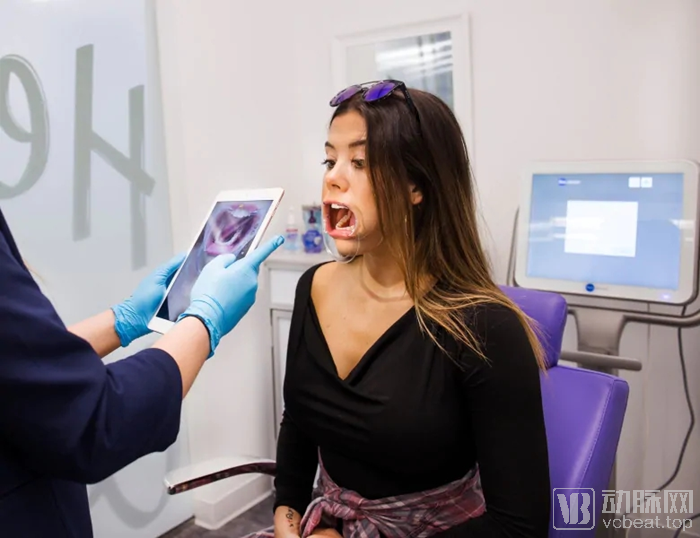 Patients Having 3D Dental Photos Taken at SmileShop | Photographer: Christen Whitney
Within 48 hours, licensed dentists and orthodontists will contact patients online to finalize the treatment plan. Three to four weeks later, custom-made aligners will be mailed to the patient. Throughout the treatment process, dentists and orthodontists will use SmileCheck’s remote platform to show patients the correction progress and records of tooth movement; patients are required to retake orthodontic photos every 90 days. Upon completion of the treatment, SmileDirectClub can also mail retainers and other oral care products to the patient.
By bypassing the need for in-person consultations between patients and doctors, SmileDirectClub streamlined the orthodontic process, offering lower prices and shorter treatment durations, thereby quickly becoming a representative of the Direct-to-Consumer (DTC) model in the clear aligner industry.
In 1999, clear aligner technology, represented by Align (Invisalign), ushered in the fourth generation of orthodontics, a milestone that has now stood for two decades. To date, no new technologies or models have emerged to challenge its dominant position. The sudden rise of SmileDirectClub, however, has introduced a new possibility.
In late August this year, SmileDirectClub filed its IPO prospectus, allowing us to examine the company’s more detailed operational data, sales model, and future plans. Is it a true innovator in the clear aligner orthodontics sector, or a disruptor shaking up the market landscape? What insights does it offer for China’s booming clear aligner orthodontics market? VCBeat (WeChat ID: vcbeat) provides an analysis.
Is the Business Model Truly Innovative or Barbaric?
What impressed SmileDirectClub was its exclusive advantages over other clear aligner orthodontic treatments, as detailed in its prospectus, primarily including:
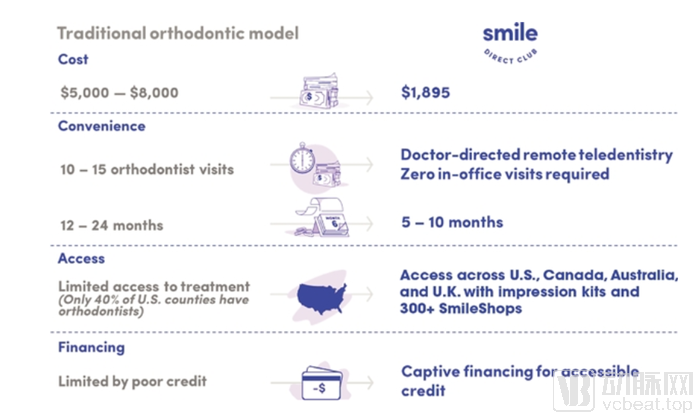 Advantages of SmileDirectClub
First, the price is low. Traditional orthodontics cost $5,000–$8,000, while SmileDirectClub costs only RMB 1,895.
Second, high convenience. Traditional orthodontics requires 10–15 in-person visits over a period of 12–24 months, whereas SmileDirectClub conducts supervision and treatment planning entirely through its telemedicine platform, SmileCheck, shortening the duration to 5–10 months. Approximately every six months, most members purchase retainers once.
Third, high accessibility. The United States also faces a shortage of orthodontists, with 40% of counties lacking any orthodontic specialists. Through orthodontic kits and more than 300 offline stores across the United States, Canada, Australia, and the United Kingdom, patients can access orthodontic treatment.
Fourth, payment diversity. SmileDirectClub also offers patients two simple payment options: a one-time payment or the SmilePay plan, which requires a $250 down payment and average monthly installments of just $85. These convenient monthly payments require no credit check. Additionally, since 2019, the company has established partnerships with insurance providers such as United Healthcare and Aetna. Customers may receive a pro-rated refund for any reason within the first 30 days.
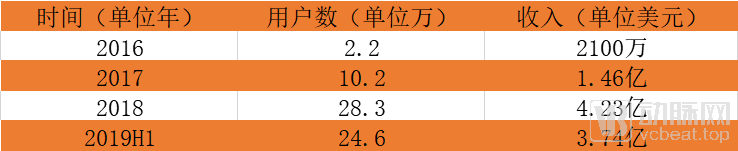
SmileDirectClub's User Base and Revenue
Since its inception in 2014, SmileDirectClub has expanded its reach to all 50 U.S. states, Puerto Rico, Canada, Australia, and the United Kingdom, boasting 5 million monthly visits, a network of 240 doctors, and more than 300 SmileShops. The member base typically comprises households with annual incomes ranging from $30,000 to $130,000, with ages spanning from teenagers (accounting for less than 5% of members) to individuals aged 50 and above (approximately 10%). Approximately 65% of members are between the ages of 20 and 40.
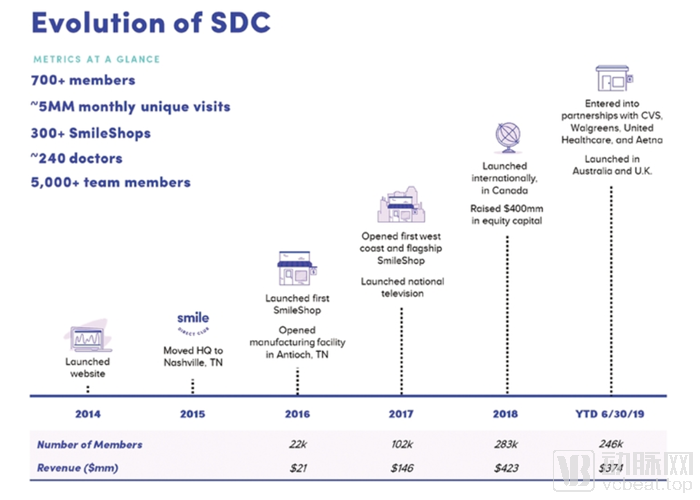
Milestones of SmileDirectClub
Excluding the start-up phase from 2014 to 2016, the key developmental milestones of SmileDirectClub can be outlined as follows:
In 2016, the first manufacturing facility was established in Tennessee, and the first SmileShop was launched;
In 2017, the flagship SmileShop store was opened in West Sea South, USA;
In 2018, it completed nearly $400 million in financing and expanded into the Canadian market;
In 2019, the market expanded to Australia and the United Kingdom, while partnerships were established with CVS, Walgreens, United Healthcare, and Aetna to sell impression kits in-store.
SmileDirectClub's Revenue
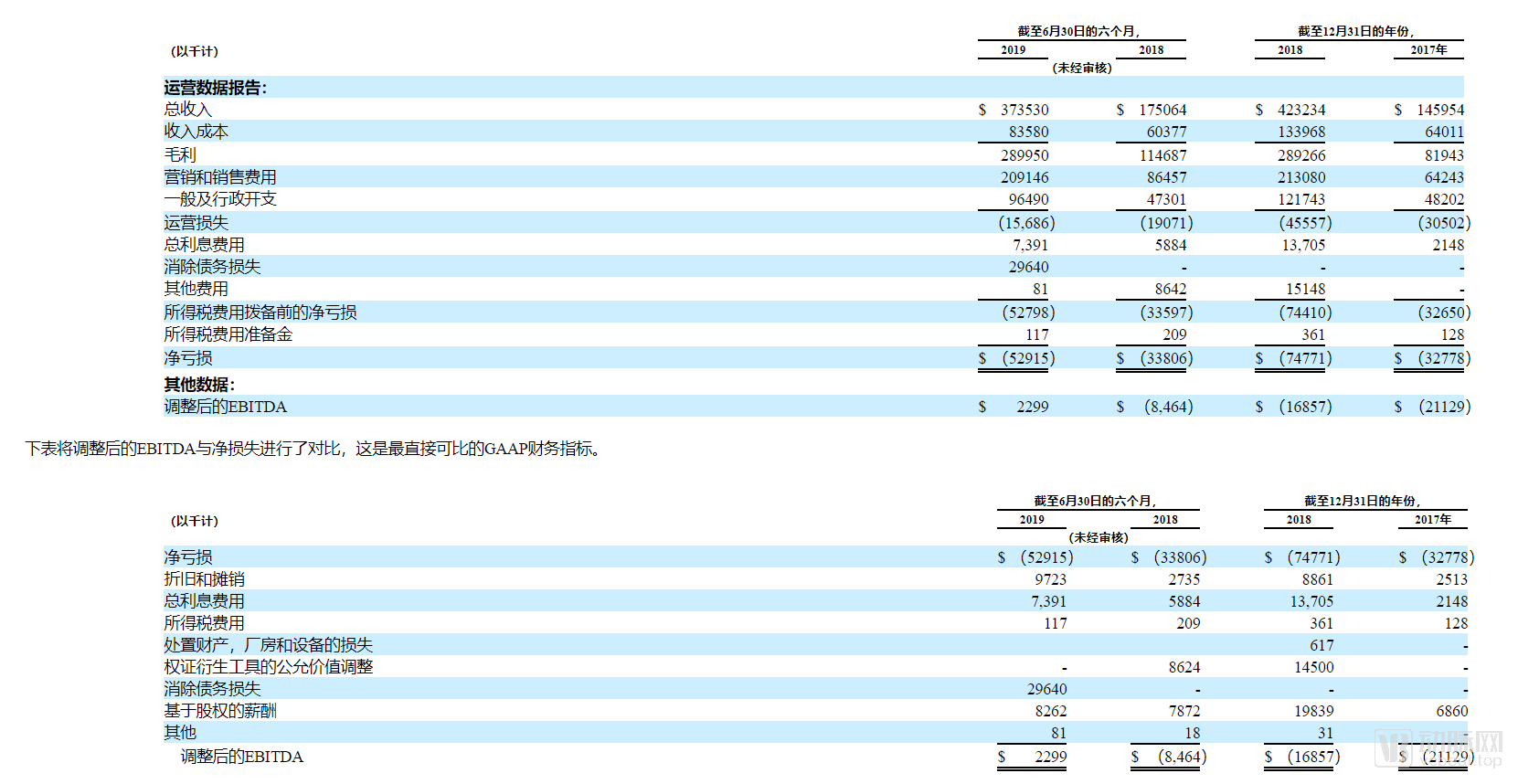
SmileDirectClub’s revenue is primarily derived from the sales of aligners, impression kits, whitening gel, and retainers. Revenue grew by 190%, rising from $146 million in 2017 to $423 million in 2018. For the six months ended June 30, 2019, total revenue amounted to $373.5 million, representing a 113% year-over-year increase compared to the same period in 2018.
Meanwhile, the net losses in 2017 and 2018 were US$32.77 million and US$74.77 million, respectively, with major expenses consisting of the cost of products sold and marketing and sales expenses. In particular, marketing costs accounted for 44%, 50.3%, and 55.9% of total revenue in 2017, 2018, and the first half of 2019 (1H 2019), respectively, showing an upward trend.
In summary, SmileDirectClub’s rapid growth can be attributed to its continuous innovation centered on clinical orthodontic outcomes, cost efficiency, and customer satisfaction. According to data from its prospectus, the company’s Net Promoter Score (NPS) reached 69, surpassing that of many major internet companies; generally, an NPS of 50 is sufficient to generate positive word-of-mouth.
However, the pain point of the B2C model lies in the fact that SmileDirectClub needs to continuously enhance brand exposure and acquire new customers through both online and offline channels via telemedicine, which is currently its primary task. Yet, orthodontic treatment represents a one-time, low-frequency consumer demand with a lengthy customer acquisition cycle. This has resulted in rapid revenue growth for the company, but persistent losses, indicating that it remains in a phase of rapid expansion.
Moreover, as customer acquisition costs for performance advertising continue to rise, SmileDirectClub has begun expanding its ad placements into more traditional channels, even crossing over into supermarkets and pharmacy chains such as CVS and Walgreens, to target audiences not reached on social media platforms. This has also led to increased spending on marketing and sales expenses.
Currently, SmileDirectClub is also engaging in preliminary B-side customer acquisition partnerships with insurance companies, but the prospectus does not disclose further specific details.
Does Remote Orthodontics Work?
As mentioned above, due to its unique B2C model that bypasses in-person dental consultations, SmileDirectClub has received numerous complaints during its development.
Since its inception, SmileDirectClub has faced criticism from the American Association of Orthodontists and dozens of state dental boards, including federal court cases in Georgia and Alabama. The company also faces similar risks in emerging markets such as Canada and Australia.
The orthodontist’s philosophy is that clear aligner therapy is, first and foremost, a medical procedure that must be performed by a qualified dentist. Only a licensed orthodontist can accurately diagnose and design the treatment plan. During tooth movement, various issues may arise, requiring the orthodontist’s clinical expertise to evaluate, adjust, and refine the plan, thereby ensuring safe and effective tooth alignment.
In 2018, the American Association of Orthodontists (AAO) issued a consumer alert stating that the practice by teledentistry orthodontic companies such as SmileDirectClub, Candid Co., and SmileLove of bypassing in-person dental consultations and X-ray examinations “poses medical risks.” While appearing to save patients money and effort, this approach can actually lead to numerous potential harms, including complications related to tooth roots and periodontal treatment. Critics argue that their business model is insufficient to protect patients, as individuals never meet the treating orthodontist in person throughout the process; all orthodontic treatment must be conducted under the supervision of a qualified dentist.
Therefore, we believe that a core key issue determining whether its model can sustainably operate lies in whether remote orthodontics can fully address clinical orthodontic needs and ensure medical quality.
Regarding this DTC orthodontics model, VCBeat interviewed Julie Tay, Senior Vice President and Managing Director for Asia-Pacific at Align, who shared her insights:
1. DIY Orthodontics: Without physician involvement, consumers fabricate their own aligners at home; Align Technology does not support this model;
2. DTC Orthodontics (similar to the SmileDirectClub model): No physical examination is conducted on patients, and the company transacts directly with them; this is not the model adopted by Align Technology;
3. DDTC Orthodontics: This refers to the traditional model, where patients receive treatment based on physical examinations and transact directly with doctors. Suppliers (i.e., Align Technology) sell clear aligners to doctors rather than directly to patients.
“Align Technology is deeply concerned about the risks associated with DIY treatment, where consumers undertake self-treatment without dental professional involvement. As innovative organizations bring clear aligners to the mass market, and given the rise of direct-to-consumer models, we are educating the public on the benefits of orthodontic treatment while continuing to help patients using Invisalign products achieve healthy, beautiful smiles.” Julie Tay stated that Align Technology adheres to a dentist-led clinical model.
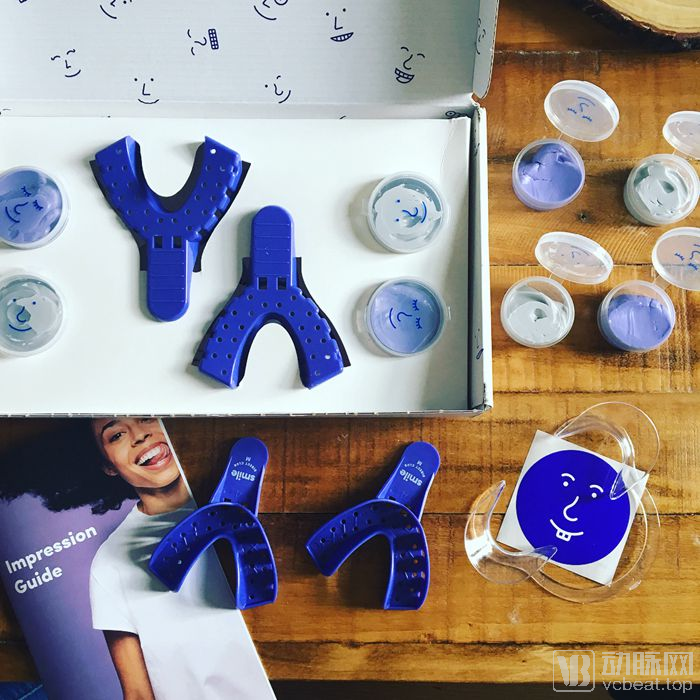 Patient Making an Impression Kit at Home. Image Source: Company Official Website
It is evident that this involves the debate over orthodontic treatment models.
Returning to the origins of teledentistry. Initially, teledentistry was primarily designed to address healthcare challenges in remote and impoverished areas, essentially saving time to varying degrees. Due to the persistent inefficiencies plaguing traditional healthcare, highly commercialized sectors such as dentistry and ophthalmology have begun actively seeking solutions.
The greatest significance of SmileDirectClub lies in steering the application of teledentistry in a different direction. Although teledentistry encompasses numerous sub-sectors, and no single company has yet achieved a fully remote end-to-end workflow, various enterprises have made considerable efforts to save patients’ time.

Optimization of Orthodontic Treatment by Teledentistry Companies
As a key segment of the dental industry, orthodontics comprises three critical stages: intraoral scanning, aligner printing, and clinical treatment. Technological innovations across these three stages are primarily focused on time efficiency: adopting faster 3D dental printing technologies (e.g., Stratasys, Shining 3D), enabling remote matching and communication between dentists and patients (e.g., Uniform Teeth, Orthly), and providing rapid “chairside” diagnostic and treatment solutions (e.g., Phitax, HeyGears).

Technological Iterations Across Various Stages of Orthodontic Treatment
Remote orthodontics demands a high degree of coordination and comprehensive innovation across scanning, printing, and treatment processes. This particularly necessitates the integration of new digital technologies; however, a fully closed-loop business model is generally unsuitable for most dental device manufacturers. Consequently, when it comes to orthodontic solutions, most industry giants choose to collaborate with other companies in one or two of the three key areas: aligners, scanning, and printing. For instance, 3Shape serves as the oral scanning partner for the vast majority of orthodontic solution providers.
 In-House Development vs. Compatibility Choices Across Business Segments for Orthodontic Solutions Companies
Specifically, not every step in the process is compatible across all companies. However, the aligner stage is independently developed by each enterprise. This aspect is particularly critical for remote orthodontics, as the remote nature of the service often introduces new and distinct challenges.
First, for traditional orthodontics, braces used to correct teeth mainly focus on precision. The FDA-registered product information for Align, Straumann, ClearCorrect, and Specialty Appliances almost uniformly uses thermoformed polycarbonate material.
 Materials and Characteristics of Braces in the Orthodontic Industry
Second, for remote orthodontics, because aligners need to be shipped via courier, attention must also be paid to various properties such as water absorption, toughness, resilience, and chemical resistance. The prospectus mentions that the vinyl polysiloxane (VPS) used in SmileDirectClub’s impression kit can effectively resist the impact of temperature changes during transportation.
There exists an "impossible trinity" in the healthcare sector: expanding access to services, curbing the growth rate of healthcare costs, and improving the quality of care, which correspond respectively to accessibility, affordability, and quality. Given the inherent logical inconsistencies among these three objectives, the only way to resolve this healthcare impossible trinity is by introducing incremental technological advancements and innovative models.
In terms of accessibility and affordability, SmileDirectClub has indeed made significant efforts, pioneering business model innovation within the industry. However, regarding medical quality, it faces the common challenges and skepticism encountered by all digital dental care products. As indicated in its prospectus, SmileDirectClub is addressing this issue by recruiting more licensed orthodontists.
Return to the Clinic to Solve Problems
From a purely procedural perspective, clear aligner orthodontics involves 3D scanning, treatment plan design, and 3D printing of appliances, with the final product being clear aligners. However, there are still significant limitations in transforming these appliances into a set of standardized and universally applicable technical standards for clinical use.
To some extent, this marks a renewed recognition of the importance of addressing practical clinical issues, following the recent surge in enthusiasm for digital dentistry.
The application of digital dentistry in the Chinese market is more representative. Although digital technology has entered the Chinese dental market for many years, it has not been fully implemented. Among the key equipment involved, CBCT and intraoral scanners, CBCT has already been accepted in the Chinese market, while the promotion of intraoral scanners in the Chinese market has just begun.
Even clinics equipped with intraoral scanners often see unsatisfactory gains in efficiency and utilization. This is because the digital workflow involves numerous steps, requiring coordination among material suppliers, dental laboratories, clinics, dentists, and patients. With many pain points in the workflow, it is difficult for any single company to build a comprehensive competitive moat in digital dentistry that seamlessly integrates all these links.
Compared to Align, when it entered China in 2011, there were still significant technical limitations. Previously, Invisalign primarily addressed simple cases and relapse cases in the United States; however, upon entering the Chinese market, it encountered a substantial increase in complex cases.
Align Technology boasts leading clear aligner products and iTero intraoral 3D scanning technology. The company makes substantial annual investments in the research and development of new products, such as Invisalign G5, G6, and Invisalign MA for adolescent consumers, covering various domains including functional correction and adolescent growth management. Align also features its exclusively developed SmartTrack material.
Invisalign aligners are also produced on a globally advanced, large-scale customized production line. To date, more than 437 million sets of customized aligners have been manufactured, with an average daily output of 332,000 sets.
However, it is difficult to claim that, given its massive scale, Invisalign has fully integrated every aspect of clear aligner therapy and resolved all clinical pain points. Rather, its strength lies primarily in intraoral scanning and digital treatment planning, where it offers comprehensive digital solutions.
In contrast, its recent strategy has involved investing in the construction of physician training centers, treatment planning centers, and manufacturing facilities in China. These initiatives are designed to engage more closely with Chinese clinicians, enable faster response times, and ultimately deliver optimal services to physicians. Strengthening clinical healthcare capabilities is the next key priority for digital dentistry, following its successful market entry. Similarly, leading Chinese orthodontic companies such as Angelalign and Smartee are all strategically aligning their efforts in this direction.
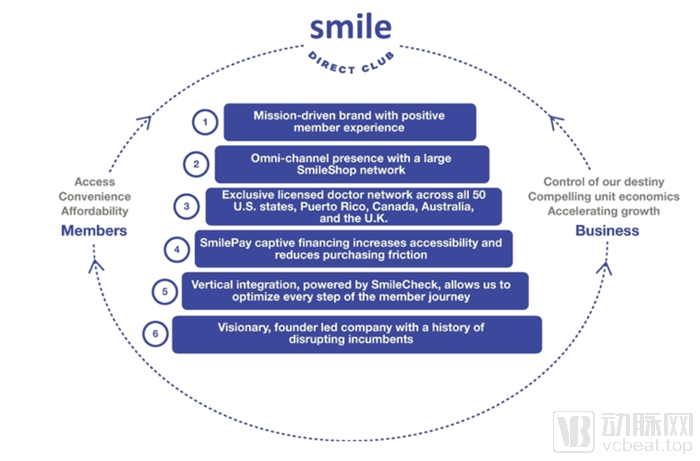
The Endgame of the SmileDirectClub Model
SmileDirectClub is also a new business model that has emerged against the backdrop of the broader digital dentistry industry. By standardizing the remote orthodontic workflow, it enables more clinicians to clearly identify which cases are suitable for treatment, as well as understand the appropriate therapeutic approaches and expected outcomes for different case types. This will undoubtedly play a critical and decisive role in SmileDirectClub’s future development.