

Innovative Surgical Technique for Acute Type A Aortic Dissection Developed by Dr. Li Yong of Linyi People's Hospital Addresses Critical Needs in Primary Healthcare
It is no exaggeration to say that the treatment of acute aortic dissection is a race against death for survival.
“Aortic dissection” is a common acute and critical condition in clinical practice, with its incidence showing an upward trend in recent years. Aortic dissection is classified according to the Stanford and DeBakey systems. Based on surgical requirements, the Stanford classification is further divided into Stanford type A and Stanford type B.
In the classification of aortic dissection, once Stanford type A acute aortic dissection occurs, life rapidly enters a critical countdown. Without surgical intervention, the prognosis is extremely poor, with a mortality rate of 50% within 48 hours, 70% within one week, and up to 90% within two weeks.
Currently, the surgical treatment for acute type A aortic dissection in China mainly adopts the traditionalSun's Procedure,Namely, aortic arch replacement with a four-branched artificial vascular graft plus distal stent-graft implantation.Compared with other surgical procedures domestically and internationally, the Sun’s procedure simplifies the operative technique, shortens operative time, and reduces the incidence of surgical complications and mortality.
“However, traditional Sun’s procedure is often associated with complications such as bleeding, acute respiratory insufficiency, acute renal failure, hepatic dysfunction, neurological complications, and spinal cord injury (resulting in high-level paraplegia). The occurrence of these complications is directly or indirectly related to the use of deep hypothermic circulatory arrest,” said Dr. Li Yong, Chief Physician of the Department of Cardiovascular Surgery at Linyi People’s Hospital in Shandong Province.
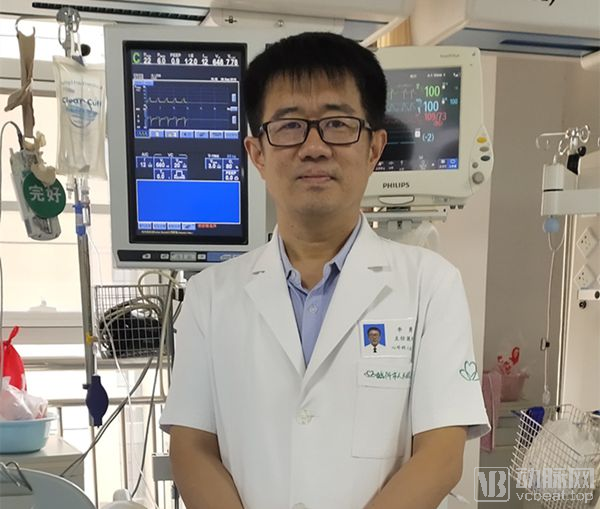
(Li Yong, Chief Physician of the Department of Cardiovascular Surgery, Linyi People's Hospital, Shandong Province)
Is it possible to find a method to avoid deep hypothermic circulatory arrest during surgery, thereby reducing complication-related mortality?
Over the past two years, Li Yong led his team across multiple regions, overcoming technical challenges, and ultimatelyDevelopment of a Branch-First Combined Endovascular Stent Grafting Technique for Total Arch Replacement to Avoid Deep Hypothermic Circulatory Arrest, which can effectively reduce neurological complications and visceral organ damage.
How exactly does this technology work? What are its actual clinical outcomes? Recently, a reporter from VCBeat (WeChat ID: vcbeat) conducted an in-depth interview with Li Yong, Chief Physician of the Department of Cardiovascular Surgery at Linyi People’s Hospital in Shandong Province, to address various questions surrounding this technology.
Data indicate thatAcute aortic dissection is currently one of the most rapidly onset, fastest-progressing, and highest-mortality diseases in cardiovascular surgery.Approximately 20 million people worldwide are affected by this condition annually, with 21% of patients dying before hospital admission and 68% of hospitalized patients dying within 48 hours of admission. Li Yong pointed out that conservative pharmacological treatment has limited efficacy, and emergency surgery is the most effective therapeutic approach.
“The prevalence rate is high, but surgical procedures can only be performed at large hospitals. In China, patients generally need to go to provincial-level hospitals, as most municipal and county-level hospitals are unable to perform these surgeries,” Li Yong told reporters. Under such circumstances, the majority of patients miss the optimal window for treatment.
The reason why only large hospitals can perform this procedure is due to its high level of difficulty and the stringent requirements it places on surgeons. “In the past, senior physicians described total arch replacement as a ‘bloody battle,’ given the extremely challenging conditions, limited technical capabilities, and very high rates of mortality and complications,” explained Li Yong.
Total Arch Replacement: The patient’s entire body is rapidly cooled to below 20°C. The surgeon then opens the thoracic cavity as quickly as possible, excises the damaged proximal segment of the aorta—the largest blood vessel in the human body—and implants a prosthetic graft made of high-molecular-weight polyester (Dacron) material, followed by restoration of the patient’s heartbeat.
“During this surgery, doctors are often under intense stress, as any mishandling can pose a life-threatening risk to the patient,” said Li Yong. Among the patients he has treated, most are in their 40s and 50s. This group is unique in that they bear the dual responsibility of caring for both aging parents and young children; therefore, the success of the surgery affects not only an individual life but also an entire family.
“Although treatment options have improved significantly compared to the past due to technological advancements, we have found in clinical surgical practice that there is still considerable room for improvement,” said Li Yong.
It is understood that the current surgical approaches for treating type A aortic dissection mainly include traditional open surgery and minimally invasive endovascular hybrid procedures. Each surgical modality has strict indications; however, for complex type A aortic dissection, there is currently a preference for the open Sun’s procedure.
The renowned "Sun's Procedure," independently developed by Professor Sun Lizhong, Director of the Center for Cardiac Surgery at Beijing Anzhen Hospital, employs total arch replacement combined with a modified stented elephant trunk technique to treat complex Type A aortic dissection involving the aortic arch. This approach has significantly reduced mortality from 30% to 5%.
“Performing the Sun’s procedure presents significant challenges. Previously, our hospital would invite experts from Beijing to assist with the surgeries. After two years of having them perform the operations, we found that even with Beijing-based experts, there remained a high rate of complications and mortality,” said Li Yong.
“Such a result compelled us to seek solutions, and after in-depth research, we discoveredThe occurrence of complications is closely associated with deep hypothermic circulatory arrest during surgery.“Li Yong told reporters. But could this problem be solved by adopting alternative approaches? With nearly 30 years of experience in cardiac surgery, Li Yong set himself a challenge: to find a way to avoid deep hypothermic circulatory arrest.”
In early 2017, Li Yong began working on research aimed at avoiding deep hypothermic circulatory arrest. “The approach I proposed was well received by many peers, and during the course of the study, we also received assistance from experts such as Sun Xiaogang and Xu Jianlong at Beijing Fuwai Hospital. The research team consisted of seven members, most of whom were physicians from our Department of Cardiovascular Medicine,” Li Yong explained.
By learning from others’ expertise and combining it with his extensive clinical experience, Li Yong led his team to develop a technique that successfully avoids the need for deep hypothermic circulatory arrest.This technique involves a total arch replacement surgery that utilizes branch-first combined occlusion of the intraoperative stented vessels in the aortic arch to avoid deep hypothermic circulatory arrest.
Li Yong introduced,To achieve the goal of avoiding deep hypothermic circulatory arrest, they divided total arch replacement into two stages. The first step prioritized branch reconstruction, ensuring continuous cerebral perfusion via the right axillary artery from the outset of the procedure.
After completing the first step, debranching of the aortic arch has been achieved. The aortic arch is thoroughly dissected to facilitate rapid clamping; the arch, its distal segment, and the stented elephant trunk are clamped en bloc to avoid deep hypothermic circulatory arrest. The remainder of the procedure proceeds as in a standard ascending aortic surgery.
From January 2017 to November 2017, Li Yong performed total arch replacement surgery on 13 consecutive patients using intraoperative stent-grafting of the aortic arch combined with a branch-first technique; all procedures were highly successful.Surgical duration has been reduced from eight hours or more to five to six hours.,Patients experienced almost no postoperative neurological complications or hepatic and renal impairment.
“With this modified total arch replacement technique, deep hypothermic circulatory arrest is avoided, ensuring adequate cerebral and visceral perfusion. This effectively reduces neurological complications and visceral organ injury, allowing patients to regain consciousness more rapidly after surgery,” Li Yong told reporters. To date, he has successfully performed more than 40 such procedures. The surgical approach of branch-first combined with arch clamping has also gained recognition from both patients and peers.
“The significance of this improved technique lies in its ability to simplify complex surgeries. The most challenging aspect during the procedure is deep hypothermic circulatory arrest; by avoiding this step, most cardiac surgeons can manage the operation with greater ease,” said Li Yong.
While the improved surgical feasibility outcomes are encouraging, they have also raised certain issues. Li Yong noted that currently, total arch replacement using intraoperative stent-grafts with branch-first combined arch vessel occlusion to avoid deep hypothermic circulatory arrest requires specific branched vascular graft materials.
However, due to the lack of large-scale technological adoption, these materials are not yet being manufactured by any company. “Currently, we hand-cut and suture these branch vessels ourselves,” said Li Yong. He hopes that manufacturers will emerge in the future to produce these materials and meet the demand.
In addition,Branch-First Combined Arch Vessel Blocking with Intraoperative Stent Grafting to Avoid Deep Hypothermic Circulatory Arrest in Total Arch Replacement: Simplifying a Technically Demanding and Challenging Procedure. Li Yong hopes that this improved technology can be applied to more primary-level hospitals.
“This simplifies the process for patients seeking medical care, eliminating the need to travel to major cities and sparing them considerable inconvenience,” said Li Yong. He revealed that many specialist physicians from other provinces have already consulted him about this technology, and he expressed strong confidence in its future widespread adoption and promotion.
August 12–September 27, jointly initiated by the Cardiac Surgery Professional Committee of the China Medical Education Association, the Cardiac Surgery Professional Committee of the China Medicine Biotechnology Engineering Association, and VCBeat“Starting from the Heart——2019 China's Top 10Cardiovascular“Call for Technological Innovation Case Studies”Activities, open to medical institutions at all levels and types, as well as medical device/pharmaceutical/service enterprises, widely solicitingAspects of Cardiovascular Disease Prevention, Treatment, Rehabilitation, and Health ManagementCase Studies in Technological Innovation: An In-Depth Analysis of Methodologies, Pathways, and Outcomes to Summarize Experience and Provide Reference for Advancing Medical Science and Technology Innovation, Improving Healthcare Quality, Safety, and Efficiency, and Enhancing Technical Proficiency in Cardiac Surgery.

Registration Link:http://vcbeat2018.mikecrm.com/o3ce6wI
November 9–10,“FTC2019 The 1st China Frontier Technology Forum in Cardiac Surgery”To be held at the Sheraton Beijing Lido Hotel. The forum will invite over 100 physicians and experts specializing in prevention, diagnosis, treatment, rehabilitation, and chronic disease management of cardiovascular conditions, along with representatives from major pharmaceutical companies, medical device firms, and innovative enterprises. More than 800 physicians, department heads, and industry professionals in the cardiovascular field will convene to discuss technological innovation and its applications, focusing on four key themes: technological innovation, discipline development, industrial collaboration, and capital perspectives.
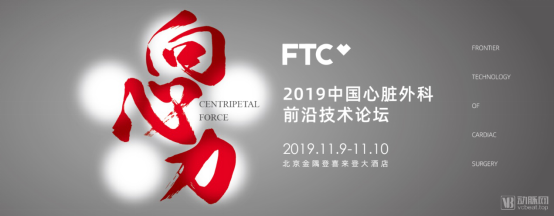
Forum Official Website Link:https://vcbeat.top/FTC2019