

Apple Watch Series 5 Steals the Spotlight at Apple’s Fall Launch: Tracing Apple’s Ambitious Five-Year Leap into Digital Health
Apple
Designers, manufacturers, and sellers of electronic products such as personal computers and software
At 1 a.m. today, Apple held its fall product launch event at the Steve Jobs Theater on its U.S. campus.
Cook took the stage, wearing a black sweater and holding a presentation clicker in his hand. Standing at the center of the stage, he wore his usual gentle yet determined expression.
The event showcased the three models of the iPhone 11 series, which had lost their novelty, along with the slightly updated entry-level iPad and Apple Watch.
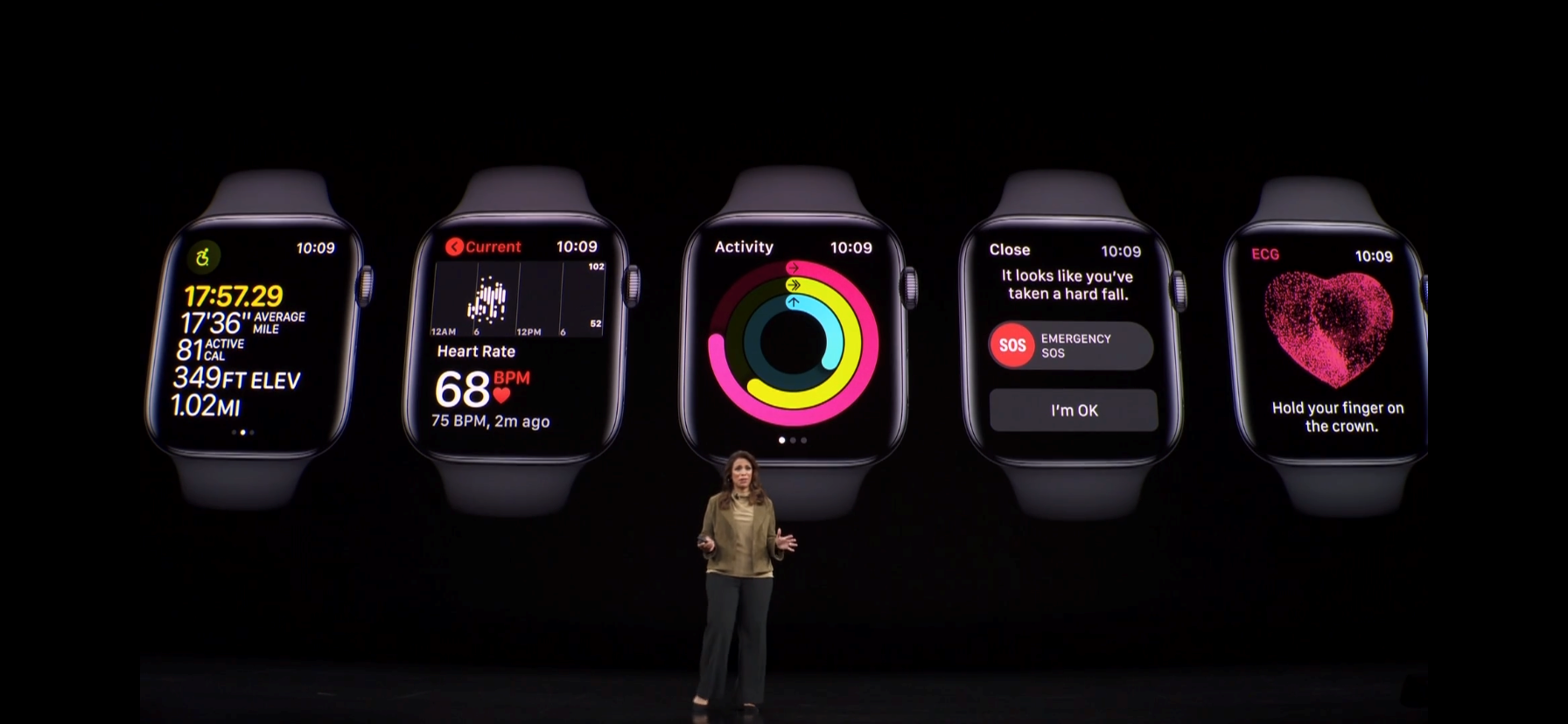
The Apple Watch update was undoubtedly the highlight of this event, with Apple specially preparing three short videos to spend nearly half an hour detailing the health protection it brings to users.
Elderly individuals who suffered accidental falls received timely treatment thanks to the smartwatch’s automatic monitoring and alert system; a pregnant woman detected an arrhythmia, with her heart rate soaring to over 200 beats per minute, and sought immediate medical care, ensuring the safety of both mother and child; and individuals with excessive body weight adopted healthier lifestyles prompted by the device’s activity reminders. All these benefits were delivered by a single smartwatch.
Following the opening story, Apple introduced three new major research directions in the health sector beyond its cardiac studies.
The Apple Heart Study, launched in 2017, has tracked and investigated irregular heartbeats and atrial fibrillation in more than 400,000 participants. The Apple Watch Series 4 enables heart rate and electrocardiogram (ECG) monitoring. This study was conducted primarily in collaboration with the American Heart Association and specialist physician associations.
The first of the three newly added research directions is hearing health, which enables real-time noise measurement via Apple Watch and provides alerts when noise levels are excessively high to prevent hearing damage. This initiative was launched by Apple in collaboration with experts from the University of Michigan and the World Health Organization (WHO).
The second initiative is women’s health research, which incorporates the latest menstrual cycle tracking functionality and will focus on conditions such as infertility and osteoporosis. This study will be conducted in collaboration with the Harvard T.H. Chan School of Public Health and the National Institutes of Health.
The third study has been expanded from cardiac research to encompass both cardiac and exercise physiology, aiming to track warning signs of heart health and identify methods to improve overall well-being. The study participants include the American Heart Association and Brigham and Women’s Hospital.
The newly released Apple Watch Series 5 primarily features two key updates: an "always-on" display and a built-in compass. The built-in compass enables real-time recording of altitude, latitude, longitude, and incline, and can be directly integrated with health features such as Medical ID, SOS, and fall detection, allowing users to access emergency assistance more quickly and effectively.
In terms of health and wellness, this watch constantly looks out for your heart by quickly measuring your heart rate and alerting you when it is too high or too low. It also notifies you when noise levels exceed safe limits; with the all-new Noise app, you receive thoughtful alerts when ambient decibel levels rise high enough to potentially affect your hearing. The updated Cycle Tracking app makes recording menstrual cycles easier than ever. Additionally, the watch features advanced fitness metrics suitable for everyone from beginners to professional athletes. The Activity rings track your progress, encouraging you daily to sit less, move more, and exercise regularly, while also allowing you to challenge friends and compete.
Upon a thorough understanding of the Apple Watch’s capabilities, one realizes that its functions have long transcended the realm of consumer electronics. By collaborating with professional medical institutions and conducting in-depth research on the impact of smartwatches on health, Apple has entered the healthcare sector. This expansion suggests, to some extent, that the tech giant is shifting its strategic focus, with healthcare poised to be its next major frontier.
“What is Apple Inc.’s greatest contribution to humanity?”
“If you stand in the future and look back, it will be about health,” said Apple CEO Tim Cook in an interview with CNBC reporters this January.
As a tech giant with over 40 years of history and a market capitalization approaching $1 trillion, Apple is recalibrating its course. Judging from its recent moves, healthcare is the destination toward which this corporate leviathan is steering.
In late July, Apple released its fiscal 2019 third-quarter earnings report, with figures that took Wall Street analysts by surprise. The company reported net revenue of $53.81 billion and net income of $10.04 billion for the quarter, significantly exceeding prior expectations. “This was Apple’s best-performing third fiscal quarter in history,” CEO Tim Cook stated during the post-earnings conference call.
Notably, iPhone sales accounted for 48% of Apple’s total revenue this fiscal quarter, marking the first time in seven years that the segment’s revenue share has fallen below 50%. Meanwhile, the “Wearables, Home and Accessories” category generated $5.5 billion in revenue this fiscal quarter, representing a surging year-over-year growth rate of 48%.
What many may not realize is that the Apple Watch, which sits at the core of this category, has long ceased to be merely a consumer electronics product. It is an FDA-cleared device capable of acquiring medical data and facilitating health management. The Apple Watch reveals Apple’s strategic pivot toward healthcare, a direction that first became clearly evident as early as 2014.
Compared to Apple’s core smartphone market, healthcare is a vastly larger market. According to data from Deloitte’s “2018 Global Health Care Outlook” report, the global healthcare market reached $7 trillion in 2015, accounting for nearly 10% of global GDP. By 2020, total healthcare expenditure in major regions worldwide was projected to rise to $8.7 trillion.
This represents a massive market opportunity not only for Apple, but also for other internet giants such as Google, Microsoft, Alibaba, and Tencent, all of which have long since established their strategic footholds.
As the smartphone market gradually declines and new technologies such as artificial intelligence, cloud computing, and 5G reach a historical tipping point of explosive growth, Apple’s pivot toward healthcare may seem unexpected to many, yet it is entirely logical upon closer analysis.
Where will Apple go in the future? No one can say for sure.
In the two years prior to founding Apple, Jobs traveled to India alone. He went there specifically to pay homage to a Hindu saint, traveling down the Yamuna River. Upon arriving at his destination, Vrindavan, he discovered that the saint had already passed away.
Later, recalling this experience, Jobs said: “It was called a pilgrimage, but at the time we didn’t know where we were going.”
Apple’s annual Worldwide Developers Conference (WWDC) is its marquee event of the year. The conference, which first took place in 1983, required attendees to sign non-disclosure agreements. To prevent media and public disclosure, developers were restricted to observing and listening only, making the event resemble a secret ritual.
Over time, this event gradually evolved into Apple’s new product launch keynote, becoming a highly anticipated spectacle in the tech industry. A review of the promotional taglines used each year reveals that words such as “Innovation,” “Inspiration,” “Greatness,” and “Disruption” appear most frequently.
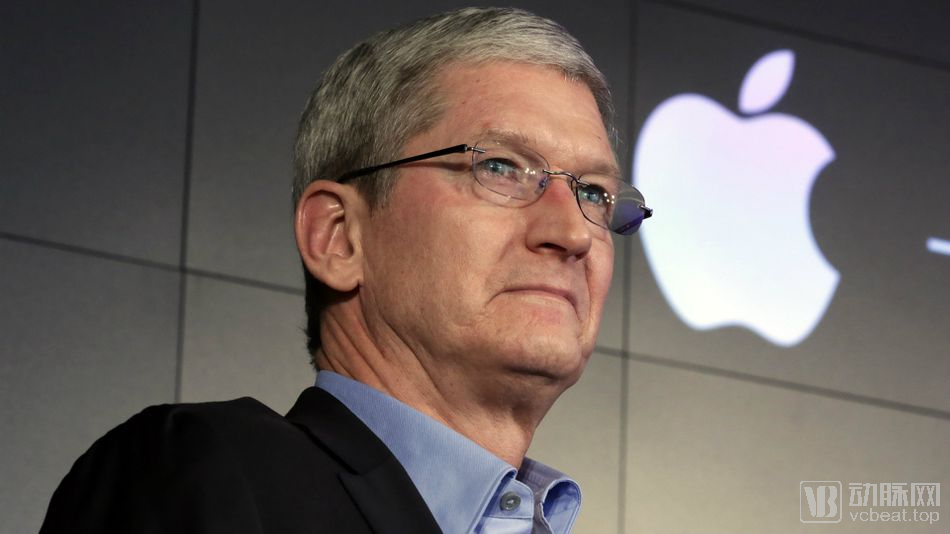
Image source: mashable.com
At the 2014 WWDC, Tim Cook arrived at the conference venue wearing a black shirt. The lights in the auditorium were dimmed, with only spotlights illuminating the stage. After applause, he began his keynote address.
“This is a milestone year,” said Cook.
At the conference, Apple unveiled its next-generation mobile operating system, iOS 8, along with the new Mac OS X Yosemite, and launched HealthKit, a mobile health application platform. The introduction of HealthKit came as a major surprise to many.
Although there have been frequent reports that a large number of scientists, engineers, biomedical technology experts, and consumer fitness equipment managers have jumped ship to Apple, with even authoritative media providing more detailed coverage. The report revealed that Apple’s Senior Vice President of Operations, Jeff Williams, has met with then-FDA Commissioner Dr. Margaret Hamburg and Dr. Jeffrey Shuren, who is responsible for regulating medical device approvals at the agency, to “discuss issues related to mobile medical applications.”
But it was not until the official launch of HealthKit that people came to believe in Apple’s foray into healthcare.
HealthKit can connect to sensors on the phone (such as the gyroscope that counts steps) and third-party products from companies like Nike, Fitbit, Wahoo, and Withings, displaying all information on the same phone through an easy-to-read data hub interface.
In layman's terms, HealthKit is an open software platform for third-party developers that provides data storage and aggregation services. Users can obtain physical and physiological data through compatible hardware devices and submit it to the platform for analysis.
The advantages of HealthKit are evident: it establishes a health data platform connecting users, healthcare institutions, and developers, fundamentally transforming how the health industry interacts with individuals.
Such a cross-industry move has naturally sparked considerable attention and discussion. A physician raised a question to Apple Inc.: “People are entrusting all their data to you now. Of course, the more data, the better, but how do you utilize it? After all, this is not music, not books, nor apps.”
The year Apple extended its reach into the healthcare sector was dubbed the “Year One of Mobile Health” by China’s domestic industry.
At that time, light consultation platforms operated by internet companies garnered widespread attention in China. As a typical representative, Chunyu Doctor secured $50 million in Series C financing in 2014.
Lei Jun, known in the industry as “Lei Bus,” has invested through Xiaomi Technology and Shunwei Capital in a number of healthcare and medical companies, including Huami Technology, Andon Health’s iHealth, and HardPai Fitness.
Since the release of HealthKit, Apple has taken annual initiatives in the healthcare sector. At the subsequent autumn launch event, the Apple Watch was unveiled, with its design and pricing fundamentally reshaping public perceptions of smartwatches. The Apple Watch focuses on health monitoring and reminders, and comes pre-installed with multiple healthcare and medical apps.
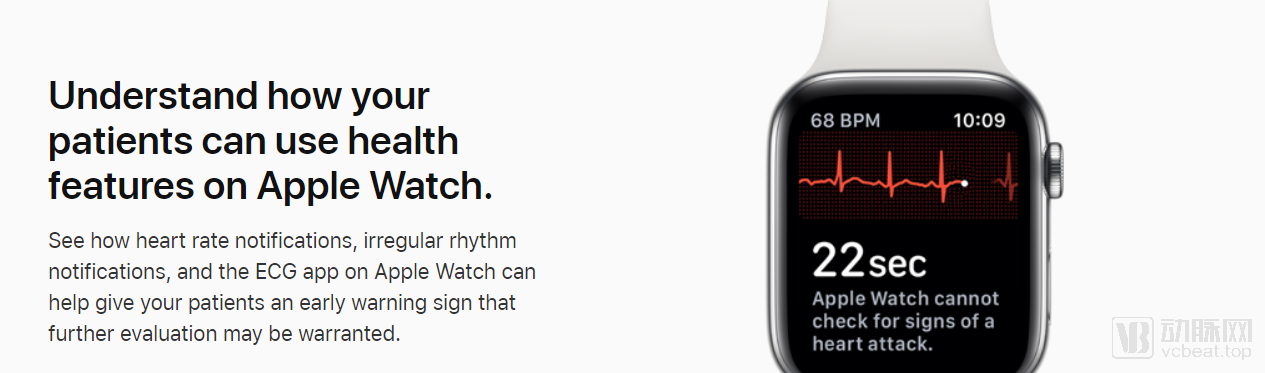
Image source: Screenshot from Apple's official website
Around the time Apple launched the Apple Watch, the global wearable device market had already begun to experience rapid growth. In China, Xiaomi released the first-generation Mi Band that same year.
Most of these wearable devices are equipped with a rich array of built-in sensors while maintaining a compact form factor and high portability. They can monitor and analyze multiple physical metrics, including physical activity levels, sleep quality, heart rate, blood glucose, and blood pressure, thereby facilitating the effortless accumulation of extensive health data.
However, no matter how much data is available, it holds little value without analysis by professional healthcare providers. How will Apple leverage the vast amount of user-accumulated data?
Apple Makes Another Move, Launching Open-Source Framework—ResearchKit.
In March 2015, Apple launched its new medical application platform, ResearchKit. On the surface, ResearchKit resembles HealthKit, which was released in June of the previous year, as both can collect and analyze users’ health data. However, ResearchKit represents a significant breakthrough over HealthKit by shifting its focus squarely to the medical field, bridging the gap between the 700 million iPhone users on one end and hospitals on the other.
Upon its launch, ResearchKit partnered with numerous renowned medical institutions worldwide to develop the first five apps using the ResearchKit framework: mPower for Parkinson’s disease, GlucoSuccess for diabetes, MyHeart Counts for cardiovascular health, Asthma Health for asthma, and Share the Journey for breast cancer.
Since then, Apple has continued to innovate around the Apple Watch.
As the product undergoes successive iterations and evolution, the Apple Health team, operating behind the scenes, has also begun to gain public recognition.
Among Apple’s current 130,000 employees, although it is unclear how many are engaged in healthcare-related work, certain personnel moves do leave a trace.
Divya Nag, the current Director of the Apple Health Team, leads initiatives such as ResearchKit. Nag’s career path is legendary, resembling an American novel. While attending Stanford University in her teens, she devoted herself to research in stem cell biology and regenerative medicine. At the age of 20, she dropped out to found a biotechnology company focused on extracting stem cells from skin, and later established a digital health accelerator. Nag joined Apple at just 23 years old. She now oversees multiple projects at Apple and is regarded as a star member of the team.
In 2017, Apple made significant moves in the healthcare sector, not only acquiring Beddit, a smart hardware company specializing in sleep monitoring, but also substantially expanding its team by recruiting numerous executives from the medical industry.
And the person behind all this is Apple’s COO, Jeff Williams. According to CNBC, in 2016, after recognizing the significant impact of health on users, it was Williams who drove Apple’s health team to explore sensors and algorithms in the medical healthcare field.

Sumbul Desai Image source: CNBC
In 2017, Sumbul Desai, a senior internist and faculty member at Stanford University, joined the Apple Health team. Prior to joining Apple, she was a professor at Stanford University. At Stanford, she not only initiated programs aimed at helping enterprises develop digital health tools but also founded ClickWellCare, a telemedicine project designed to provide users with health information via phone or video consultations. Desai currently serves as Vice President of the Apple Health team, overseeing a series of major initiatives.
In an interview with the media outlet mobihealthnews this February, Desai said, “Healthcare is a field worthy of our dedication and efforts to drive change; in a way, it is like a mission that drives us. Democratizing data and healthcare is something that benefits human well-being.”
During Desai’s first year on Apple’s Health team, Apple continued to advance multiple health-related applications for the Apple Watch, ranging from feature upgrades to clinical research.
A close examination of Apple’s healthcare strategy at this stage reveals two primary initiatives: building an interoperable data platform and upgrading metric monitoring centered on the Apple Watch.
CareKit, unveiled at Apple’s spring 2016 event, together with the previously launched HealthKit and ResearchKit, aims to transform the iPhone into a personal hub for comprehensive medical information. Meanwhile, the Apple Watch sits at the core of Apple’s health and healthcare ecosystem, seeking to penetrate the central aspects of medical care through the monitoring of various health metrics.
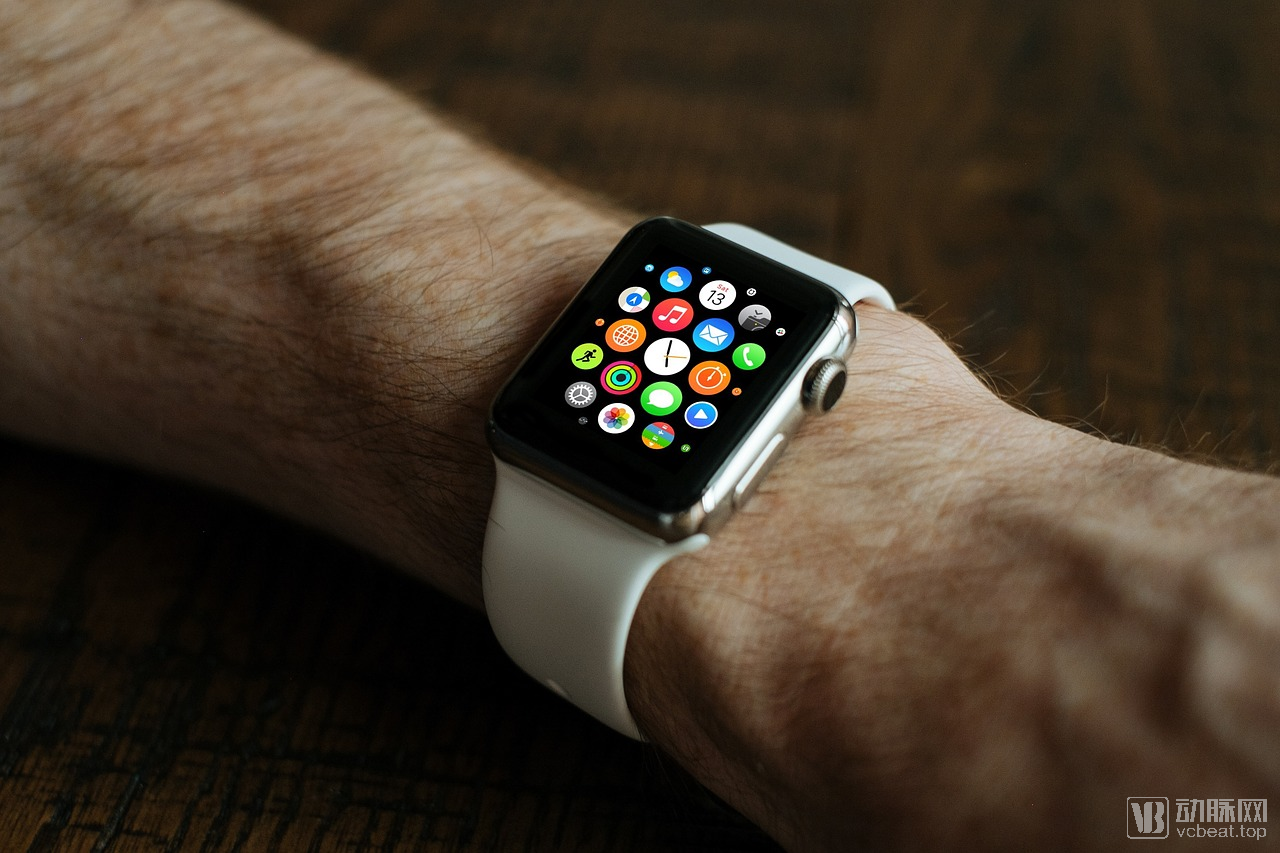
Image source: https://pixabay.com
At first glance, Apple’s ambitions are considerable.
But in reality, Apple’s continuous expansion into the healthcare sector is driven by circumstantial pressures.
As tech giants continue to encroach on Apple’s territory—with Google applying increasing pressure in the smartphone sector and Amazon achieving growing breakthroughs in home hardware—Apple has recognized that healthcare can help differentiate its products and build a competitive moat. This strategy supports core objectives such as driving sales of high-margin hardware and reducing switching costs within its ecosystem.
Furthermore, Apple can leverage healthcare as a means to establish a new ecosystem for its products that differs from previous ones.
What a brilliant move!
2018 was an unprecedented year for Apple. In August, Apple’s market capitalization surpassed the $1 trillion mark, with a scale roughly equivalent to two times that of Alibaba, 30 times that of Baidu, and 2,500 times that of Sohu.
This year, Apple’s products also ushered in a revolutionary breakthrough.
In January 2018, as part of the iOS 11.3 beta, Apple announced its plan to integrate patient health records—including data on allergies, immunizations, and laboratory results—into its Health app. The initiative was launched at 12 pilot hospitals, including leading healthcare providers such as Geisinger in Danville, Pennsylvania, and Johns Hopkins Medicine in Baltimore. At that time, more than 100 hospitals and clinics had adopted this feature.
In addition to medical devices, Apple also partners with third-party clinical laboratories such as LabCorp and Quest Diagnostics to directly import patients’ diagnostic results into the Health app on iPhone as part of its health records feature.

Health App Interface for Apple iPhone Users
At the new product launch event last September, the Apple Watch was unveiled, capable of reading electrocardiogram (ECG) data from the wrist to help wearers identify signs of atrial fibrillation, and equipped with fall detection and immediate alert features.
The news that stunned the audience is that the over-the-counter electrocardiogram (ECG) feature on the Apple Watch has received FDA approval.
This signifies that Apple has completed its transition from consumer electronics to health products and clinically viable devices, quietly establishing a preliminary smart healthcare ecosystem.
For Apple, this represents a major breakthrough. However, from the perspective of the healthcare industry, Apple’s innovation may have only scratched the surface.
Despite Apple’s extensive efforts in personal health data, electronic medical records, and even academic research, its foray into the core of healthcare—the diagnosis and treatment process—still appears to be rather marginal.
Even compared with other tech giants, Apple’s innovation holds no distinct advantage. According to CB Insights data, Google’s healthcare ecosystem already spans multiple stages of the care journey, including new drug development, medical devices, pharmaceutical distribution, patient management, and telemedicine. This value chain is further empowered by Google’s cutting-edge technologies in AI and machine learning.
Leveraging its online retail expertise, Amazon developed the AI assistant Alexa to strengthen its presence in smart health hardware.
Microsoft has shifted its focus from the consumer market to the business sector, developing medical robots for healthcare institutions while achieving significant breakthroughs in the field of precision medicine.
“Even a super-great company like Apple cannot single-handedly accomplish such a monumental undertaking as disrupting healthcare.”
Erik Gordon, a professor at the University of Michigan’s Ross School of Business, has stated that the challenges in the healthcare sector are vast and complex, involving the interplay of various stakeholders’ interests, and cannot be resolved by industry companies alone. The critical task for large technology companies lies in cultivating a profound understanding of these complex healthcare issues.
Many companies with strong technical capabilities and technological competitiveness have failed because they underestimated the complexity of issues in the healthcare industry.
Apple, the pioneer of the mobile internet era, has made breakthroughs in healthcare but also appears to have encountered challenges.
In August 2019, news of the mass departure of Apple’s health team members seemed to underscore the company’s predicament.
According to a recent CNBC report, Apple’s healthcare team has undergone a series of leadership changes and internal disagreements over strategic direction in the past year, leading to significant employee turnover. The report revealed substantial divisions within Apple’s health team regarding its long-term vision.
Some believe that the team should expand its portfolio of medical projects, such as developing products targeted at specific diseases. Other employees advocated focusing on telemedicine services and entering the healthcare payment sector to streamline insurance billing, but this proposal was rejected.
Apple’s products and services are largely focused on population health and prevention. Compared with disease diagnosis and treatment, the population health business carries lower risk and faces less regulatory oversight. This is likely Apple’s primary consideration.
"Those who follow different paths cannot plan together."
According to LinkedIn, Charles Schlaff, who was responsible for Apple Watch-related matters, left in November 2018; Craig Mermel, who oversaw health software operations, left Apple this February to join Google Brain; and Yoky Matsuoka, currently a Vice President at Google, previously worked on Apple’s health team.
Digitalization and intelligence are undoubtedly the most exciting and profound transformations in the healthcare sector over the coming decades, and they will inevitably accelerate the realization of healthier lives and more inclusive healthcare—two shared ideals of all humanity.

Image source: Apple's official website
Judging from Apple’s moves in recent years, the company appears to be attempting to blur the line between health and healthcare. By breaking down the “data silos” separating personal health records from patient data platforms, it would empower patients to make informed decisions and grant data access to anyone they choose. This represents a fundamentally different model of healthcare, one in which patients wield increasing knowledge and agency in decision-making.
“Medical records can be managed by a digital hub, just as iTunes centrally manages music,” said an executive in Apple’s health division during an interview with the media.
This May, Apple reaped the fruits of seeds sown two years ago.
According to data from the European Patent Office database cited by Patently Apple, Beddit, a company acquired by Apple in 2017, has been granted a patent for an in-bed health sensor system.
The patent document describes a method for monitoring a user’s health status during sleep. Upon detecting abnormal data, healthcare service providers can offer recommendations to improve the user’s condition through various potential channels, including phone calls, video calls, and EHR alerts.
Apple’s earnings report released in late July revealed that the company has found a new growth engine. While its iPhone business declined, the “Wearables, Home and Accessories” category generated $5.5 billion in revenue this fiscal quarter, marking a 48% year-over-year increase. New users accounted for 70% of Apple Watch buyers, making it one of Apple’s products with the highest proportion of first-time customers.
At last night’s Apple event, although the newly launched Apple Watch 5 did not feature breakthrough advancements in medical capabilities, the contribution of Apple Health Research, mentioned at the event, to medical research was impressive.
Apple’s future healthcare research will focus primarily on three areas: hearing, women’s health, and heart health.
Amid the era’s labyrinth, Apple, this colossal vessel, appears to have found its course.
For more information on the press event, scan the QR code below to access the Special Report Pro and learn about all of Apple’s new initiatives related to healthcare.

References:
1. “Multiple Key Executives in Apple’s Healthcare Division Resign Amid Senior Leadership Disagreements Over Future Prospects,” Tencent Securities, August 2019
2.《5 names to know at Apple: the people leading its move into health care》,statnews,2019-4
3. "Steve Jobs," Walter Isaacson, 2011
4.《Tim Cook: Apple’s greatest contribution will be ‘about health’》,CNBC,2019-1
5.《Apple’s health strategy: Democratizing health information》,mobihealthnews,2019-2
6. “2018 Global Health Care Outlook,” Deloitte, April 2018