

UK-CD Wuhou District Digital Health Partnership Advances Next-Gen Primary Care with High Quality and Low Cost
From September 3 to 5, 2019, Mr. Ash Green (Ge Rui), Commercial Consul at the British Consulate-General in Chongqing, led a UK digital health delegation to Wuhou District, Chengdu, to foster greater collaborative achievements between Chengdu and the United Kingdom in the field of primary healthcare services.
On September 5, the “China-UK Joint Innovation Exchange Meeting on Primary Healthcare and the Big Health Industry Cooperation Summit,” guided by the Chengdu Municipal People’s Government and hosted by the Wuhou District People’s Government of Chengdu, was held in Wuhou. Attendees included Jing Jing, Deputy Mayor of Chengdu; Zhang Feng, Deputy Inspector-General of the Chengdu Municipal Health Commission; Pan Hong, Member of the Standing Committee of the CPC Chengdu Wuhou District Committee and Head of the Publicity Department of the CPC Wuhou District Committee; Alice Pegg, Consul General of the British Consulate-General in Chongqing; and Zhuang Tianman, Head of Digital Health for China at the UK Department for International Trade.
At the meeting, the Wuhou District People’s Government and NHS England signed the “Memorandum of Understanding on Primary Care Innovation.”
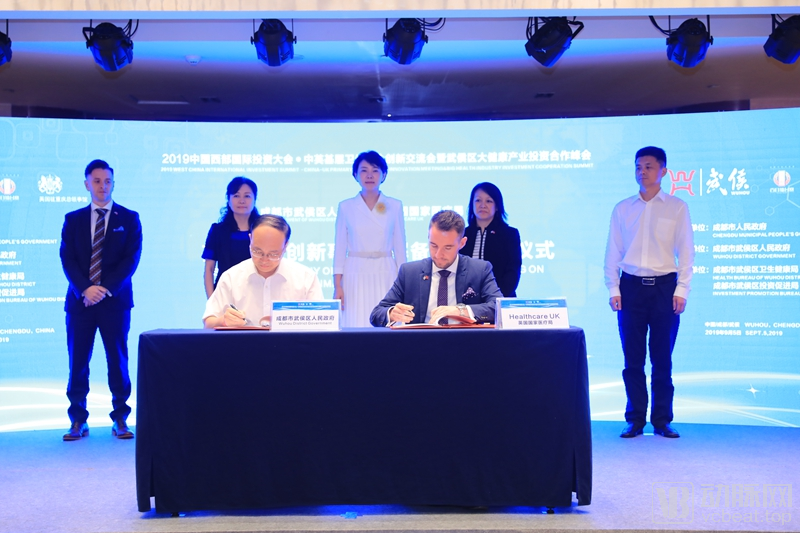
Following the signing of the memorandum, both parties will join forces to drive innovation in Wuhou DistrictNext-Generation Primary Healthcare Pilot Projects and Related Industrial Incubation InitiativesThrough this collaboration, NHS England and the Wuhou District People’s Government will jointly promote exchanges of digital health technologies between China and the United Kingdom, support the establishment of a China-UK Digital Health Technology Incubator, facilitate the integration of UK primary care-related technologies, and advance the localization and industrialization of UK technologies in Wuhou District.
Sichuan Provincial Health Center and the Wuhou District Health Bureau of Chengdu signed the "Strategic Cooperation Agreement for the International Innovation Center for Primary Healthcare."
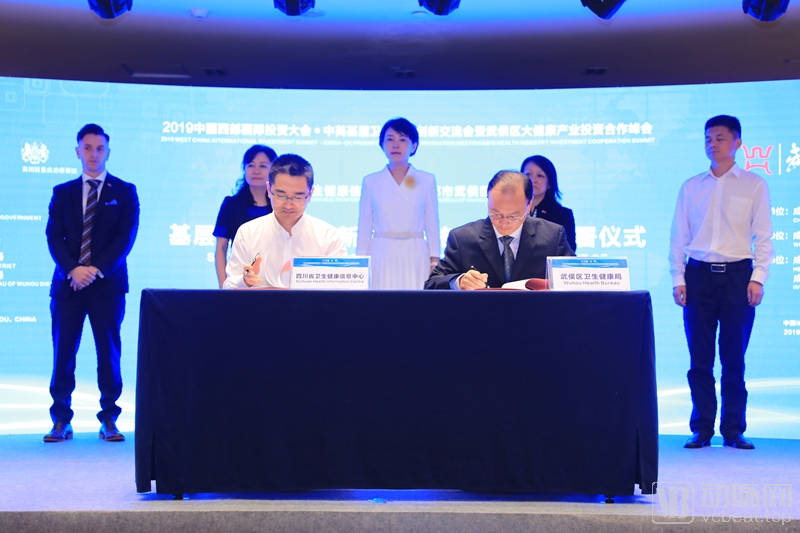
Following the signing of the agreement, both parties will leverage family doctor contracted services as a key initiative to introduce internationally advanced evidence-based medicine, big data, and artificial intelligence technologies. This collaboration aims to facilitate the translation of scientific and technological achievements in primary healthcare informatics and jointly conduct top-level design for next-generation primary healthcare informatization based on medical principles.
Meanwhile, the Fengshu Primary Care Research Center in Wuhou District signed project cooperation agreements with three UK companies: Nine Health, London Imaging Network, and Xycare.
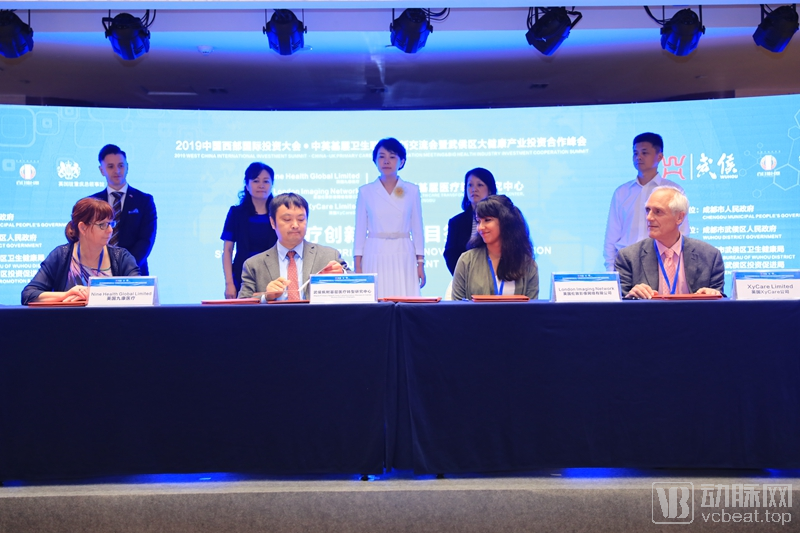
Following the signing of the agreement with Nine Health, UK resources will be introduced to design the next-generation primary care incubator, and high-quality UK medical resources and corporate projects will be brought into Wuhou District. After signing with the London Imaging Network, the focus will be on providing consulting services for a pilot project on breast cancer screening. Upon signing with Xycare, consulting services will be provided with a focus on primary care services tailored for China, including code-based electronic health record (EHR) system architecture, clinical referral decision support system design, diabetes management workflows, and related e-prescribing solutions.
Alice Ip, British Consul General in Chongqing, stated, “It is a great pleasure to witness the signing of cooperation agreements between the Chinese and British governments as well as business institutions today. To address the shared global healthcare challenges of the future, we hope that China and the United Kingdom will engage in deep, comprehensive cooperation, leveraging their respective strengths to meet the diverse needs for medical services and jointly drive the advancement of the healthcare industry.”
It is understood that after decades of development, developed countries such as the United States and the United Kingdom have established relatively mature primary healthcare systems. Both the family physician system in the United States and the general practitioner system in the United Kingdom are renowned for the quality of their primary care services.
The primary care systems in the United Kingdom and the United States rely heavily on highly qualified, high-cost physicians, making it difficult for developing countries such as China to replicate and scale this model. In response, China’s Barefoot Doctor system leveraged state power to achieve low-cost universal health coverage and essentially established a grassroots healthcare service network, once serving as a WHO-recommended global model.
As the population ages, healthcare demands in countries around the world are shifting. China’s barefoot doctor system is grappling with the pain point of insufficient service quality, while the current primary care systems in the UK and the US face challenges such as high per capita healthcare costs and sustained cost inflation. Countries worldwide are exploring next-generation primary care delivery models.
The rise of digital health technologies, represented by big data, artificial intelligence, and mobile health, has become a powerful tool for building a next-generation primary healthcare system that is lower in cost and higher in quality.
A high-quality, low-cost primary care system is a goal pursued by every country. In the United States, the Patient-Centered Medical Home (PCMH) reform movement has emerged in primary care, leveraging health information technology to guide family physicians toward population health management, team-based care, and coordinated services, with the aim of shifting the healthcare system from a disease-centered model to a health management-centered one. The UK’s National Health Service (NHS) has also begun promoting de-hospitalization and launching a national-level transformation toward digital healthcare service models.
In 2013, Wuhou District began to draw on the U.S. Patient-Centered Medical Home (PCMH) model and engaged in in-depth cooperation with the United States in the field of primary care transformation. This collaboration attracted the attention of the British Consulate-General. In 2018, UK representatives conducted multiple site visits to Wuhou District and expressed strong interest in its primary care transformation efforts.
In May 2019, the British Consulate-General in Chongqing organized the first UK delegation of primary healthcare technology firms to visit the Sichuan Provincial Health Commission and Wuhou District for inspections and exchanges, exploring Sino-UK cooperation in primary healthcare. On June 17, Xie Ruiwu, Deputy Mayor of Chengdu, led a delegation including the district heads of Wuhou and other districts to attend the Sino-UK Primary Healthcare Technology Symposium hosted by NHS England in London. At the event, Chengdu’s primary healthcare technology enterprises signed the first batch of primary healthcare cooperation agreements with multiple UK companies, proposing an initiative for joint Sino-UK innovation in developing a third-generation primary healthcare service system.
During a subsequent visit to the Chair of NHS Digital and the Head of Healthcare UK by a Chengdu-based primary care technology enterprise, the initiative received a positive response from the UK side. This facilitated a follow-up visit in September this year, culminating in the signing of an agreement.
In 1948, the United Kingdom established the National Health Service (NHS). As the largest publicly funded healthcare system in Europe, it primarily raises medical funds and covers healthcare costs through the national budget. Individuals with legal residency status are entitled to free medical care, regardless of their social status or wealth. The World Health Organization (WHO) regards the NHS as one of the best and most equitable healthcare systems in the world.
For over 70 years, the NHS has accumulated extensive experience and expertise in clinical care, infrastructure, education and training, digital health, and big data analytics. The UK government recently announced a £250 million investment in the NHS to establish a National Artificial Intelligence Laboratory, dedicated to developing innovative technologies for cancer, dementia, and heart disease.
“China’s primary healthcare system has many areas that need improvement,” said Liu Jingwei, Chairman of the Wuhou District Fengshu Primary Healthcare Transformation Research Center. He noted that there are four aspects of the NHS worth learning from for China:
General Practitioner SystemThe NHS’s general practitioner (GP) system enjoys a high global reputation and serves as a model for other countries. Its core strategies include: universal patient registration with GPs, health risk stratification of registered patients by GPs, and strengthening the GP gatekeeper role through a primary care-first consultation system.
Application of Evidence-Based Medicine. The NHS has established the National Institute for Health and Care Excellence (NICE) to be specifically responsible for developing evidence-based clinical pathways, providing informational support to standardize these pathways, and promoting the widespread application of evidence-based medicine at the primary care level, thereby ensuring the standardization, normalization, and service quality of primary healthcare.
General Practice Service PurchaseThe NHS established the Quality and Outcomes Framework (QOF), a quality standard system for primary care in the UK, purchasing general practitioner services based on QOF assessment results to ensure the quality of primary healthcare. The QOF includes both clinical indicators and public health indicators, accumulating extensive experience in quality-based performance assessment and incentive mechanisms for general practitioners.
Unified Information Operations. Establish NHS Digital to assume unified responsibility for the construction, operation, and interoperability of primary care informatization across China, build a nationally unified electronic referral platform, prescription circulation platform, and health screening platform, and provide national-level operational services for primary care informatization.
Liu Jingwei stated, “These four areas are currently relatively scarce in China, and can be rapidly implemented and yield results after introduction.”
Wuhou District in Chengdu has undertaken two national pilot reform tasks: the general practitioner service model and the comprehensive reform of primary healthcare. After years of development, Wuhou District has established the foundation and resources necessary to adopt and adapt advanced experiences and technologies from developed countries in primary healthcare. This agreement signing marks the first step in China-UK cooperation, with Wuhou District and the UK set to further explore specific areas of collaboration.
Deep China-UK cooperation in primary healthcare can leverage the UK’s technological strengths in evidence-based medicine and artificial intelligence, along with China’s market scale and late-mover advantages in primary care, to build next-generation primary healthcare infrastructure and facilitate the transformation and upgrading of primary healthcare institutions in Sichuan and central and western China.
The UK is home to more than 500 digital health companies, with research fields that are both broad and deep. The British companies visiting Wuhou District this time cover areas such as digital healthcare, artificial intelligence applications in healthcare, chronic disease management, clinical decision support systems, medical diagnostics, big data analytics in healthcare, and electronic health records. Liu Jingwei stated, “As China-UK cooperation continues to deepen, we will collaborate with more British companies to build a new generation of primary healthcare systems.”
Liu Jingwei stated, “I believe that within the next three years, China and the UK will yield numerous outcomes in their cooperation on primary healthcare services.” It is hoped that this collaboration will help establish a new generation of primary healthcare systems in western China, improve the quality and efficiency of primary care services, and foster the robust growth of the emerging primary healthcare service industry.
Liu Jingwei further remarked, “Primary healthcare must truly reach the front lines, extending from the national level down to provinces, cities, communities, and finally townships, in order to effectively implement the primary healthcare system. Therefore, although we have currently put forward a highly forward-looking development goal, I am fully aware that this endeavor is extremely challenging and will require tremendous effort.”
It is reported that, in addition to visiting Chengdu, the UK digital health delegation also visited Shanghai and Wuxi, attending the World Artificial Intelligence Conference in Shanghai. Next, the delegation will participate in the World Internet of Things Exposition in Wuxi, showcasing the UK’s innovative technologies and achievements in digital healthcare to industry professionals worldwide.