

JunLian Healthcare Global Drug Pipeline Update – Issue 21 (September 2–8, 2019)
Sep 09, 2019 11:23
CST Updated
11:23

Sep. 2–8, 2019: A total of seven new drug data entries were recorded this week, including three in cardiovascular diseases, and one each in dermatology, anti-infectives, immunology, and the urinary system.
❖The JAK-STAT signaling pathway has broad functional applications, leading many companies to concentrate their development efforts in this area. With six products already launched globally (primarily for rheumatoid arthritis and myelofibrosis), patents held by major pharmaceutical giants (such as Pfizer, Gilead, and Eli Lilly), and the evolution toward second-generation agents (shifting from pan-JAK inhibitors to selective JAK inhibitors), how Chinese enterprises can achieve differentiation, navigate around existing patents, and select optimal first-line indications will soon become pressing practical challenges.
❖Sumitomo Pharma of Japan is expected to acquire the equity interests in five subsidiaries under Roivant Sciences for a $3 billion upfront payment. Vivek Ramaswamy, the founder of Roivant, has emerged as a polarizing and enigmatic figure in the biotechnology sector over the past five years. He has raised more than $2 billion in recent years, with his core strategy focusing on establishing separate subsidiaries in various therapeutic areas and licensing in corresponding products. Unlike Vertex Pharmaceuticals’ high-stakes acquisition of Semma Therapeutics—a gamble that promised substantial IPO gains if successful but carried significant downside risk—Sumitomo’s approach appears more akin to seeking stability amid uncertainty. As for the outcome, let time do its job.
❖In oncology drug development, it has long been said that those who conquer lung cancer conquer the field. The World Conference on Lung Cancer (WCLC) has already convened, and next week we will launch a special feature on lung cancer to focus with our readers on the latest frontier advances in this area.
Concert Pharmaceuticals’ JAK1/2 Inhibitor Announced in Treatment
Phase 2 Results in Patients with Severe Alopecia Areata Show Significant Symptom Relief
Concert Pharmaceuticals Announces Phase 2 Clinical Trial Results of CTP-543, a JAK1/2 Inhibitor in Development for the Treatment of Patients with Moderate-to-Severe Alopecia Areata
CTP-543 is a drug developed by Concert Pharmaceuticals for the treatment of alopecia areata, and it is a deuterated form of ruxolitinib.
Phase 2 trial, placebo-controlled, two dose groups (8 mg per dose or 12 mg per dose)
Compared with placebo, twice-daily administration of CTP-543 resulted in significant symptom relief in more than 50% of patients after 24 weeks.
Genentech Announces Its New Anti-Influenza Drug Xofluza (Baloxavir Marboxil),
Positive Results Achieved in Phase 3 Clinical Study for Influenza Prevention
Genentech, a member of the Roche Group, announced that its new anti-influenza drug Xofluza (baloxavir marboxil) achieved positive results in Phase 3 clinical trials for influenza prevention.
Baloxavir marboxil is a single-dose oral medication that inhibits viral replication by targeting the cap-dependent endonuclease of the influenza virus.
BLOCKSTONE is a randomized Phase 3 post-exposure prophylaxis study involving family members of patients with influenza.
Compared with the placebo group, prophylactic treatment with baloxavir marboxil after exposure to an infected household member reduced the risk of influenza by 86%.
Ardelyx Announces Investigational Drug Tenapanor for the Treatment of Hyperphosphatemia in Dialysis Patients
in the pivotal Phase 3 trial, met the primary and all secondary endpoints
Ardelyx Announces That Its Investigational Drug Tenapanor Met Primary and All Secondary Endpoints in a Pivotal Phase 3 Trial for Treating Hyperphosphatemia in Dialysis Patients, Significantly Reducing Serum Phosphate Levels When Used in Combination with Phosphate Binders
Ardelyx’s investigational new drug, tenapanor, is an inhibitor of the sodium-hydrogen exchanger 3 (NHE3) in the gastrointestinal tract.
A total of 236 patients with chronic kidney disease (CKD) undergoing hemodialysis were enrolled in this randomized, double-blind, Phase 3 trial. All participants had serum phosphorus concentrations ≥5.5 mg/dL and ≤10.0 mg/dL.
Compared with phosphate binder monotherapy, combination therapy with tenapanor and a phosphate binder significantly reduced serum phosphorus levels, with approximately twice as many patients achieving the therapeutic target of <5.5 mg/dL each week.
Mechanism of Action of Tenapanor
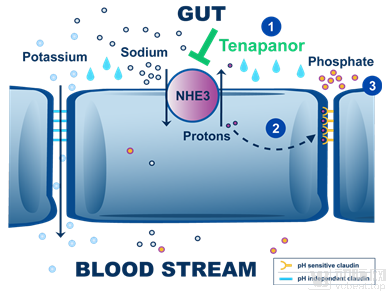
Data Source: Ardelyx
AstraZeneca announced detailed results from the Phase 3 THEMIS clinical trial,
Ticagrelor can significantly reduce the relative risk of cardiovascular events
AstraZeneca Announces Detailed Results from Phase 3 THEMIS Trial: Combination Therapy with Ticagrelor and Aspirin Significantly Reduces Relative Risk of Cardiovascular Death, Heart Attack, and Stroke
Ticagrelor is an orally administered, reversible antagonist of the adenosine diphosphate (ADP) receptor. It selectively inhibits P2Y12, a key ADP receptor, thereby suppressing platelet aggregation in the blood and reducing the risk of recurrent thrombosis.
The THEMIS trial, initiated in early 2014, enrolled approximately 19,000 patients with coronary artery disease and type 2 diabetes mellitus without a history of myocardial infarction or stroke, making it the largest randomized trial conducted to date in patients with type 2 diabetes.
Compared with aspirin monotherapy, the combination of ticagrelor and aspirin reduces the relative risk of cardiovascular death, myocardial infarction, and stroke by 10%.
The Medicines Company Announces Data on RNAi Therapy Inclisiran,
Inclisiran reduced LDL cholesterol by 54% when used in combination with statins
The Medicines Company announced detailed data on the RNAi therapy inclisiran, showing that when used in combination with statins, inclisiran reduced LDL cholesterol by 54%, a result comparable to those achieved by existing PCSK9 inhibitors in several pivotal trials.
Inclisiran is the first RNAi therapy to lower LDL-C. It directly binds to the mRNA encoding the PCSK9 protein, reducing mRNA levels through RNA interference.
Phase 3 trial, with 1,617 participants being patients with atherosclerotic cardiovascular disease (ASCVD) from outside the United States
Data show that when used in combination with statins, inclisiran reduces LDL cholesterol by 54%.
AstraZeneca announced that the SGLT2 inhibitor Farxiga (dapagliflozin) in the treatment of
Detailed Results from Phase 3 Clinical Trials in Patients with Heart Failure
AstraZeneca announced detailed results from the Phase 3 clinical trial of its SGLT2 inhibitor Farxiga (dapagliflozin) for the treatment of patients with heart failure at the European Society of Cardiology Congress (ESC 2019).
Dapagliflozin is a first-in-class oral SGLT2 inhibitor. It has been approved by the FDA to improve glycemic control in patients with type 2 diabetes, in conjunction with diet and exercise.
In a randomized, double-blind, multicenter, international Phase 3 clinical trial, patients with heart failure with reduced ejection fraction received dapagliflozin or placebo in addition to standard therapy.
Dapagliflozin reduces the risk of worsening heart failure events and cardiovascular death in patients with heart failure by 26% (HR=0.74, 95% CI: 0.65–0.85, p=0.00001), including a 30% reduction in the risk of worsening heart failure and an 18% reduction in the risk of cardiovascular death.
Mechanism of Action of Dapagliflozin
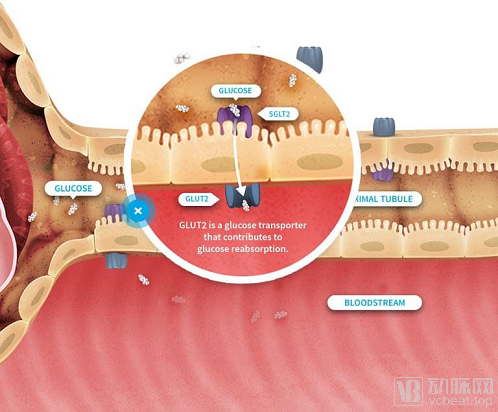
Data Source: AstraZeneca
The U.S. FDA Approves Boehringer Ingelheim’s Ofev for Market Launch to Delay
Decline in Lung Function in Adult Patients with Systemic Sclerosis
U.S. FDA Approves Boehringer Ingelheim’s Ofev (nintedanib) to Slow Decline in Lung Function in Adult Patients with Systemic Sclerosis-Associated Interstitial Lung Disease (SSc-ILD)
Ofev has received FDA approval for the treatment of idiopathic pulmonary fibrosis (IPF), a disease characterized by pathological changes in the lung interstitium.
In the SENSICS randomized, double-blind, placebo-controlled Phase 3 clinical trial, a total of 576 patients were enrolled, with a treatment duration of 52 weeks.
The annual rate of decline in forced vital capacity (FVC) among patients receiving Ofev treatment was 52.4 mL/year, compared with 93.3 mL/year in the placebo group (p=0.04). This indicates that Ofev reduced the decline in lung function by 44%.
❖IFM Therapeutics, a biopharmaceutical company dedicated to developing innovative therapies targeting the innate immune system, announced that its subsidiary, IFM Due, has entered into a research and development agreement with Novartis. The two parties will collaborate on the development of a series of innovative immunotherapies inhibiting the cGAS/STING signaling pathway for the treatment of various severe inflammatory and autoimmune diseases.
❖Boehringer Ingelheim Announces R&D Agreement with Lupin Pharmaceuticals. The agreement aims to develop a combination therapy pairing Boehringer Ingelheim’s investigational KRAS inhibitor with Lupin’s novel MEK inhibitor (LNP3794), focusing on the treatment of cancers harboring oncogenic KRAS mutations, such as gastrointestinal and lung cancers.
❖Vertex Pharmaceuticals Announces Definitive Agreement to Acquire Semma Therapeutics for $950 Million in Cash; Company Is Developing World-Leading Stem Cell-Derived Human Islets as a Potential Curative Therapy for Type 1 Diabetes
❖Novartis has long pinned high hopes on the cardiovascular drug Entresto, but the medication recently suffered a major clinical trial setback. Data from the PARAGON-HF trial showed that although patients with heart failure taking Entresto experienced a 13% reduction in heart failure hospitalization rates and cardiovascular mortality compared to those taking valsartan, this result did not reach the threshold for statistical significance, thereby failing to meet the trial’s primary endpoint.
❖Sumitomo Pharma of Japan is expected to acquire the interests in five subsidiaries under Roivant for a $3 billion upfront payment. Additionally, Sumitomo Dainippon Pharma will obtain a 10% stake in Roivant Sciences and secure options to acquire another six companies. The final agreement is anticipated to be formally concluded by the end of October.