

WeMed Medical: A Rising Chinese Innovator Pioneering Domestic High-End DSA for Import Substitution

WeMed
Interventional Medical Device Provider
As domestic innovation capabilities continue to advance, China has largely achieved independent research, development, and manufacturing of low- to mid-end medical devices, gradually gaining market influence. However, a significant gap remains between China and foreign countries in the high-end medical device sector. Industry insiders note that developed nations in Europe and America occupy 90% of the high-end medical device market share, leaving Chinese medical institutions heavily reliant on imports.
How Far Is the “Localization” of High-End Medical Devices? Recently, Beijing WeMed Medical Equipment Co., Ltd., which is committed to building the “leading brand in interventional medicine,” granted an exclusive interview to VCBeat. CEO Yang He provided insights into the company’s latest high-end interventional medical device (DSA) developed through independent R&D.
The development of the global medical device industry began with the invention of the stethoscope in 1816. Over the following two centuries, a continuous stream of new medical devices emerged, driving the industry’s steady upward trajectory. China’s modernization of its medical device sector started in 1952. After decades of development, the domestic industry has formed several key segments, including high-value consumables, medical imaging, in vitro diagnostics (IVD), and low-value consumables.
Data shows that in 2017, the global and Chinese medical device markets reached USD 405 billion and RMB 442.5 billion, respectively; by comparison,China's medical device market is experiencing robust growth, with a compound annual growth rate significantly higher than the global average.
"Made in China 2025"It is proposed to enhance the innovation capability and industrialization level of medical devices. In addition, in recent years, the state has introduced a series of favorable policies for the medical device industry, promoting the vigorous development of the high-end medical device sector.
For example,"13th Five-Year Plan" OutlineIt explicitly states that, over the next five years, priority will be given to the research and development of high-tech diagnostic and therapeutic equipment and in vitro diagnostic (IVD) devices, as well as the development and application of therapeutic devices such as medical accelerators and implantable products such as interventional stents.NDRCInclude medical device-related equipment, medical materials, and services in the “Guidance Catalog of Key Products and Services for Strategic Emerging Industries.”
“The overall landscape for medical devices is highly promising, particularly in the field of high-end interventional devices. In recent years, the rapid growth of minimally invasive treatments has created a significant market gap,” Yang He, CEO of Beijing WeMed Medical Equipment Co., Ltd., told VCBeat.
WeMed Takes on the Challenge of Breaking the Monopoly Barriers in Interventional Medical Devices
Interventional Therapeutics refers to a series of minimally invasive techniques performed under the guidance and monitoring of digital subtraction angiography (DSA) systems, utilizing puncture needles, catheters, and other interventional devices to deliver specific instruments to pathological sites via natural body orifices or minimal incisions.
"As a treatment method with less trauma and lower cost than surgery, interventional therapy has become the preferred choice for many patients."Digital Subtraction Angiography (DSA) systems are critical support equipment for image-guided navigation in interventional therapy., but the DSA systems used for interventional procedures in China rely almost entirely on imports.“Yang He said.”
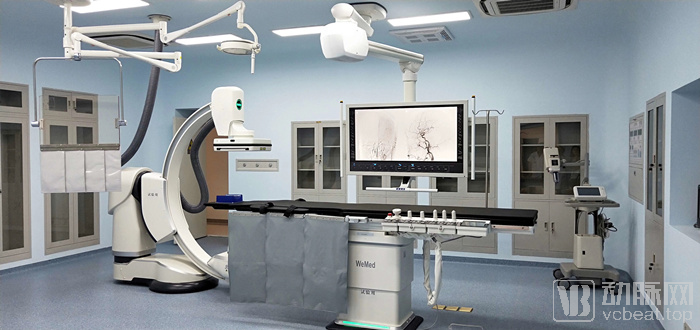
(The image shows the "Aurora" intelligent digital angiography system)
He pointed out that more than 70% of the market share in China’s high-end medical equipment industry is monopolized by three multinational corporations—General Electric (GE), Philips, and Siemens (Siemens)—collectively known as “GPS.” Among these, GPS holds a 92% monopoly on the market share for DSA (Digital Subtraction Angiography) equipment.
“For those of us born in the 1980s who have embarked on entrepreneurial ventures, there is an urgent desire to break through and bring about change under the current market landscape. Looking at many high-tech sectors in China today, our technologies have reached or even surpassed international standards. I believe that in the field of high-end medical devices, we will be able to achieve the same in the future,” said Yang He.
Guided by this conviction, Yang He—a Peking University electronics graduate with a master’s degree from the Chinese Academy of Sciences and over a decade of experience in the high-end medical imaging industry—joined forces with his partner Cao Hongguang (Co-founder and Chief Scientist of WeMed) to lead their team in targeting interventional high-end medical devices as their entrepreneurial focus, amidst market opportunities and challenges.
In 2014, Beijing WeMed Medical Equipment Co., Ltd. was established. Since 2015, WeMed has been professionally dedicated to the field of interventional medical devices. To date, it has achieved industrialization of large-scale angiography systems, mobile angiography systems, and surgical C-arms, filling numerous gaps in domestic products and technologies.
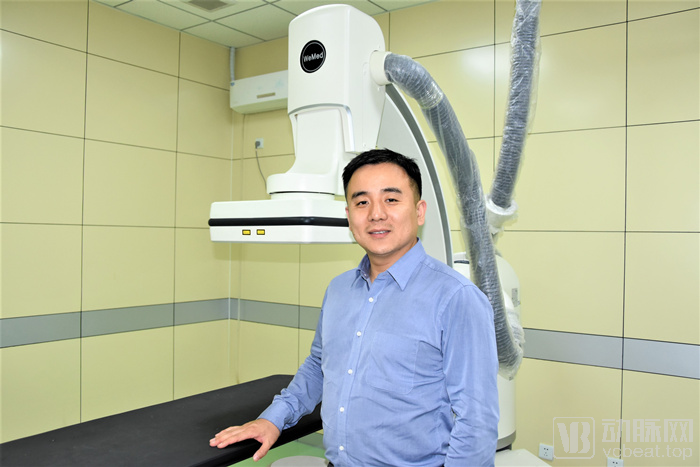
(The image shows Yang He, CEO of WeMed)
“WeMed’s core team comprises R&D engineers and senior management professionals from GE, Philips, Siemens, and well-known domestic medical device companies. Our goal is to achieve the localization of high-end interventional devices through independent R&D,” said Yang He.
It is reported that WeMed has successively undertaken more than ten scientific research projects, including the National Key R&D Program and the National Science and Technology Support Program of the Ministry of Science and Technology, as well as the Special Project for High-Tech Industrialization of Biopharmaceuticals, Biomedical Engineering, and Biological Breeding of the National Development and Reform Commission, thereby filling technological gaps in the field of interventional diagnosis and treatment.
“Since its establishment, WeMed has been pursuing technological innovation and product breakthroughs,” said Yang He. He introduced that the company’s latest independently developed product, the “Aurora” DSA system, is a prime example of the team’s innovation and breakthroughs.
“Aurora” is an innovative intelligent DSA angiography system with multiple patents.Equipped with the world’s most advanced third-generation large-field-of-view flat-panel detector, this system shares the same technological lineage as GE Healthcare’s Discovery IGS 730 and Siemens’ ARTIS pheno. Leveraging its large-field-of-view flat-panel detector, the device provides optimal support for cardiac, neurovascular, and non-vascular catheter-based (interventional) procedures, making it ideal for medical facilities such as hybrid operating rooms serving multiple departments.
“Our device, in simple terms, provides surgeons with real-time intraoperative imaging guidance to assist them throughout the entire surgical procedure.”Aurora is characterized not merely as a diagnostic device, but as a system integrating both diagnostic and therapeutic functions, with an even greater emphasis on the therapeutic process.“Yang He introduced.”
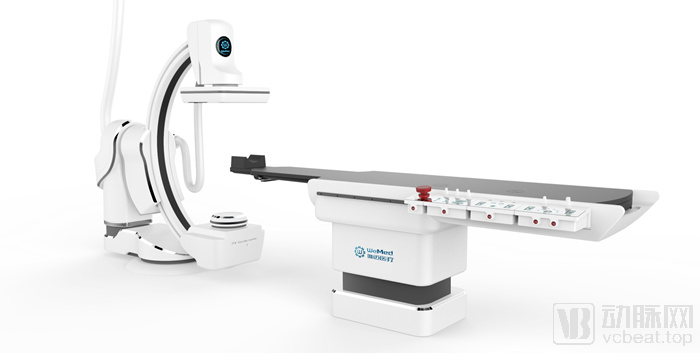
(The image shows the "Aurora" DSA product)
The core advantages of the Aurora DSA product include three intelligent technologies, four user-friendly designs, and five high-end technologies. With high-definition imaging and agile, stable performance, it ensures clinical treatment safety and surgical efficiency.The three major intelligent technologies include: 5A HD Image Intelligent Engine Optimization, We-Dose Low-Dose Intelligent Platform, and We-Link Interconnected Integration.
Four thoughtful designs include: Ultra-Smart gantry movement, ultra-wide scanning range, touchscreen bedside microcomputer control, and one-touch convenient operation. Five high-end technologies include: liquid metal X-ray tube for safety and reliability; intelligent grid control for lower radiation dose; intelligent grid control for lower radiation dose; ultra-4K large screen for high-definition display; and omnidirectional floating catheterization table...
“The Intelligent 5A Algorithm, built upon our advancements in artificial intelligence, enables intelligent optimization of the high-definition image engine and employs multiple automated processing techniques to deliver ultra-high-definition image quality. Meanwhile, the We-Dose Low-Dose Intelligent Platform significantly reduces radiation exposure while maintaining superior image quality,” said Yang He.
What Does Reducing Radiation Dose Mean?
Yang He explained that because excessive X-ray exposure causes significant harm to the human body, physicians performing interventional procedures are often referred to as “lead-apron guardians.” “Chinese physicians perform a very high volume of surgeries each day, with their workload exceeding three to four times the global average. While conducting procedures at the patient’s bedside, they endure substantial radiation-induced health risks,” said Yang He.
"Therefore, we are hereRongIt integrates several technologies, including proactive defense, passive alerts, and intelligent prediction algorithms, to comprehensively provide a dose reduction solution.For physicians, such products offer greater peace of mind and enhanced safety.”Yang He told VCBeat.
Currently, the Aurora DSA system has been deployed for trial use at hospitals including Beijing Tiantan Hospital, The First Affiliated Hospital of Zhengzhou University, Zhengzhou Central Hospital, and The Affiliated Hospital of Hebei University, receiving positive feedback from numerous clinicians.
In addition to the major features mentioned above, the Aurora DSA also employs robotic multi-axis linkage technology, requiring a minimum installation area of just 20 square meters, thereby saving on space costs.
“Aurora has now met the standards for import substitution. Feedback from dozens of clinicians who have used Aurora indicates that there is virtually no gap in either appearance or performance compared to imported DSA products, with some technologies even surpassing them.“Yang He said that such evaluations have given him greater confidence in the subsequent promotion of the product.”
“Finally, in terms of pricing, while imported equipment costs tens of millions, our equipment will see a significant price reduction, truly achieving import substitution,” said Yang He.
"Aurora" made its debut in July this year. Yang He stated that the next strategic step would be to organize installations of this product at pilot hospitals in selected regions, launch it into the market, and accelerate the process of industrialization.
Following its technological breakthroughs in core products, WeMed has capitalized on its momentum to expand its interventional diagnosis and treatment equipment portfolio, introducing multiple products such as the Alien E flat-panel mobile C-arm angiography system, the intelligent robotic flat-panel large C-arm system, and the “Jingling” flat-panel small C-arm system.
These product lines not only meet the comprehensive clinical interventional needs in neurology, cardiology, oncology, urology, gynecology, and peripheral vascular diseases in China, but also fill the gap of reliance on imports for interventional diagnosis and treatment equipment, thereby promoting the development of China’s interventional diagnosis and treatment industry. Currently, the company has established “window hospital” partnerships and R&D translation collaborations with multiple Grade 3A hospitals across China.
“Regarding import substitution, we emphasize that it is not simply about achieving high cost-performance ratios or domestic production. Domestic substitution does not mean that a product can replace imports merely because it is cheaper. Since our clients are physicians who bear responsibility for patients’ lives, the primary consideration must be the quality of the product itself. Price comes second; while competitive pricing is ideal as it can alleviate the financial burden on both doctors and patients and reduce healthcare costs, what we develop are high-performance, cost-effective products. This is our understanding of domestic substitution,” said Yang He.
He stated,Next, the company will accelerate in-depth research and development of products and solutions in the interventional field.“At present, our DSA provides an imaging guidance platform. Next, we”The plan aims to enable remote operations in remote areas or regions with scarce medical resources. By introducing interventional surgical robots, the threshold is lowered, ensuring faster and more standardized dissemination of medical technologies.“Yang He said.”
Yang He stated that the greatest value of this technology in the future lies in enabling surgeons to perform procedures without wearing cumbersome lead aprons. “WeMed is achieving a deep integration of interventional diagnostic imaging and surgical robot operation. Within the industry, we are the first to propose such an operational solution,” Yang He said.
Finally, Yang He stated that import substitution is an undeniable development trend in the medical device sector. Moving forward, WeMed will expand its portfolio; in addition to DSA imaging systems, a series of diagnostic and therapeutic products, along with consumables and integrated solutions, will be launched.
“Our goal is not merely to invest in R&D for a single interventional device, but to establish a comprehensive presence across the entire interventional industry, creating more holistic interventional solutions and treatment systems,” said Yang He. WeMed will remain professionally dedicated to the interventional field, striving to become an innovative solutions company that aligns closely with the practices of Chinese physicians.