

Xinsaiya Biotech Launches World’s First Quantum Dot-Based POCT Kit for Helicobacter pylori Strain Typing and Files IPO Prospectus
Having worked in the in vitro diagnostics (IVD) industry for nearly eight years, Zhang Nianlin’s greatest impression is that the vast majority of technologies in China’s IVD market are derived from foreign models, with almost no IVD technology being wholly indigenous. This has, to some extent, resulted in companies lacking fully autonomous decision-making authority. Therefore, when discussing his original motivation for founding New Saiya Biology, Zhang Nianlin responded, “I aim to build a distinct IVD technology platform—one that does not follow in others’ footsteps, but rather establishes a company with core competitive advantages.”
In 2007, Zhang Nianlin was still studying the advanced foreign technology of “magnetic particle chemiluminescence immunoassay,” aiming to industrialize in vitro diagnostics based on this principle. By 2012, Zhang Nianlin decided to start his own business and established Saiya (Hebei) Biotechnology Co., Ltd., independently developing in vitro diagnostic applications based on “quantum dot” technology. In 2016, the company relocated to Chongqing and founded Chongqing New Saiya Biotechnology Co., Ltd. (hereinafter referred to as “Chongqing New Saiya”). In 2018, it began industrial production of quantum dot-based rapid in vitro diagnostic reagents built on the quantum dot immunofluorescence analysis system platform.
Quantum dots are semiconductor nanocrystal materials, typically with particle sizes ranging from 1 to 10 nm. The primary distinction between quantum dot-based in vitro diagnostics and chemiluminescence-based in vitro diagnostics lies in the labeling mechanism: quantum dot technology employs physical methods for target labeling and detects signals via light rather than chemical substances, thereby enhancing detection sensitivity and result accuracy. In contrast, the light emission in chemiluminescence relies on chemical reactions, a process that is inherently subject to gradual signal decay and involves cumbersome, complex steps.
Quantum dot technology was first applied as biological fluorescent labels in life sciences in 1998, but its application to POCT remained extremely rare as of 2012. Zhang Nianlin stated, “While China lags more than a decade behind foreign countries in in vitro diagnostics based on chemiluminescence, New Saiya Bio can lead internationally in in vitro diagnostics based on quantum dot technology.”
Applying quantum dots to in vitro diagnostics is not as easy as one might imagine. Zhang Nianlin told VCBeat, “Quantum dots are nanoscale materials. When using them to label biological products, it is necessary not only to ensure the activity of the biological materials but also to consider the stability of the quantum dots. These are all challenges in research and development.”
From the establishment of Hebei Saiya Biology in 2012 until 2018, the company was consistently engaged in innovative R&D on the application of quantum dots to in vitro diagnostics for six years. It took the company three to four years to overcome core technical challenges, after which the products underwent multiple rounds of optimization and upgrading.
The product portfolio covers multiple fields, including gastric function, maternal and child health, inflammation, and cardiovascular diseases.
Xinsai Biologics Aims to Launch Ten New Products Annually
How Do Quantum Dots Enable In Vitro Diagnostics? Zhang Nianlin replied, “The principle of using quantum dot technology for in vitro diagnostics still relies on immune reactions. This immune reaction involves two antibodies: one antibody is conjugated to quantum dots, and the other is attached to a solid-phase material, thereby enabling the detection of target proteins. After the two antibodies react, we illuminate the quantum dots with a light source, causing them to emit light at a specific wavelength. By detecting this optical signal, we can determine the concentration of the corresponding target protein.”
Currently, New Saiya Biotechnology has applied this technology to testing in multiple fields and obtained production approval numbers for approximately 10 diagnostic products in 2018. These primarily include three product series: cardiac marker kits, inflammation series kits, and bone metabolism series kits. This year, New Saiya Biotechnology has not only added maternal and child health series and gastric function series diagnostic reagents but is also launching oncology and infertility series. Among these, the gastric function series is the company’s flagship product for the year, with its most distinctive feature being the globally exclusive rapid test for Helicobacter pylori genotyping.
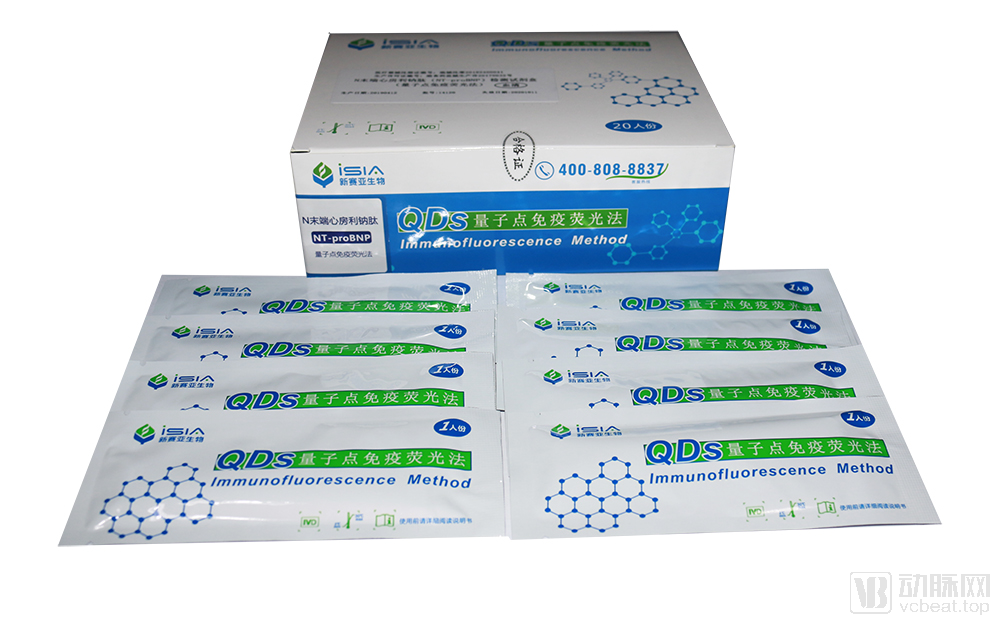
Myocardial Marker Kit (Image provided by the company)
Cardiac biomarker kits are primarily used to detect cardiovascular diseases, enabling rapid diagnosis of heart conditions. Zhang Nianlin stated, “Our diagnostic reagents are compact and suitable for use in emergency departments. During resuscitation of cardiac patients, physicians can quickly determine whether the patient is suffering from myocardial infarction or heart failure, facilitating the prompt formulation of appropriate treatment plans.”
The Inflammation Series is primarily designed for patients experiencing inflammatory conditions such as colds and fever. Physicians perform fingerstick blood sampling on patients, and then use Xin Saiya Biologics’ inflammation testing products to determine whether the inflammation is caused by a bacterial or viral infection. This enables targeted pharmacological treatment, thereby reducing antibiotic usage.
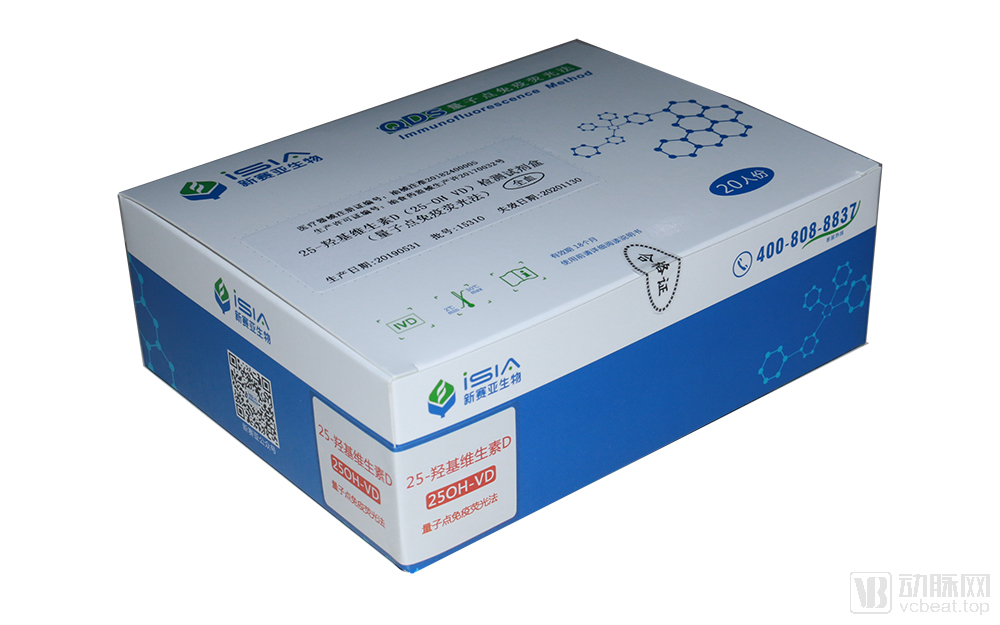
Bone Metabolism Series Kit (Image provided by the company)
The Bone Metabolism Panel is primarily used to measure 25-hydroxyvitamin D levels in the human body. Low levels are associated with an increased risk of bone disorders, cardiovascular diseases, diabetes, infectious diseases, dermatological conditions, and other related illnesses, while elevated levels may lead to hypercalcemia and toxicity. Regular monitoring of 25-hydroxyvitamin D assists clinicians in developing personalized supplementation strategies to ensure appropriate vitamin D intake.
In addition to the three aforementioned series of in vitro diagnostic (IVD) products, New Saiya Biologics is vigorously advancing R&D and production with a target of launching ten new products annually. Zhang Nianlin stated, “New Saiya Biologics will place equal emphasis on sales and R&D, thereby increasing its R&D investment. In terms of business model, we are also taking an unconventional approach by establishing our own novel partnership frameworks, namely the ecosystem chain partnership model and the internal partnership model.”
Launch of the First Helicobacter pylori Typing Detection Kit,
Approval is expected by year-end, enabling early screening for gastric cancer.
It is reported that New Saiya Biotechnology has recently launched a new product line—the Gastric Cancer Early Screening Series. This series includes early screening kits for gastric conditions such as gastric ulcers, enabling patients to adhere to the principle of “early screening, early detection, and early treatment.” By identifying disease status before extensive gastric damage occurs, patients can seek timely medical attention.
Among these, one noteworthy kit is the Helicobacter pylori typing test kit, which is currently the world’s first point-of-care testing (POCT) rapid diagnostic kit for H. pylori typing.
Helicobacter pylori resides in the human stomach and duodenum, and is categorized into toxigenic and non-toxigenic strains. According to a national epidemiological survey conducted by the Helicobacter pylori Group of the Chinese Medical Association, the infection rate of H. pylori in China is 59%, meaning that approximately 700 million people in China are infected with the bacterium. The incubation period for H. pylori infection is about one week. Approximately 70% of infected individuals remain asymptomatic, exhibiting no systemic symptoms and not developing other gastric diseases. The remaining 30% may experience symptoms such as dyspepsia, inflammation, or peptic ulcers, necessitating medical consultation at a hospital.
Zhang Nianlin commented, “There is actually a large population in China suffering from gastric diseases, yet these conditions have not received the attention they deserve. Many people simply take anti-inflammatory medications when experiencing stomach pain and assume they are cured once the pain subsides. Few individuals seek to thoroughly and fundamentally address their gastric issues, which means that recurrent stomach pain may eventually progress to gastric cancer.”
Extensive scientific research indicates that over 90% of duodenal ulcers and approximately 80% of gastric ulcers are caused by Helicobacter pylori infection. In 1994, the International Agency for Research on Cancer classified Helicobacter pylori as a Group 1 carcinogen, with 78% of gastric cancers attributed to chronic Helicobacter pylori infection.
“The transmission routes of Helicobacter pylori are closely associated with the Chinese lifestyle of using chopsticks. Typing detection of Helicobacter pylori is a project that benefits both the nation and its people. Through the use of Helicobacter pylori typing detection kits, patients can accurately determine whether they are infected with Helicobacter pylori and whether their strain is pathogenic, thereby enabling early prevention of gastric diseases,” added Zhang Nianlin.
It is reported that New Saiya Biotechnology’s project for the typing detection of Helicobacter pylori was initiated in 2014 and has now been largely completed, with production approval expected by the end of this year.
Whether for early gastric cancer screening or cardiac disease detection, users of New Asia Biologics’ test kits can obtain results within 3 to 15 minutes. The kits are easy to use and deliver precise results, meeting user needs. In terms of its business model, New Asia Biologics primarily adopts a new partnership model, with current market sales of its test kits amounting to approximately RMB 20 million.
Looking ahead, Zhang Nianlin revealed that the company will sequentially launch a cancer screening series and a female ovarian testing series to enrich its product portfolio. Furthermore, the company plans to expand its presence across the Chinese market and overseas markets, aiming to achieve an initial public offering on either the STAR Market or the ChiNext Board within three to five years.