

Chongqing Pharma LangYi Files IPO Prospectus: Pioneering Medical Data Gateway and 'Health Cloud Community' for Primary Care
At the recently held 2nd China International Smart Industry Expo (hereinafter referred to as “Smart Expo”) in Chongqing, more than 800 outstanding domestic and international enterprises gathered. Participants included the three major telecom operators actively deploying 5G networks, as well as companies such as iFlytek and Tencent that are expanding into the healthcare industry.
Reporters learned on-site that long queues formed in front of a self-service health cloud kiosk at the Tongnan Pavilion of the Smart China Expo. By undergoing a simple facial scan and answering basic diagnostic questions, users can receive a comprehensive constitution analysis report along with personalized wellness and healthcare recommendations directly on their mobile devices.
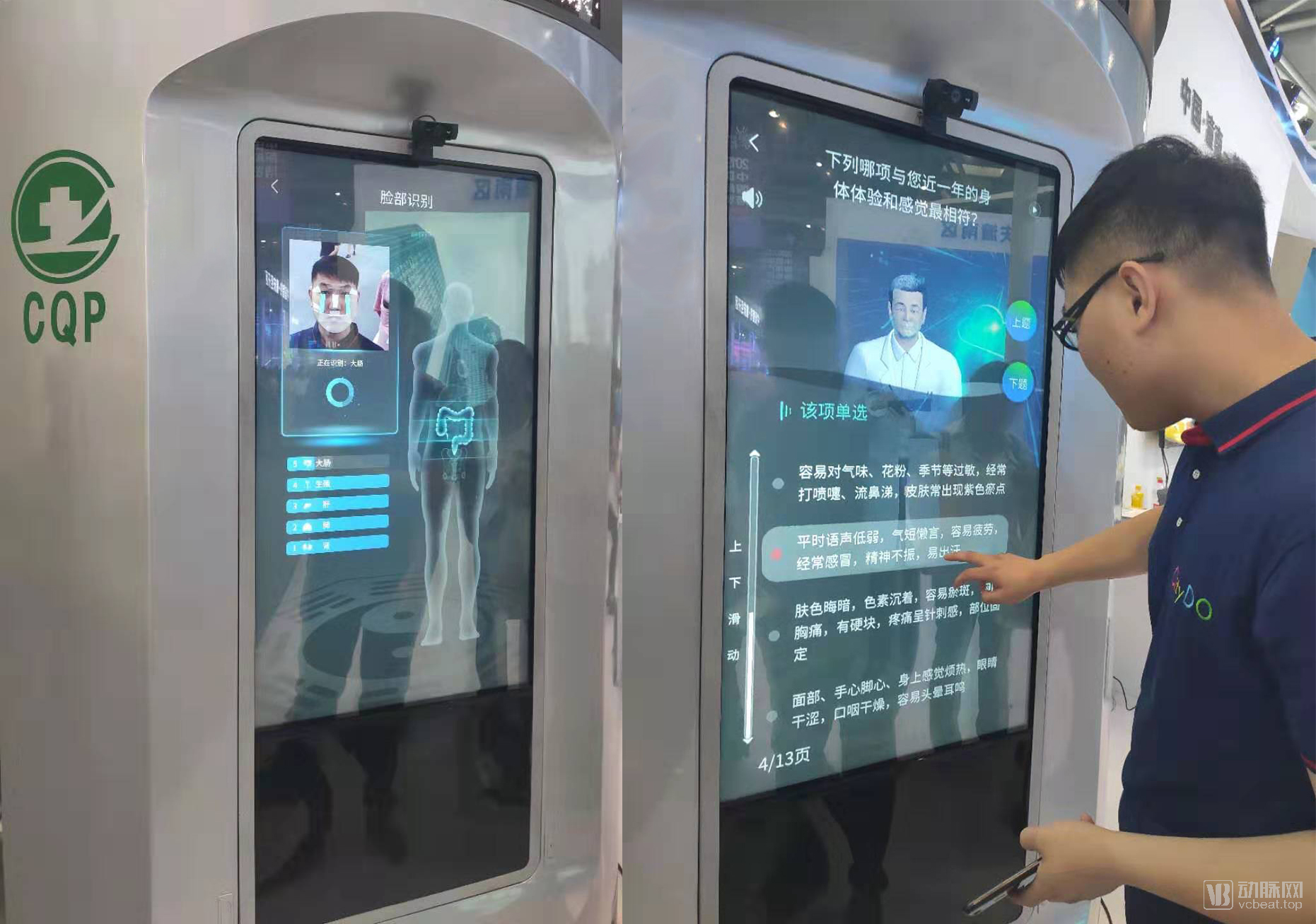
User is undergoing a health diagnosis
It is reported that this self-service health kiosk was developed by Chongqing Pharmaceutical Langyi Medical Equipment Co., Ltd. (hereinafter referred to as “Chongqing Pharma Langyi”), a subsidiary of Chongqing Pharmaceutical Group. Huang Yang, Sales Manager at Chongqing Pharma Langyi, introduced on-site that the product simulates the “inspection” and “inquiry” components of Traditional Chinese Medicine (TCM) consultations. Through a 51-inch touchscreen device, it engages users in interactive Q&A sessions, enabling them to independently undergo TCM constitution identification and TCM tongue diagnosis, as well as receive daily dietary and nutritional assessment guidance, thereby enhancing users’ personal health management.
In addition to traditional Chinese medicine consultations, this self-service health kiosk features an automated external defibrillator (AED) and medical-grade precision collection of vital signs. The medical-grade data encompasses the unified acquisition of parameters such as blood pressure, height, weight, body mass index (BMI), blood oxygen saturation, body temperature, pulse rate, and electrocardiogram (ECG). Furthermore, users’ health data can be uploaded in real time to public health platforms or family doctor contracting platforms, facilitating community hospitals and family doctors in establishing user health records and delivering contracted services.
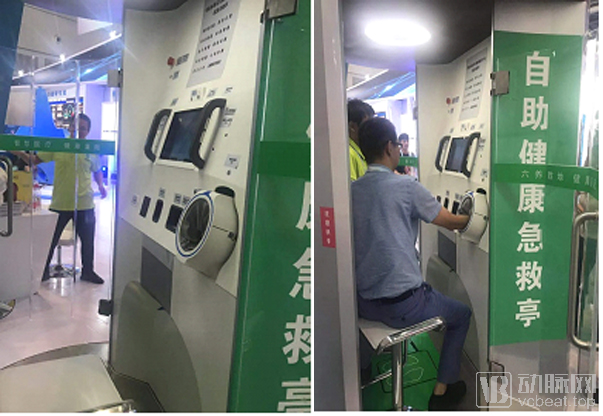
The user is using an automated external defibrillator (AED) in a health kiosk.
In an exclusive interview, Zhou Zaolei, General Manager of Chongqing Pharmaceutical Langyi, revealed that self-service health kiosks represent only the tip of the iceberg among the company’s product offerings. Centered on community healthcare, Chongqing Pharmaceutical Langyi has launched nearly ten medical products, including health huts, family doctor service packages, public health examination vehicles, minute clinics, and self-service health monitoring chairs, with over 100 units already deployed for pilot programs in Chongqing.
In 2008, the state launched the strategic research for “Healthy China 2020” for the first time, subsequently incorporating health data collection as a key component. Implementing health data collection enables effective chronic disease management for residents and helps them establish their personal health records.
To collect health data, front-end medical testing devices are indispensable. In response to national policies, China has seen the emergence of health monitoring devices such as Health Kiosks, portable all-in-one health monitors, and general practice mobile diagnostic kits. These tools enable community residents to conduct self-health assessments while simultaneously capturing their health data.
Zhou Zaolei also developed one of the few “Health Huts” in China at that time amidst this wave, drawing attention from the National Health Commission as well as provincial and municipal health commissions. However, during the actual process of health data collection, he identified a critical pain point in the market: after leveraging Health Huts as the primary tool for health data acquisition, grassroots-level data could not be integrated with public health systems due to the lack of unified data standards, making data sharing and interoperability difficult. Furthermore, Zhou Zaolei summarized, “The complex operation of grassroots medical equipment and the fragmented product landscape have, to some extent, led to low utilization rates of these devices, thereby limiting the amount of health data ultimately obtained.”
Faced with the diverse data access points available on the market, Zhou Zaolei sought to unify these data gateways to achieve interoperability, thereby making health data collection more convenient, user-friendly, and cost-effective. Currently, most medical devices on the market utilize USB or RS232 interfaces for data communication, with communication protocols and formats defined independently by their respective manufacturers.
In Zhou Zaolei’s practical experience, integrating new medical data often required on-site negotiation of communication protocols with the R&D teams of medical device manufacturers, followed by standardized uploads via computers or tablets running Windows or Android systems. However, this method of uploading medical data was not only cumbersome but also unstable, which further inspired Zhou Zaolei to develop a universal medical data gateway.
Since 2014, Chongqing Pharmaceutical Langyi has undergone nearly five years of independent research and development, ultimately completing the basic development of its medical gateway in 2017. Zhou Zaolei described this as a task that could not be rushed: “Some imported medical devices do not make their communication protocols available in China. We had to rely on our extensive industry experience to interpret them and then perform manual packet capture and analysis.” Years of effort have endowed Chongqing Pharmaceutical Langyi with a core competitive advantage in community healthcare—the medical data gateway. This gateway uses an underlying ARM system to automatically adapt or provide factory-preconfigured adaptations for the protocols and interfaces of mainstream domestic medical devices. By employing a Linux system to enhance product reliability while eliminating the need for computers and monitors, the solution significantly reduces costs.
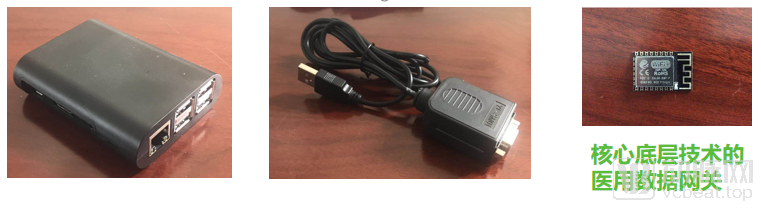
Schematic Diagram of Medical Gateway Form Factor
Currently, the medical gateways developed by Chongqing Pharmaceutical Langyi are compatible with 10 major brands of blood pressure monitors and 12 types of glucometers, as well as all domestically produced height and weight measurement devices, ultrasound systems, electrocardiographs (ECGs), and certain biochemical analyzers. Zhou Zaolei stated, “Traditional ultrasound equipment in community hospitals is not networked. Physicians previously had to manually upload ultrasound examination data to the public health system and then enter and submit the data via computer. However, with the medical gateway, ultrasound data can be automatically uploaded directly to a designated IP address or transmitted straight to physicians’ smartphones or tablets, eliminating the need for manual uploading.”
Medical gateways serve as a novel approach to health data acquisition, enabling integrated data collection through all-in-one devices. Chongqing Pharmaceutical Langyi has also developed multiple integrated solutions for family doctor contracting platforms, centered on health data collection, specifically tailored for community use.
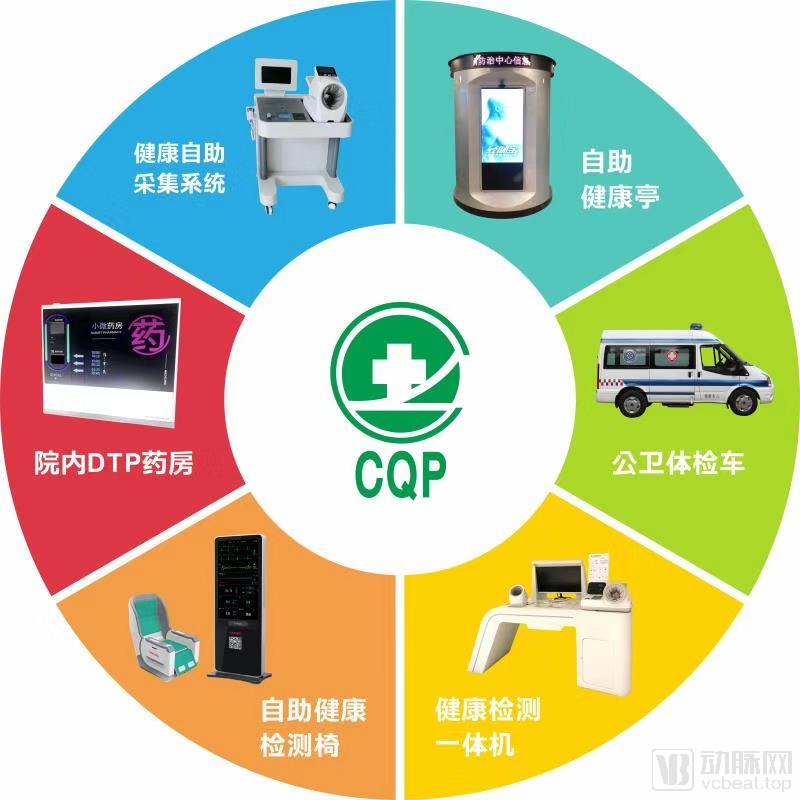
Zhongyao Langyi has partnered with multiple medical device companies to secure application licenses for core medical equipment such as blood pressure monitors and blood glucose meters. It integrates its independently developed technologies into all-in-one devices, and then collects user health data through a unified medical data gateway port.
Taking the self-service health screening chair as an example, its blood glucose testing module utilizes core technology from Hangzhou Weice Biotechnology Co., Ltd., while the blood pressure monitoring function employs core technology from Shenzhen Pulse Wave Technology Co., Ltd. Both technologies have been approved by the China Food and Drug Administration (CFDA), ensuring the accuracy and validity of the data. After swiping their national ID card, users can sit on the self-service health screening chair and have their blood pressure and blood glucose levels measured without any additional operation. These data are then automatically uploaded to the user’s personal health record.
Chongqing Langyi’s Health Cloud Community project has already been implemented in several districts and counties of Chongqing. The company will next work with partners across China to expand into the national market. Chongqing Langyi will continue to promote its family doctor platform, leveraging data collection as a key driver to facilitate services such as data upload, establishment of resident health records, remote diagnosis and treatment, and medical consultations. By establishing community-based Health Cloud platforms and cloud services nationwide, the company aims to contribute to the Healthy China initiative.