

Xi'an Tianbao Autism Rehabilitation Center: Over 20 Children Successfully Reintegrated into Schools Through Dietary Intervention and Daycare Services
In 1987, her husband was diagnosed with advanced tonsillar cancer. Later, the cancer metastasized to his head, leaving him unable to eat or receive injections. The hospital issued Xie Yanhong an ultimatum to “take him home for rest.” After returning home, she could not simply leave her husband without food or care. By chance, she learned about “dietary therapy” from a friend.
“The principle is actually quite simple: boil seven or eight jujubes, once in the morning and once in the evening, and have him drink the decoction,” explained Xie Yanhong. “I have subscribed to China Anti-Cancer News for ten years, and gradually came to understand the underlying rationale. The plant-based nutrients contained in traditional Chinese medicine decoctions can be absorbed by the human body more rapidly.”
Under Xie Yanhong’s meticulous care, her husband gradually recovered and remains alive to this day. In 1992, she founded her own enterprise, which achieved annual sales of nearly RMB 100 million. In 1996, she brought her younger brother, who has severe intellectual disabilities, to live with her from their hometown.
“When he first came to us, he was already 29 years old. He was nonverbal and frequently had bowel incontinence, so I had to clean him,” said Xie Yanhong. “To prevent further incidents of incontinence, I began monitoring his diet, recording and eliminating any foods that triggered diarrhea. After six months, one day he suddenly started calling me ‘older sister.’”
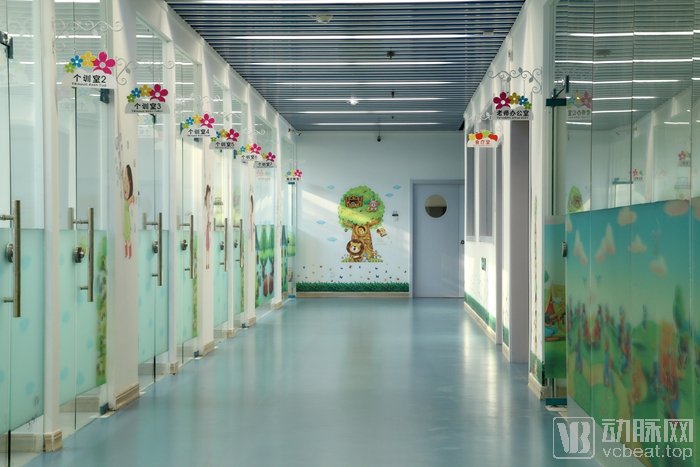
Indoor Environment at Tianbao Rehabilitation Hospital (Image source: Provided by the enterprise)
Xie Yanhong continued to focus on her work. Then, in 2000, tragedy struck: her six-year-old daughter passed away seven days after receiving a vaccination. Plunged into deep despair, Xie remained trapped in this shadow for two years, during which time her company was sold off. As her situation improved, she resolved to study nutrition and conduct in-depth research into traditional Chinese medicine.
Leveraging over a decade of expertise in the field of oncology and cancer care, Xie Yanhong began offering dietary therapy for tumor rehabilitation. In 2007, a friend approached her, seeking help with the rehabilitation of her autistic daughter. “That was my first encounter with autism. With a tentative mindset, I applied my existing knowledge and used traditional Chinese medicine (TCM)-based dietary therapy to regulate her condition. After two years of treatment, the 20-year-old girl recovered and went on to attend junior college.”
By 2009, Xie Yanhong began investigating the autism market and discovered that it represented a substantial niche. Conservative estimates indicated that the population of individuals with autism in China exceeded 13 million, including over 2 million children with autism. Moreover, pharmacological interventions are not advisable for young children during their developmental stages. During this period, she also worked with a 30-year-old individual with autism and conducted trials for more than a year to verify the efficacy of her conditioning approach. Driven by these positive outcomes, Xie Yanhong founded the Xi’an Tianbao Autism Rehabilitation Center in 2011, specializing in nutritional and dietary interventions for children with autism.
When she first started out, lacking funds, Xie Yanhong rented a one-bedroom apartment to begin working with these children. Through daily close interaction, she discovered that their emotional issues were severe. “At the time, I wondered whether there might be an underlying physiological problem.”
Subsequently, Xie Yanhong gathered various research materials on autism, compiling articles and papers from both domestic and international sources. “When we were working on oncology, we observed that patients’ nutritional status was very poor, so we focused primarily on nutrition. With children with autism, I also wanted to examine their nutritional status, so I took the children for blood tests.” She further stated, “We analyzed the blood test results of children with autism and neurotypical children. Using the same panel of 70 indicators across 21 categories, only 5 indicators were abnormal in neurotypical children, whereas a striking 30 indicators were abnormal in children with autism.”
Based on these abnormal indicators, Xie Yanhong summarized three physical issues present in children with autism:
First, cerebral malnutrition. Inflammation present in the blood of children with autism leads to insufficient cerebral blood supply, ultimately resulting in brain malnutrition.
Second, severe atrophy of the gastric mucosa. Children with autism lack pepsin, which impairs the breakdown of food in the body and prevents complete absorption of nutrients from the diet;
Third, cardiac abnormalities. Blood tests reveal that myocardial enzyme levels in children with autism are significantly higher than those in typically developing children.
In summary, severe dysplasia of the gastrointestinal mucosa impairs food digestion and absorption, triggering an immune response that leads to elevated myocardial enzyme levels, systemic hormonal dysregulation, and severe cerebral malnutrition, ultimately resulting in autism.
Based on each condition, Xie Yanhong summarized different dietary regimens. For heart health, a decoction made from adzuki beans, Poria cocos, and jujubes is recommended, to be consumed twice daily; for stomach care, a decoction prepared with dark plums, dried tangerine peel, and malt is advised, also to be taken twice daily.
“I found that most peers primarily focus on classroom instruction, but after children return home, parents lack the time and energy to provide additional support,” Xie Yanhong recalled scenes from her survey of families with autistic children. “Due to bodily pain caused by internal infections, autistic children often exhibit significant emotional instability, alternating between crying and acting out. Parents, exhausted by their children’s behavior, resort to giving them a smartphone to play with when they cry, offering snacks when they fuss, or even resorting to physical punishment if the crying persists. In such circumstances, if children remain at home and only attend one-hour daily sessions with their parents, meaningful rehabilitation is unattainable.”
Therefore, Xi’an Tianbao Autism Rehabilitation Center adopts a day-care model that separates children from their mothers, with teachers providing one-on-one care. Through 40 hours per week of intensive intervention, teachers can closely observe changes in the children. During the first 15 days after admission, the focus is on adaptation; teachers build rapport with the children through activities such as feeding, companionship, and playing games.
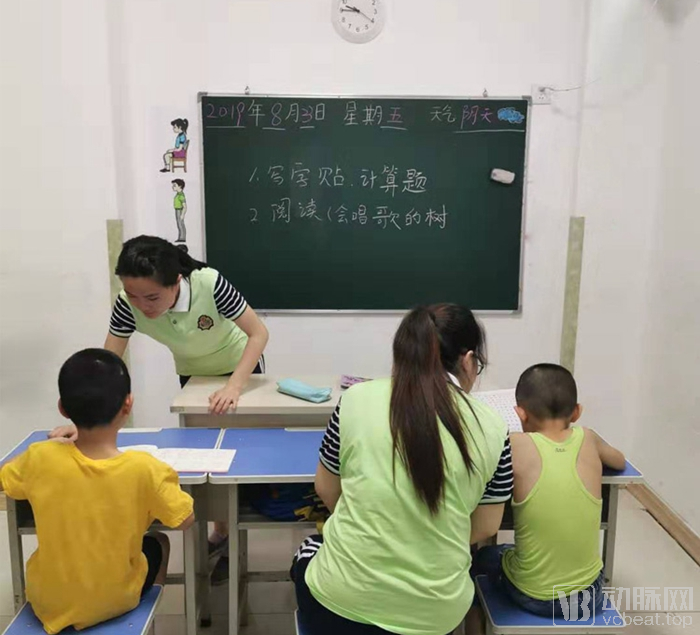
Teacher tutoring children in learning (Image source: provided by the company)
Upon becoming familiar with the children, Xi’an Tianbao Autism Rehabilitation Center evaluates each child’s nutritional status based on their blood test indicators. Teaching and nutrition plans are then formulated according to the assessment reports.
To date, Xi’an Tianbao Autism Rehabilitation Center has enrolled 100 children with autism spectrum disorder (ASD). More than 20 of these children have successfully transitioned to mainstream schools and kindergartens following a rehabilitation program combining nutritional dietary interventions with educational training. Xie Yanhong told reporters that, with parental cooperation, children generally begin to use language after approximately four months of treatment, and those with the best rehabilitation outcomes can be discharged from the center within 12 months.
By analyzing these children, Xie Yanhong summarized four manifestations of autism in children and their corresponding nutritional dietary intervention plans:
First, the child is crying excessively and requires hormonal regulation;
Second, the child has hyperactivity and requires regulation of myocardial enzymes;
Third, the child has low cognitive function and requires gastrointestinal regulation;
Fourth, the child has unfocused eyes and needs vitamin supplementation.
Xie Yanhong stated that only by focusing on the physiological conditions of children with autism, establishing a blood testing database for this population, identifying patterns through cases of recovered children, developing clinical guidelines, and creating replicable models can research on autism rehabilitation be accelerated, thereby fundamentally addressing the high rate of disability associated with autism.
Accordingly, Xi’an Tianbao Autism Rehabilitation Center seeks to raise RMB 5–6 million in financing. On one hand, it aims to commercialize its traditionally decocted food-based herbal preparations into standardized products; on the other hand, it intends to continue collecting blood biomarker data from children with autism spectrum disorder to further establish and refine nutrition-based dietary interventions.