

Doctors and AI: Who Needs Whom More? Dr. Dacheng Tao on AI in Healthcare
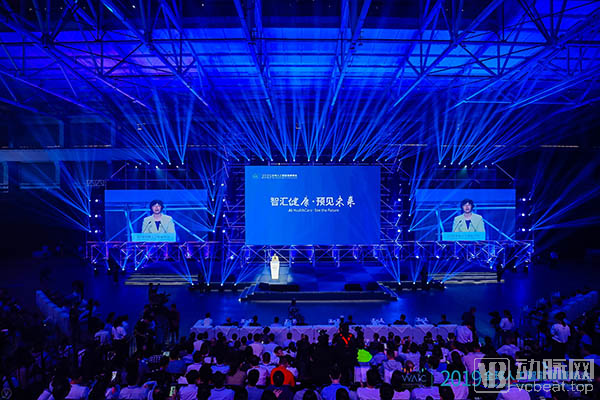
Artificial intelligence (AI) is undoubtedly one of the hottest concepts today. According to the “2018 Blue Book on the Development of the Global Artificial Intelligence Industry,” a total of 4,998 AI companies were monitored worldwide as of the first half of 2018, among which 1,040 were based in China. Notably, AI applications targeting healthcare accounted for the largest proportion, reaching as high as 22%. This makes it easy to understand why the “2019 Global AI Health Summit,” held on August 30 at West Bund in Xuhui District, Shanghai, was able to attract leading figures from the global AI community.
As one of the thematic forums of the World Artificial Intelligence Conference, this summit was guided by the International Telecommunication Union (ITU) of the United Nations. It was jointly organized by the Shanghai Municipal Commission of Economy and Informatization, the Shanghai Municipal Health Commission, the People’s Government of Xuhui District, the China Academy of Information and Communications Technology (CAICT), and the Internet Medical and Health Industry Alliance, with the CAICT East China Branch responsible for the specific implementation of the conference.
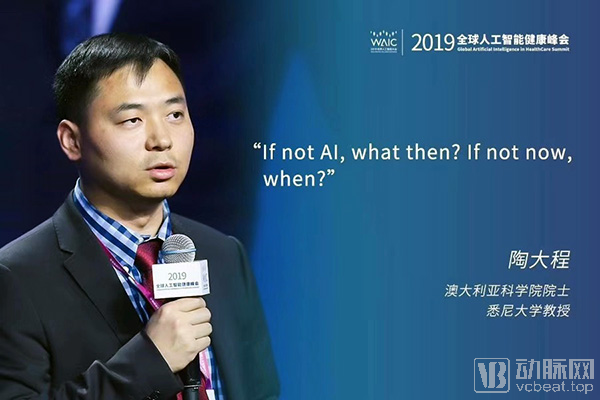
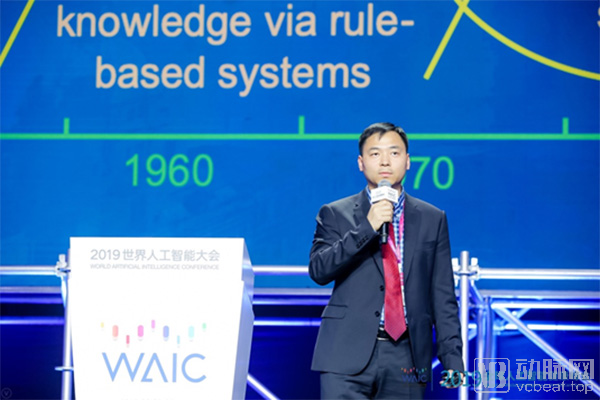
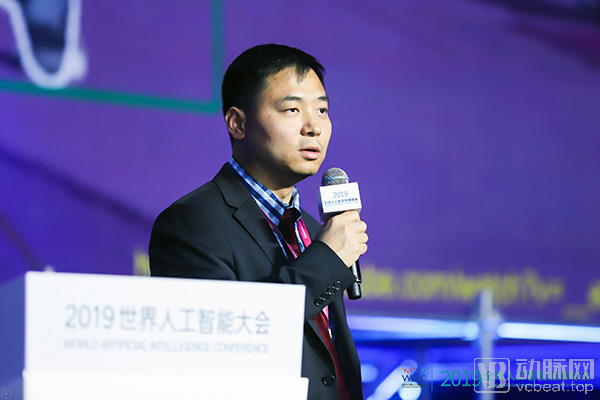
Among them, Dr. Dacheng Tao from the School of Computer Science at the University of Sydney has achieved remarkable academic accomplishments in fields including computer vision, machine learning, and their applications. Consequently, he was elected as a Fellow of the Australian Academy of Science in 2018. In the recently announced complete list of accepted papers for NeurIPS 2019, Dr. Tao had eight papers accepted, ranking sixth worldwide. Despite his long-term optimism about AI, Dr. Tao maintains a clear-eyed perspective on the current realities of artificial intelligence and delivered a keynote speech titled “Just an AI Youth” at the summit. As an industry observer, VCBeat (WeChat ID: vcbeat) was honored to conduct an exclusive interview with Dr. Tao. How do top global AI experts view AI and healthcare?
Doctors and AI: Who Needs Whom More?
In August 1956, at Dartmouth College in Hanover, New Hampshire, scientists including John McCarthy, Marvin Minsky, Claude Shannon, Allen Newell, and Herbert Simon convened to discuss the use of machines to simulate human learning and other aspects of intelligence. Although this two-month conference did not reach a broad consensus, it at least coined a term for the subject under discussion: AI (Artificial Intelligence). Since then, the development of AI has experienced several ups and downs, and it has now entered the third wave of artificial intelligence advancement—supported by big data and supercomputing, deep learning has become a reality and is gradually maturing.
Nowadays, AI plays a variety of roles in the healthcare sector, primarily manifested in four aspects. The most prominent is machine vision technology, which is currently the most widely applied and mature, such as in CT scans for pulmonary nodules and fundus screening. The integration of these AI-assisted diagnostic tools has significantly improved physicians’ image interpretation speed and lesion recognition rates, helping them address a substantial number of patient issues.
Natural language processing (NLP) technology has gradually matured alongside advancements in deep learning, giving rise to the analysis of electronic medical records. Speech recognition systems facilitate rapid voice-based entry of medical records by physicians, enhancing the structuralization of patient data and significantly aiding subsequent diagnosis and treatment. Leveraging the same speech recognition technology, assistant triage robots that interact with patients can also assess disease risks. This helps alleviate hospital burdens and reduce outpatient pressure, enabling physicians to promptly identify patients in most urgent need of diagnosis, thereby helping to mitigate patients’ financial burdens.
Reinforcement learning has been widely applied in robotics. Today’s surgical robots are capable not only of suturing wounds but also of performing minimally invasive surgeries. In the past, physicians might develop hand tremors due to aging or injury, rendering them unable to perform surgeries competently. By introducing surgical robots and leveraging physicians’ extensive experience, these doctors can maximize their strengths while mitigating their weaknesses, thereby extending their professional careers.
Finally, AI is leveraged for data mining. Related data mining techniques are essential for both new drug development and future precision medicine.
AI has developed at such a rapid pace in recent years that some optimists have begun to envision a future scenario in which AI will replace physicians. However, according to Dr. Tao Dacheng, it remains highly challenging for AI to replace doctors—or even ordinary individuals—in the foreseeable future.
Humans can easily comprehend real-world scenes, recognizing the people and various objects within them. However, this same task presents significant challenges for AI. To help AI understand images and videos, highly efficient representation learning algorithms are required to effectively encode the pixels in visual data. Current representation learning methods can extract more precise features from raw data while simultaneously removing or minimizing redundant information and noise.
“Leveraging advanced representation learning, AI has indeed achieved or even surpassed human performance in specific visual recognition tasks—such as identification, detection, and segmentation—on particular datasets. However, in many other areas, such as performing simple addition and subtraction or understanding relationships between objects in images, AI still lags behind children aged around ten. ‘The goal of artificial intelligence is to emulate human intelligence. We are still quite far from meeting this expectation and must continue our efforts,’ said Dr. Dacheng Tao.”
Medical data is typically multimodal, requiring the collection of a wide variety of patient indicators, including age, sex, urine samples, blood samples, CT scans, and X-rays. Such multimodal data enables physicians to construct a comprehensive patient profile. Much like the parable of the blind men and the elephant, relying on a single data source is insufficient for diagnosing conditions; only by integrating data from different modalities can one perceive the full picture. With sufficiently rich multimodal data, it is theoretically possible to reconstruct a “God’s-eye view,” thereby enhancing the accuracy of patient profiling models.
Currently, the most common AI application in healthcare is pulmonary nodule detection. This model is typically trained by AI companies using accessible datasets. However, when deployed in clinical settings, hospitals have found that the recognition accuracy of these models is suboptimal. This discrepancy primarily stems from differences in data distribution between the datasets used by AI companies for training and those available in hospital environments.
The key to solving this problem lies in acquiring large volumes of precisely annotated data from the same distribution to train accurate AI models. For instance, even when training a high-precision object detection model for natural images, millions of images and tens of millions of labels are required. In the case of medical imaging, data annotation must be performed by professionally trained and experienced physicians, as laypersons are incapable of undertaking this task. It is thus evident that applying AI to healthcare presents significant challenges. Consequently, medical AI companies must also consider how to design efficient data annotation tools to alleviate the workload of physicians in annotating data.
So, assuming there is sufficient high-quality data for learning, is it possible for AI to evolve from specializing in one or two diseases to covering a broader range of conditions in the future? Dr. Dacheng Tao believes this is highly challenging. Physicians, after rigorous training, specialize in specific diseases and find it difficult to branch out into other distinct disease areas. Similarly, specific AI algorithms are designed for single tasks, making multi-task learning no easy feat—despite ongoing efforts by researchers. A key challenge in multi-task learning lies in how to effectively organize different but related tasks. Combining unrelated tasks, or even tasks with conflicting objectives, to train a multi-task model may even reduce the accuracy of the learned model.
Meanwhile, medical imaging also faces the challenges of "different images for the same disease" or "the same image for different diseases." Addressing these issues still requires in-depth analysis by physicians. The ability of doctors to understand the associations between different types of diseases (where one disease may lead to another) is something that current AI struggles to replicate. Furthermore, not all diseases have sufficient labeled data. While common diseases can easily obtain adequate labeled datasets, rare diseases completely lack enough data to train models. When considering the additional factor that there are no fully unified medical standards for rare diseases themselves, the problem becomes even more complex.
Dr. Dacheng Tao believes that AI is data-driven, and high-quality data annotation by physicians is the foundation for ultimately achieving AI-assisted medical diagnosis.
Ethical Issues of AI
As an AI scientist, Dr. Dacheng Tao pays close attention to ethical issues in technology. He believes that it is necessary to promptly establish ethical management standards and legal accountability mechanisms for AI applications in medicine, as well as address potential ethical and legal challenges. Currently, AI ethics remains an open topic, and further exploration is needed to ensure that AI makes decisions aligned with ethical and moral principles.
As technology continues to advance, AI has begun to give rise to certain social issues. A fundamental requirement for AI-powered autonomous vehicles to operate on public roads is the ability to recognize traffic signs. In China, as well as in many other countries around the world, it is common practice to post small advertisements or stickers in public spaces. Imagine placing such a sticker on a traffic sign; this simple alteration could compromise an autonomous driving system. For instance, if a small advertisement were affixed to a “Stop” sign, the autonomous system might misinterpret it as indicating a speed limit of 100 kilometers per hour, posing a significant safety hazard.
Furthermore, due to the incompleteness of underlying theories, AI exhibits significant instability. For instance, AI systems may misidentify chimpanzees as humans in image recognition tasks, which could raise racial concerns. Additionally, issues regarding AI fairness and interpretability persist, such as with “black box” algorithms, where the rationale behind specific decisions remains unclear. These challenges are closely related to the ethics and morality of artificial intelligence.
Dr. Dacheng Tao believes that this is not merely an issue for AI researchers and physicians, but should also involve a multidisciplinary group of professionals, including government officials and sociologists. Together, they should explore how to establish ethical governance frameworks for AI in specific domains, ensuring that AI applications do not give rise to ethical concerns—or at least minimizing such risks—so that AI can better serve humanity.
How Can AI Overcome the Challenge of Difficult Implementation?
Regarding this issue, Dr. Tao Dacheng believes that it needs to be considered from several aspects.
First, medical AI companies need to establish multi-faceted, win-win partnerships with hospitals, health centers, and insurance companies to explore several models for the commercial implementation of medical AI. Ultimately, the industry still relies on market forces to drive the adoption of AI.
Secondly, governments and hospitals need to establish secure models for data opening and sharing while ensuring user privacy. Only through concerted industry efforts can the difficulty of accessing medical data be reduced. By establishing standardized databases on the foundation of data security, thereby enhancing the volume and quality of medical data, medical AI enterprises will be able to improve the usability of their products.
The third aspect pertains to AI technology. We need to consider designing effective federated learning models to address the current challenges in building large-scale databases. Data sharing is often difficult, necessitating the exploration of other artificial intelligence technologies to resolve such issues. Federated learning can effectively safeguard user privacy against infringement and assist medical AI companies in training models that are effective, robust, and interpretable. Only such models will earn the trust of physicians.
The fourth aspect concerns regulatory and approval authorities. These authorities should establish systematic AI testing protocols and acceptance criteria to facilitate the safety certification of medical AI products. Currently, the China Food and Drug Administration (CFDA) classifies AI-assisted diagnostic imaging software as Class III medical devices, which carry a higher risk profile. Academician Dacheng Tao believes that although this entails stringent controls over clinical trials, it is nonetheless crucial for ensuring the safety and efficacy of AI-based medical products.
Final Thoughts
In the view of Dr. Dacheng Tao, even traditional disciplines with centuries of history, such as mathematics, physics, and chemistry, still have many unresolved fundamental issues. As an emerging discipline with only half a century of history, artificial intelligence (AI) requires even greater continuous investment and courageous advancement. Although AI today has not replaced humans and remains in the stage of weak AI, each surge in AI development has brought about technological innovation, enhanced productivity, and improved our lives. Supported by deep learning, today’s AI can accomplish many tasks that were once unimaginable. While current AI may be likened to Simba the young lion, we have every reason to believe that Simba will eventually become the king of the forest, serving as a powerful enabling technology to empower healthcare and various other industries.

Introduction to Dacheng Tao:
Professor at the Faculty of Engineering, The University of Sydney; Fellow of the Australian Academy of Science; Director of the UBTECH–University of Sydney Centre for Artificial Intelligence; Chief AI Scientist at UBTECH.
In 2015, Dacheng Tao was awarded the Australian Eureka Prize, often hailed as the “Oscars of Australian Science.” In 2016, he was elected as a Foreign Member of Academia Europaea. In 2017, he was appointed an Australian Research Council (ARC) Laureate Fellow. In 2018, in recognition of his outstanding contributions to artificial intelligence, including computer vision, machine learning, and related applications, he was elected as a Fellow of the Australian Academy of Science. That same year, he received the IEEE ICDM Research Contribution Award, one of the highest honors in the global data mining research community, specifically designed to recognize individuals or groups with profound academic achievements and impact in this field.
Tao Dacheng’s primary research focus is representation learning, one of the most significant areas in artificial intelligence. His work encompasses multi-view learning, multi-label learning, multi-task learning, and transfer learning. These research achievements have been widely applied in fields such as computer vision, image processing, and biometric recognition technologies.