Six Listed Medtech Firms Eye Acquisition of Cordis, the Vascular Intervention Pioneer Valued at $9–10 Billion
Cordis
Vascular Interventional Medical Device Provider

Johnson & Johnson
Medical Device R&D and Manufacturer
'%20fill='%23FFFFFF'%3E%3Crect%20x='249'%20y='126'%20width='1'%20height='1'%3E%3C/rect%3E%3C/g%3E%3C/g%3E%3C/svg%3E "1801077283.png")
Pioneer in Medical Device Media Reports
Share Professional Medical Device Knowledge
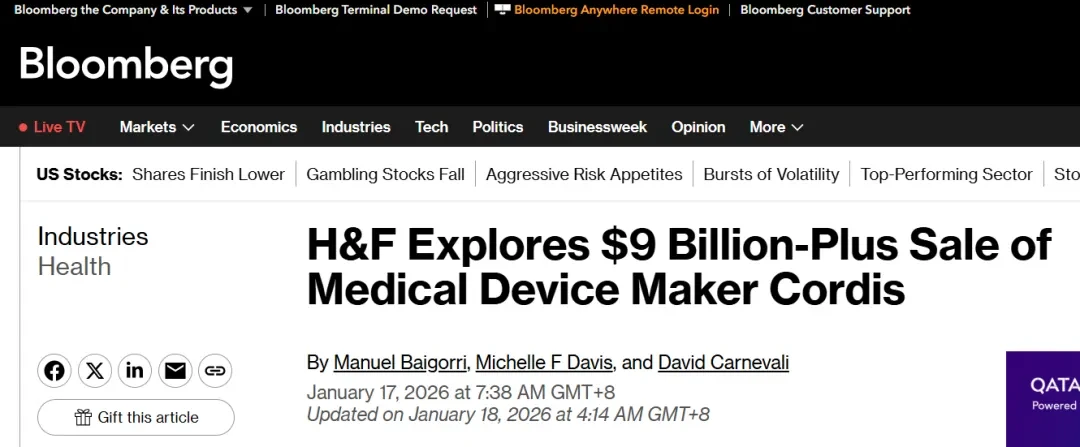
As of the time of writing, the relevant negotiations are still in the early stages.H&FIt is still inconclusive whether to sell Cordis. Moreover, KKR is also one of the investors in Cordis. H&F andKKRRepresentatives of the group all refused to comment on the rumor. Cordis spokesperson has not yet made an immediate response.
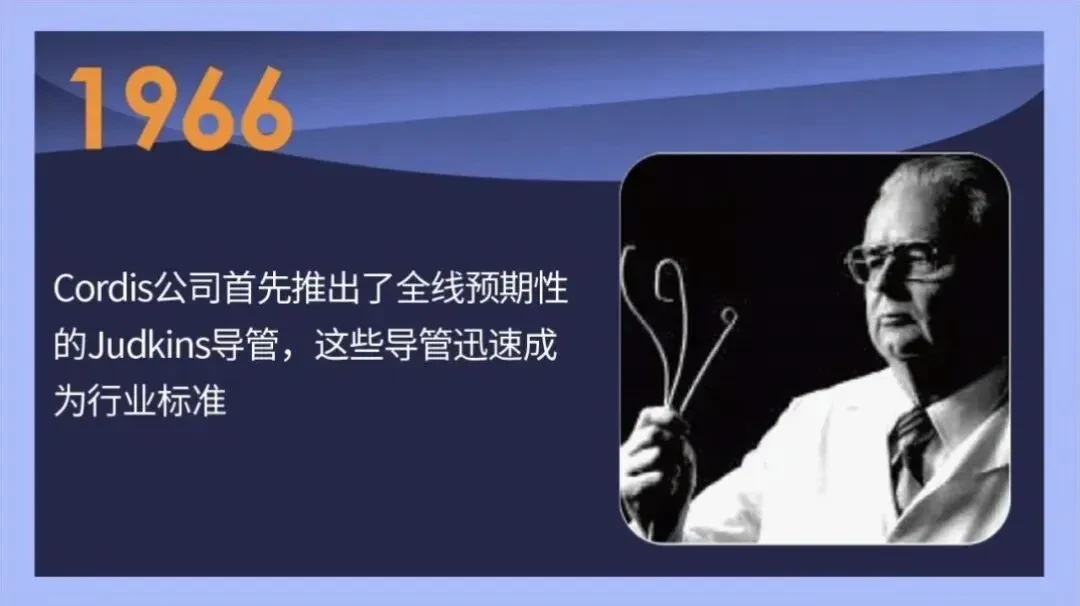
Cordis, founded in Miami, USA in 1959, holds a pivotal position in the entire cardiovascular field and is regarded as one of the pioneers in interventional cardiology and peripheral vascular interventions. Its diagnostic and interventional products include diagnostic and interventional catheters, balloons, self-expanding stents, guidewires, and vascular closure devices, with business operations extending to over 70 countries worldwide.
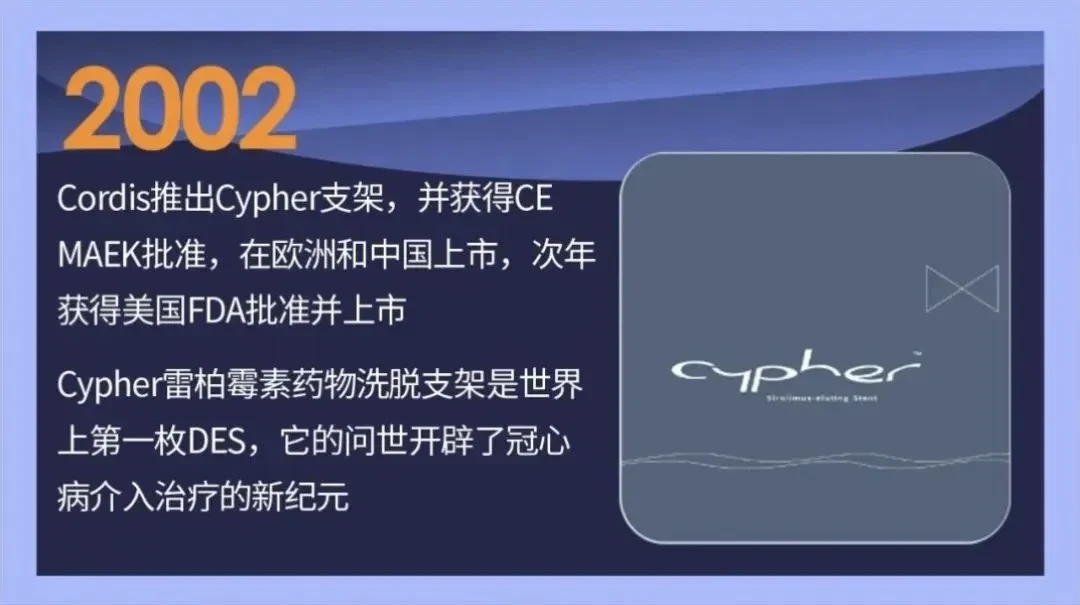
Its well-known products include: the full line of pre-shaped Judkins catheters, vascular sheaths with hemostatic valves, the self-expanding S.M.A.R.T stent made of nickel-titanium alloy, and the coronary drug-eluting stent Cypher, among other innovative industry products. These products quickly became "industry standards," revolutionizing traditional surgical methods.
Cordis has changed hands multiple times, but its development can be mainly divided into three stages:
The Johnson & Johnson Era (1996-2015)
Strategic investment in Endovascular Engineering expanded the business scope to venous thromboembolism (VTM).Market。
Cordis-X Invests $11.5 Million in Adient Medical to Support Development of Next-Generation Bioabsorbable Inferior Vena Cava Filter for Pulmonary Embolism Prevention
Acquire MedAlliance for $1 Billion to Enter the Drug-Eluting Balloon MarketSelution products have been approved in Europe, while advancing clinical trials in the U.S., forming a dual-product portfolio of "stents + balloons," driving valuation from $1 billion to $9 billion.
In 2020, distribution agreements were signed with three companies: Coris, Kaneka, and Bomei Medical. This marked the first collaboration with Coris, and both parties will work together to promote the clinical application of ZhiKun™ Single-Lumen Microcatheter and ZhiShuang™ Dual-Lumen Microcatheter.It is worth mentioning that these two products were both independently developed by Coreach, breaking the monopoly of imported products in this field.In addition, Cordis has once again partnered with Japan's Kaneka and Bomei Medical to obtain the distribution rights in China for the following products: Thrombuster™ II thrombus aspiration catheter and Ikazuchi Zero/Raiden 3 coronary balloon from Kaneka, as well as Bomei Medical’s Ultratimes® (Youyou®) / Ultratimes® NC (Youyou® NC) coronary balloons.
In response to the normalized policy environment of China's national medical device procurement, Cordis adopts a flexible and pragmatic participation strategy, with a high overall selection rate. In the fifth round of national procurement in the peripheral vascular stent field, Cordis performed particularly outstandingly.All three categories of peripheral vascular stent products under its brand participated in the competition, and ultimately succeeded in being selected as the top choice in all three product groups with a unified bid of 2,280 yuan.
In the alliance's centralized procurement in the coronary artery access field, Cordis also demonstrated strong policy adaptability. All of its core products, such as guiding catheters and guidewires, were successfully selected, with prices dropping by about 50% from the previous thousand-yuan level to the 400-500 yuan range.
China's Vascular Interventional Device Market in a Golden Cycle of Rapid Expansion
At the policy level, the normalization of centralized procurement has become a key variable in reshaping the market landscape. Since the implementation of the first national centralized procurement of coronary stents in 2020, the national level has carried out five batches of high-value medical consumables centralized procurement, covering core categories such as coronary stents and peripheral vascular stents. The sixth batch of centralized procurement will further include drug-coated balloons and urological interventional consumables.
The competitive landscape of China's vascular interventional device market has evolved from the early dominance of foreign enterprises to a diversified pattern characterized by "the rise of leading domestic products and differentiated competition from foreign enterprises," with domestic substitution entering a critical phase. In the coronary stent sector, the domestic substitution rate has reached as high as 80%, with companies such as Lepu Medical and MicroPort Medical leveraging cost advantages and policy adaptability to dominate the market. The traditional advantages of foreign brands have significantly diminished, retaining only a small share in certain high-end niche scenarios.
In the field of peripheral vascular intervention and access devices, foreign brands still maintain certain advantages, but local enterprises are rapidly squeezing foreign market shares through technological breakthroughs and centralized procurement strategies. According to the sixth batch of centralized procurement data, Chinese-produced enterprises already account for 80% of the market in categories such as coronary artery drug-coated balloons and ureteral interventional guidewires. In some细分varieties of peripheral vascular drug-coated balloons, Chinese products have achieved full coverage, extending domestic substitution from the coronary field to all categories.
The potential sale of Cordis is still in the early stages of discussion, and it remains uncertain whether H&F will ultimately sell and who the buyer might be. However, one thing is certain: whether or not the deal is finalized, Cordis’ capital story and strategic adjustments will become a significant footnote in the transformation period of China's vascular interventional device market. Medical Device News will continue to monitor this potential change.
More exciting content
Welcome to follow WeChat Video Channel


Boston Scientific CEO: China Market to Transform
Medical Device Giant Closes Factory, Lays Off 421 Employees
Medtronic CEO: Increase Acquisition Efforts by 2026
China's Brain-Computer Interface Leader: "Super Factory" Breaks Ground
Medtronic Takes the World's First Brain-Computer Interface
The First National Centralized Procurement in 2026 is Here
Former General Manager of Medtronic China Orthopedics and Neurosurgery Business Takes New Position
Production Capacity Increased 8 Times, Major Moves by China's Leading Interventional Device Manufacturer
Medtronic Split, Executive Pay Raises
Giant to Cut 22,000 Jobs, Including Medical Division

BusinessBusiness cooperation email: qxzj@landianyiliao.com