

Aikemai Medical's PFA System Achieves Successful Clinical Application in National First-Ever Procedures at Tongji Hospital, Huazhong University of Science and Technology

AccuPulse
Developer of products in the field of cardiac electrophysiology

Johnson & Johnson
Medical Device R&D and Manufacturer
Click the blue text
'%20fill='%23FFFFFF'%3E%3Crect%20x='249'%20y='126'%20width='1'%20height='1'%3E%3C/rect%3E%3C/g%3E%3C/g%3E%3C/svg%3E)
Follow Us

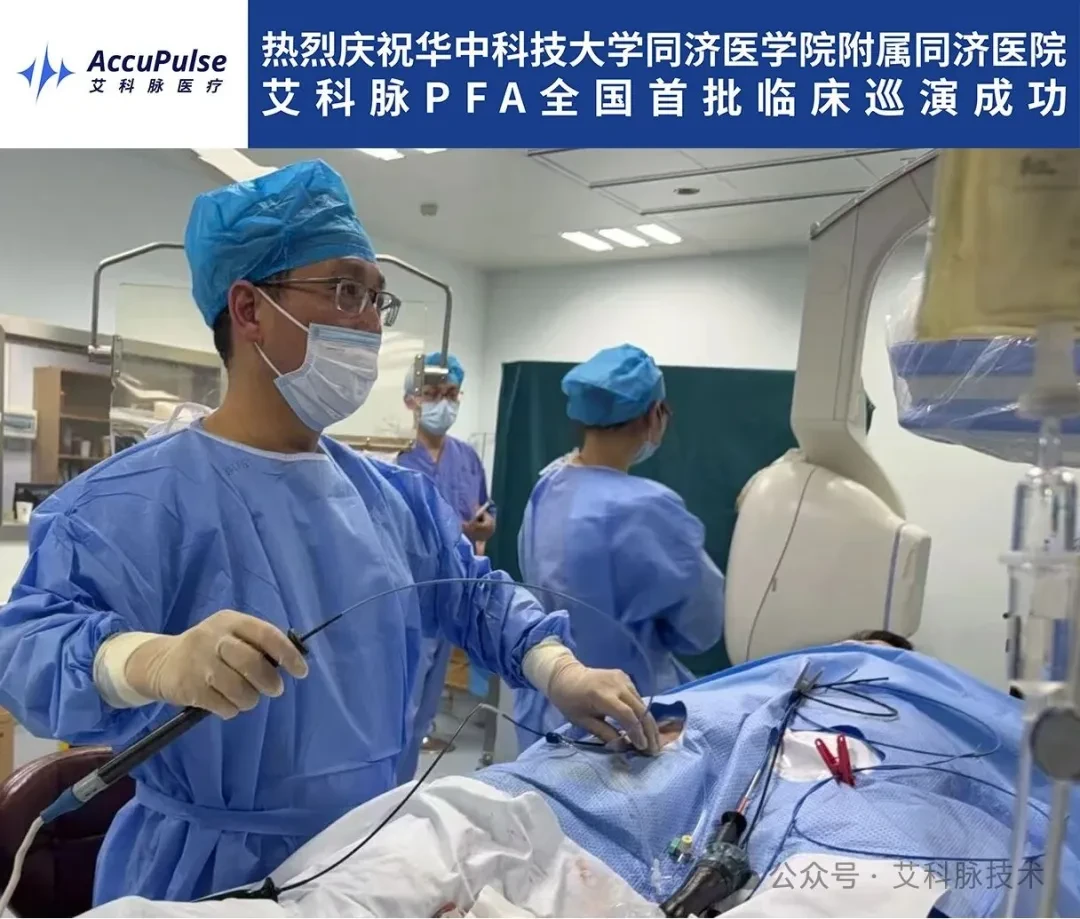
Recently,Tongji Hospital, Tongji Medical College, Huazhong University of Science and TechnologyAs one of the first clinical application units in China,Professor Wang Yan, Department of CardiologyLead its teamApplication of AccuPulse by AccuPulse Medical®Single-Use Cardiac Pulsed Field Ablation Catheter and AccuBlator®AccuPulse Medical Technology Co.Ltd's cardiac pulse electric field ablation instrument successfully performed a cardiac pulse electric field ablation (PFA) surgery on a patient with atrial fibrillation.
The successful completion of the surgery not only marks the official entry of this innovative domestically produced PFA system into the clinical application stage but also, with its three core advantages of integrated circular catheter mapping and modeling, efficient ablation, and excellent safety, provides a better option for atrial fibrillation interventional treatment.
Case Summary
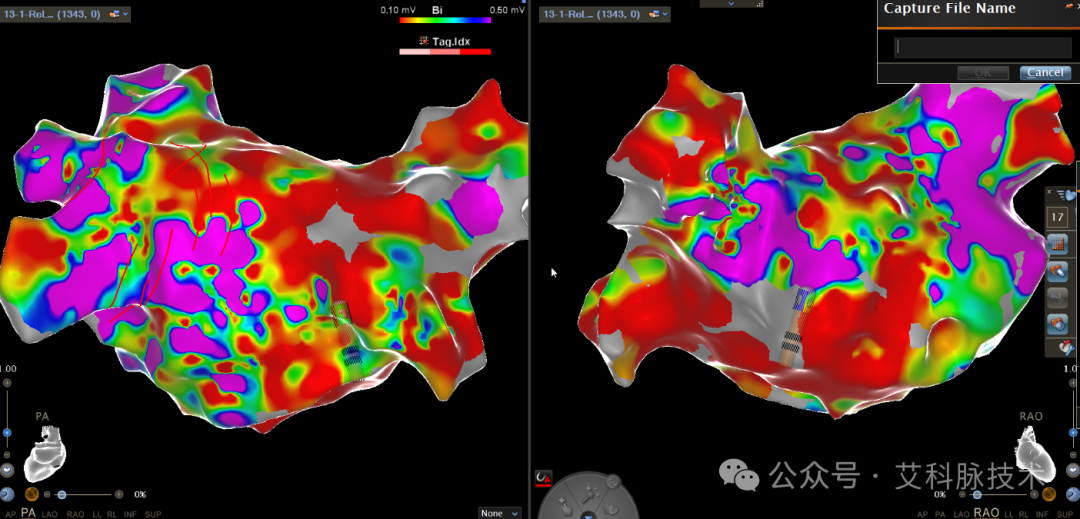
Preoperative Substrate Mapping
The patient in this surgery was a 67-year-old female with paroxysmal atrial fibrillation. According to preoperative examinations, the left atrial diameter was 52mm. Ablation was performed using AccuPulse's 20mm fixed-loop cardiac pulse ablation catheter. The total surgery duration was 2 hours and 27 minutes, including 12 minutes for mapping and modeling and 62 minutes for pulmonary vein ablation.
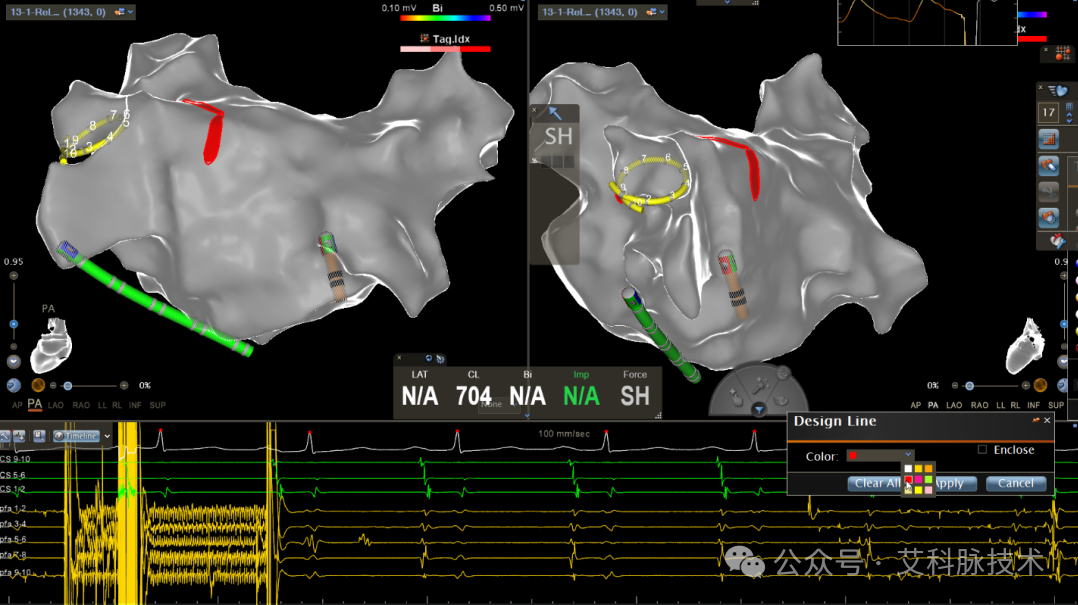
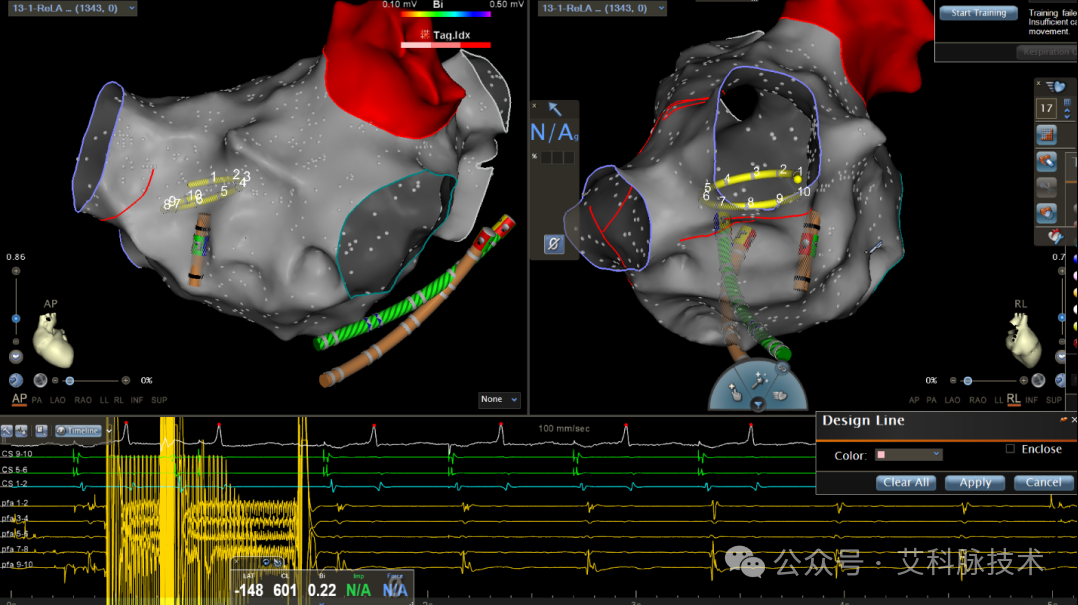
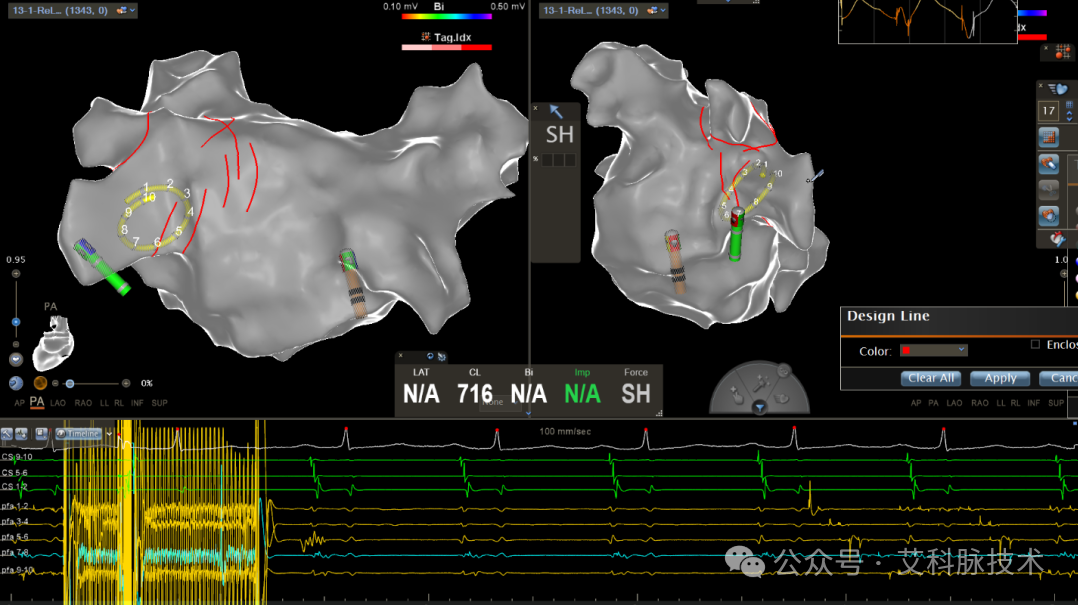
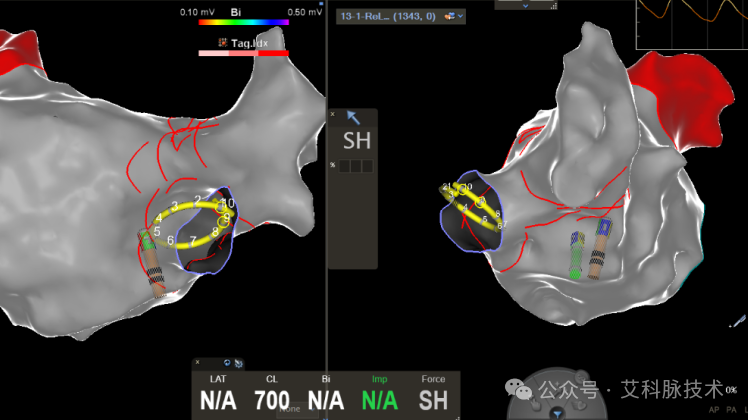
PVI Ablation Diagram
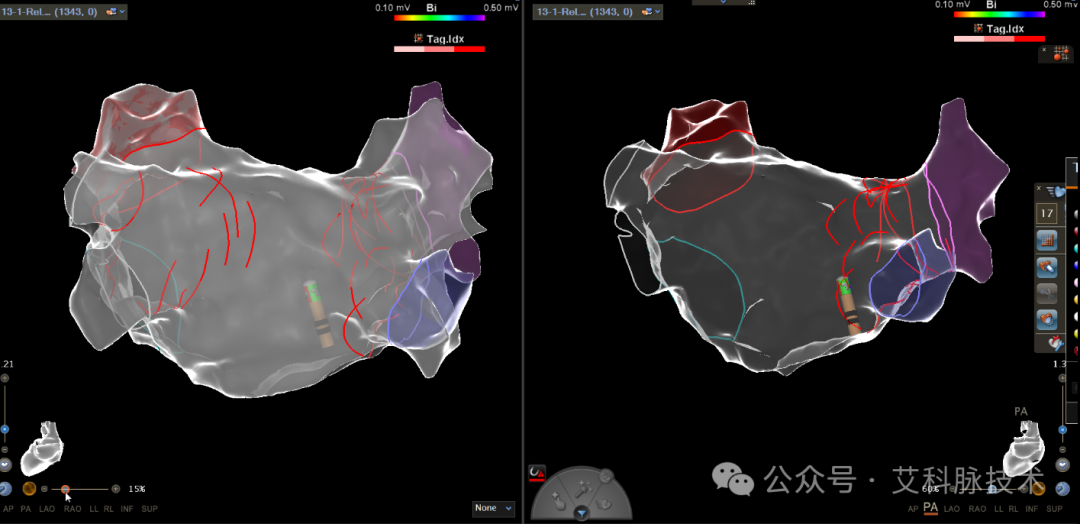
Ablation Trajectory Map
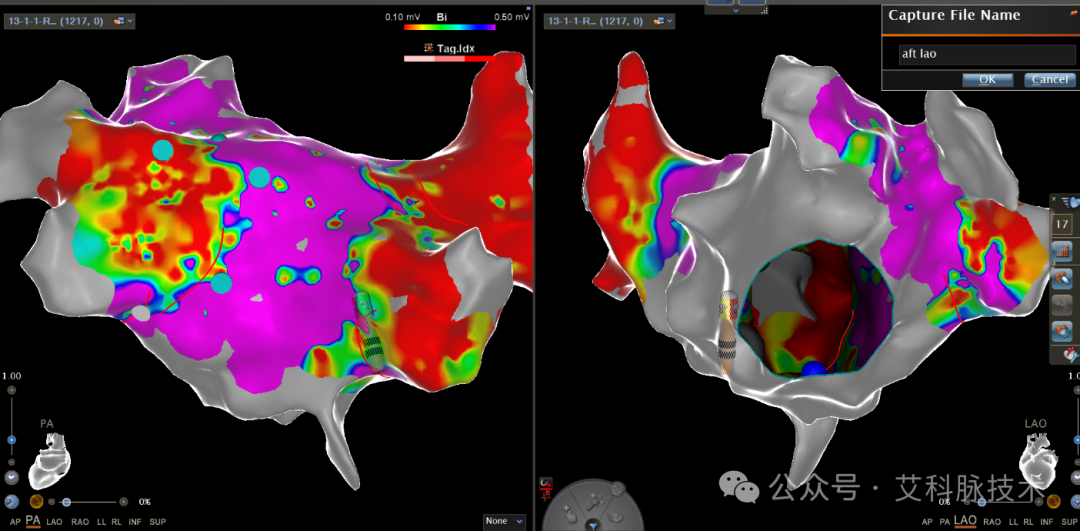
Postoperative Substrate Mapping
The core strategy of the surgery was bilateral pulmonary vein isolation (PVI). During the procedure, a pulsed electric field ablation catheter was used. Based on the model and mapping information, electrodes were selected for ablation at the pulmonary vein ostium and vestibule areas. Additional points were added and the ablation isolation circle was expanded as needed. The specific ablation discharge details are as follows: LSPV discharged 28 times (6 times at the ostium, 22 times in the vestibule), LIPV discharged 30 times (6 times at the ostium, 24 times in the vestibule), RSPV discharged 71 times (23 times at the ostium, 48 times in the vestibule), RIPV discharged 78 times (30 times at the ostium, 48 times in the vestibule). After the ablation, detailed voltage mapping was performed to confirm complete electrical isolation of the bilateral pulmonary veins. The ablation line (large loop isolation) was intact with thorough blockage, and the surgery was successfully completed.
Expert Commentary
This surgery was performed under local anesthesia, thanks to the rapid pulse energy release time of the AccuPulse Cardiac Pulse Field Ablation System—single ablation energy release <0.2s. Performing atrial fibrillation pulse ablation without general anesthesia saved costs for the patient and avoided the occurrence of "anesthesia-related accidents" due to general anesthesia. The contact indication function of the AccuPulse Cardiac Pulse Ablation System proved to be stable and reliable, with its real-time monitoring of catheter-tissue contact quality and clear indication of contact status effectively supporting the smooth implementation of the predetermined ablation strategy: “PVI isolation + spot supplementation consolidation and expansion of isolation lines.” Despite the complexity posed by the significant enlargement of the patient’s left atrium, which increased the difficulty of accessing certain areas, the system demonstrated excellent controllability and stability during the main ablation process. The operator also praised its clear and intuitive 3D modeling function, which worked smoothly in conjunction with the Johnson & Johnson 3D system, further enhancing the precision of the surgical operation.
About AccuPulse Cardiac Pulse Ablation System
Flexible Adaptation, Precise Adherence:Its unique 7.5F adjustable loop diameter design can flexibly match the pulmonary vein anatomy of different patients, achieving personalized adaptation and significantly enhancing the adaptability and safety of the operation.
Intelligent docking, real-time feedback:The system is equipped with AccuPulse's self-developed impedance contact提示 technology, which can monitor the contact quality between the catheter and tissue in real time, clearly indicate the contact status, assist operators in achieving stable and reliable catheter control, and provide a solid guarantee for precise ablation.
Efficient Integration, Streamlined Processes:The circular catheter integrates mapping, modeling, and ablation functions, rapidly constructing a three-dimensional electroanatomical model of the heart during surgery, accurately locating lesions, and significantly reducing reliance on additional high-density mapping catheters in traditional surgeries. This not only decreases surgical complexity but also saves on consumable costs, providing a safer, more effective, and less invasive treatment option for patients with atrial fibrillation.
Safer:7.5F Ultra-thin Catheter, Reducing Tissue Damage
More Stable:Smart Snap Tips for More Precise Operation
More flexible:Adjustable loop diameter (15-20mm or 20-25mm) to meet different clinical choices.
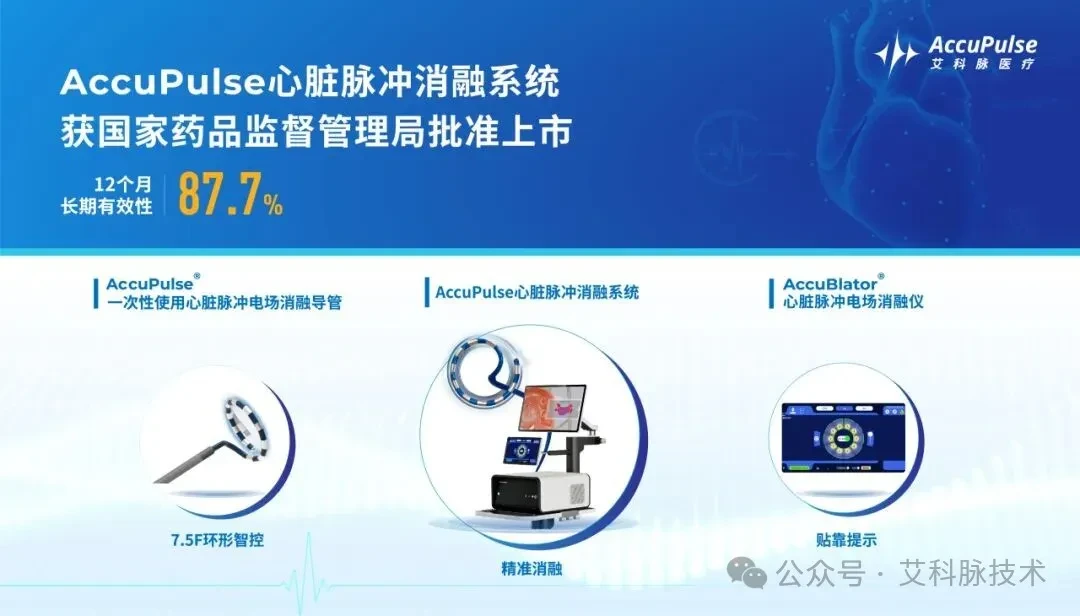
AccuPulse Medical Technology Co., Ltd. Receives Approval for Its Disposable Cardiac Pulse Field Ablation Catheter, Overcoming Challenges in the PFA Field Related to Catheter Stability and Anatomical Adaptability, Providing a Precise and Reliable Solution for Pulmonary Vein Isolation (PVI). The Unique 7.5F Adjustable Loop Design of the AccuPulse Cardiac Pulse Field Ablation Catheter Flexibly Adapts to Different Pulmonary Vein Anatomies, with Intelligent Contact Sensing and Flexible Electrode Selection Allowing Surgeons Full Control to Achieve Precise Pulse Ablation!
The successful application of PFA technology this time is an important achievement of AccuPulse Medical in the continuous innovation and meticulous development in the field of atrial fibrillation treatment. The high efficiency, safety, and potential cost-effectiveness demonstrated by the system during the procedure show broad clinical application prospects and market potential. In the future, AccuPulse Medical will continue to deepen its clinical collaboration with Tongji Hospital Affiliated to Tongji Medical College of Huazhong University of Science and Technology, promote the standardized application and popularization of PFA technology, and strive to provide internationally leading one-stop atrial fibrillation diagnosis and treatment solutions for arrhythmia patients across China.
About AccuPulse Medical
AccuPulse Medical Technology Co.Ltd is an innovative company specializing in the research, development, and industrialization of advanced technologies in the field of cardiac electrophysiology. The company’s core team possesses deep expertise in electrophysiological technology and extensive experience in the industrialization of medical devices, consistently striving to provide safer, more efficient, and more convenient treatment options for patients with arrhythmias such as atrial fibrillation.
This time, AccuPulse®Single-use Cardiac Pulsed Field Ablation Catheter and AccuBlator®The successful application of the cardiac pulsed electric field ablation system at Tongji Hospital, Huazhong University of Science and Technology, marks a milestone achievement for AccuPulse in the field of innovative electrophysiological treatment technology.
About Tongji Hospital Affiliated to Tongji Medical College, Huazhong University of Science and Technology
Department of Cardiology, Tongji Hospital, Tongji Medical College, Huazhong University of Science and Technology, was established in 1959. The Heart Function Room was set up in 1985, and the Cardiac Catheterization Lab was established in 1988. The department is a key discipline of the Ministry of Education and a National Key Clinical Specialty of the National Health Commission. It also hosts several national platforms, including the NHFPC Training Base for Interventional Diagnosis and Treatment of Coronary Heart Disease, Arrhythmia, and Structural Heart Disease, as well as the National Standardized Training Base for Resident Physicians (including the Specialty Physician Training Base in Cardiovascular Diseases). Supported by the Hubei Provincial Key Laboratory of Genetics and Molecular Mechanisms of Cardiovascular Diseases and the Hubei Engineering Research Center for Vascular Interventional Therapy, the department has achieved coordinated development in medical care, education, and research. Under the leadership of successive directors such as Tao Huanle, Zhao Huayue, Yu Shu, Lu Zaiying, Ma Yexin, Wang Daowen, and Zeng Hesong, the cardiology team has continued to grow stronger. The current academic leader is Professor Wang Yan, who holds important academic positions both domestically and internationally, including member of the Professional Committee of the Chinese Medical Doctor Association's Arrhythmia Society, member of the Chinese Biomedical Engineering Society’s Arrhythmia Branch, standing committee member of the Youth Committee of the Chinese Society of Cardiac Electrophysiology and Pacing, and chairman of the Hubei Society of Cardiac Electrophysiology and Pacing. The department covers the diagnosis and treatment of various cardiovascular diseases, particularly excelling in areas such as fulminant myocarditis treatment, complex coronary artery disease and large vessel interventions, structural heart disease interventions, radiation-free electrophysiology, pulsed electric field ablation for atrial fibrillation, catheter-based hypertrophic cardiomyopathy ablation, artificial intelligence, and disease risk prediction, maintaining a leading position nationwide and even globally.
Expert Profile

Wang Yan
Tongji Medical College, Huazhong University of Science and Technology
Affiliated Tongji Hospital
Professor, Chief Physician, Doctoral Supervisor, Director of the Department of Cardiology at Tongji Hospital, Tongji Medical College, Huazhong University of Science and Technology. In 2008, he was one of the four recipients of the Siemens Scholarship in Cardiac Intervention awarded by China's Ministry of Health. In 2009, he studied at the Texas Arrhythmia Institute in the United States. He has served as a member of the First Committee of the Heart Rhythm Society of the Chinese Medical Doctor Association, a member of the Heart Rhythm Branch of the Chinese Biomedical Engineering Society, a standing committee member of the Youth Committee of the Chinese Society of Cardiac Electrophysiology and Pacing, the first Deputy Chairman of the Green China Electrophysiology Alliance, and the fifth Chairman of the Hubei Provincial Medical Association’s Pacing and Electrophysiology Branch. He has led five key projects of national and provincial Natural Science Foundation. In 2013, he was the first both domestically and internationally to propose β-blocker-induced premature ventricular contractions/ventricular tachycardia and successfully perform ablation; in 2016, he completed the first single-chamber pacemaker implantation and the first dual-chamber pacemaker implantation without radiation in China; in 2017, he was the first globally to publish a large clinical controlled study on "Zero X-ray" three-dimensional navigation ablation for premature ventricular contractions/ventricular tachycardia. In 2019, he received funding from Springer Publishing to edit the English monograph "Cardiac Electrophysiology Without Fluoroscopy," co-authored by dozens of experts from Europe, the U.S., and other countries; in 2019, he was among the first in China to publish research papers on high-power short-duration ablation for atrial fibrillation; ablation treatment for pregnant women using zero-radiation three-dimensional navigation was cited in the 2019 European Guidelines for Supraventricular Tachycardia. In 2020, he was among the first both domestically and internationally to publish a large clinical controlled study on "Zero X-ray" three-dimensional navigation ablation for supraventricular tachycardia. Editorial board member of the European Journal of Pacing and Electrophysiology (PACE); in 2018, he edited "Introduction to Electrophysiology Knowledge" (Beijing, Scientific and Technical Documentation Press).