

From Tertiary Hospitals to Community Health Centers: Four Institutional Visits Reveal the Transformative Shifts in Shenzhen's Smart Healthcare Ecosystem
From “Special Economic Zone” to “Demonstration Zone,” Shenzhen has once again stepped into the spotlight.
Over the past decade of healthcare reform, Shenzhen’s technology-driven healthcare system has delivered outstanding results across many fields, with smart healthcare undoubtedly taking center stage. We have witnessed profound changes in Shenzhen’s healthcare models, institutions, and economics. These shifts are first evident in the data released by the Shenzhen Municipal Health Commission.
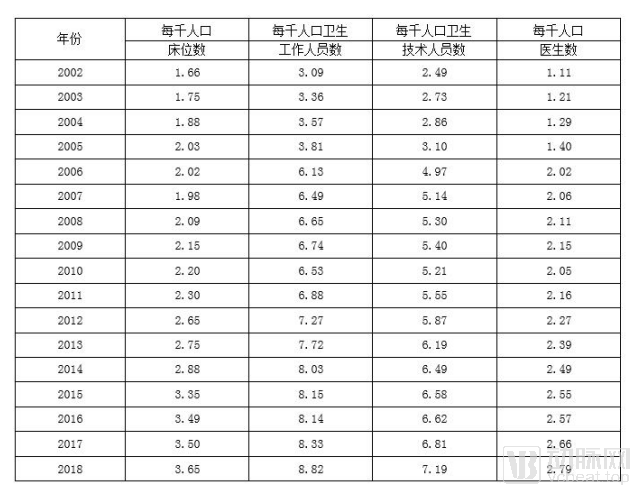
Data sourced from the 2018 Shenzhen Health Statistics Summary
The total number of hospital beds in a regional hospital indirectly reflects the healthcare status of that region. As shown in the chart, all four indicators exhibit a consistent upward trend, indicating effective investment in healthcare by Shenzhen. However, has this level of investment been sufficient to bridge the healthcare gap?
Statistical data from the 10 years following 2009 show that in Shenzhen, the number of hospital beds per 1,000 people increased by 69.77%, with an average annual growth rate of 5.38%; the number of health workers per 1,000 people rose by 30.9%, with an average annual growth rate of 2.73%; the number of health technical personnel per 1,000 people grew by 33.15%, with an average annual growth rate of 2.90%; and the number of physicians per 1,000 people increased by 29.77%, with an average annual growth rate of 2.64%.
Over the past decade, the number of hospitalized patients has increased from approximately 800,000 to about 1.43 million, representing a total growth of 78.75% and an average annual growth rate of 5.98%. This growth rate has surpassed that of any of the aforementioned indicators.
How is Shenzhen Responding? Technological Empowerment and Model Iteration Are Naturally the Solutions. Leveraging its homegrown tech giants such as Tencent, Shenzhen has carved out its own unique “Internet + Healthcare” pathway by exploring technologies and models including internet hospitals, artificial intelligence, big data, and 5G. This approach features both the mature and tightly integrated medical consortium model known as the “Luohu Model” and mobile payment support that spans the entire healthcare journey—gradually giving rise to what is emerging as the “Shenzhen Model.”
So, under the “Shenzhen Model,” how can community health centers retain hospitals? How can tertiary Grade A hospitals extend their services downward? How can health insurance payment systems be integrated? And how should tiered diagnosis and treatment be advanced? With these questions in mind, VCBeat visited four medical institutions: Union Shenzhen Hospital of Huazhong University of Science and Technology, Shenzhen Traditional Chinese Medicine Hospital, Shenzhen Children’s Hospital, and Dongmen Community Health Center. From the perspectives of smart community health center development, smart hospital construction, and hospital structural organization, we explored the development of smart healthcare in Shenzhen.
How Can Community Health Centers Retain Patients?
The Pattern May Be the Key to Solving the Problem
As a window and model for Shenzhen’s community health centers, the Dongmen Community Health Center, located on the former site of Luohu Hospital, has undergone transformative changes following the new healthcare reform.
Prior to the reform, the Dongmen Community Health Service Center handled approximately 300 outpatient visits per day. Today, that figure has surged to nearly 1,000. During peak periods such as the post-Spring Festival season, daily outpatient visits can reach 1,100, a volume comparable to that of a secondary hospital.
What factors have driven the transformation of Dongmen Community Health Center? One entity and three-pronged reforms may be the key to its metamorphosis.
On August 20, 2015, Luohu Group established an integrated, tightly-knit medical group with a single legal entity. The group comprises five district-affiliated hospitals, 23 community health centers, and two specialized community health facilities, supported by six management centers and six resource centers.
Due to its unique structure, characterized by a single legal entity and a fixed global budget for medical insurance expenditures, the various subsidiaries within the entire medical group are incentivized to collaborate, forming a community of shared interests dedicated to safeguarding the medical insurance fund. In contrast, the incentive mechanism has shifted from the former model of “sustaining healthcare through drug sales” to a proactive “preventive care” approach, striving to assist enrolled residents with prevention efforts to encourage them to remain within primary care settings.
Why Are Community Health Centers Motivated to Retain Patients at the Primary Care Level? From the Perspective of Medical Insurance, Incentives Lie at the Core.
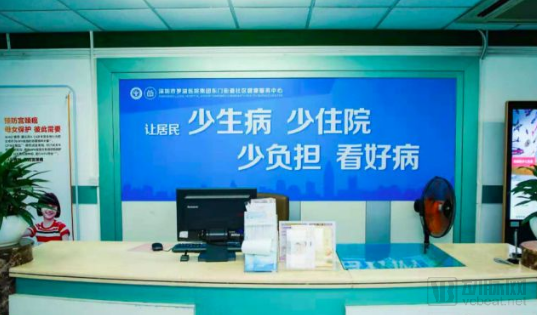
The Mission of Dongmen Community Health Center: A Path to Medical Insurance Savings
From the perspective of medical insurance, Shenzhen has adopted a four-tier medical insurance contribution system. For conditions covered under the reimbursement catalog, patients incur nearly 1.4 times higher medical insurance expenditures when seeking care at hospitals compared to community health centers, resulting in additional costs for both patients and healthcare institutions. Consequently, primary care providers are incentivized to retain patients at the grassroots level by improving service quality, while referring patients whose conditions exceed their capacity to higher-level facilities.
Meanwhile, there is a significant demand for convenience in medical insurance payments. How to simplify processes and reduce the time cost for patients’ out-of-pocket payments has become a core challenge confronting primary healthcare institutions across various regions.
To address this issue, Dongmen Community Health Center partnered with Tencent to integrate WeChat medical insurance payments. Under this model, every payment slip issued to patients features a QR code for settling the associated fees. As illustrated in the figure, patients no longer need to make frequent trips to the hospital’s cashier office; instead, they can simply scan the QR code on the receipt to complete the medical insurance deduction.
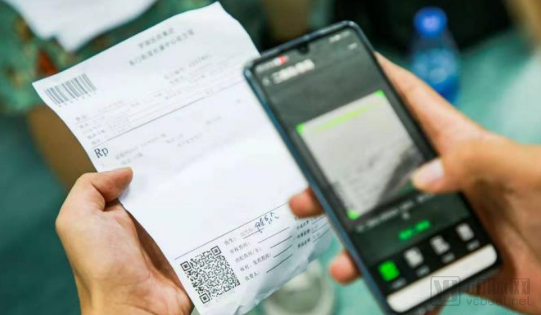
Patients can complete payment at any time by scanning the WeChat QR code on the payment slip.
The second perspective is quality. To ensure the reliability of medical services and retain more patients at the primary care level, Dongmen Community Health Center has taken the lead in strengthening its information technology infrastructure.
Chen Jialin, Deputy President and Director of the Information Center at Shenzhen Luohu Hospital Group, stated, “To achieve data interoperability across the Luohu Group, all medical institutions under the group are gradually unifying their information systems.”
Taking the radiology department of a community health center as an example, there is only one radiologic technologist on staff. All generated images are transmitted to the cloud for centralized interpretation by specialists at higher-level institutions. This approach ensures that the entire Luohu Group produces standardized imaging results, facilitating patient referrals and follow-up care. Meanwhile, this model significantly reduces labor costs for community health centers.
The third perspective is pharmaceuticals. After all community health centers under the Luohu Group were connected with hospitals, the supply of pharmaceutical varieties became sufficiently abundant.
Guo Zhihong, Deputy Director of the Dongmen Community Health Center under the Shenzhen Luohu Hospital Group, stated, “The Dongmen Community Health Center offers more than 1,300 types of medications. If contracted residents have needs for specific drugs, we can promptly address these issues through internal coordination within the hospital group.”
“Dongmen Community Health Center has also introduced automated medication dispensing kiosks. The implementation of this equipment not only reduces patients’ waiting time for medications but also lowers the error rate among physicians. Furthermore, a robust team at the group’s backend is responsible for prescription review, thereby reducing the number of physicians required for medication dispensing through centralized management.”
Beyond the three pillars of medical care, pharmaceuticals, and health insurance, Dongmen Community Health Center has also implemented numerous innovations in its general practitioner model.
In terms of general practice services, the Group has adopted a “4+X” family doctor service team model, comprising one general practitioner (team leader), one general practice nurse, one public health specialist, and one community clinical pharmacist, plus “X.” Here, “X” refers to one or more specialists from among specialist physicians, health promotion officers, dietitians, health managers, and mental health physicians. This model enables the team to flexibly address the needs of diverse patient populations and comprehensively meet residents’ healthcare and public health requirements.
Overall, as the foundation of the tiered diagnosis and treatment policy, Dongmen Community Health Center has effectively retained patients at the primary care level by leveraging technical expert support and a two-way referral model provided by the Luohu Hospital Group, along with service supports such as online appointment registration and online medical insurance payment.
The medical consultation process is frequently obstructed,
Process Visualization May Become a Boon for Patients
Regarding the optimization of the patient consultation process, the approach adopted by Union Shenzhen Hospital of Huazhong University of Science and Technology (Nanshan Hospital) is worth discussing. The new building of this Grade 3A hospital opened in March this year, with the entire facility undergoing significant adjustments to support the development of a smart hospital.
From the perspective of the outpatient lobby, registration windows have nearly vanished from this building; patients can now register for medical consultations via self-service kiosks or online appointments.
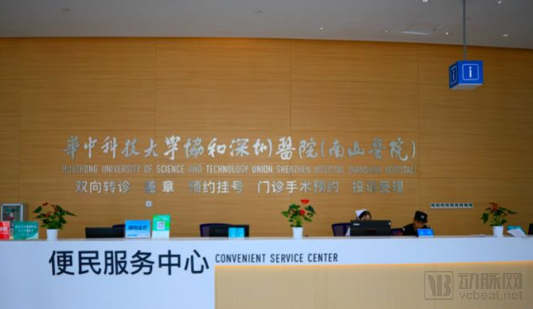
Past registration windows have been replaced by service windows.
Through its partnership with Tencent, Nanshan Hospital has opened up mobile appointment registration channels. After following the Nanshan Hospital official WeChat account, patients in Shenzhen can schedule appointments from anywhere via the hospital’s WeChat Official Account or Mini Program.
The mini-program offers more than just these functions; at any stage of the medical visit, patients can use it to make real-time payments, access real-time navigation, and check their visit status and social insurance balance.
“To help patients accurately determine their location,” explained Lv Zhouping, Deputy Director of the Network Technology Department at Union Shenzhen Hospital of Huazhong University of Science and Technology, “the building is equipped with built-in Bluetooth beacons every three meters, enabling floor-level positioning precision. Hospital department layouts rarely take patient experience into account, often forcing patients to ask for directions multiple times before reaching their destination. This system effectively addresses the challenge of indoor navigation within the hospital, significantly reducing labor costs. Moreover, it will become an important component of the hospital’s digital transformation.”
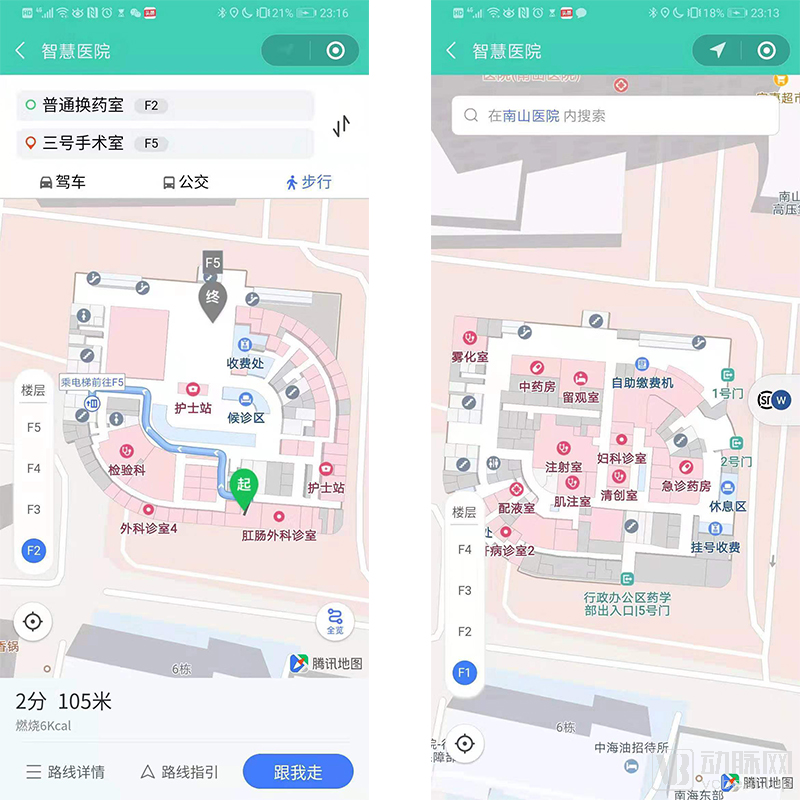
Navigate to Every Hospital Department via WeChat Mini Program
Nowadays, Nanshan Hospital has implemented pre-prescription review. Through the software system, once a physician issues a prescription via computer, it is simultaneously transmitted to pharmacists for review. Upon approval, the medication is dispatched directly to the pharmacy pickup window. When handing over the medication to the patient, the attending physician re-verifies the consistency among the prescription, the medication, and the patient to ensure the safety of the prescription drug distribution process.
“The entire process undergoes dual verification, eliminating medication errors by physicians and dispensing mistakes for patients. Integrated with online medical insurance payment, patients can proceed directly to the pharmacy pickup counter after the physician issues the prescription, enabling immediate discharge. Previously, patients waited for medications; now, medications await patients.”
In addition to optimizing the patient care process, Nanshan Hospital has also made significant efforts in areas such as informatization and artificial intelligence.
2019 marked the 10th anniversary of China’s national healthcare reform, as well as the 10th year of health informatization development in the Nanshan District. Over the past decade, hospitals have leveraged the advantages of the Nanshan District Health Private Network and the internet to achieve interoperability between electronic medical records (EMRs) and personal health records (PHRs). This has enabled the extension of services such as physician order entry, e-prescriptions, and telemedicine, facilitating the sharing and mutual utilization of medical information—including medical imaging, health records, laboratory reports, and EMRs—between hospitals and community health service centers.
Looking back, the top-level design implemented after the new healthcare reform in 2009 has been a crucial factor in shaping the current landscape. Luo Xudong, Party Secretary of Union Shenzhen Hospital of Huazhong University of Science and Technology (Nanshan Hospital), told VCBeat, “Nanshan Hospital began its regional health informatization construction as early as 2009, laying a solid foundation for today’s information systems.”
Today, a comprehensive healthcare informatics network characterized by “horizontal coverage across all departments and vertical integration down to the grassroots level” has been fully implemented at Nanshan Hospital, extending the hospital’s patient care reach to primary care settings. It is reported that, leveraging the hospital’s regional network platform, clinical experience data and diagnostic/treatment information are now interoperable and shared among five district-level hospitals under Nanshan District and 89 community health centers, thereby facilitating seamless two-way referrals between hospitals and community health centers.
Furthermore, Nanshan Hospital was the first in Shenzhen to complete technical integration with the provincial supervision platform. On April 23, 2019, it obtained one of the first batch of Internet hospital licenses issued by Guangdong Province, becoming one of only two Internet hospitals in Shenzhen.
Nanshan Hospital also has its unique construction philosophy. Secretary Luo Xudong stated, “First, we treat the Internet as a tool and integrate it into every aspect of medical services. Second, we recognize that the Internet represents a mindset. This Internet-driven mindset brings about transformative changes in hospital management and healthcare delivery models, and we embrace these changes.”
Extension of Smart Services: Shenzhen Traditional Chinese Medicine Hospital
Self-Reinvention through Informatization and the Internet of Things
“Supporting the inheritance, innovation, and development of Traditional Chinese Medicine (TCM)” is one of the major trends in China’s healthcare development. Therefore, for this issue, we visited Shenzhen Hospital of Traditional Chinese Medicine to gain an overview of its progress in smart healthcare.
Informatization has always been a key focus in the development of Shenzhen Traditional Chinese Medicine Hospital. Here, informatization refers not only to internal hospital information systems but also to the digitalization of patient care processes.
In terms of in-hospital informatization, Shenzhen Traditional Chinese Medicine Hospital has established a hospital information integration system architecture based on an interoperable service bus. It passed the Level 4 assessment in accordance with national interoperability standards and achieved Level 5 certification in the national electronic medical record (EMR) grading evaluation.
Equally important is patient-oriented informatization. Tang Xiongwei, Deputy Director of the Computer Center under the Quality and Information Department at Shenzhen Traditional Chinese Medicine Hospital, stated, “We aim to establish a comprehensive, end-to-end digital workflow that covers every stage from appointment scheduling, waiting, consultation, to medication dispensing. To achieve this goal, the hospital has introduced services such as electronic health codes and WeChat-based mobile payments, optimizing traditional outpatient diagnosis and treatment processes to uphold the principle of ‘patient-centered care’.”
Furthermore, to better implement internet-based convenient services for the public, the Traditional Chinese Medicine (TCM) Hospital has established a smart pharmacy to provide patients with one-stop comprehensive pharmaceutical care services. These extended services include TCM decoction on behalf of patients, home delivery of medications, and pharmaceutical information consultations. Specifically, after receiving a prescription from their physician, patients no longer need to queue to pick up their medications; instead, the hospital will arrange for the drugs to be dispatched within 24 hours from several partner compounding pharmacies collaborating with Kangmei Pharmaceutical directly to the homes of patients in the Shenzhen area.
“The storage and dispensing of medications previously incurred costs; we are now redirecting the savings to provide patients with more convenient delivery services, driven by our hospital’s ‘patient-centered’ principle,” a physician at a traditional Chinese medicine hospital told VCBeat.
It should be noted that, to ensure medication safety for patients, the Traditional Chinese Medicine (TCM) Hospital has not enabled prescription circulation. This means that patients must print their prescriptions through the TCM Hospital’s smart platform each time they collect their medications.
According to data provided by Shenzhen Traditional Chinese Medicine Hospital, the number of patients opting for medication delivery has exceeded 50%, while those using mobile payments have surpassed 60%.
Going forward, Shenzhen Traditional Chinese Medicine Hospital has a substantial agenda. On one hand, the hospital will strive to achieve Level 6 in the Electronic Medical Record (EMR) Application Functionality Grading and Level 5-Yi in the Health Information Interconnectivity Standardization Maturity Assessment, while also pursuing smart hospital service accreditation. On the other hand, the hospital is working to standardize its extensive TCM diagnosis and treatment data to extract value from big data analytics.
Is Humanistic Care Important?
The hospital regards this as one of the key priorities in its development goals.
Strictly speaking, the exterior appearance and departmental design of a hospital do not fall under the definition of a “smart hospital” by nature. However, when human-centered design is integrated with intelligent services, it delivers a markedly different experience for patients, particularly for children who are new to the world.
On the one hand, pediatric conditions are characterized by sudden onset, recurrence, variability, and instability, making it difficult for parents to assess the severity of their child’s illness based on current symptoms. On the other hand, children are often unable to recognize their own condition, provide accurate chief complaints, or cooperate with medical treatment, thereby rendering all diagnostic and therapeutic interventions particularly challenging.
Therefore, children's hospitals need to incorporate greater humanistic care into their design to alleviate children's anxiety and resistance as much as possible.
Taking the dental department as an example, Shenzhen Children’s Hospital has adopted a design with independent private rooms. “In the past, several children underwent procedures together; when one child started crying, it triggered all the others to cry as well. Doctors couldn’t concentrate on their work,” a dentist told VCBeat.
At Shenzhen Children's Hospital, every department within the dental clinic is equipped with televisions, allowing children to divert their attention during surgical procedures.
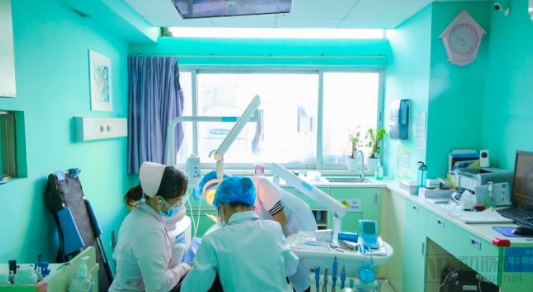
Surgical Departments Tailored to Children's Needs
Furthermore, the hospital has created a “Space of Love” for pediatric patients, establishing China’s first public-service experience hub based in a hospital setting—the VCare Care Space, a public information portal for child health assistance. This initiative offers a variety of courses for children, providing them with a dedicated space for activities and engagement.
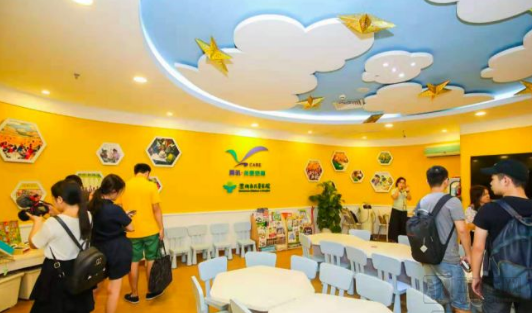
Vcare Care Space
In addition to these user-centered design features, Shenzhen Children’s Hospital has also made significant strides in smart outpatient services.
As the only children’s hospital in Shenzhen, the biggest challenge for pediatric care stems from parents’ difficulty in securing appointments. “Our outpatient volume reaches 2.3 million visits annually, averaging 6,300 visits per day. Family members often queue from the registration windows all the way to the side roads near Lianhua Mountain,” joked Cong Min, Director of the Outpatient Department at Shenzhen Children’s Hospital.
To this end, Shenzhen Children’s Hospital pioneered the “comprehensive appointment model for non-emergency consultations,” whereby all appointment channels are opened to implement full appointment-based scheduling for non-emergency cases. The real-name medical card system has been upgraded (with the guardian’s name being mandatory), and the patient’s name and date of birth are, in principle, not subject to change, thereby ensuring that parents who need appointments can secure them.
Shenzhen Children’s Hospital pioneered mobile payment services in 2015. In October alone, daily transactions via mobile payment methods, primarily WeChat, exceeded 5,000. This figure continued to rise over time. In 2018, Shenzhen Children’s Hospital partnered with Health 160 to innovatively apply WeChat’s medical insurance payment feature to pediatric healthcare scenarios, becoming the first in China to integrate children’s medical insurance with mobile payment functionality. According to the data, a total of 2,246,197 mobile in-clinic payments were processed throughout 2018, with a total payment amount of RMB 212.54 million.
Through changes in the service model, the online appointment rate for medical consultations at Shenzhen Children’s Hospital surged from 16.04% in 2013 to 90.01% in 2018. Overall, the healthcare-seeking behavior of the vast majority of parents has undergone a significant shift.
Overall, the clinical service experience at Shenzhen Children’s Hospital is more impressive than that of smart hospitals. In fact, convenience in medical services is crucial for patients, and the immediate impression conveyed by a hospital also significantly influences their healthcare experience. Perhaps adult hospitals should also incorporate more vibrant elements to create a more relaxed atmosphere for both doctors and patients.
"The decongestion of tertiary hospitals and the bustling community health centers are our immediate impressions after visiting four hospitals, reflecting the success of Shenzhen's 'tiered diagnosis and treatment' system."
“The Shenzhen Model” took its initial shape here; the healthcare landscape once characterized by robust hardware but inadequate services has become a thing of the past, thanks to the infusion of new models and technologies. We believe that the core forces driving this transformation can be attributed to the following three factors.
First, tightly integrated medical consortia, represented by the “Luohu Model” and the “Nanshan Model,” have unified community health centers with tertiary Grade A hospitals into a single entity. Under this integrated framework, previously fragmented services such as bidirectional patient referral, prescription circulation, and medical record sharing have been seamlessly connected. This has also fostered centralized processes, including unified laboratory testing and centralized imaging review, thereby aggregating dispersed resources and reallocating surplus physicians to areas with greater healthcare needs. Meanwhile, community health centers under this model have gained support from high-quality medical professionals at superior-level hospitals, leading patients to gradually trust the diagnostic and treatment capabilities of these community facilities.
Second, technological advancements centered on artificial intelligence and informatization have enabled many of the functions offered by internet hospitals. Consultations and prescription reviews are expedited to occur before patients see their doctors, thereby improving the efficiency of resource matching between doctors and patients and making the visualization of the patient care process possible.
Third, payment models centered on mobile medical insurance payments, such as those via WeChat, have bridged the gaps between various stages of healthcare delivery. Patients can continue their consultations without needing to return to payment counters, thereby streamlining the entire diagnosis and treatment process. As a Shenzhen-based enterprise, Tencent has leveraged its “Two Cards and One Platform” solution—comprising the Electronic Social Security Card, the Electronic Health Card, and the “Tencent Health WeChat Mini Program”—to achieve extensive user connectivity. This approach integrates online and offline medical services, facilitating comprehensive, lifecycle health management for users. It makes convenient patient access, improved physician efficiency, high-quality hospital services, and intelligent management a reality.
Meanwhile, healthcare reform is ultimately a slow process; the current situation is merely a snapshot of Shenzhen’s ongoing healthcare upgrades and iterations—there remains ample room for collaborative development between enterprises and hospitals.
As Director Cong Min stated, “The past year has unfolded a thousand splendid vistas; the new year propels us to even greater heights.”
Whether or not the “Shenzhen Model” prevails, the outcome will not be long in coming.