

CAS MicroNeedle Becomes Global Leader in Microneedle Patch Mass Production, Files IPO Prospectus
CASMN
Polymer Microneedle Technology and Transdermal Technology R&D, Manufacturer
In new drug development, when scientists discover a new active pharmaceutical ingredient, they ultimately select an appropriate dosage form to enable patients to use the medication for disease treatment. Each dosage form has its own advantages and disadvantages. For instance, oral tablets are convenient to administer but pose challenges for very young children. Furthermore, all tablets are absorbed through the gastrointestinal tract, subjecting them to hepatic first-pass effect, which results in low bioavailability and exerts significant adverse effects on the liver and other organs.
Some topical formulations, such as medicated plasters, topical ointments, and cosmetic sprays, exhibit extremely low absorption rates due to the skin’s natural barrier function—so low that consumers may question their actual efficacy.
Is there a dosage form that can deliver medication effectively, cure diseases, and provide patients with a positive experience? People often wonder if it is possible to treat illnesses without injections or oral medications (here referring to the two most prevalent dosage forms: injectables and tablets). In today’s era of rapid technological advancement, these simple expectations are no longer fantasies. The answer lies in microneedle drug delivery, which features painless administration, high efficacy, low dosage, short treatment duration, and rapid onset of action. It represents a novel, green, and healthy pharmaceutical dosage form that developed countries in Europe, America, and Japan are striving to advance.
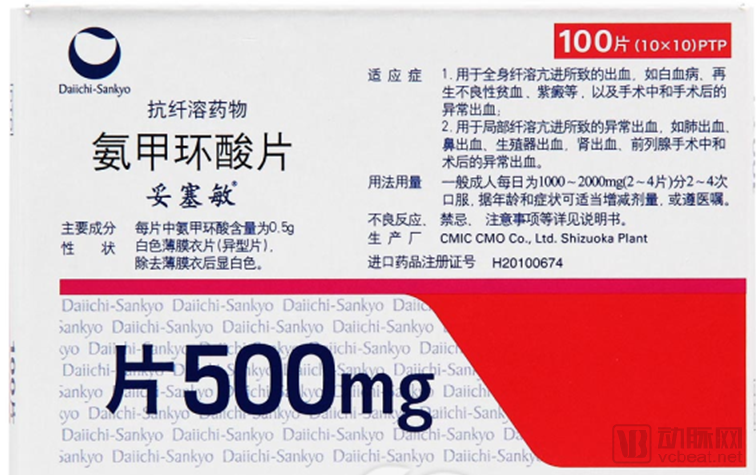
How Advanced Is Microneedle Drug Delivery Technology? Let’s Use an Example to Provide a Comprehensive Understanding. Tranexamic acid is a hemostatic agent that also offers therapeutic benefits for melasma, making it currently the most effective active ingredient for treating this condition. It is currently available in tablet form, with each tablet containing 500 mg of tranexamic acid (each tablet weighs approximately 2 grams and contains 500 mg of tranexamic acid). The product packaging is shown in the figure below. Patients with melasma need to take the medication orally for six consecutive months to achieve successful treatment outcomes.
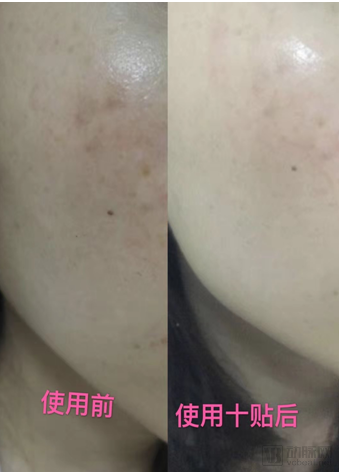
If tranexamic acid is switched from tablets to microneedle patches, the dosage per patch only needs to be 4 mg of tranexamic acid, and visible spot-fading effects can be achieved in just 20 days, as shown in Figure 2.
The active ingredient is also tranexamic acid. A comparison of the parameters for the two dosage forms is shown in the table below:
Active Ingredients | Dosage Form | Dosage | Course of Treatment | Total Human Intake Dose | Relative Total Dose |
Tranexamic Acid | Tablets | 500 mg | 180 Days | 90,000 mg | 2250 |
Microneedle Patch | 4 mg | 20 days | 40 mg | 1 |
As shown in the table above, when tranexamic acid is used to treat melasma, the dosage required for microneedle patches is 1/2250 of that for oral tablets. In other words, while only one part of the microneedle patch is needed to treat melasma, the oral tablet regimen involves an excess intake of 2249 parts of the drug. This excessive dosage can cause significant damage to the gastrointestinal tract and hepatobiliary organs.
Generally speaking, compared with traditional dosage forms, microneedle patches offer advantages such as low dosage, short treatment duration, rapid onset of action, safe drug administration, and improved user experience. Using a microneedle patch feels akin to applying an adhesive bandage to the face, causing no discomfort to patients. This represents a revolutionary new dosage form and drug delivery method. Topical medications, cosmetics, biologics, and certain chemical drugs can all be reformulated into microneedle patch formats, indicating a vast market potential.
Microneedle patches are also a frontier focus of R&D for international pharmaceutical companies and academic institutions. Currently, leading global manufacturers include Zosano Pharma (NASDAQ: ZSAN) and Corium Inc. (NASDAQ: CORI). Although Chinese manufacturers have entered this field, they lack mature next-generation microneedle technologies, particularly facing challenges in achieving mass production. Furthermore, their application scenarios are predominantly centered on medical aesthetics, with insufficient foundational accumulation in the field of drug delivery.
CASMN, the technology commercialization team led by Researcher Gao Yunhua from the Technical Institute of Physics and Chemistry, Chinese Academy of Sciences, has independently developed a new-generation polymer microneedle drug delivery platform. The product has been officially launched on the market, primarily targeting the medical aesthetics and pharmaceutical industries. Compared with other transdermal drug delivery methods available on the market, this approach “encapsulates” active ingredients within the microneedle array and base layer, allowing for slow release into the body via concentration gradients with human tissue fluid. Relative to injectable administration, it offers the advantages of safety, painlessness, convenience, and controlled quantitative release.
Meanwhile, CASMN has conquered the most challenging aspect of microneedle patch manufacturing—mass production. It has achieved fully automated annual production capacity in the tens of millions of patches and established the world’s largest microneedle drug delivery production facility by shipment volume. This capability meets the demand for novel drug delivery formats and supports independent innovative drug R&D. Application areas include vaccines aimed at enhancing immune responses and vaccination coverage, immunotherapeutic agents requiring improved targeting, biologics necessitating repeated injections, as well as pediatric and dermatological medications.
In terms of its business model, CASMN adopts a dual-drive strategy: on one hand, it provides CRO/CDMO collaborative R&D services to pharmaceutical companies; on the other, it is advancing its own proprietary drug pipeline. Additionally, it is reported that the company’s Class I medical devices and medical aesthetics products have begun to be supplied to the market.
In terms of the team, CASMN is led by Researcher Gao Yunhua from the Technical Institute of Physics and Chemistry, Chinese Academy of Sciences (CAS), and has received strong support from both the CAS and local governments. Gao Yunhua was selected for the CAS “Hundred Talents Program” in 2000 and currently serves as a Researcher and doctoral supervisor at the Technical Institute of Physics and Chemistry, CAS. Other core team members possess extensive technical expertise and resource accumulation in the field of pharmaceutical formulation R&D, with rich experience in the industrialization of scientific achievements and market operations. In 2018, CASMN secured tens of millions of yuan in angel financing from CAS Venture Capital and CAS Star. After one year of development, the team completed the construction of its production base in Daxing, Beijing, and established a subsidiary in Chongqing. Furthermore, CASMN has initiated collaborative explorations with several well-known pharmaceutical companies, and is expected to file the first Investigational New Drug (IND) application for a microneedle-based drug in China in 2020.
In addition to its continuous investment in technological innovation, CASMN adheres to an innovation-driven mindset, consistently improving its operational management and strengthening its professional team for formulation R&D. Gao Yunhua stated that CASMN aims to establish an internationally advanced and domestically leading R&D service platform for microneedle patches, providing technical support for new drug innovation among Chinese pharmaceutical companies.