

Xinmu Sports Rehabilitation Center Files IPO Prospectus: Aiming for Nationwide Expansion with Six-Dimensional Treatment Model
Exercise rehabilitation is a branch of rehabilitative medicine that integrates “sports” and “medical care.” It encompasses modalities such as equipment-based rehabilitation, manual therapy, and patient-initiated active exercise. The target population includes individuals prone to exercise-induced fatigue, those susceptible to injury or pain, patients with musculoskeletal injuries or post-orthopedic surgery conditions, individuals with chronic diseases, the elderly, adolescents, and those in a suboptimal health state.
Luo Jiali, head of the Xinmu Sports Rehabilitation Center, believes that the immaturity of China’s sports market is the result of multiple factors, including a scarcity of professional sports rehabilitation institutions, a lack of coordination between orthopedic and rehabilitation physicians and various sports coaches, the absence of an established industry system and standards for sports rehabilitation, and relatively outdated rehabilitation equipment and technology. Among these, the lack of clear understanding of sports rehabilitation is a major reason why such services are not widely recognized. “In the eyes of most people, sports rehabilitation is not a medical necessity; only professional athletes need it.” Many others believe, “I only need rehabilitation therapy when I’m injured or in pain.”
However, with the widespread adoption of national fitness initiatives, scientific exercise has gradually gained popularity. Sports rehabilitation is evolving from a niche market catering to professional athletes into a mass market that serves fitness enthusiasts by ensuring safe and efficient physical conditions for exercise. Concurrently, the number of enterprises in the sports rehabilitation sector has begun to increase.
Xinmu Sports Rehabilitation Center is a young rehabilitation facility dedicated to helping clients prepare their physical function before exercise, alleviate pain during activity, restore pain-free movement, improve neuromuscular coordination, and rebuild sports function after exercise. Luo Jiali, head of Xinmu Rehabilitation Center, told VCBeat that the center’s original mission is to enable every sports enthusiast to engage in healthy physical activity up to the age of 100.
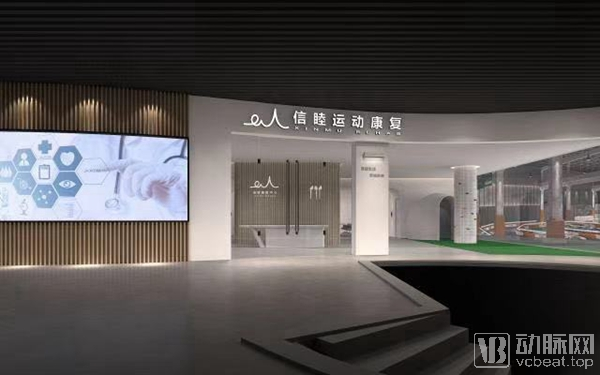
Interior View of Xinmu Sports Rehabilitation Center (Photo provided by the interviewee)
Pain as the Entry Point: Six-Dimensional Treatment
Xinmu Sports Rehabilitation Center is located in the Leyun Cube venue in Changsha, Hunan Province. Jointly funded by Xinmu General Practice Chain Clinics and the Leyun Cube team, and supported by the technical team of Xiangya Hospital, it specializes in providing systematic sports rehabilitation solutions for athletes and active individuals.
It is reported that Xinmu General Practice Chain Clinics is Changsha’s first new-type chain clinic brand. With three clinics currently in operation, it has served nearly 20,000 clients within its first year of establishment. Le Yun Cube (jointly funded by Le Yun and SANY Group) is Hunan Province’s largest sports complex project, with its team composed of the regular investment and operation team from Hunan 798 Sports.
Luo Jiali, currently the head of Xinmu Sports Rehabilitation Center, bears significant responsibility for technical operations. A graduate of Hunan University of Chinese Medicine with a major in Integrated Traditional Chinese and Western Medicine, she also serves as an Executive Director of the Pain Management Branch of the Hunan Provincial Health Service Association. In recent years, her primary focus has been on clinical practice and conducting training courses on topics such as Anatomy Trains, the NADA protocol, myofascial trigger points, postural assessment, and fascial points. She specializes in TCM acupuncture, myofascial trigger point therapy, Italian Fascial Manipulation, American chiropractic care, and modern advanced rehabilitation techniques, utilizing dynamic and static assessments to accurately identify primary issues.
Luo Jiali introduced that Xinmu Sports Rehabilitation Center responds to the national call to decentralize high-quality medical resources, which is why all its clinics are located within communities. Its core services include pre-exercise physical function assessments, elimination of potential safety hazards before exercise, rehabilitation from sports injuries, treatment and rehabilitation of neck, shoulder, lower back, and leg pain, non-surgical management of adolescent scoliosis, corporate health assurance services, and postural correction. The center is currently equipped with professional rehabilitation devices such as ultrasound, polarized light therapy, DMS (Deep Muscle Stimulator), and shockwave therapy. It strives to provide customers with professionally tailored, personalized sports rehabilitation plans through a six-dimensional integrated approach encompassing assessment, pain management, rehabilitation, nutrition, psychology, and exercise.
Following respiration, pulse, blood pressure, and body temperature, pain has been recognized by modern medicine as the fifth vital sign. Pain is an unpleasant sensory and emotional experience associated with actual or potential tissue damage, and some forms of chronic pain are themselves considered diseases (such as trigeminal neuralgia and postherpetic neuralgia). Luo Jiali told VCBeat that Xinmu Sports Rehabilitation Center aims to use pain management as the entry point for treatment, providing personalized therapeutic plans for its clients.
Treatment + Training, Dual-Business Parallel Operation
Xinmu Sports Rehabilitation Center has expanded the highly acclaimed 15-minute consultation process of Xinmu General Practice Clinic into five stages: assessment and testing, explanation and communication, plan formulation, treatment, and re-evaluation. The average consultation duration is 30 minutes, aiming to provide the most professional and attentive care, enabling patients to understand their body structure and sports rehabilitation principles while undergoing treatment and recovery. Physicians identify the underlying causes through clinical reasoning, explain the pathological mechanisms and rehabilitation principles to patients, develop personalized rehabilitation plans aligned with patients’ recovery goals, implement rehabilitation interventions accordingly, and subsequently re-evaluate the positive findings from previous assessments after a period of intervention. This iterative process continues until full recovery is achieved.
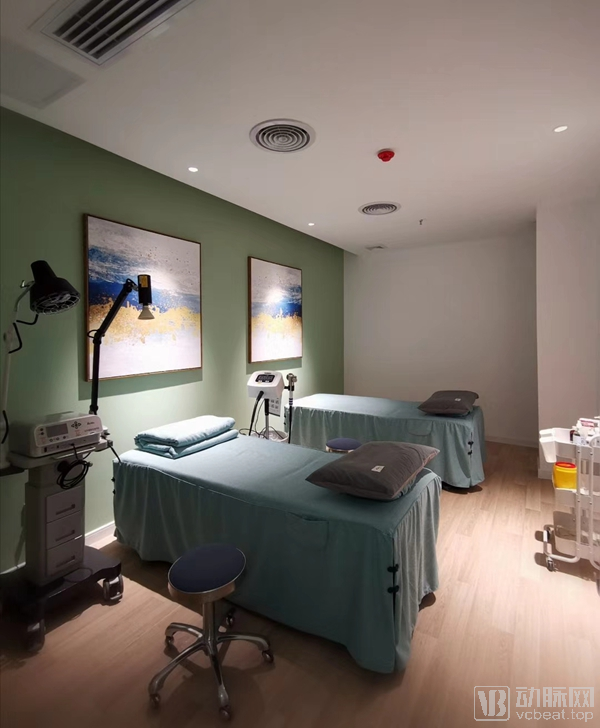
Xinmu Sports Rehabilitation Center’s Rehabilitation Room (Photo provided by the interviewee)
Among these, a detailed and comprehensive assessment serves as the foundation of treatment. Rehabilitation physicians need to identify the cause of the disease through 11 methods, including pathological history taking, postural assessment, palpation, special tests, functional tests, muscle length measurement, joint range of motion assessment, and safety screening. Then, based on the patient’s injury severity and rehabilitation goals, the physician will develop targeted short-term and long-term rehabilitation plans.
Under the guidance of physicians, appropriately engage in muscle training with the aid of external tools such as resistance bands, rowing machines, and other fixed equipment, utilizing shockwave therapy when necessary. Xinmu Rehabilitation Center also regularly invites experts from the Department of Nutrition and the Department of Psychology at Xiangya Hospital to provide consultations, offering targeted solutions for clients’ internal physiological and psychological issues.
Xinmu Sports Rehabilitation Center has also established a technical evaluation mechanism, directly linking rehabilitation physicians’ salaries to patient feedback on treatment outcomes. This ensures that patients receive higher-quality medical services during their visits and encourages physicians to continuously refine their professional skills.
According to data from NewSight, China currently has approximately 36,000 professionals with technical qualifications as rehabilitation therapists. Calculated according to international standards, there are 2.65 physical therapists per 100,000 population in China, whereas the average in North America and Europe is 60 per 100,000. Specifically, the United States has 62.8 physical therapists per 100,000 population, and Germany has 68.7 per 100,000. A comparison of the therapist-to-population ratios between China and developed countries in Europe and America reveals a severe shortage of rehabilitation personnel in China at present. Consequently, cultivating rehabilitation professionals, particularly senior-level experts, has become a top priority.
To this end, Xinmu Sports Rehabilitation Center has launched training programs for rehabilitation professionals alongside its core therapeutic services. By standardizing treatment protocols and methodologies, the center ensures that rehabilitation specialists can rapidly master core competencies, thereby expanding the pool of qualified sports rehabilitation talent. Additionally, Xinmu is refining its management system, using the center as a pilot site to lay the groundwork for future chain expansion.
Notably, Xinmu Sports Rehabilitation Center is located within the Leyun Cube venue, benefiting from inherent customer traffic and acquisition channels. According to reports, Leyun Cube covers an area of 44,000 square meters and integrates fitness centers, swimming pools, courts, and other entertainment and sports facilities, making it Hunan’s first comprehensive, multi-functional modern commercial center.
Xinmu Sports Rehabilitation Center and Leyun Cube share a complementary relationship. Customers of the rehabilitation center can receive therapy and training at Leyun Cube’s various sports venues, while Leyun Cube’s high foot traffic helps drive customer referrals to the rehabilitation center. Furthermore, the audience directed by Leyun Cube is highly targeted, primarily comprising sports enthusiasts and middle-to-high-income individuals.
“We prefer customers to view sports rehabilitation as a consumer service rather than a medical treatment,” Luo Jiali told VCBeat. She added that, building on the operational framework of Xinmu General Practice Clinic, Xinmu Sports Rehabilitation Center will refine its own service system and technical standards tailored to sports rehabilitation. The goal is to build a strong reputation and, within five to ten years, become the most professional and dedicated sports rehabilitation institution in Hunan Province and across China.