

Aier Eye Hospital Group Launches 'Second Entrepreneurial Journey': Three Key Pillars Driving Its Next Growth Curve
Aier Eye Hospital
Ophthalmology Medical Chain Institution
Today is "World Sight Day." How are your eyes doing?
On the eve of World Sight Day, the World Health Organization released its first-ever World Report on Vision: more than 2.2 billion people worldwide have impaired vision or are blind, with over 1 billion of these cases attributable to uncorrected refractive errors (such as myopia and hyperopia), glaucoma, cataracts, and other conditions that have not received necessary treatment.
The vast population suffering from impaired eye health has created a huge market for ophthalmic diagnosis and treatment, with growing demand for myopia surgery, cataract surgery, and optometric services. In the field of ophthalmic care, Aier Eye Hospital Group (hereinafter referred to as “Aier Eye Hospital”), which has recently undertaken significant strategic initiatives, has become a key focus of industry attention.
Tender offer for listed ophthalmic care provider ISEC Healthcare, transfer of 2% equity to introduce strategic investors, donation of 100 million shares to a public welfare foundation... Aier Eye Hospital has been making significant moves recently.
Meanwhile, Aier Eye Hospital has continued to bask in the spotlight: as it approached the 10th anniversary of its IPO, its market capitalization surpassed the RMB 100 billion mark, rising from RMB 6.9 billion at its listing in 2009 to RMB 100 billion in 2019. The company’s performance remained impressive in the 2019 semi-annual report, with revenue and net profit maintaining rapid growth. In the first half of the year, it achieved operating revenue of RMB 4.749 billion, a year-on-year increase of 25.64%; net profit reached RMB 731 million, up 33.60% year on year; and net profit attributable to shareholders of the listed company after deducting non-recurring gains and losses amounted to RMB 695 million, representing a year-on-year increase of 31.93%.
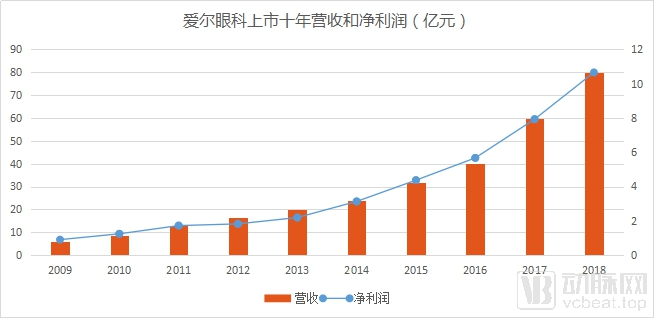
Source: Aier Eye Hospital Annual Report. Graphic by VCBeat
A Review of Aier Eye Hospital’s Performance Over the Past Decade Since Its IPO: Both Revenue and Profits Have Shown Impressive Upward Trajectories. Notably, after adopting the off-balance-sheet M&A fund model for expansion in 2014, the company’s performance accelerated steadily. This year, at the shareholders’ meeting, Chen Bang, Chairman of Aier Eye Hospital, stated that the 10th anniversary of the company’s listing marks the first year of its “second entrepreneurship,” and that the company will embrace a mindset of starting afresh with an empty cup, recommencing its efforts for the next decade.
Aier Eye Hospital’s frequent major commercial moves are closely linked to its second entrepreneurial venture. For a startup, the three most critical elements are business model, capital and resources, and talent. Let us examine the logic underpinning Aier Eye Hospital’s second entrepreneurial venture from these three perspectives.
For private ophthalmic hospitals, the business model is very clear: ophthalmic diseases are primarily treated through surgery, with returns generated from diagnostic and therapeutic services. Due to the high dependence of surgical procedures on equipment, the necessity of face-to-face interactions between doctors and patients, and the limited service radius of hospitals, cost reduction and improved profitability can be achieved through chain operations and centralized procurement, which also helps expand the scope of services.
However, for Aier Eye Hospital, which was founded 16 years ago and has been listed for 10 years, the business model is far from being so singular. On September 6, Aier Eye Hospital officially released its ten-year strategy, proposing to comprehensively build an eye health ecosystem. The company will lay out its operations across five major segments, including: a tiered chain ecosystem, a same-city network ecosystem, an “Internet+” ecosystem, a globalization ecosystem, and a medical finance ecosystem. We have also conducted an analysis of these five major segments.
Tiered Chain Ecosystem
At the strategic press conference for the next decade, Chen Bang stated that Aier Eye Hospital will continue to advance its tiered chain model.
In fact, Aier Eye Hospital has long adopted a tiered chain model for its hospital network layout. Hospitals in first-tier cities such as Beijing, Shanghai, Guangzhou, and Shenzhen focus primarily on academic research and the management of complex and rare conditions. Hospitals in provincial capitals and municipalities directly under the central government feature renowned experts within their respective provinces or cities and serve as the core providers of the group’s main business operations. Prefecture-level city hospitals possess certain medical service capabilities to address most common and frequently occurring ophthalmic conditions, while facilitating two-way referrals between higher- and lower-level institutions. County-level hospitals function as primary care facilities, capable of managing common eye diseases and serving as channels for upward referrals.
How Has Aier Eye Hospital’s Tiered Diagnosis and Treatment System Progressed After Years of Strategic Deployment? We Have Compiled Information on Medical Institutions Across Various Regions Linked to the “Find a Hospital” Feature on Aier Eye Hospital’s Official Website.
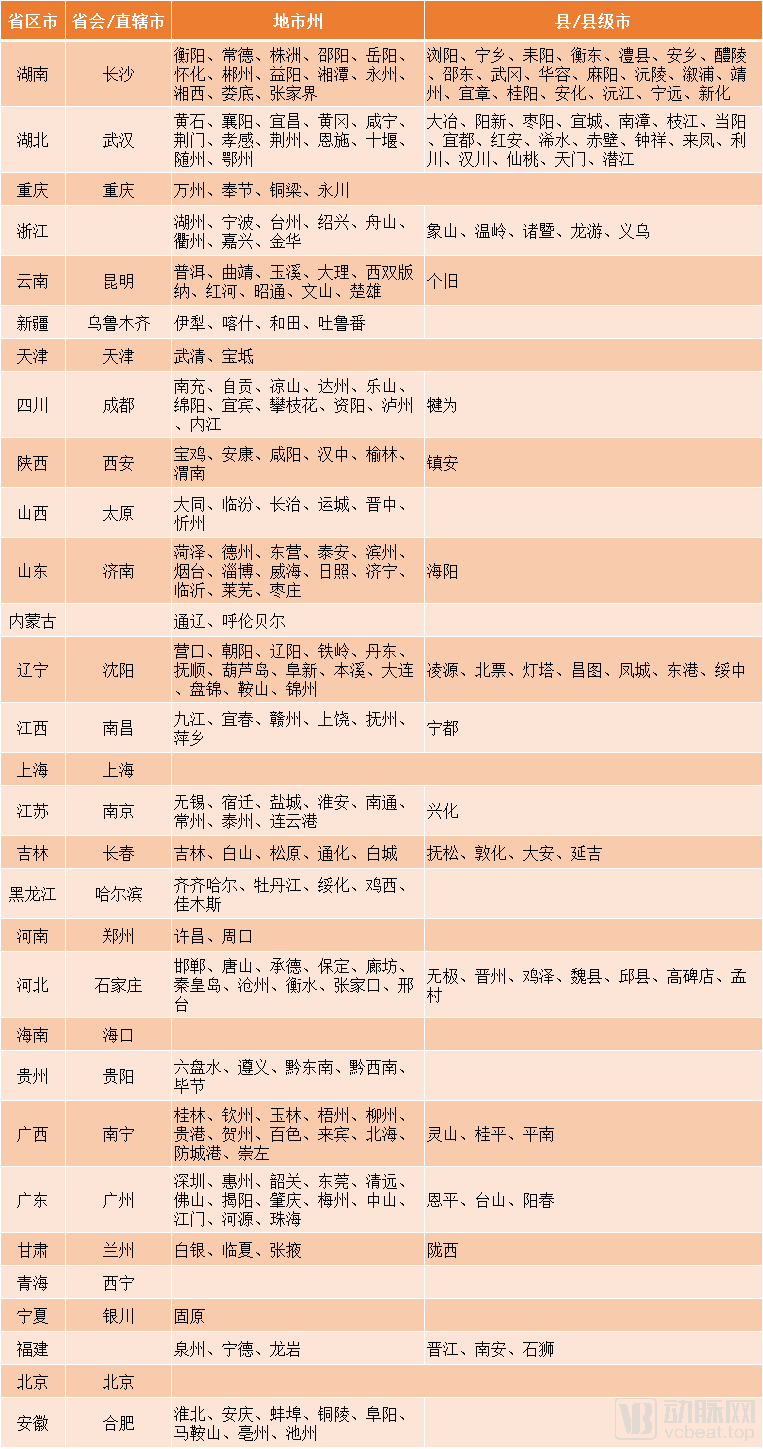
Regions Covered by Aier Eye Hospital’s Tiered Chain Network, Compiled by VCBeat Based on Information from Aier Eye Hospital’s Official Website
Currently, Aier Eye Hospital has established medical institutions in 30 provinces, autonomous regions, and municipalities across China, as well as in the Hong Kong Special Administrative Region. The chart above visually illustrates the progress of its tiered chain expansion: Hunan and Hubei have the highest number of cities with Aier hospitals, particularly featuring extensive coverage at the county level; provinces such as Sichuan, Shandong, Liaoning, Guangxi, and Guangdong have also opened hospitals in numerous prefecture-level cities. However, several provinces still lack county-level hospitals or have very few, especially in populous provinces like Shandong, Henan, and Sichuan.
In its interpretation of the 2019 semi-annual performance report, Aier Eye Hospital stated that it would not engage in unprepared battles or pursue blind, aggressive expansion in advancing its tiered chain model. Prefectural-level hospitals were to be developed first to build up physician reserves before expanding into county-level hospitals. At the strategic conference for the next decade, Chen Bang also introduced that Aier Eye Hospital’s goal is to cover the vast majority of China’s urban and rural counties, enabling more grassroots ophthalmic patients to access high-quality eye care services nearby.
In the first half of this year, Aier Eye Hospital acquired a total of 13 hospitals, including Jinzhong Aier, Shanghai Aier Jingliang, Nanjing Aier Gubo, Wuxi Aier, Bengbu Aier Heping, Yichun Aier, Zibo Kangming, Xiangtan Renhe, Guilin Aier, Guigang Aier, Chongqing Aier Children’s, Dazhou Aier Boshi, and Pu’er Aier. This indicates a strong strategic focus on expanding its presence in prefecture-level cities at the current stage.
In the future, Aier Eye Hospital will strengthen its scientific research and innovation capabilities in hospitals located in first-tier cities, while continuing to implement tiered diagnosis and treatment by expanding from prefecture-level cities to county-level areas, thereby capturing new growth points during market penetration. Given the variations in medical standards, market conditions, and policy frameworks across different regions, even though Aier Eye Hospital has established a relatively mature expansion pathway, the entire process cannot be accomplished overnight. Therefore, the road to building a tiered chain ecosystem remains long, and it is crucial to proceed steadily and securely at every step.
Intra-City Network Ecosystem
In building the eye health ecosystem, Aier Eye Hospital will continue to explore the “light cavalry” model of optometry clinics and Aiyan e-Stations in urban communities, gradually expanding it nationwide.
In the past, Aier Eye Hospital’s optometry services were primarily operated by its hospitals, resulting in a limited service radius. To accelerate the market penetration of its optometry business into lower-tier markets, Aier Eye Hospital began establishing standalone optometry clinics in 2016. According to publicly disclosed data, there are currently approximately 80 Aier optometry clinics, with the number expected to exceed 100 by the end of the year. In the first half of this year, the group also established a new department—the Optometry Clinic Management Center—to further drive the development of its optometry business.
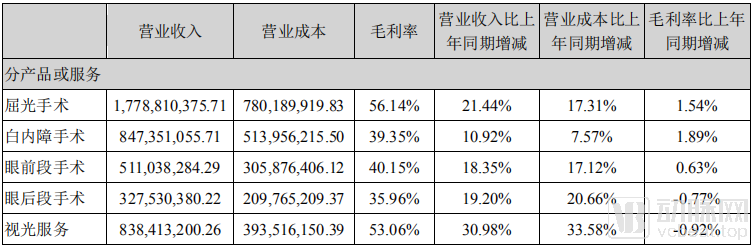
Aier Eye Hospital’s Revenue from Core Business Segments in the First Half of 2019, Source: Semi-Annual Report
The semi-annual report shows that in the first half of this year, Aier Eye Hospital's optometry service revenue increased by 30.98% year-on-year, demonstrating strong growth, and the optometry business also has a relatively high gross profit margin.
The “Eye Care e-Station” brings basic eye health services into communities, with further refined business units that effectively complement outpatient clinics and hospitals, thereby helping to increase market penetration.
As residents’ awareness of eye health strengthens, medical consumption upgrades, and the national myopia prevention and control strategy advances, an increasing number of consumers are opting for medical optometry. Compared with commercial eyewear dispensing, medical optometry can rule out ocular conditions such as amblyopia and strabismus, ensure the accuracy and comfort of eyeglass wear, and effectively control and slow the progression of myopia. In the future, with channel penetration into lower-tier markets and the opening up of grassroots markets, Aier Eye Hospital’s optometry business is poised to achieve even greater breakthroughs.
"Internet Plus" Ecosystem
Although ophthalmology is a surgery-oriented specialty, and optometry services also require support from relevant examinations, with offline services and face-to-face interactions dominating most scenarios in the diagnosis and treatment of eye diseases and the maintenance of eye health, the internet can still empower the field of ophthalmology through applications such as remote collaboration, teleconsultation, and referral platforms.
Aier Eye Hospital’s strategy is to achieve deep penetration through a mix of offline hospitals and online internet hospitals, driven by informatization, digitalization, and intelligence. By seizing opportunities presented by the development of 5G, artificial intelligence, and the Internet of Things, it aims to build global teleconsultation centers, intelligent image reading centers, and ophthalmic medical big data centers, thereby providing people across China with eye health services throughout their entire life cycle. In the future, the internet will play a significant role in improving the efficiency of ophthalmic diagnosis and treatment, optimizing healthcare processes, and enhancing access to high-quality medical resources.
Globalized Ecosystem
Aier Eye Hospital’s global ecosystem strategy will continue to introduce advanced ophthalmic diagnostic and therapeutic technologies from Europe, the United States, Southeast Asia, and other regions through international acquisitions, while continuously building a shared platform for ophthalmologists and scientists worldwide and engaging in comprehensive strategic collaborations with more globally renowned institutions in ophthalmology and visual science.
On August 26, Aier Eye Hospital issued an announcement stating its intention to acquire a 35% stake in ISEC Healthcare Ltd. (hereinafter referred to as “ISEC Healthcare”) through its wholly-owned subsidiary, Singapore Aier, for SGD 67.07 million. Simultaneously, it will launch a voluntary general offer on the open market at a price of SGD 0.36 per share. Through this acquisition, Singapore Aier will hold a minimum of 35% and a maximum of 78.22% of ISEC Healthcare’s equity, with the total consideration amounting to approximately SGD 150 million (approximately RMB 770 million) at the upper limit.
ISEC Healthcare, a chain of ophthalmic medical institutions established in 2014, is a publicly listed company on the Singapore Exchange’s Catalist board. It operates a total of 11 ophthalmology and general practice clinics across Singapore, Malaysia, and Myanmar.
By acquiring ISEC Healthcare, Aier Eye Hospital can rapidly enter markets such as Singapore and Malaysia, while also leveraging ISEC Healthcare’s high-quality medical team resources and internationally leading ophthalmic care expertise from Singapore and other regions.
Previously, Aier Eye Hospital had already acquired leading overseas ophthalmic institutions such as the MING WANG Eye Center in the United States and Clínica Baviera, S.A. in Europe.
Aier Eye Hospital’s aggressive overseas acquisitions offer the most immediate benefit of rapid entry into local markets and direct revenue generation. For instance, in 2018, its European operations generated RMB 855 million in revenue, accounting for 10.68% of the company’s total annual revenue. Secondly, these acquisitions facilitate the introduction of advanced medical technologies, research achievements, and management service models, thereby driving development in the domestic market. As previously mentioned, Aier Eye Hospital still has a long way to go in terms of penetrating the high-end domestic market, advancing scientific research and innovation, and expanding its tiered chain network; thus, the continuous adoption of advanced models is imperative. Meanwhile, through its globalization strategy, the two-way exchange of ophthalmic experts and management teams between China and overseas markets helps build a world-class platform for scientific research, talent, and technological innovation, while enhancing the brand’s global influence.
Healthcare Finance Ecosystem
Aier Eye Hospital will build a medical-finance ecosystem through channels such as health insurance, consumer finance, investment and M&A, innovation incubation, and supply chain finance. In particular, in the field of eye health insurance, it will provide insurance services through eye health insurance products to address myopia prevention and control among adolescents, thereby creating a complete closed-loop system.
Commercial health insurance is gaining increasing attention, an inevitable trend driven by the tightening of basic medical insurance. Due to cost-containment measures under the national medical insurance scheme, Aier Eye Hospital has seen its volume of low-end cataract surgeries and outpatient visits affected in certain regions, leading to a slowdown in the revenue growth of its cataract business in 2018. In the second half of 2018, the company shifted its cataract services toward the high-end segment. The 2019 semi-annual report showed that the growth rate of the cataract business began to rebound, with year-on-year revenue increasing by 10.92%.
Timely transformation is one of the important pathways for sustainable development, and its effects are evident. However, it should also be recognized that cost containment in medical insurance will become the norm. Regardless of how businesses transform, enterprises must prioritize improving the payment segment. The state will also vigorously develop commercial health insurance, encouraging commercial insurers to develop marketable insurance products and services to meet multi-level, diversified, and personalized healthcare security needs.
Within the healthcare industry, a significant number of enterprises are already building service closed loops that integrate healthcare with commercial health insurance. Similar to ophthalmology, the dental care sector—driven by medical needs and consumption upgrades—has seen companies such as Taikang Bybo Dental and Arrail Group successfully integrate commercial insurance payment channels. For Aier Eye Hospital, enhancing payer solutions to better address patients’ medical expenditure concerns is also an inevitable trend.
Capital is the lifeblood of an enterprise, and access to high-quality resources is akin to holding a strong hand of cards. Aier Eye Hospital has established a solid foundation and delivered outstanding performance, positioning it as a company with robust financial health. The semi-annual report shows that the net cash flow from operating activities in the first half of the year reached RMB 997 million, with the balance of cash and cash equivalents at the end of the period standing at RMB 1.513 billion. For Aier Eye Hospital, the more critical task is to optimize capital allocation to maximize its value.
On August 30, Aier Eye Hospital announced that its controlling shareholder, Aier Investment, and actual controller, Chen Bang, had jointly transferred a 2% equity stake to introduce strategic investors Hillhouse Capital and Temasek Fullerton Alpha Pte. Ltd., each acquiring a 1% equity interest. Upon completion of the equity transfer, Hillhouse Capital will become the fifth-largest shareholder of Aier Eye Hospital with a cumulative shareholding of 2.57%, while Temasek Fullerton Alpha Pte. Ltd. will become the seventh-largest shareholder with a 1% stake.
The introduction of two heavyweight strategic investors will bring Aier Eye Hospital global perspectives and proven experience in global strategic layout, thereby boosting the company’s international development. Meanwhile, as these two investors have invested in numerous high-quality companies worldwide, they will also provide Aier Eye Hospital with certain collaborative resources.
Securing additional resources is a key objective of this strategic investment introduction. The other side of the transfer lies in maximizing the value of capital.
The announcement revealed that the average transfer price for this transaction was RMB 29.96 per share. Based on this calculation, Aier Investment is expected to realize gains of approximately RMB 1.21 billion, while Chen Bang is expected to realize gains of RMB 645 million. These are substantial sums. Aier Eye Hospital has also disclosed the intended use of these proceeds:
First, the returns generated by Aier Investment will be used to acquire properties in core cities, which will then be leased to the listed company. The hospitals will lease these facilities based on their development needs, allowing for steady and organic growth. Meanwhile, this will provide Aier Investment with sufficient capital to establish a specialized eye health insurance company, thereby supporting Aier Eye Hospital in building a comprehensive eye health ecosystem.
Secondly, the proceeds obtained by Chen Bang will be used to provide loans to the company’s partners. Since implementing its partner plan in 2014, Aier Eye Hospital has achieved significant success in incentivizing and aggregating talent, as well as fostering co-creation and mutual benefit, thereby strongly supporting the healthy development of hospitals at all levels. However, the partner plan is a long-term investment, typically requiring around five years to transition from the investment phase to the return phase. As an increasing number of new hospitals participate in the investment, many partners are facing certain difficulties in meeting their capital commitments. As the majority shareholder, Chen Bang’s provision of loans to partners not only helps them address their funding challenges but also facilitates the smoother and broader implementation of the company’s partner plan.
Thus, this transfer represents a dual gain in both capital and resources, paving the way for the Group’s sustainable development.
Furthermore, Aier Eye Hospital has adopted a well-known strategy: participating in the establishment of M&A funds to accelerate its chain expansion while ensuring the operational stability of the listed company. As is widely recognized, the expansion of private hospitals is a capital-intensive process, particularly for specialized fields like ophthalmology, which rely heavily on costly surgical equipment. If the listed company were to pursue rapid expansion using its own funds over an extended period, it would inevitably have a significant impact on its financial performance, thereby affecting investor interests and confidence.
Since 2014, Aier Eye Hospital has adopted an expansion model based on off-balance-sheet M&A funds. Specifically, it invests a certain amount of capital as a limited partner (LP) in these funds, entrusting their capital operations to professional investment management firms. After the M&A funds acquire or establish new hospitals, these entities operate independently outside the listed company during an incubation period. During this time, the off-balance-sheet hospitals gradually implement standardized training and operational processes aligned with those of Aier Eye Hospital. Once these hospitals achieve initial profitability, Aier Eye Hospital proceeds to acquire them, thereby integrating them step by step into its listed corporate structure.
This expansion model not only satisfies the information disclosure requirements for listed companies, avoiding the adverse impact on performance reports caused by poor financial data during the incubation period of newly built or acquired hospitals, but also leverages limited funds to mobilize multiple times the capital. For example, Aier Eye Hospital’s wholly-owned subsidiary, Lhasa Liangshi Venture Capital Co., Ltd., invested in and established the Hunan Liangshi Changyin Medical Industry Investment Fund Partnership. Lhasa Liangshi contributed RMB 190 million, holding a 19% equity stake. According to data from Qichacha, Hunan Liangshi Changyin has participated in investments in more than 70 hospitals, including Longyan Aier, Wuhu Aier, and Wanzhou Aier, with a total investment exceeding RMB 800 million. In other words, Aier Eye Hospital leveraged over RMB 800 million in capital with an initial investment of RMB 190 million, proceeding with acquisitions only after these hospitals achieved preliminary profitability.
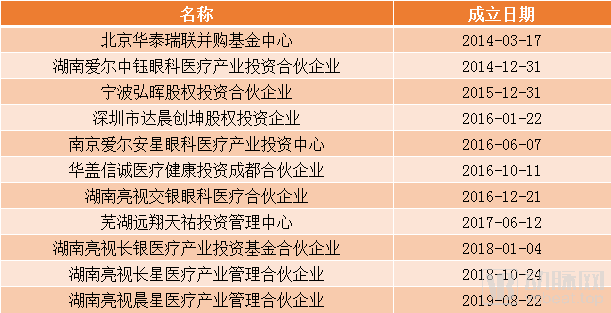
Selected Industrial Funds Participated in by Aier Eye Hospital, Compiled by VCBeat Based on Public Data from Qichacha
Since 2014, Aier Eye Hospital has participated in the establishment of multiple M&A funds, with off-balance-sheet mergers and acquisitions becoming its primary expansion model. Moving forward, M&A funds will continue to play a pivotal role in its tiered chain layout strategy.
However, Li Li, President of Aier Eye Hospital, stated in an interview with the media this year that, from a long-term perspective, the industrial fund model is phased and transitional. Since the total cost of funds is somewhat higher than that of self-construction by listed companies, the number of hospitals self-built by listed companies will gradually increase as their profitability and carrying capacity continue to improve. It is expected that in another five or six years, after the hospitals invested by the funds are sequentially injected into the listed company, the industrial fund model will gradually fade out.
The scarcity of talent has long been one of the major pain points in the development of private healthcare. Poaching specialists and renowned physicians from Grade 3A hospitals entails increased costs; without greater investment in labor expenses, recruited personnel may only be ordinary retired physicians or recent medical graduates.
The training cycle for ophthalmology professionals is lengthy, particularly for specialists in fundus diseases. Ophthalmology and clinical academia in China started late, leading to a shortage of talent in emerging fields such as optometry and refractive surgery. High-quality ophthalmic medical resources are unevenly distributed, and primary-level eye health service capabilities need improvement. To address these challenges, Aier Eye Hospital has adopted various approaches to cultivate, attract, and incentivize talent.
In 2013, Aier Eye Hospital jointly established the Aier School of Ophthalmology at Central South University to train master’s and doctoral students. As of July 2019, it had enrolled 240 postgraduate students in ophthalmology. In 2014, Aier Eye Hospital reformed its traditional employment model by launching the “Partner Plan” to stimulate employee enthusiasm. Over the past two years, this plan has entered a harvest phase, completing two rounds of profit sharing, with partners achieving an average return of 7.1 times. As mentioned earlier, the proceeds from Chen Bang’s equity transfer were used to provide loans to partners.
To drive the implementation of its strategy for the next decade, Aier Eye Hospital is further upgrading its talent strategy.
For example, on September 6 this year, Aier Eye Hospital announced the launch of its “Global Talent and Intelligence Introduction” series of talent programs while unveiling its ten-year strategic plan. The initiative aims to recruit and cultivate a cohort of high-level ophthalmic medical and management professionals from around the world, including international leaders, industry pioneers, and young elites. Meanwhile, Aier Eye Hospital donated 100 million shares of its equity to the Xiangjiang (Education and Research) Public Welfare Foundation, valued at over RMB 3 billion based on the current stock price.
The funds are mainly used for the following aspects:
Continuously and vigorously cultivate ophthalmic medical professionals, particularly primary-care ophthalmologists, to lay the talent foundation for the tiered diagnosis and treatment system;
Conduct cutting-edge, original academic research in ophthalmology and optometry, strengthen international academic exchanges, aim to achieve significant breakthroughs in a series of new ophthalmic technologies, enhance the overall level of ophthalmology in China, gradually narrow the gap with advanced global standards, and ultimately strive to surpass them;
Establish high-level ophthalmic education and research institutions with a global perspective, introduce world-class ophthalmic talent, create globally influential ophthalmic awards, and continuously produce high-caliber ophthalmic professionals to achieve a breakthrough in the “supply side” of outstanding ophthalmologists;
Further advance the dissemination and popularization of eye health knowledge to enhance residents' awareness of eye health.
Aier Eye Hospital is expanding rapidly, creating multi-tiered demand for talent. Although it has made corresponding talent reserves in the early stage, it still needs to continuously attract sufficient technical and managerial professionals, and continue to innovate mechanisms in talent development and incentives, so as to avoid talent shortages. In Aier Eye Hospital’s talent strategy, there is not only the cultivation of frontline medical personnel to ensure the sustainability of subsequent medical services, but also the introduction and incentivization of high-end medical and management talents to ensure the continuity of scientific research and management innovation.
Based on observations across these multiple dimensions, Aier Eye Hospital’s two strategic pathways are becoming increasingly clear: Supported by flexible capital allocation and enhanced talent development, the company aims to further consolidate its leading position in China’s ophthalmic chain industry through market penetration into lower-tier cities, expansion of its medical institution network, and the establishment of high-end medical services. Meanwhile, with the infusion of international strategic resources and the recruitment of top-tier global talent, its strength as a global chain of ophthalmic medical institutions will continue to grow.
Despite Aier Eye Hospital, the leading player in the ophthalmology chain sector, having already laid out an extensive business ecosystem plan for the next decade, we believe that there remains substantial room for growth across the entire ophthalmic diagnosis and treatment industry.
First, market segmentation.For instance, in pediatric ophthalmology, the widespread adoption of electronic devices has posed significant challenges to children's eye health. With the implementation of the Healthy China Initiative, myopia prevention and control among children and adolescents has been elevated to a national strategic level. Coupled with the increase in the child population over the next decade following the relaxation of the two-child policy, pediatric ophthalmology may find market opportunities in this trend. Aier Eye Hospital is currently exploring this niche segment, as evidenced by its acquisition of Chongqing Aier Children's Eye Hospital in the first half of this year.
Second, open cooperation.For small hospitals with regional advantages, rather than facing the impact of large enterprises with well-developed industrial ecosystems, it is preferable to pursue collaboration by divesting partial equity stakes and introducing brand recognition and standardized management processes, thereby scaling up and strengthening their existing operations.
Third, there is significant room for growth in the upstream segment of the industry chain.Ophthalmology is primarily surgery-driven, with a high dependence on surgical equipment and substantial demand for consumables. Currently, the equipment required for surgeries is predominantly imported and expensive; high-cost consumables are also mainly imported, such as orthokeratology lenses for vision correction in adolescents, intraocular lenses for cataract treatment, and vitreous fillers. These devices and consumables present significant opportunities for import substitution.
Furthermore, the research, development, and manufacturing of pharmaceutical formulations represent another strategic direction. For instance, in the first half of this year, Aier Eye Hospital and Lummy Pharmaceutical established a joint venture, Hunan Maiou Medical Technology Co., Ltd., to develop a series of ophthalmic drugs and care products for myopia and dry eye syndrome in children and adolescents. This initiative aims to gradually build a platform for ophthalmology-related products and explore the establishment of an ophthalmic industry chain.