

TPP Files IPO Prospectus: Scaling Its EHR Platform SystmOne Across China with 7,000 Institutions and 200,000 Doctors

The Phoenix Partnership
A company focused on medical software development, system integration, and providing technical services
“Hot and Hotpot.” Recalling his invitation to the Second China International Smart Expo, Sir Frank Hirst (hereinafter referred to as Frank) was deeply impressed by Chongqing, the host city. In 1997, Frank founded TPP (The Phoenix Partnership), a healthcare information technology company, in Leeds, UK. To date, TPP has become a leading provider of electronic health record (EHR) systems in the UK, with its core product, SystmOne, used by 200,000 doctors across more than 7,000 healthcare institutions. In 2013, TPP entered the Chinese market and subsequently established Zhihuang Software Technology (Hangzhou) Co., Ltd., aiming to introduce its advanced healthcare software solutions to China.
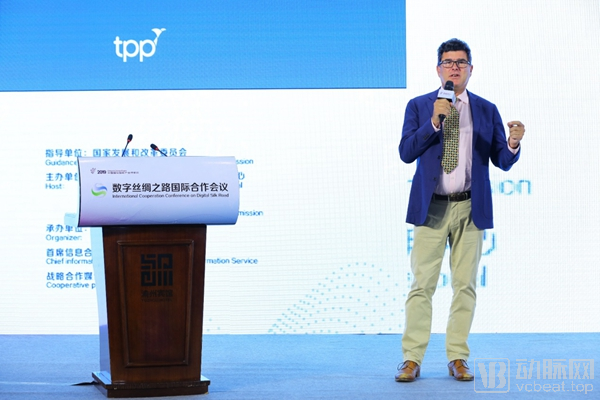
Frank Delivers Keynote Address at Smart China Expo
More than two decades ago, Frank never imagined that TPP, the company he founded, would achieve such tremendous success. During the Smart China Expo, TPP hosted the “TPP Smart Healthcare Special Session for Guest Enterprises of the 2019 Smart China Expo,” where numerous Chinese and international medical and health experts engaged in open and in-depth discussions on digital health.
“I used to be a programmer, and my wife is a physician,” Frank recalled. “I often picked her up after work, but she consistently worked late into the night. Over time, I gradually realized that, as a physician, she had to devote substantial amounts of time to numerous non-clinical administrative tasks, such as processing insurance claims and completing reports. At that point, I began wondering whether it would be possible to develop software to assist my wife and help alleviate physicians’ workload.”
At that time in the UK, general practitioners and hospitals operated on different systems, each of which was small in scale and used by only a few institutions. Frank hoped to establish an interconnected, shared system that would allow physicians, with patient consent, to access patients’ health records regardless of the region or healthcare institution where they received care. This was the original mission behind the founding of TPP.
Following the company’s establishment, Frank and his team pioneered the launch of “YiTong,” a comprehensive, integrated electronic health record (EHR) system. Leveraging centrally hosted cloud technology and delivered via a Software-as-a-Service (SaaS) model, YiTong provides physicians with an all-in-one solution encompassing hospital management, customized report generation, structured data capture, system training, and data migration. Physicians can access YiTong through PC or mobile app interfaces, enabling mobile and cross-regional practice.
TPP has partnered with the NHS (National Health Service) for over two decades, and its SystmOne platform currently hosts the health records of 50 million patients in the UK. According to Frank, SystmOne’s database is one of the largest real-time databases in the world. Its unique, advanced computing system enables the seamless processing of tens of millions of health records, with TPP’s servers handling more than one billion transactions daily.
In addition to YiTong, TPP has also launched AiYueLi, a patient-oriented health management app. AiYueLi serves as a mobile health record, allowing users to document their comprehensive health information, including medical conditions, symptoms, and test reports. These data become part of the user’s health record, accessible anytime and anywhere. The app also features a family function, enabling family members to quickly and conveniently access each other’s health information, even when geographically separated. Furthermore, AiYueLi allows users to present their health records to physicians during consultations and integrates seamlessly with YiTong, providing doctors with a more complete view of the patient’s medical and treatment history to facilitate better treatment planning. Additionally, AiYueLi offers functionalities such as online appointment scheduling and remote medical consultations.
In terms of data security, TPP’s system architecture is regularly subjected to third-party penetration testing to ensure system security. Meanwhile, TPP has developed a proprietary disaster recovery system that replicates patient data to a secondary location, thereby safeguarding data security.
As an interoperable EHR system, Yitong is patient- and physician-centric, enhancing diagnostic and treatment efficiency by supporting patients and doctors across four key areas. Specifically, these include:
1. Improve the efficiency of initial consultations. With patient consent, Yi Tong can share patient information across different medical systems, including records of successful diagnosis and treatment cases, thereby assisting physicians in enhancing the accuracy and efficiency of diagnosing similar conditions.
2. Physician Learning and Exchange Platform. YiTong is a comprehensively integrated EHR system that enables departments and teams to collaborate within a single platform. As the system accumulates extensive clinical experience, it also serves as an excellent learning resource.
3. Avoid redundant examinations. First, YiTong aggregates health data from patient visits across various institutions to create an integrated patient health record. When providing diagnosis and treatment, physicians can access examination information from previous consultations by other doctors, thereby eliminating the need for duplicate tests and data entry, reducing physicians’ workload, and alleviating the financial burden on patients.
4. Engage patients in health management. Within the AiYueli app, patients can input health data, which then becomes part of their electronic medical records. Additionally, leveraging AI capabilities, AiYueli can automatically prompt patients with questions; for instance, when a patient enters symptoms, the app sends follow-up questions to encourage the input of more detailed data.
“By combining YiTong and AiYueLi, a comprehensive, all-in-one health management solution can be formed,” said Frank. As all designs for TPP’s products, including servers and software, are independently developed, service costs are minimized to the greatest extent, offering users more affordable products.
After collecting tens of millions of patient records, Frank began to explore how to leverage AI to unlock the potential of this data. In the UK, ovarian cancer is known as the “silent killer,” as it is typically diagnosed only at an advanced stage. “We spent six weeks building a research model for ovarian cancer and performing AI-driven computations. Ultimately, we found that for 50% of the women in the study, we could identify symptoms of ovarian cancer earlier than general practitioners,” said Frank.
Since then, Frank and his team have continued to conduct AI research on other diseases, including liver cancer, colorectal cancer, lung cancer, and prostate cancer, through collaborative research and other means. “This is a new intelligent screening system. We have begun deploying these programs and algorithms in six or seven countries, with the aim of detecting corresponding symptoms at an early stage of cancer, issuing alerts to physicians, enabling early diagnosis and treatment, and ultimately improving survival rates for cancer patients,” said Dr. Chris Bates, Head of Data Operations at The Phoenix Partnership (TPP).
In addition, TPP is leveraging AI to utilize data collected by Yitong for risk stratification calculations. This involves building models to segment the population, identifying those with high disease risk who are in greatest need of medical services, thereby enabling timely alerts and preventive measures.
“YiTong is not merely an EHR system; we also aim to leverage YiTong to help address the weakness of primary healthcare services,” Frank explained. “In the UK, by widely providing EHR systems and services to general practitioners (GPs) and hospitals, we have enabled them to maintain close connections. Senior specialists in hospitals can also assist GPs and physicians in primary care institutions in improving the efficiency and accuracy of diagnosis and treatment.” Frank told VCBeat that TPP’s system in China, “YiTong,” is a localized version combining the strengths of both China and the UK, with updates released every four weeks. Its features are not only consistent with the UK’s “SystmOne,” but also include localized improvements tailored to China’s specific conditions, such as the addition of traditional Chinese medicine (TCM) content, and adjustments made according to the usage habits of Chinese physicians and China’s insurance system.
“We believe that despite the significant differences between the Chinese and British healthcare systems, this model can still gain recognition among primary care physicians in China and improve the quality of primary healthcare,” Frank remarked.
Currently, AiYueli is available only to users with Yitong health records. Yitong and AiYueli have been widely adopted in Shanghai, Guangdong, Hainan, Jiangsu, Zhejiang, Chongqing, and other regions. “In the coming months, AiYueli will be gradually opened to all users for health management purposes,” said Dr. Ye Huiqi, President of Greater China at The Phoenix Partnership (TPP).