

Russian Exoskeleton Firm ExoAtlet's Chinese Subsidiary Aibot Files IPO Prospectus to Expand Rehabilitation Robotics in China
In China, the number of patients who are unable to walk due to paralysis caused by stroke, cerebral palsy, and accidents is countless. According to statistics, there are approximately 5.3 million patients with spinal cord injuries and over 6 million patients with cerebral palsy in China each year. Among the nearly 300 million elderly population, 20% suffer from mobility impairments.
But more terrifying than the accidents themselves is their state of survival. A large number of patients with lower limb motor impairments do not receive rehabilitation treatment. This is partly due to a lack of awareness and partly due to the scarcity of rehabilitation resources.
Compared with countries boasting advanced rehabilitation medicine, such as the United States, China faces significant shortages in both rehabilitation institutions and professionals. There are only 11,000 rehabilitation therapists in China, whereas the United States has more than 200,000. The number of rehabilitation clinics in China is merely 50 to 60, while there are approximately 30,000 to 70,000 in the United States. In terms of caregiving personnel, China currently has a shortfall of up to 7 million caregivers.
The massive shortage of human resources needs to be filled by a “robot revolution.”
To address this gap, the prestigious magazine The Economist published an article titled “Robots to Care for Grandma,” pointing out that the world needs a “robot revolution” in the face of population aging. With robotic assistance, older adults will be able to maintain independence and mobility for longer periods; it also helps alleviate loneliness and mitigate the effects of dementia, while making elderly care in nursing homes easier.
The International Federation of Robotics claims that approximately 20,000 robotics products targeting aging populations were sold in 2018, including medical robots, assistive robots for people with disabilities, and exoskeleton robots. This figure accounts for less than 5% of industrial robot sales, indicating significant untapped market potential.
Among these robots, exoskeleton robot technology integrates sensing, control, information fusion, and mobile computing technologies. After wearing an exoskeleton robot, patients can regain their ability to walk, achieving the dual functions of assisted mobility and rehabilitation therapy.
In this sector, numerous companies both in China and abroad have established their presence. Among the many players, AiBu Artificial Intelligence Technology (hereinafter referred to as “AiBu Tech”) may be relatively unfamiliar to most. While it appears to be a newcomer to the industry, its parent company, ExoAtlet, has accumulated over 15 years of R&D expertise in the field of exoskeleton robotics, with its products sold across South Korea, Japan, China, the United States, Southeast Asia, Europe, and other regions.
As exoskeleton rehabilitation robots from multiple domestic and international companies have received regulatory approval for market launch, lower-limb exoskeleton robots have transitioned from the R&D phase to the industrialization phase. During the commercialization process, challenges such as high costs and limited application scenarios have become obstacles to large-scale market adoption.
How Does Aibu Tech Plan to Break Through as It Enters the Chinese Market? VCBeat Interviews Aibu Tech CEO Liu Zhixi.
Aibu Robotics is a wholly-owned subsidiary of the rehabilitation robotics company ExoAtlet in China. Founded in 2014, ExoAtlet’s core team had already been conducting research in the field of exoskeleton robotics for over 15 years prior to establishing the company.
In just five years since its founding, ExoAtlet has established subsidiaries in seven countries worldwide and set up research institutes in South Korea and Russia.
ExoAtlet’s vision is “warm technology,” aiming to enable patients with lower-limb paralysis to walk freely through wearable robots, thereby improving their quality of life and fundamentally transforming their way of living.
Liu Zhixi told VCBeat, “AiBu Tech’s products had been sold in Europe for many years before being introduced to China and were widely used by European patients with lower-limb movement disorders. Based on feedback from our patient data, the rehabilitation outcomes are multiples better than those achieved with other rehabilitation methods.”
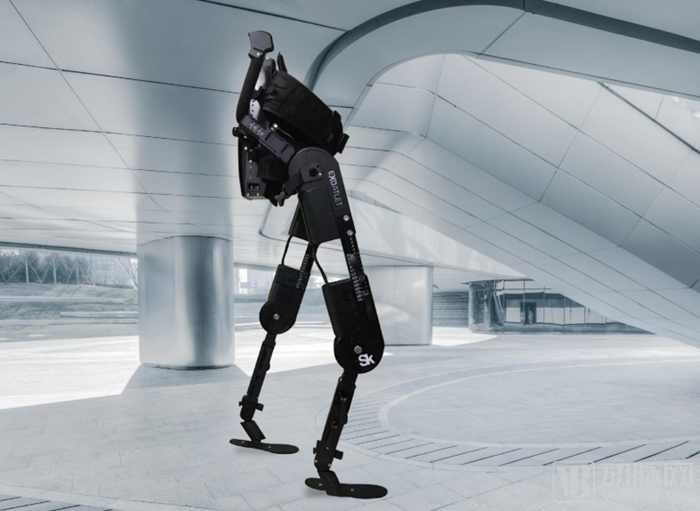
In the Chinese market, Aibu has launched the EA1 Home Edition and EA2 Medical Edition exoskeleton rehabilitation walkers.
Among the design features of the home edition, Aibu products have a wide range of indications and can be applied to three types of patients: stroke patients, those with spinal cord injury (SCI), and patients with myasthenia.
ExoAtlet Exoskeleton Rehabilitation Robot is developed for rehabilitation and walking assistance for patients with complete or incomplete lower limb impairment. The robot features an ergonomic design, making it nearly weightless when worn.
In terms of mode configuration, therapists can customize different training modes for patients to ensure comfortable walking speeds. The Aibu exoskeleton rehabilitation walker utilizes a proprietary algorithm that mimics the ankle, knee, and hip joint angles and force application patterns of healthy individuals. By adopting a gait pattern closer to normal human locomotion, long-term use can significantly enhance the efficacy of rehabilitation therapy.
ExoAtlet: An App Designed for Rehabilitation Therapists to Monitor Patients’ Rehabilitation Data in Real Time and Adjust Rehabilitation Methods and Training Plans
The home version is also equipped with four motors, each featuring a built-in sensor that automatically stops operation when excessive pressure is applied, thereby providing enhanced safety for the wearer. The use of a high-capacity battery ensures all-day usage for patients.
Liu Zhixi stated, “Our ultimate goal is not merely to enable individuals with disabilities to stand and walk, but to empower patients to walk independently without the robotic device through rehabilitation training. It has been demonstrated that ExoAtlet training facilitates both psychological and physiological changes. Physiologically, it improves joint mobility, muscle recovery, digestive and gastrointestinal function, and cardiovascular function. Psychologically, it enhances post-exercise satisfaction, boosts self-esteem derived from standing, and alleviates depression.”
To achieve better rehabilitation outcomes, Aibu Technology has developed a rehabilitation therapy system designed for use with exoskeleton robots. It is reported that the complete rehabilitation system was jointly developed by ExoAtlet in collaboration with professional medical institutions both in China and abroad.
Liu Zhixi stated, “Many may currently believe that the primary obstacle to the commercialization of exoskeleton robots is their high price. We contend that the immediate priority is not pricing, but rather diversifying application scenarios and establishing a comprehensive rehabilitation framework. By promoting products through an integrated rehabilitation system and expanding their range of applications, we can reduce usage costs.”
Liu Zhixi revealed to VCBeat that Aibu will unveil the second-generation medical version of its product during the China International Import Expo, with more technical details to be disclosed at that time.
Regarding the market growth of exoskeleton rehabilitation robots, Liu Zhixi stated, “For exoskeleton robots, people have actually overestimated their short-term development within the next five years while underestimating their growth potential over the coming decade. We believe this is a century-long technological endeavor, which will achieve steady growth only after its solutions have matured.”