

Mingxin Health Debuts at CSCO 2019, Pioneering Innovative Healthcare Payment Solutions

MediTrust Health
Innovative Inclusive Health Medical Service and Security Platform
September 18, Xiamen ---- The annual National Clinical Oncology Conference (the 22nd) and the 2019 CSCO Academic Annual Conference were grandly held in Xiamen. In line with the conference theme of “Innovative Precision Research, Exploring Smart Healthcare,” MediTrust Health hosted its inaugural special satellite symposium themed “Innovative Medical Payment.”
Zhou Jin, a renowned host from Dragon TV, joined numerous medical experts, as well as senior executives from financial institutions, insurance companies, and pharmaceutical enterprises, at this satellite symposium. They engaged in in-depth discussions on how healthcare payment systems can better assist patients in accessing higher-quality medication services at lower costs amidst the new market access environment. By leveraging technological innovation, business model optimization, and service network expansion, the participants explored solutions to pressing social issues such as high out-of-pocket expenses for patients and their difficulty in accessing premium healthcare services.
At the meeting, Professor Li Jin, Chairman of the CSCO Conference, delivered a special opening address on behalf of the organizing committee for this satellite symposium. He stated that in today’s era of increasingly diverse cancer treatment options, while innovative drugs bring new hope to patients, their high costs remain “out of reach” for many.
While the “broad coverage and basic protection” of China’s basic medical insurance is undoubtedly a significant achievement, ensuring actual medication access for patients with serious illnesses has become a issue of sustained concern among various stakeholders in recent years.
Furthermore, Professor Li Jin discussed health trends among the healthy population. “People are becoming increasingly proactive about preventive care, and they are learning to select various commercial insurance plans for themselves and their families. Given the gaps in basic medical insurance, there is significant potential for the development of commercial health insurance. I am very optimistic about the future of MediTrust Health,” Professor Li Jin remarked humorously.
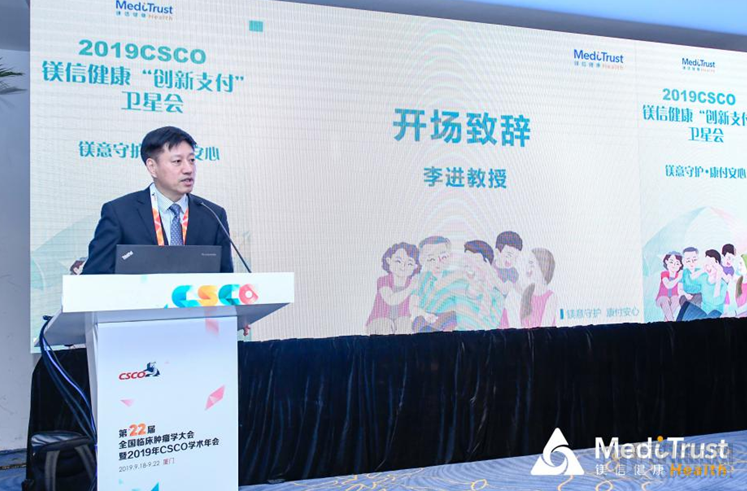
Figure Caption: Opening Remarks by Professor Li Jin
From the perspective of clinicians, innovations and diversification in payment methods are beneficial developments for patients. Professor Zhou Ye from Fudan University Shanghai Cancer Center explains, “Previously, we had various chemotherapy drugs; later, targeted therapies and immunotherapies emerged. From a medical standpoint, these advances have significantly extended patients’ survival times and hold the potential to transform cancer into a chronic disease.” The National Healthcare Security Administration has long prioritized the advancement of healthcare reform policies related to specialty drugs. However, as of June this year, 14 targeted drugs remain excluded from the national medical insurance coverage. While the therapeutic efficacy of targeted drugs is widely recognized, their high costs indeed force many patients to abandon treatment and merely sustain daily life. “Charitable drug donation programs are currently the preferred option to ensure patients’ long-term access to medications. Additionally, we physicians also recommend that patients consider alternative payment methods distinct from traditional approaches, such as installment plans or outcome-based insurance, to maximize their ability to afford and adhere to prescribed treatments.”
At this innovative medical payment satellite symposium, the two most distinguished guests were Lu Yong, the real-life “Drug Hero” who inspired the film *Dying to Survive*, and Qin Bo, the director of the renowned medical documentary *The World of Humans*. Representing the perspectives of patients and observers, respectively, they engaged in a dialogue centered on “dedication and genuine compassion.” Addressing a series of issues that have drawn significant public attention—from the difficulties and high costs of accessing medical care in previous years to the recent challenges and expenses associated with obtaining medications—they explored the question: “How can patients practice ‘self-rescue’ within China’s current medical policy environment?”
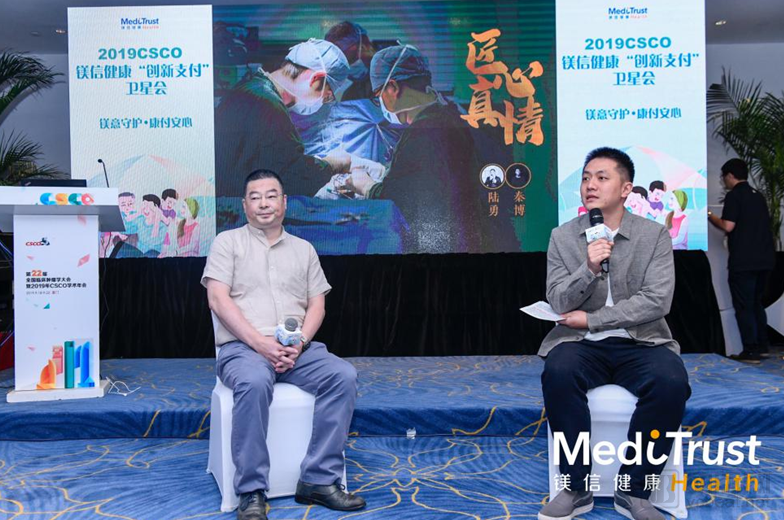
Figure Caption: Interview with Mr. Lu Yong (left) and Mr. Qin Bo (right)
In the medical documentary *The Human World 2*, the story of Yan Hongwei, the protagonist of “The Road to Fighting Cancer,” is deeply lamentable. She traveled thousands of miles to the United States in search of a glimmer of hope. Although her test results remained disappointing, she spent an entire year’s salary to purchase palbociclib in Hong Kong—a targeted therapy not yet available in mainland China in 2018. Yet this drug, as precious as gold, ultimately failed to extend her life.
Lu Yong stated, “For cancer patients, having access to medication is a stroke of luck, as it signifies that there are treatment options available.” During the interview, Lu Yong articulated the expectations of most patients: if more insurance companies were to enter the specialty drug insurance market sooner and launch high-quality commercial health insurance products, thereby becoming a crucial component of coverage beyond social security, they could address more challenges and assist a greater number of patients.
In China, there are far too many cancer patients who cannot afford care, far too many who abandon treatment, and far too many who desperately wish to survive. As the film “Dying to Survive” puts it, “There is only one disease in this world: poverty.” This starkly illustrates how critical the ability to afford medication is for cancer patients.
Recently, the national government released a new edition of the National Reimbursement Drug List (NRDL), which includes five drugs for major diseases approved through standard access procedures. This significantly demonstrates that the state has begun to prioritize this patient population and ensure the implementation of national policies. In this context, the “Drug Hero” incident and the film *Dying to Survive* have undoubtedly exerted a certain influence.
At the conference, Lu Yong also stated, “A film is merely a medium that reflects society, and I am simply one of the many leukemia patients who have survived to this day. However, when my fellow patients learned that the state had begun to prioritize our community, we were genuinely heartened. We hope that future patients will no longer have to endure hardships to purchase medications abroad, and that they will not readily give up on life.”
The well-known “impossible trinity” of healthcare—better clinical outcomes, lower healthcare expenditures, and broader accessibility—has long been a thorny issue for all stakeholders. Addressing this challenge for both patients with existing conditions and healthy individuals has always been the focus of MediTrust Health’s efforts. To this end, Yaokangfu, a pharmaceutical benefits platform that has already served over 100,000 patients, is embarking on a new journey with a major upgrade. It has evolved into a comprehensive pharmaceutical benefits platform offering an extensive range of services, providing patients with greater benefits and protection, and delivering an enhanced user experience.
It provides patients with the strongest protection against three major challenges: difficulty in accessing medications, high drug costs, and uncertainty regarding treatment efficacy. In addition, Zhang Xiaodong, CEO of MediTrust Health, shared another milestone PBM (Pharmacy Benefit Management) platform under its umbrella, which aims to collaborate with major commercial insurance companies to launch drug coverage insurance products. The platform has already partnered with dozens of commercial insurers and launched nearly twenty specialty drug coverage insurance plans. It offers services including pharmacy network planning, direct billing at pharmacies, guidance on Patient Assistance Program (PAP) applications, and green-channel access for outpatient care, providing specialty drug coverage to over ten million healthy individuals and families.
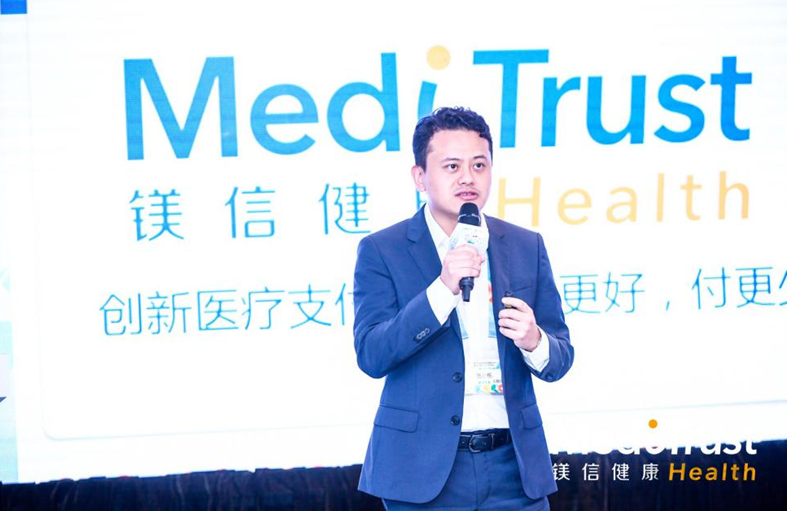
Caption: Speech by Zhang Xiaodong, CEO of MediTrust Health
The core logic of pharmacy benefit management (PBM) is to help commercial insurance companies control costs through prescription audits, price negotiations, and other methods, primarily serving commercial insurers and corporate employers. In contrast, patient benefit management is primarily patient-centric, serving patients directly, with objectives that extend beyond merely reducing medication costs.
“From the perspective of addressing pain points, MediTrust Health’s original intention is closely aligned with policy directions and public needs. For instance, policies aimed at resolving the issues of ‘poverty caused by illness’ and ‘return to poverty due to illness,’ as well as those implementing zero tariffs on anticancer drugs, are all designed to enable the public to better access high-quality medicines and medical services. From the standpoint of out-of-pocket patients, leveraging professional third-party institutions to integrate the upstream and downstream segments of the healthcare industry chain can effectively reduce medical costs and improve the accessibility of high-quality medical services and pharmaceuticals,” said Zhang Xiaodong.
Although many specialty anticancer drugs have been included in the national medical insurance scheme, China’s vast population means that medical resources remain insufficient and social insurance cannot fully cover the medication needs of all cancer patients. This reality has driven various sectors of society to explore and develop more effective solutions to practically address the financial and accessibility challenges associated with these treatments.
Zhang Xiaodong, CEO of MediTrust Health; Fu Xudong, Senior Vice President of China Market Access at Bristol-Myers Squibb Pharmaceutical; Yin Min, General Manager of the Oncology Business Unit at AstraZeneca China; Mou Yanping, General Manager of the Oncology Business Unit at MSD China; Chen Shaofeng, General Manager of the Second Oncology Business Unit at Roche China; Hu Xiao, Deputy General Manager of China Re Life Insurance; and Liu Jiaming, CEO of WeSure engaged in an in-depth discussion on “Multi-Party Support for Innovative Healthcare Payment Solutions.”
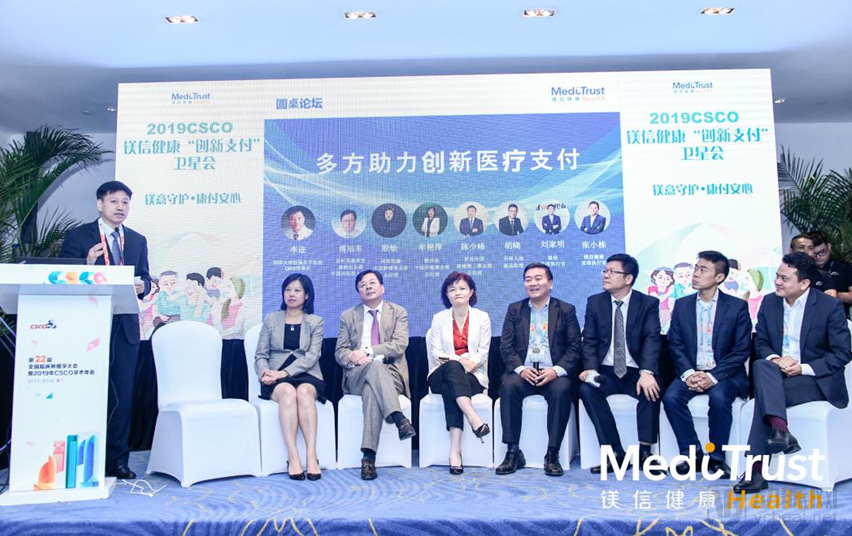
Caption: Guest Roundtable Discussion Session
Yin Min of AstraZeneca stated that the “Taiyu Xinsheng Public Welfare Insurance,” developed in collaboration with MediTrust Health, adheres to a “patient-centric” philosophy. It aims to provide public welfare coverage for first-line standard treatment of patients with advanced EGFR-mutated non-small cell lung cancer (NSCLC), thereby enhancing patient confidence in Tagrisso therapy and offering greater peace of mind to more lung cancer patients.
Liu Jiaming, CEO of WeSure, also stated that the “MediShield” Special Oncology Drug Coverage Plan, jointly launched with MediTrust Health and Taikang Online Insurance, received widespread acclaim upon its debut. Building on this success, WeSure has once again partnered with MediTrust Health and Taikang Online Insurance to introduce the “MediShield • Patient Protection Plan,” further deepening and expanding the scope of coverage under the “MediShield” brand to provide the most tangible support to cancer patients. In the future, WeSure will continue to collaborate with MediTrust Health to develop more insurance products that benefit the general public. Additionally, WeSure has engaged in over thirty innovative medical payment projects with pharmaceutical companies, including Roche’s FoundationOne, Perjeta, and Eisai’s Lenvima programs. It has also worked with dozens of commercial insurance providers—such as Ping An Life Insurance, Ping An Health Insurance, Huaxia Life Insurance, Taikang Online Insurance, and AIA—to launch nearly twenty specialized drug coverage insurance products.
From specialty drug services to the chronic disease sector, and from patients to the general healthy population, MediTrust Health is committed to starting at the payment end, aggregating the needs of patients and healthy individuals, connecting pharmaceutical companies with insurers, and deeply integrating financial tools to help people access cutting-edge medication benefits and premium medical services at lower costs and with greater convenience.
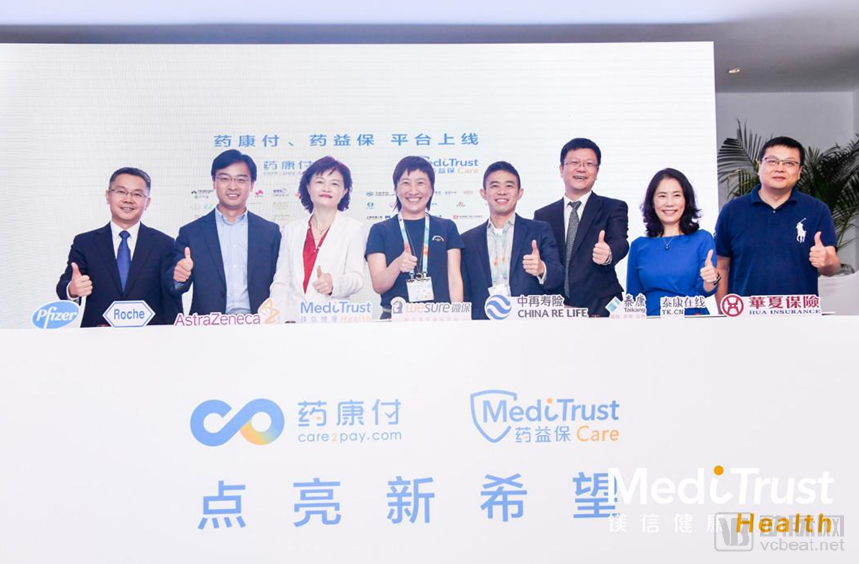
Caption: The lighting ceremony segment
A new era of transformation in pharmaceutical payment is rapidly approaching. The innovative medical payment satellite symposium hosted by MediTrust Health at this CSCO Oncology Congress vividly embodies the conference theme, “Innovative Precision Research: Exploring Smart Healthcare.” This event represents a forward-looking initiative to bridge pharmaceutical companies and commercial health insurance, while offering new hope for survival to more cancer patients.