

TechBridge Inc. Files for IPO: Enabling Import Substitution in Cloud Video Conferencing for China’s Healthcare Sector with Proven Support for WeDoctor’s Tens of Millions of Video Sessions

Zoom Video
Telemedicine Solutions Provider
Starting from September 9, 2019, users began reporting an inability to access the services of Zoom, a well-known cloud video conferencing provider. Subsequently, Zoom’s authorized distributors in China issued notifications to confirm the issue. One of the distributors, Mengshi Technology, stated in its notice that “as of September 9, 2019, access to Zoom International Edition services has been suspended within mainland China; Zoom China Edition services remain operational, although some mobile apps have been affected.” The notice also provided a temporary workaround, advising users unable to access the international version to register for a free Zoom China Edition account as an emergency measure while awaiting official announcements from Zoom.
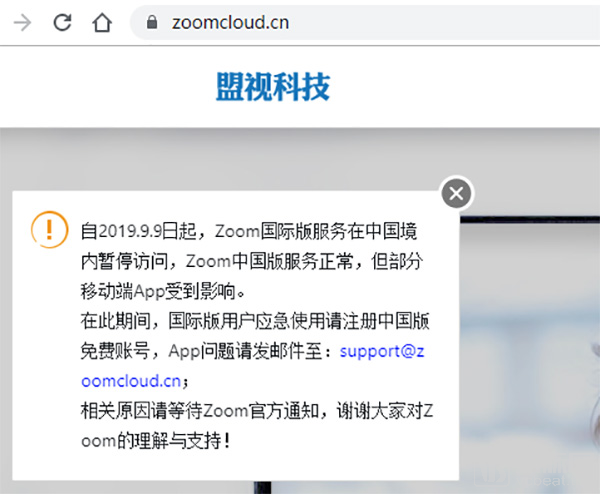
According to industry speculation, Zoom’s sudden inaccessibility may be attributed to its non-compliance with domestic business regulations. Chinese regulations mandate that entities engaged in telecommunications activities within the country must hold an operating license, and that personal information and important data generated during operations must be stored domestically. The outage of Zoom has impacted many enterprises, particularly those relying on its services to conduct their business. Although other overseas online video conferencing services of a similar nature have not been affected for the time being, “non-compliance” remains a Sword of Damocles hanging over them.
For the internet healthcare industry, which relies on this service, seeking “import substitution” for online video solutions may be a more prudent long-term strategy. In this regard, WeDoctor, a leading domestic digital health enterprise, has fully achieved “import substitution” by leveraging its in-house team. VCBeat (WeChat ID: vcbeat) also conducted an in-depth profile of the company, aiming to provide valuable insights for healthcare enterprises and institutions currently exploring “import substitution” options.
The Current Status of Remote Video Conferencing in China
Before it became inaccessible, Zoom was the leading player in China’s cloud video conferencing sector. Founded in 2011, this video conferencing service provider specializes in delivering SaaS-based cloud video conferencing solutions to enterprise clients. On April 28 this year, Zoom went public on the Nasdaq. On the last trading day before news of its inaccessibility broke, Zoom’s market capitalization reached $23.27 billion. Interestingly, although Zoom is a U.S. company and theoretically has not entered the Chinese market, it employs more than 500 people in China, primarily engaged in research and development, accounting for approximately 30% of its total workforce.
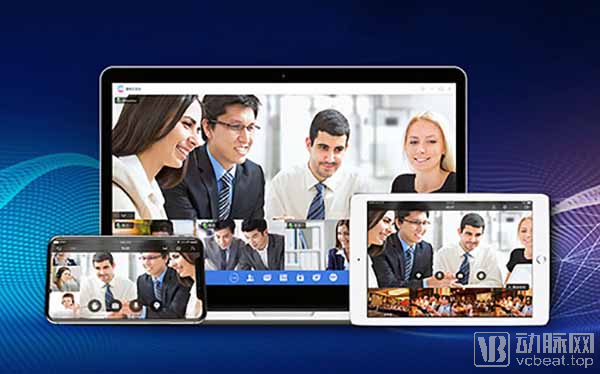
Thanks to its smooth and user-friendly experience, along with features such as low cost, flexible purchasing options, and no specific hardware requirements, cloud video conferencing represented by Zoom has developed rapidly. To date, Zoom has achieved over ten million downloads and serves 750,000 enterprise users. Its customers are distributed across 180 countries and regions, with 82% of its revenue coming from the United States. Business in the Chinese market accounts for only a small proportion of its overall operations, which is likely the main reason why Zoom has not yet entered the Chinese market.
Before the rise of cloud-based video conferencing, represented by Zoom, the industry was dominated by hardware-based video conferencing systems. A complete system includes conference room terminals, desktop terminals, multi-point control units (MCUs), and peripherals such as cameras, microphones, and displays, requiring professional personnel for installation. Compared to cloud-based video conferencing, hardware-based systems do offer advantages in terms of powerful performance, stability, reliability, and security; however, their costs are prohibitively high, nearly ten times those of cloud-based solutions.
Therefore, although the hardware video conferencing system market is dominated by industry giants such as Huawei, Suzhou Keda, Polycom, and Cisco, with its market size reaching $600 million in 2019 (while the software-based cloud video conferencing market currently stands at only around $170 million), research firms still believe that cloud video conferencing will rapidly replace hardware video conferencing systems. IDC predicts that the domestic cloud video conferencing market in China will reach $540 million by 2023. Following this trend, the market size of domestic cloud video conferencing is expected to surpass that of hardware video conferencing systems by 2025.
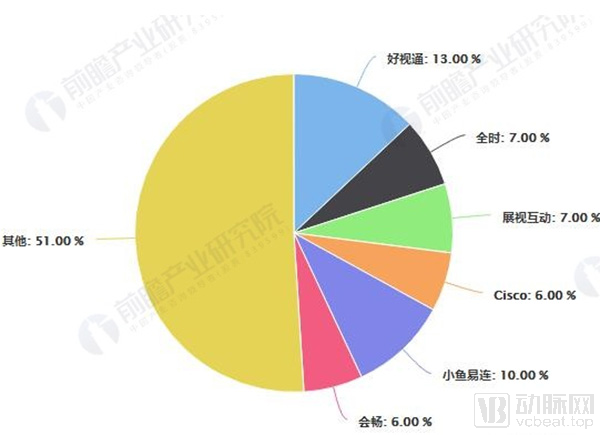
Image source: Relevant reports from the Qianzhan Industry Research Institute
Cloud video conferencing in China is still in its early stages, with a highly fragmented competitive landscape. According to relevant reports from Qianzhan Industry Research Institute, the major domestic providers of software-based conferencing solutions centered on cloud video conferencing currently include Haoshitong (V2 Conference), Xiaoyu Yilian (XYLink), BizConf, Quanshi (QS), Zhanshi Hudong (Gensee), and Cisco. Among these, Haoshitong and Xiaoyu Yilian hold notably prominent market shares, while the other brands are closely matched. Nevertheless, the combined market share of these six companies remains below 50%, indicating that the market is still quite fragmented and subject to potential changes at any time.
The Technological Backbone Behind WeDoctor
Due to the unique nature of the healthcare industry, general-purpose cloud video conferencing services may not be the most suitable choice. First, the healthcare sector demands exceptionally high reliability from cloud video conferencing services; any lag or stuttering could lead to serious consequences. Second, healthcare institutions often have stringent security requirements and need to achieve rapid and reliable communication between internal and external networks. Third, the information technology systems in healthcare organizations are extremely complex, making it nearly impossible for generic cloud video conferencing solutions to integrate seamlessly. Finally, unlike the design logic of general-purpose cloud video conferencing, the medical field places an exceptionally high premium on fidelity. For example, while standard cloud video conferencing systems filter out background noise to enhance audio quality during processing, remote digital stethoscopes require the exact opposite: 100% accurate, high-definition sound reproduction is essential, as any alteration could result in significant diagnostic errors.
WeDoctor, a leader in China’s digital healthcare industry, recognized early on the decisive role of cloud-based video conferencing systems in the infrastructure of internet-based healthcare. Since establishing the Wuzhen Internet Hospital in late 2015, WeDoctor has been seeking reliable partners and ultimately selected Tangqiao Technology, then a relatively unknown startup.
Although Tangqiao Technology was founded only recently, its co-founders are seasoned experts with years of industry experience who returned to China from overseas. Founders Yang Jinyu and Zhang Xuan both held key positions at Webex and Cisco, and have strong ties to Zoom, underscoring their formidable technical expertise. The team currently holds five core patents for cloud-based video conferencing systems and 23 software copyrights. Leveraging its robust technical capabilities, Tangqiao Technology has been designated as a Class A priority enterprise under the Hangzhou Xiaoshan District’s Overseas Talent Introduction Program.
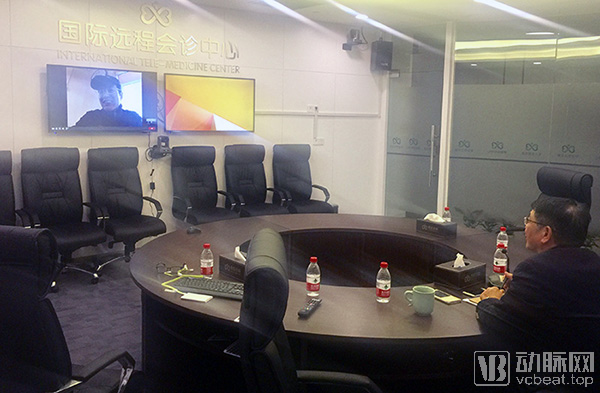
Tangqiao Technology's cloud video conferencing system supported the connection between China's Great Wall Station in Antarctica and mainland China.
For WeDoctor and Tangqiao Technology, which provides the technical support, February 5, 2017, Antarctic time, was a memorable day. On this day, WeDoctor Internet Hospital successfully established a video connection with China’s Great Wall Station in Antarctica. Under extremely challenging communication and climatic conditions, Tangqiao Technology’s cloud video conferencing system enabled polar scientists and medical experts to connect “face-to-face across screens,” bridging a distance of 16,000 kilometers and an 11-hour time difference with clear video and smooth audio. He Chao, founder of WeDoctor General Practice and former president of Sir Run Run Shaw Hospital affiliated with Zhejiang University School of Medicine, provided interdisciplinary support for this remote consultation and conducted health examinations for the polar scientists.
Notably, no special optimizations were applied to this connection. In fact, Liao Jieyuan, founder of WeDoctor, downloaded the WeDoctor app while aboard a ship in the Drake Passage. After disembarking amid Force 6 winds and waves, he completed the system debugging at the Great Wall Station within just a few minutes. The satellite communication system used at the Great Wall Station supports only basic data exchange with domestic networks, making remote video conferencing under such conditions previously considered impossible. Tangqiao Technology’s independently developed video compression and transmission algorithms enabled smooth audio-video interaction over extremely narrow bandwidth, demonstrating impressive performance and reliability.
This is not the first time that Tangqiao Technology’s platform has shone. Back in 2016, with strong support from the Tangqiao Technology platform, WeDoctor successfully extended its internet hospital services to the Sansha Islands, China’s southernmost archipelago. The successful connection to Antarctica further demonstrates that WeDoctor’s remote diagnosis and treatment system, built on Tangqiao Technology’s cloud-based video conferencing system, can withstand the most extreme environmental conditions.
Strength Is the Source of Tangqiao Technology’s Dream of “Import Substitution”
Supported by the Tangqiao Technology platform, WeDoctor’s business volume has continued to expand. Currently, WeDoctor Group operates a total of 60 apps that serve 117 medical consortia across China, covering 1,187 institutions in 30 provinces. Annual cloud-based push notifications reach 3–4 billion, real-name SMS messages total 300–400 million, and video consultations number in the tens of millions. This massive data workload is maintained by Tangqiao Technology’s team of 60 professionals.
“In the healthcare industry, where lives are at stake, reliability is the single most critical consideration in our design process,” explained Yang Jinyu, outlining the logic behind Tangqiao Technology’s architectural design. To enhance reliability, Tangqiao Technology improves stability from two perspectives. First, it employs patented codec and transmission technologies, implementing Quality of Service (QoS) design across the entire link. Unique adaptive control strategies have been developed to address packet loss, latency, and bandwidth jitter during network transmission. Tangqiao Technology ensures that video communication remains unaffected even with 20%–30% network packet loss. Additionally, Tangqiao Technology provides multi-path redundancy solutions for critical components to guarantee seamless communication.
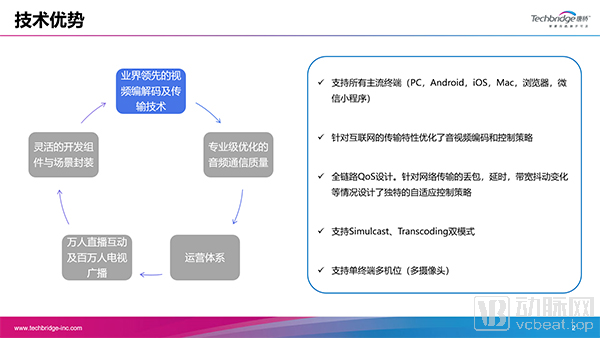
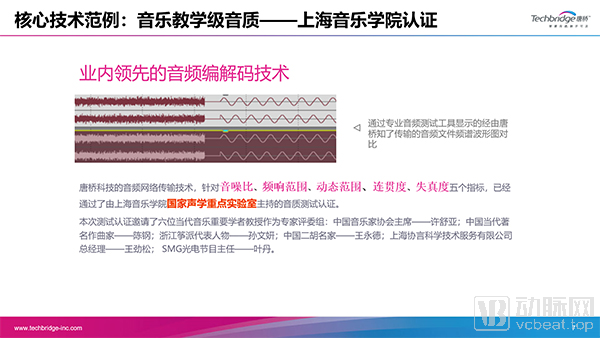
By ensuring priority transmission of voice data through QoS, along with forward error correction and packet loss concealment technologies, as well as automatic gain control, noise suppression, echo cancellation, and silence detection, Tangqiao Technology delivers professionally optimized audio communication quality. This approach maximizes voice quality across five key metrics: signal-to-noise ratio, frequency response range, dynamic range, continuity, and distortion. As early as 2017, Tangqiao Technology passed the audio quality testing and certification conducted by the National Key Laboratory of Acoustics at the Shanghai Conservatory of Music, with review experts concluding that its performance had already achieved CD-level auditory experience.
Beyond its core technological strengths, Yang Jinyu believes that Tangqiao Technology holds distinct advantages in localization compared to international giants like Zoom. First, it better accommodates domestic meeting conventions. Additionally, recognizing that some older users in China are unfamiliar with operating conferencing systems, the platform has incorporated a feature allowing assistants to operate the system on their behalf. From the outset of its architectural design, Tangqiao Technology addressed the poor interoperability among China’s major telecom carriers—China Telecom, China Mobile, China Unicom, and cable networks. By implementing acceleration between carrier servers, it mitigates issues such as insufficient bandwidth or choppy video during cross-network communications. To meet the high security requirements of certain institutions, Tangqiao Technology ensures data security and stability through a hybrid deployment model combining SaaS and on-premises solutions.
Service excellence is another key strength of Tangqiao Technology, as illustrated by Yang Jinyu with two examples. Micro Medical Group, currently Tangqiao’s largest client, requires not only mobile app functionality but also integration with its proprietary medical devices. To meet these needs, Tangqiao has optimized compatibility for over 200 mainstream smartphone models available on the market and provided dedicated adaptation and optimization for Micro Medical’s specialized devices. Furthermore, in collaborations with healthcare institutions such as West China Medical Center, Tangqiao has demonstrated rapid response capabilities, ensuring timely support.
Finally, in addition to SaaS offerings, Tangqiao Technology also provides PaaS services. By partnering with various application-layer vendors, Tangqiao Technology delivers underlying audio and video capabilities. Through collaborative development with partners, its services can be rapidly and seamlessly integrated with diverse information systems used by healthcare institutions, thereby enhancing the efficiency of system deployment.
Technical Application Scenarios of Cloud Video in Healthcare Informatics
As a cloud video conferencing service provider deeply rooted in the healthcare vertical, Tangqiao Technology has accumulated substantial experience through its collaboration with WeChat and has categorized the empowerment of healthcare informatization by cloud video conferencing into nine application scenarios.
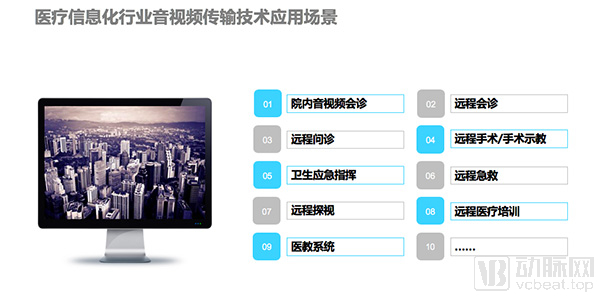
In-Hospital Audio-Visual Consultation
Current large-scale general hospitals occupy substantial areas, making navigation within a single campus challenging. Some major hospitals even operate multiple campuses across the local region. For physicians from different departments or campuses to conduct consultations, traveling between buildings is routine; in some cases, they must traverse the entire city, which is highly inconvenient. Cloud-based video conferencing systems enable seamless consultations among different departments and campuses within the hospital, alleviating the burden on physicians and significantly improving efficiency.
Teleconsultation
Beyond in-hospital audio-video consultations, long-distance remote consultations represent a domain where cloud video conferencing systems can make significant contributions. Currently, the medical capabilities of primary healthcare institutions are relatively limited, and complex or rare conditions often require referral to higher-level hospitals, even to nationally renowned medical centers. With improvements in network infrastructure, cloud video conferencing systems can overcome geographical barriers, enabling regions with scarce medical resources to access expert consultations from thousands of miles away, thereby sparing patients and physicians the burdens of travel. On the WeDoctor platform, remote consultations conducted by experts via cloud video conferencing are already well established.
Teleconsultation
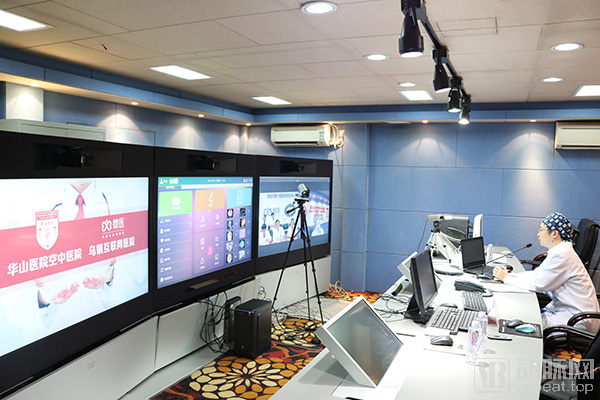
For internet hospitals like WeDoctor, remote consultations constitute the core differentiator from traditional hospitals. Since physicians cannot conduct in-person examinations, the quality and stability of remote video connections are critically important. Any lag or visual distortion could potentially lead to misdiagnosis by the physician. It is fair to say that cloud-based video conferencing systems form the foundational infrastructure upon which internet hospitals depend for their operation.
Remote Surgery / Surgical Instruction
Remote surgery was once merely an ambitious vision. With the increasing maturity of low-latency 5G networks and Internet of Things (IoT) technologies, remote surgery—and the surgical training derived from it—will gradually become more viable in the future. Over the past year, multiple pilot cases of remote surgery have been conducted in China. Cloud-based video conferencing systems play a critical role in these procedures, as any lag, latency, or image distortion could potentially lead to severe consequences.
Public Health Emergency Command
In practice, health emergency command systems are primarily utilized at the government level. When infectious disease outbreaks or similar public health emergencies occur, cloud-based video conferencing systems can rapidly facilitate real-time communication between command centers and frontline teams, enabling immediate response and intervention.
Remote Emergency Care
Remote Emergency Care is a solution designed for 120 emergency centers, which has seen significant development in recent years with the maturation of 5G network technology. Previously, the primary task of ambulances was to transport patients to hospitals as quickly as possible. However, due to limited on-site conditions, critical information from the scene was often difficult to transmit promptly to emergency departments. The cloud-based video conferencing system enabled by 5G networks allows on-site emergency personnel to communicate with physicians, conduct preliminary consultations via video, and prepare emergency protocols in advance. At this year’s Boao Forum for Asia, WeDoctor demonstrated this remote emergency care system, which integrates 5G, the Internet of Things (IoT), and cloud-based video conferencing, and performed an emergency rescue on a patient with an acute condition at the event.
Remote Visitation
Through cloud-based video conferencing systems, hospitals can also enable remote visitation and remote ward rounds. The former allows family members who are unable to accompany patients in person to visit them at any time, thereby alleviating family anxiety. The latter helps physicians improve the efficiency of ward rounds. In traditional ward round practices, doctors often need to traverse large hospital campuses. Due to heavy workloads and high patient volumes, ward rounds sometimes become merely formalistic. High-definition cloud video conferencing systems with bidirectional communication enable physicians to conduct remote ward rounds for hospitalized patients with stable conditions under special circumstances, thereby enhancing both efficiency and the quality of care.
Telemedicine Training and Medical Education System
In traditional medical education systems, physicians often need to lead large groups of students to hospital wards to observe case patients. This approach faces two main challenges: limited ward capacity and the potential discomfort caused to patients, which inevitably compromises the quality of teaching. To address these issues, Tangqiao Technology developed a cloud-based video conferencing system for West China Medical University. This system enables students to clearly observe clinical instruction remotely, thereby eliminating spatial constraints and minimizing disruption to patients. Additionally, the cloud video conferencing system supports remote medical training, helping grassroots physicians enhance their clinical skills. Currently, secondary-level and above hospitals in 13 prefecture-level cities and 63 counties across Heilongjiang Province are utilizing Tangqiao Technology’s cloud video conferencing platform for training purposes. As early as late 2018, Tangqiao Technology assisted Weiyi (Micro Medical Group) in launching a pilot program in Hainan Province, establishing remote medical training systems in several townships to support health-focused poverty alleviation efforts through the Weiyi platform. In the future, Weiyi plans to deploy more remote medical training systems in impoverished areas nationwide, fundamentally addressing the shortage of clinical skills among grassroots physicians.
Final Thoughts
“I’m still young, and I always feel like there’s more I can do,” said co-founder Zhang Xuan when asked why he resigned from a highly coveted position to return to China and start a business. In the eyes of Yang Jinyu and Zhang Xuan, the achievements of China’s reform and opening-up over the past 30 years are likely unprecedented in human history, with no parallel in either the past or the future. Driven by the relentless wheel of history, there will always be a few companies that should step forward to take on responsibility and make their contributions.
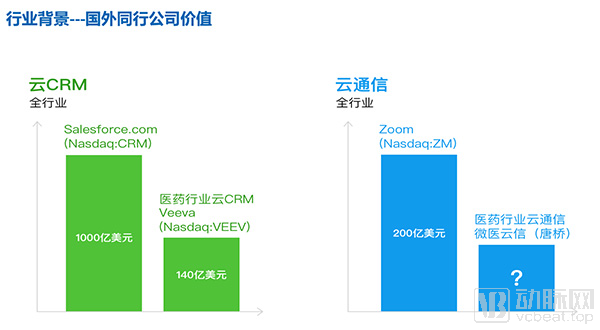
In Yang Jinyu’s view, with the enactment of laws and regulations such as the Cybersecurity Law and China’s global leadership in 5G development, the “import substitution” of cloud-based video conferencing in the healthcare industry will arrive soon. He is confident about the future of cloud video conferencing systems and Tangqiao Technology in China.
In fact, Tangqiao Technology, which has just engaged with the STAR Market and is preparing for re-capitalization, indeed has grounds for such capital market optimism. Whether it will become another unicorn remains to be seen, but at the very least, Tangqiao Technology is poised to make significant strides in the “import substitution” of cloud-based video conferencing systems within the healthcare industry.
References
Qianzhan Industry Research Institute: Analysis of the Current Market Status and Development Trends of China’s Video Conferencing Industry in 2018—Cloud Video Replacing Hardware-Based Video Conferencing Is an Irreversible Trend