

Yidong Health Launches AI-Powered Exercise Prescription Platform, Partnering with Peking University First Hospital to Transform Chronic Disease Management
Studying under Ao Lijuan, a director of the Chinese Association of Rehabilitation Medicine and President of the Yunnan Association of Rehabilitation Medicine, Guo Wei was in the year when the Physical Therapy program at Kunming Medical University achieved accreditation from the World Confederation for Physical Therapy. Coincidentally, Dr. Marilyn Moffat, the President of the Confederation and a luminary in the field of rehabilitation, was dedicated to helping countries in the early stages of developing their rehabilitation services. To this end, she selected five to six students annually from around the world to form a cohort for study at New York University. Guo Wei was selected to join this class.

Dr. Marilyn Moffat (Image source: Provided by the company)
During his master’s studies, Guo Wei was introduced to the concept of exercise prescription: a method that specifies the content and volume of physical activity for individuals based on their health status, presented in the format of a medical prescription. During his internship and subsequent employment at the New York Rehabilitation Center, he frequently utilized exercise prescriptions to intervene in the management of patients with chronic diseases, observing tangible clinical benefits.
In 2018, Guo Wei returned to China and, leveraging the advancement of the “Healthy China 2030” Planning Outline, founded Beijing Kangtang Medical Technology Co., Ltd. (hereinafter referred to as “Yidong Health”). Centered on an exercise prescription database, Yidong Health is committed to providing rehabilitation and health management professionals with a scientific, safe, authoritative, and professional intervention support tool, helping them improve work efficiency and prescribe safer and more effective exercise regimens.
“Just like choosing a puppy at a pet store, we usually pick the most active one. A puppy’s activity level intuitively reflects its health status,” said Guo Wei. “Physical activity is an instinctive biological indicator for assessing health.”
Physical activity reflects an individual’s health capacity. In recent years, with the emergence of concepts such as chronic disease management and the integration of sports and medicine, people have gradually recognized the importance of exercise. However, there is still a lack of effective solutions to key questions: How can one engage in scientific physical activity? And how can exercise be leveraged to restore health?
In recent years, the rise of apps such as Keep, Codoon, and Yuedongquan has helped consumers understand exercise and fitness methods to some extent. However, in essence, these are not medical-grade solutions. Comparing them with exercise prescriptions, Guo Wei aptly described the relationship as that between “food and medicinal cuisine”: food sustains life and provides nutrition, while medicinal cuisine targets specific conditions to alleviate symptoms.
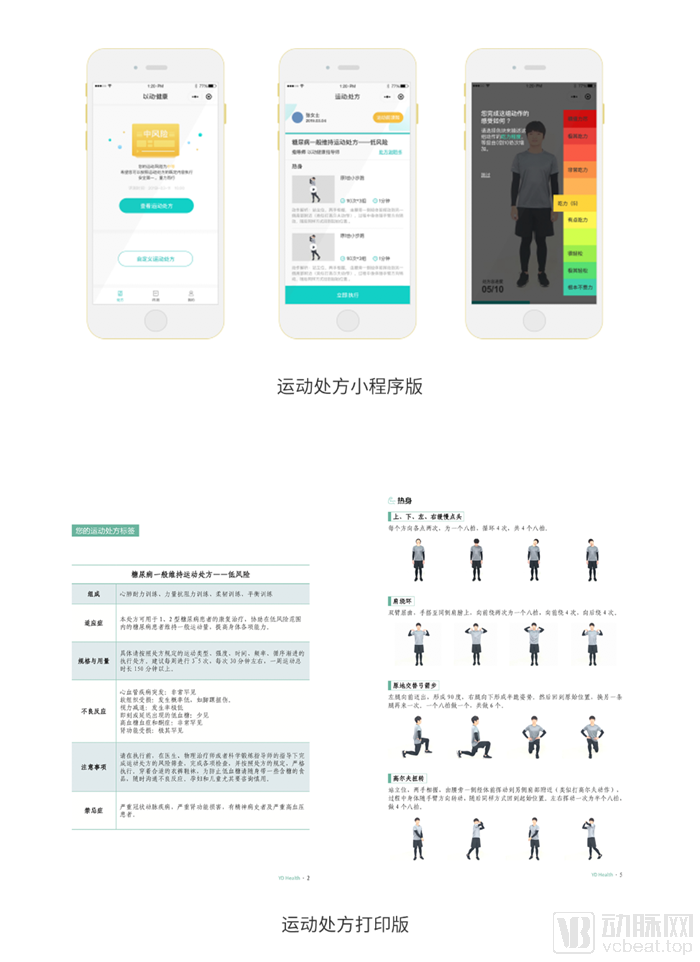
An exercise prescription is a comprehensive rehabilitation exercise plan developed by healthcare professionals, physical therapists, and exercise specialists using the FITT-VP principle (Frequency, Intensity, Time, Type of exercise, Volume, and Progression). It is designed to address medical conditions through a gradual, step-by-step approach.
(Image source: Provided by the company)
Exercise prescriptions differ from routine physical exercise and conventional treatments; they are a highly targeted, purpose-driven, selective, and controlled form of exercise therapy. Guo Wei told reporters that exercise prescriptions are the most important therapeutic intervention for the three major chronic diseases—cardiovascular, pulmonary, and metabolic (glucose-related) disorders.
“Currently, there are approximately one million practitioners in cardiology, pulmonology, and endocrinology departments, as well as rehabilitation departments, yet the number of chronic disease patients requiring services exceeds 300 million,” Guo Wei further told the reporter. Issuing a single personalized exercise prescription takes about three hours, and educating patients on how to exercise requires at least two additional hours. Under these circumstances, it is challenging for physicians to prescribe exercise regimens for individual patients. Moreover, healthcare professionals may generate vastly different prescriptions for the same patient, making the establishment of standardized protocols crucial.
“When I was in the United States, there was a dedicated website called WebPT to assist with learning. During my internship at a rehabilitation center, I frequently used a rehabilitation software solution similar to CAD and Microsoft Office, which enabled electronic medical record documentation, prescription of rehabilitation plans, and insurance reimbursement,” recalled Guo Wei. “At that time, I wondered whether the underdevelopment of rehabilitation services in China was due to a lack of supportive tools and insufficient data accumulation.”
Rehabilitation is inseparable from assistive devices, and chronic disease rehabilitation relies heavily on exercise. “Without exercise prescriptions, the effectiveness of patient rehabilitation would be significantly compromised, thereby affecting the overall therapeutic outcomes of hospitals and further impacting scientific research achievements.” Consequently, Guo Wei considered whether it would be possible to develop an office-like software application that could assist healthcare professionals in prescribing exercise regimens.
Exercise Prescription Database and Software, Rehabilitation SaaS System. By empowering healthcare professionals, exercise instructors, and physical therapists who require exercise prescriptions, we enhance their capabilities, expand their scope of practice, and ultimately help them achieve success.
Taking diabetes as an example, the 8th edition of the IDF Diabetes Atlas published by the International Diabetes Federation in 2017 estimated that there were 114 million people with diabetes in China. New statistical data indicate that 12.8% of the Chinese population suffers from diabetes, accounting for more than one-quarter of the global total of 425 million patients. Population aging, urbanization, dietary changes, the obesity epidemic, and physical inactivity are all contributing factors to this increase.
The field of diabetes management has summarized the “Five Carriages” for prevention and treatment, which include exercise therapy. However, compared with other medical specialties, endocrinology departments lack supporting exercise rehabilitation guidance services, leaving a gap in the market for exercise-based rehabilitation for diabetes. Therefore, Dongjiankang has chosen diabetes, a chronic disease, as its distinctive entry point to develop an exercise prescription tool.
This exercise prescription tool functions as a comprehensive library of exercise prescriptions. Leveraging over 5,000 hours of video production by Dongjiankang, it has compiled a database featuring video demonstrations of more than 2,000 prescribed exercises, training and stretching routines for over 70 muscle groups, and rehabilitation protocols for more than 50 common conditions, thereby establishing the Dongjiankang Exercise Prescription Database.
Guo Wei introduced that the database is built upon internationally certified rehabilitation protocols and encompasses training exercises addressing various exercise risks, complications, muscle groups, and common indications. Multiple papers have been co-published with the Department of Endocrinology at Peking University First Hospital and the Institute of Integration of Sports and Medicine. The exercise videos in the database enable patients to visually learn rehabilitation movements and assist physicians in easily and conveniently prescribing safer exercise regimens.
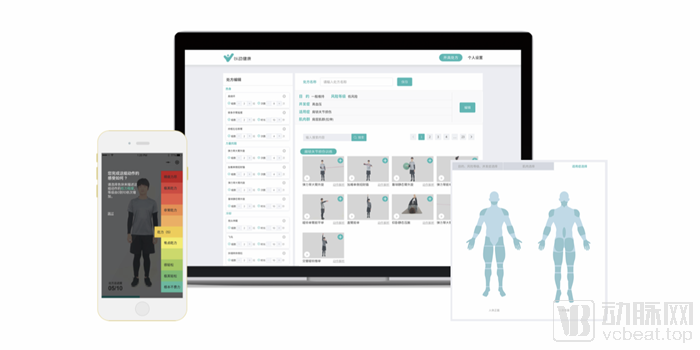
Yidong Health Exercise Prescription Tool (Image source: Provided by the company)
The Exercise Prescription Tool for Physicians is a web-based software powered by a cloud backend. By setting screening criteria for exercise prescriptions, physicians enable the database backend to select appropriate exercises from an activity library. The generated exercise prescription is then presented back to the physician for review; upon approval, it is assigned to the patient, who executes the regimen via a companion mini-program. Reportedly, this software allows physicians to issue an exercise prescription in as little as 1–2 minutes.
Finally, the user's adherence, outcomes, and feedback are presented to physicians through visualized data. By reviewing this comprehensive dashboard, physicians can gain a holistic understanding of key metrics for target clients, including prescription adherence, adverse events, and patient feedback, thereby facilitating a thorough sports rehabilitation medical assessment.
Just as hiring a personal trainer at the gym is common, it is often difficult for individuals to self-monitor whether their exercise movements are standard and whether force application points are correct. Therefore, Dongjiankang has introduced IoT-enabled monitoring equipment available for patient rental.
The YD Health C2 device is an IoT-enabled power bike designed specifically for patients with diabetes, integrating medical and fitness approaches. Featuring an intuitive, ergonomic design, it is deeply integrated with the Dongjiankang Exercise Prescription System, offering real-time heart rate feedback, intelligent exercise intensity alerts, and constant-power mode.
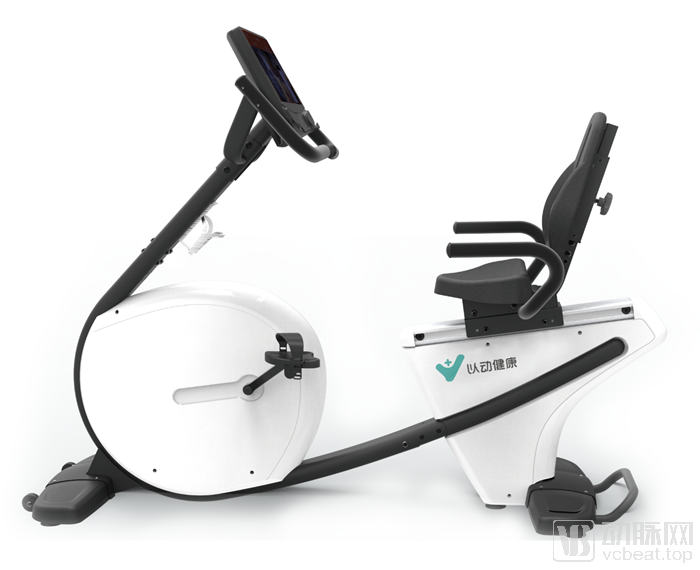
YD Health C2 (Image source: provided by the company)
The intelligent alert system provides smart notifications based on preset target intensity and rigorously calculated heart rate thresholds, guiding users to exercise effectively while preventing hazardous situations. The constant power mode enables sustained exercise at a steady power output, significantly reducing the risk of exercise-induced cardiac issues and ensuring consistent exercise intensity.
Heart rate monitoring during exercise utilizes the Polar armband sensor. Unlike traditional hand-grip devices, it provides a more accurate reflection of physiological status with a virtually unnoticeable wearing experience, enabling physicians to continuously track the dynamic effects of exercise on the body.
The YD C Series features an integrated cloud management system that interconnects the web, tablet, device, and mobile platforms. It encompasses over 20 functions covering user data, exercise prescriptions, implementation, and healthcare provider-patient interactions. Exercise data from the power bike is uploaded directly to the web-based SaaS management backend, which synchronizes prescriptions and exercise data with the monitoring software on the tablet.
To ensure the effectiveness of exercise interventions, Dongjiankang has piloted the establishment of an SMIS Medical-Exercise Integration Exercise Guidance Workstation in the Endocrinology Ward of Peking University First Hospital. This initiative introduces a novel device capable of directly generating a digital twin of the human body, creating a 3D visualization that enables comprehensive monitoring of movement angles and range of motion.
Regarding the team, the founding members hail from the core team of the National Center for Integration of Sports and Medicine, Peking University First Hospital, and top-tier authoritative experts in the United States. They possess deep expertise in the policies and technologies surrounding the integration of sports and medicine, along with extensive experience in developing web-based databases and IoT devices. The company has collaborated with multiple Grade 3A hospitals, including Peking University First Hospital and Beijing Hospital, as well as national-level research institutions, to undertake several major special projects. Three product-related papers have been published, and the company has secured orders from numerous research institutions and enterprises.
Regarding profitability, Guo Wei stated that the company is currently recouping its initial investments through equipment sales and leasing. Software subscription fees are expected to be introduced by the end of September this year, followed by the gradual monetization of additional features such as training programs and an online marketplace. Guo Wei noted that WebPT, a U.S.-based startup with similar offerings, has already secured 15,000 institutional clients and 85,000 professional users, generating over $85 million (approximately RMB 500 million) in revenue last year. After raising $44 million across three funding rounds, WebPT received investment from the prominent New York-based firm Warburg Pincus in late August 2019; the specific amount was not disclosed.
Currently, VCBeat is seeking a new round of financing. Interested parties are welcome to contact VCBeat’s financing assistant, Xiaoyun: DongMai_Investent