

Roche Showcases Multicancer Breakthroughs at CSCO 2019, Highlighting Advances in Lung Cancer, Breast Cancer, Liver Cancer, Leukemia/Lymphoma, and Glioblastoma
From September 18 to 22, 2019, the 22nd Annual Conference of the Chinese Society of Clinical Oncology (hereinafter referred to as CSCO) was held in Xiamen. As a global leader in oncology and personalized medicine, Roche will present the latest research advancements across multiple tumor types at this year’s CSCO conference, including lung cancer, breast cancer, liver cancer, leukemia and lymphoma, and glioblastoma. In addition to promoting cutting-edge academic exchanges between China and other countries, these efforts aim to support the development of personalized medicine in clinical oncology in China.
True Personalized Medicine: Tailoring Diagnosis and Treatment Plans for Each Cancer Patient
At Roche Pharmaceuticals China’s press conference during the CSCO Annual Meeting, Ms. Li Wei, Vice President of the Medical Department at Roche Pharmaceuticals, provided a detailed overview of Roche’s philosophy on personalized medicine. “As a global leader in personalized medicine, Roche has made it a core strategic priority since 2006. With the integration of big data and cloud computing into healthcare, personalized medicine is evolving from targeted therapies directed at specific genes in particular tumors toward more precise, individually tailored treatment plans for each patient.”
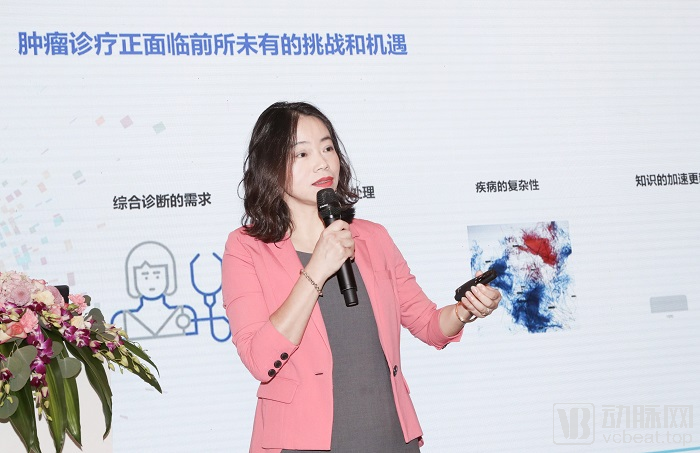
Ms. Li Wei Shares Roche China’s Practical Explorations in Personalized Medicine
Li Wei introduced that Roche is leveraging its extensive experience in pharmaceuticals and diagnostics, while fully utilizing the vast amount of real-world data accumulated from oncology clinical practice. By collaborating with various stakeholders—including hospitals, patient organizations, research institutions, and governments—Roche is building a value-based personalized healthcare system across multiple dimensions, such as drug development, clinical treatment, and drug accessibility. “The core of personalized medicine is value. It can accelerate drug development, enhance the specificity and accuracy of testing, improve physicians’ clinical decision-making, and increase the efficiency of healthcare resource allocation and pharmaceutical payment systems, ultimately benefiting every patient,” she stated.
At the press conference, Li Wei introduced two cutting-edge research achievements in personalized medicine. Entrectinib is a broad-spectrum anti-tumor drug under development by Roche, designed to treat tumors driven by NTRK and ROS1 gene alterations. In its clinical trial design, patient enrollment criteria are based solely on the presence of driver genes, rather than the primary tumor site. Currently, NTRK gene mutations are observed in various adult tumors, including intracranial tumors, thyroid cancer, lung cancer, colorectal cancer, and leukemia, as well as in pediatric conditions such as glioma, congenital infantile fibrosarcoma, and mesoblastic nephroma. Entrectinib has already been approved for marketing in both the United States and Japan. The other achievement is the “Tumor Immunotherapy” project—iNeST (individualized neoantigen-specific immunotherapy)—which has recently completed its Phase Ib trial. This therapy involves reconstructing mutant genes identified through solid tumor biopsies to tailor gene therapies targeting tumor neoantigens for individual patients. Phase I trial results showed that nine melanoma patients achieved complete response, with no clinical progression for nearly three years, and long-term follow-up is ongoing.
With the widespread adoption of big data and informatization, along with the advancement of artificial intelligence (AI), smart healthcare has become a prevailing trend and a key direction for hospital reform. Zhongshan Hospital Affiliated to Fudan University has been an active adopter and practitioner of cutting-edge medical technologies. In August 2019, “Xiao Bao,” an AI-powered physician independently developed by Zhongshan Hospital, officially began seeing patients, sparking considerable public discussion. This AI application model and its usage scenarios, designed based on clinical needs, will significantly enhance clinicians’ diagnostic and therapeutic capabilities, promote standardized, scientific, and refined hospital development, and further improve patients’ healthcare experience and satisfaction.
In fact, AI has become an indispensable new driving force in the field of clinical oncology. With the assistance of AI, physicians can shorten assessment times and reduce inter-rater variability through intelligent quantitative evaluation of neurological function and interpretation of auxiliary examinations. By leveraging big data algorithms for AI-driven clinical decision-making, AI plays a positive role in early disease prevention and the establishment of personalized diagnosis and treatment plans. Furthermore, AI helps multidisciplinary tumor care teams make more informed decisions based on integrated scientific evidence, provides critical insights and information that cannot be identified manually, and enhances patient satisfaction by offering comprehensive treatment options. Taking Zhongshan Hospital Fudan University as an example, their developing "Liver Tumor Artificial Intelligence Application System," which encompasses knowledge graphs, imaging AI, specialized disease databases, and research platforms, will assist physicians in detecting suspicious lesions more efficiently and accurately, thereby achieving precision medicine.
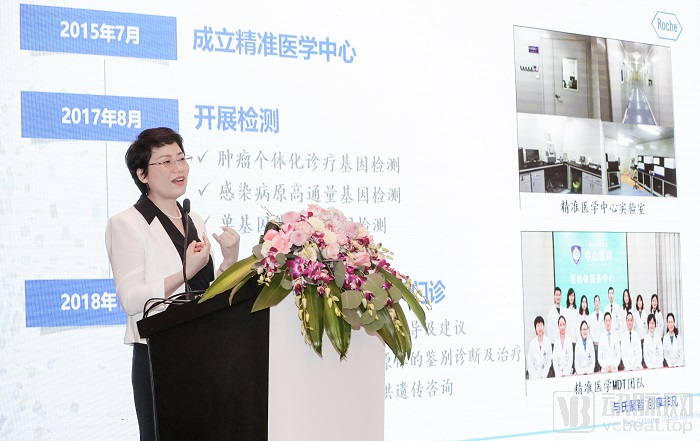
Professor Gu Jianying Shares Zhongshan Hospital’s Practical Experience in Smart Healthcare
Professor Gu Jianying, Vice President of Zhongshan Hospital Affiliated to Fudan University, stated: “We are currently in an era of rapid transformation within the healthcare industry, which presents both opportunities and challenges for us. AI and big data have indeed transformed our entire medical care environment and the direction of medical development, making healthcare more precise and standardized. However, as this field is still relatively new, the quality of applications varies significantly. There is a lack of corresponding policies and market regulations to provide oversight, and improvements are still needed in ensuring patient data security and sustainability. This requires our continued exploration and practice in the future.”
At this year’s CSCO Annual Meeting, Roche announced multiple advances in personalized oncology research, delivering more appropriate diagnostic and therapeutic strategies and improved outcomes for specific patient populations, thereby offering greater hope to patients worldwide. Of particular note were the breakthroughs achieved in liver cancer. Liver cancer is a common malignancy in China. It is estimated that there are approximately 466,000 new cases and 422,000 deaths from liver cancer annually in China, making it the second leading cause of cancer-related mortality after lung cancer. Current treatment options for liver cancer include surgery, transarterial chemoembolization (TACE), hepatic arterial infusion chemotherapy (HAIC), local ablation, and systemic therapies (chemotherapy and targeted therapy). However, treatment outcomes remain suboptimal, with a five-year survival rate of only 12.5%. There is an urgent need for more effective therapeutic agents for patients with advanced liver cancer.
Currently, phase III clinical trials of PD-1 monotherapy in immunotherapy have successively announced failures, and exploring the application of combination immunotherapy in the treatment of liver cancer has become a new research direction. The GO30140/NCT02715531 study is an open-label, international, multicenter phase Ib clinical trial aimed at investigating the efficacy and safety of the PD-L1 inhibitor Atezolizumab combined with the anti-angiogenic drug Bevacizumab (T+A regimen) as first-line treatment for advanced hepatocellular carcinoma (HCC). Cohort A enrolled a total of 104 patients, with a median follow-up period of 12.4 months.
At this CSCO Congress, the latest data from the GO30140 study were encouraging. In terms of efficacy, the confirmed objective response rate (ORR, tumor shrinkage or disappearance) was 35.6% according to the Response Evaluation Criteria in Solid Tumors (RECIST) version 1.1, and 39.4% according to the modified RECIST (mRECIST) criteria, with durable responses observed in 75.7% and 68.3% of responders, respectively. Furthermore, complete response (CR, complete tumor disappearance) was achieved in 12 and 16 patients, corresponding to CR rates of 12% and 15%, respectively. Regarding safety, the T+A regimen demonstrated good overall tolerability and manageable toxicity, with no new safety concerns identified beyond the known safety profiles of the individual agents. Proteinuria, decreased appetite, and fatigue were the most common adverse events. Grade 3–4 treatment-related adverse events occurred in 39.4% of patients.
Professor Liang Jun Presents the Latest Research Advances in Advanced Liver Cancer
In response, Professor Liang Jun, Vice President of Peking University International Hospital, stated, “The ‘T+A’ regimen has demonstrated clinically meaningful and durable objective responses, along with a manageable safety profile, in the first-line treatment of advanced hepatocellular carcinoma. This combination therapy represents a promising first-line treatment option for unresectable advanced hepatocellular carcinoma.” It is reported that this immunotherapy combination is the first combined immunotherapy regimen granted Breakthrough Therapy designation by the FDA for first-line treatment of liver cancer.