

Enhanced Robotics Files Prospectus: Pioneering Lightweight Rehabilitation Robots with In-House Core Components
In April 2018, within the rehabilitation department of a Grade A tertiary hospital in Shanghai, a stroke patient was trialing Yinghansi’s powered assistive exoskeleton. Zhu Hanqi, CEO and founder of Yinghansi, felt both anticipation and apprehension regarding this product trial. “Although previous human trials had been successful, it was only when I heard a patient tell me that walking felt significantly less strenuous and that their walking duration had increased considerably after using our device that I truly felt our years of effort had finally paid off,” Zhu told VCBeat.
Enhanced Robotics, established in December 2017 and headquartered in Dallas, USA, specializes in the research and development of lightweight rehabilitation robots. In September 2018, the company completed the development of its first-generation demo prototype. By early 2019, it had submitted applications for clinical certification to the U.S. Food and Drug Administration (FDA) and for CE marking, securing trial use and purchase intentions from multiple hospitals. Although it may appear that the company took only one year from its founding to enter the approval phase, its predecessor team had actually begun early research on powered exoskeletons as far back as 2013, after receiving millions of dollars in research funding from the National Institutes of Health (NIH).
“Entering the rehabilitation field was driven partly by the fact that rehabilitation robotics was my doctoral research topic, and partly by a survey on individuals with walking impairments,” said Zhu Hanqi. After earning dual master’s degrees in mechanical engineering and electrical engineering, Zhu pursued his Ph.D. at the University of Texas in the United States. During his doctoral studies, he came across an NIH survey of middle-aged and older adults, which reported that the prevalence of depression, anxiety, and social isolation among individuals with walking impairments was as high as 30.8%, compared to only 3.8% among those without such impairments.
In China, the accelerating pace of population aging has led to a rapid increase in the middle-aged and elderly population, resulting in a year-on-year rise in the number of individuals suffering from common age-related conditions such as stroke, muscle weakness, and arthritis. Statistics indicate that by 2018, over 150 million people across China required rehabilitation therapy or faced long-term mobility impairments. Currently, rehabilitation for mobility disorders relies primarily on manual physical therapy provided by rehabilitation therapists, which is inefficient. Furthermore, China faces a shortage of more than 300,000 rehabilitation professionals, leading to an insufficient supply of rehabilitation resources. High-performance rehabilitation devices are monopolized by foreign enterprises; as these are predominantly large-scale equipment with high costs, they are restricted to hospital use and cannot be operated independently by patients.
“We aim to transform professional rehabilitation equipment into consumer-grade electronic medical devices, thereby helping individuals with mobility impairments improve their quality of life. This was the original intention behind founding the company,” said Zhu Hanqi. This research also determined that the Yinghansi team’s technological focus would not be on large-scale rehabilitation equipment, but rather on high-performance, lightweight powered rehabilitation exoskeletons.
In early 2017, the lightweight powered exoskeleton prototype developed by Zhu Hanqi and his team had undergone three iterations, enabling assisted walking functionality. In November 2018, following comprehensive market research, Yinghansi ultimately defined the product’s application scenarios as home-based rehabilitation and in-hospital/out-of-hospital exoskeleton-assisted rehabilitation, launching two lightweight rehabilitation robotic products: an intelligent knee joint rehabilitation robot and a powered assistive exoskeleton.
“The core of lightweight rehabilitation robots lies in their power drive systems. All components of our product’s power drive system, including motors, transmissions, and electric drives, are independently developed and manufactured in China,” explained Zhu Hanqi. Unlike large-scale rehabilitation equipment used in hospitals, lightweight rehabilitation devices are smaller and lighter, imposing stricter cost requirements. Taking knee joint rehabilitation devices as an example, if core components were directly imported from foreign companies, the cost of the power drive system alone would reach RMB 10,000 or more, bringing the total material cost to RMB 30,000–50,000. Such high pricing makes them unsuitable for use as home-based rehabilitation devices. Both of Yinghansi’s products feature self-developed and domestically manufactured hardware, resulting in lower costs. Furthermore, while traditional hydraulically powered exoskeleton robots weigh around 15–16 kilograms, Yinghansi’s self-developed products weigh only about two kilograms, offering patients a much lighter and more comfortable wearing experience.
Yinghansi’s core product, the assistive powered exoskeleton, is primarily designed for the rehabilitation phase of stroke patients. Traditional powered exoskeletons have limited applications and are typically used within hospital settings, where they guide patients to walk via trajectory control algorithms. “However, stroke patients in the rehabilitation phase can often walk slowly, albeit with abnormal gait patterns. In such cases, lightweight rehabilitation robots based on trajectory control have limited application scenarios and cannot adapt to the diverse and complex walking environments encountered outside the hospital.”
Yinghansi’s assistive powered exoskeleton integrates AI and torque control technologies to enable intelligent walking assistance across diverse environments, thereby significantly expanding the application potential of powered exoskeletons. Tailored to patients’ usage habits, the product is available in two variants—single-knee and single-hip—and weighs no more than 3.5 kilograms. According to Zhu Hanqi, the core algorithm underlying Yinghansi’s assistive powered exoskeleton was featured on the cover of the renowned journal IEEE Control Systems Magazine.
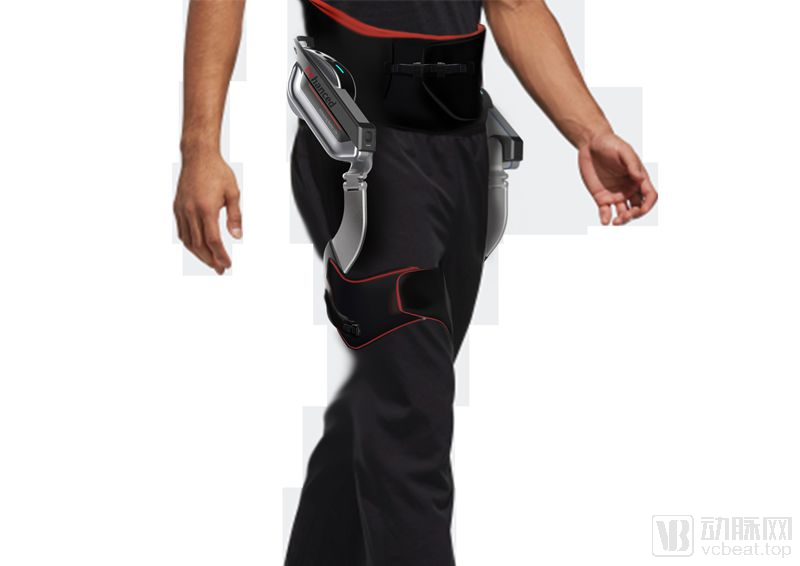
Assistive Powered Exoskeleton
Another core product of the company is a powered knee exoskeleton robot designed for use 3–6 months after knee surgeries, such as joint replacement, cruciate ligament repair, and meniscus repair. This wearable automated rehabilitation device weighs only 2.7 kg and integrates functions including intelligent range-of-motion training, isotonic muscle strength training, gravity-simulation training, and isokinetic muscle strength assessment. It assists therapists in guiding patients through multifunctional exercises, thereby enhancing rehabilitation efficiency. Furthermore, the device records and tracks human physiological data during the rehabilitation process for analysis, enabling optimization of rehabilitation protocols. In contrast, a large imported medical rehabilitation device with equivalent functionality weighs over 500 kg and costs nearly one million RMB.
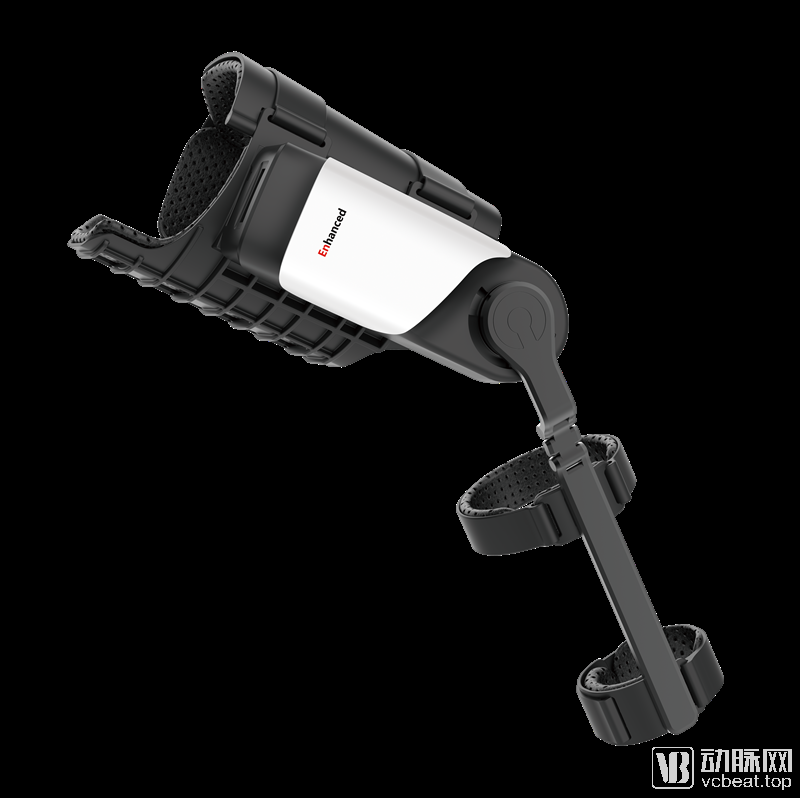
Knee Joint Powered Exoskeleton Robot
Regarding product advancement, Zhu Hanqi revealed that the company’s two products are currently undergoing trials at several Grade A tertiary hospitals in Shanghai and Xi’an, and registration applications for both as Class II medical devices have been submitted. The market launch will target high-end rehabilitation markets in first-tier cities such as Beijing, Shanghai, Guangzhou, and Shenzhen, starting with secondary specialized rehabilitation hospitals, elderly care institutions integrating medical and health services, out-of-hospital rehabilitation centers, and community health centers. The products will be provided to patients upon physicians’ recommendations, either through medical device distributors or via direct sales to hospitals. “Although rehabilitation medical devices cannot currently be marketed directly to patients outside of medical institutions, our ultimate goal is for patients to use our products as part of their daily rehabilitation routines,” stated Zhu Hanqi.
While advancing its products, Yinghansi is also seeking collaborations with medical device manufacturers to jointly develop comprehensive rehabilitation solutions for hospitals. Zhu Hanqi stated that although powered exoskeletons can be used independently as standalone medical devices, they can also be integrated with other rehabilitation equipment. For instance, assistive powered exoskeletons can be paired with intelligent ceiling track systems to facilitate faster recovery for stroke patients. Knee-joint powered exoskeletons can also be combined with neuromuscular electrical stimulation therapy, making the rehabilitation process safer, more efficient, comfortable, and convenient.
Currently, Yinghansi is undergoing Pre-A round financing, with the funds to be used for clinical qualification certification of its products, pilot-scale production, and other related activities.