

CSCO 2019: LinkDoc AI Ignites Smart Healthcare, Partners with Hengrui to Upgrade 'Sci-Patient Platform'

LinkDoc
Provider of Artificial Intelligence and Medical Big Data Solutions
On September 19, the 2019 Chinese Society of Clinical Oncology (CSCO) Annual Conference was held in Xiamen. At a satellite symposium themed “LinkDoc’s Digital Intelligence, Unlocking the Future,” hosted by LinkDoc, prominent domestic and international clinical experts and scholars in medical big data and artificial intelligence—including Professor Qin Shukui, Director of the PLA Cancer Center at the Eastern Theater General Hospital and Vice President of CSCO; Professor Liang Jun, Vice President of Peking University International Hospital and Chairman of CSCO; and Dr. Sandhya Pruthi, Associate Director of Development and Physician Partnerships at the Mayo Clinic Center for Innovation—engaged in in-depth discussions on new directions for empowering healthcare with big data.
At the event, Professor Liu Yunpeng, Director of the Department of Medical Oncology at the First Affiliated Hospital of China Medical University, jointly with LinkDoc, unveiled the “AI for Predicting Risk of Chemotherapy-Induced Myelosuppression” for the first time. Professor Hu Jie, Deputy Director of the Department of Thoracic Oncology and Respiratory Intervention at Zhongshan Hospital, Fudan University, presented how multi-omics data are leveraged to develop AI tools for early lung cancer screening. These advancements have continuously expanded the horizons of imagination regarding the applications of medical AI.
At the conference, under the guidance of the CSCO Committee on Patient Education, LinkDoc signed a strategic cooperation agreement with Hengrui Medicine, a leading domestic innovative pharmaceutical company, to launch the “Smart Neighbor Companion, Science Extends Wisdom” project. The “Patient Service Sci-Tech Innovation Platform” project was also launched simultaneously.
AI has become an indispensable driving force in the healthcare sector.
Professor Qin Shukui stated that with the continuous advancement of the “Healthy China 2030” plan, the important status of health and medical big data as a fundamental strategic national resource has become increasingly prominent. AI is leading humanity into a new era of development, and its applications in the field of oncology have attracted significant attention. It has become an indispensable new driving force in the healthcare sector, providing optimal solutions to various challenging problems.
“From diagnosis to treatment, from imaging to pathology, from translational research to clinical practice, and from innovative drug development to the exploration of diverse therapeutic regimens, all can be empowered by new technologies such as medical big data and AI, thereby transforming traditional approaches to diagnosis, treatment, and research,” said Professor Qin Shukui.
Professor Liang Jun further stated that, in the practical implementation of AI in clinical settings, it is essential to achieve a high degree of integration between medicine and engineering. Clinicians should identify challenges encountered during diagnosis and treatment and raise pertinent questions, while AI researchers should work in close collaboration with clinicians to develop targeted solutions. This approach ensures that AI applications truly originate from clinical practice, advance beyond current clinical capabilities, and ultimately return to benefit patient care. He added, “The future development of AI will also depend on clinical big data centers and experts in various oncology fields to conduct multicenter studies and clinical trials, thereby providing empirical support for AI parameter configuration and validation of its effectiveness.”
Guided by the AI philosophy of “originating from clinical practice and returning to clinical practice,” clinical experts have been continuously exploring new avenues. At this year’s CSCO conference, Professor Liu Yunpeng, in collaboration with LinkDoc, unveiled for the first time an “AI Model for Predicting the Risk of Post-Chemotherapy Myelosuppression.”
Professor Liu Yunpeng stated that “human-AI collaboration” will become the new normal in future healthcare. AI can empower physicians’ clinical work from multiple dimensions, offering substantial clinical value—particularly for challenging issues such as cancer treatment—and “can address a large number of unmet needs.”
Professor Liu Yunpeng’s decision to focus on “post-chemotherapy myelosuppression” was grounded in real-world clinical practice. Data indicate that the global number of new cancer cases is projected to rise from 17 million in 2018 to 26 million by 2040, while the optimal global chemotherapy utilization rate stood at 57.7% in 2018. Myelosuppression is a major adverse effect of chemotherapy; it not only delays treatment cycles, thereby compromising therapeutic efficacy, but may also lead to complications that endanger patients’ lives.
“Early assessment of patients before or during chemotherapy can predict and identify those at high risk for common toxic side effects, such as myelosuppression. Adjusting medication regimens in advance can significantly improve treatment efficacy and safety,” said Professor Liu Yunpeng.
Based on extensive treatment data from chemotherapy patients, Professor Liu Yunpeng collaborated with LinkDoc to develop an “AI for Predicting the Risk of Post-Chemotherapy Myelosuppression.” Together, they established an AI prediction model for evaluating chemotherapy outcomes. This model predicts the probability of myelosuppression under different chemotherapy regimens during the pre-chemotherapy and early chemotherapy phases, thereby assisting physicians in formulating individualized diagnosis and treatment strategies to reduce the risk of myelosuppression. Additionally, it helps both physicians and patients set reasonable psychological expectations regarding treatment efficacy.
Professor Liu Yunpeng introduced that AI-based prediction of myelosuppression risk has already been applied and validated in clinical practice. Data show that AI achieves a sensitivity of over 90% and a specificity exceeding 75% in predicting hemoglobin suppression.
Professor Liu Yunpeng noted that, in addition to predicting chemotherapy-induced adverse reactions, AI can further enhance the efficiency of clinical workflows and alleviate the workload of clinicians by assisting in diagnosis and formulating clinical decisions, which indeed presents substantial application potential. “However, for AI to be effectively implemented, two prerequisites are essential: AI technology companies with a profound understanding of medicine, and healthcare institutions possessing sufficient high-quality clinical data. Only by leveraging high-standard, high-quality data and integrating the expertise of medical professionals with that of AI specialists can we establish AI models and promote their widespread clinical application, thereby bringing about genuine transformation in clinical practice.”
Professor Hu Jie has focused on lung cancer screening in her exploration of medical AI.
A study from the NLST demonstrated that lung cancer screening can reduce mortality by more than 25% compared to no screening. However, early lung cancer screening in China currently faces significant challenges. On one hand, there is a shortage of radiologists and high work pressure among physicians; on the other hand, the aging population trend is severe, requiring timely and precise analysis of massive volumes of chest imaging data.
AI can play a significant role in improving lung cancer screening. For instance, combining AI with imaging and biomarkers can facilitate early lung cancer screening—using computer-aided diagnosis (CAD) to make chest CT scans easier to interpret, and employing biomarker testing to detect early-stage lung cancer, identify optimal target populations, or aid in the classification of pulmonary nodules.
From Professor Hu Jie’s perspective, what holds even greater revolutionary significance is the “omics revolution” that has swept through biological research, generating vast amounts of data. This has continuously expanded the informational dimensions available to physicians for medical decision-making. If multi-omics data—including genomics, transcriptomics, and radiomics—can be integrated to leverage these diverse information dimensions for clinical decision-making and scientific research, it will accelerate the development of precision medicine.
Taking lung cancer screening as an example, AI has conducted relevant explorations in early lung cancer screening based on its ability to analyze and learn from massive amounts of data. Although the application of deep convolutional neural networks (CNNs) in imaging and the use of various biomarker detection technologies have improved clinical diagnostic rates, certain limitations remain.
“Most current AI systems rely on a single data source to build their capabilities. Could integrating multi-channel, multimodal data to enhance AI performance become a direction for next-generation AI exploration?” This is a question that Hu Jie has been continually contemplating and exploring in her clinical research. To this end, she has collaborated with LinkDoc to process clinical multi-omics data, including radiomics and liquid biopsy, and apply multimodal AI modeling to the early diagnosis of lung cancer, which can further improve diagnostic efficiency and accuracy to a certain extent.
In this process, Professor Hu Jie believes that the most challenging aspect is that multimodal AI modeling requires technological breakthroughs in the intelligent processing of massive multi-omics data, normalization of multi-pathway data, and corresponding modeling capabilities. It demands a sufficient understanding of medicine and bioinformatics, as well as close interdisciplinary collaboration across multiple fields.
It is evident that the healthcare industry has developed a clear understanding of AI and identified specific clinical application needs, meaning AI is no longer an “ethereal” concept. However, it is undeniable that the complexity and variability inherent in clinical diagnosis and treatment make it difficult to simply “standardize” these processes as seen in other industries. Consequently, many clinicians remain cautious about adopting AI applications.
“But overall, clinical experts and AI developers have reached a consensus on application: to jointly explore and expand the scope of AI implementation in specific clinical and research scenarios, with the aim of reintegrating AI into clinical practice to fulfill its supportive role,” said Zhang Tianze, Founder and CEO of LinkDoc, in an interview.
He stated that the greatest value of technology lies in its ability to serve as a human assistant, specifically by aiding healthcare providers to work more efficiently and thereby better benefiting patients. LinkDoc is committed to providing clinical experts with technologies and tools—such as those for assisted diagnosis, treatment planning, patient management, and scientific research—offering superior data intelligence solutions to address unmet clinical needs. Starting from patient needs and centering on the core processes of disease diagnosis and treatment, LinkDoc leverages innovative AI technologies to provide clinicians with enhanced clinical diagnostic and therapeutic insights and solutions.
LinkDoc AI possesses the capability to process massive multi-omics datasets, standardizing and normalizing clinical multi-omics data—including text, charts, imaging, and genomic data—to facilitate more effective handling of such data and leverage multimodal AI modeling capabilities. While this presents significant technical challenges, solutions developed through extensive communication with clinicians have enabled LinkDoc’s AI to empower clinical diagnosis, treatment, and research in specific application scenarios such as risk prediction and screening. Furthermore, the AI algorithmic models built by LinkDoc based on multi-channel information fusion technology are more accurate and reliable.
Whether conducting risk assessments for post-chemotherapy myelosuppression using AI or overcoming key technical challenges in multi-omics data processing and AI modeling, LinkDoc relies on a team of interdisciplinary professionals who possess expertise in data, information technology, and the internet, while also understanding medicine. Its AI engineers work on the clinical frontline, maintaining close communication with physicians who utilize AI tools, thereby establishing a routine workflow encompassing research and development, application, and feedback. This collaborative process also enables physicians to continuously enhance their understanding and perception of AI through practice, allowing them to better identify clinical pain points and develop solutions. Consequently, this truly integrates AI technology with clinical issues, driving AI products to undergo iterative upgrades that consistently align with clinical needs.
Zhang Tianze stated that LinkDoc AI, which began with innovations in an integrated platform for screening, diagnosis, treatment, and research focused on single diseases and later expanded to multiple diseases, has now entered the field from the perspective of chemotherapy—one of the most common therapeutic approaches in oncology. By exploring AI-based prediction of myelosuppression risks, LinkDoc AI is continuously expanding its product application scenarios, enhancing the generalizability of its products in clinical practice, and demonstrating the capability to rapidly “replicate” its solutions in other disease diagnosis and treatment settings.
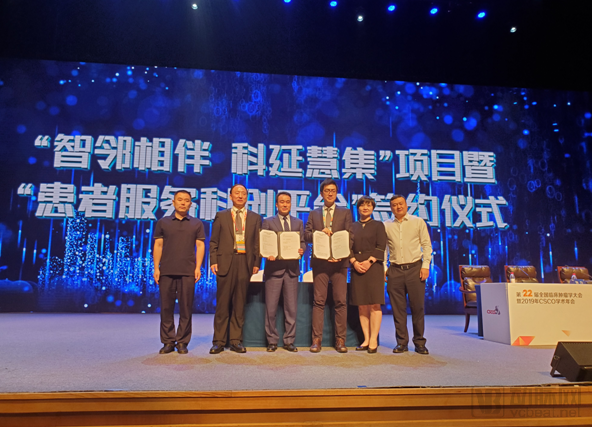
Notably, at the conference, under the guidance of the CSCO Patient Education Committee, LinkDoc signed a strategic cooperation agreement with Hengrui Medicine, a leading Chinese innovative pharmaceutical company, to launch the “Smart Neighbor Companion, Science Extends Wisdom” project. The “Patient Service Sci-Tech Innovation Platform” project was also launched simultaneously. Hengrui Medicine, in collaboration with LinkDoc’s Linke DTP Pharmacy, serves as the “Demonstration Site for the Patient Service Sci-Tech Innovation Platform,” carrying out patient education, follow-up, and innovative research activities across China. This will facilitate the upgrade of the Linke Smart Pharmacy 3.0 model into the first and only research-oriented pharmacy in China, making Linke Smart Pharmacy the only pharmacy in the industry conducting innovative Real-World Studies (RWS).
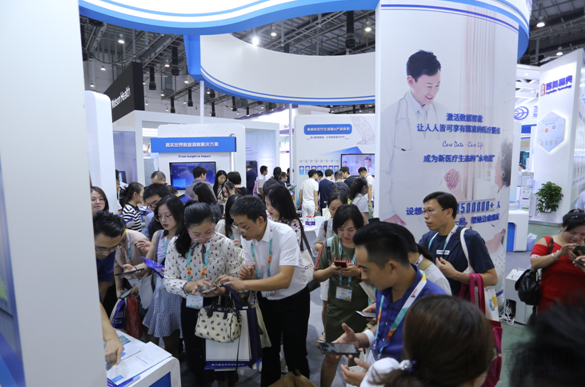
At the LinkDoc booth, numerous attendees experienced the latest smart healthcare applications, including a one-stop intelligent medical research solution, an integrated platform for diagnosis, treatment, and research, an AI product suite covering the entire clinical pathway for single diseases, innovative real-world study capabilities, intelligent patient recruitment systems, a comprehensive patient treatment management platform, LinkDoc’s Smart Pharmacy, and real-world data insight solutions.