

Liaoning, Zhejiang, Shandong, and Guangdong Provinces Pioneered in Signing Agreements for Joint National Regional Medical Center Construction with the National Health Commission
VCBeat (WeChat ID: vcbeat) has learned thatTo build a high-quality and efficient healthcare service system, enhance regional medical service capabilities, and promote the establishment of a tiered diagnosis and treatment system, the National Health Commission held a signing ceremony in Beijing on September 19 for the first batch of national regional medical centers co-sponsored by the Commission and provincial governments, signing agreements with the people’s governments of Liaoning Province, Zhejiang Province, Shandong Province, and Guangdong Province, respectively.
Cross-regional patient mobility for medical care reflects the principal contradiction in Chinese society within the healthcare sector. To address urgent local needs, shortages of medical resources, and the most prominent specialized care demands arising from cross-regional medical treatment, the National Health Commission has promoted the establishment of National Medical Centers and National Regional Medical Centers. Between 2019 and 2020, the National Health Commission completed the designation of National Medical Centers in eight categories, including respiratory medicine, and National Regional Medical Centers in twelve categories. Specifically, in 2019, centers were established in six categories: pediatrics, cardiovascular diseases, oncology, neurology, respiratory medicine, and trauma; in 2020, centers were established in another six categories: obstetrics and gynecology, orthopedics, infectious diseases, geriatrics, stomatology, and psychiatry. Additionally, one comprehensive National Regional Medical Center was designated in each province.
This signing will strongly promoteThe First Affiliated Hospital and Shengjing Hospital of China Medical University Are Building National Regional Medical Centers, which is of great significance for enhancing the capacity to diagnose and treat complex and critical diseases in the region and improving the health status of the population across the province.
Liaoning Province will take this signing as an opportunity to go all out in building and developing the National Regional Medical Center, striving to create a new landscape for health and healthcare in the new era.
First, consolidate responsibilities and ensure rigorous implementation. Further strengthen support for the development of National Regional Medical Centers, strive to enhance the equalization of basic public health services, and fully implement every provision of the agreement without compromise.
Second, strengthen communication and improve mechanisms. Establish and refine the joint construction mechanism between the National Health Commission and provincial governments, proactively enhance coordination and consultations, and actively seek guidance and support.
Third, strengthen vertical coordination to build synergy. Refine supportive policies in areas such as fiscal investment, personnel compensation, and health insurance payment, thereby creating a policy environment and support system conducive to the long-term development of hospitals.
Fourth, deepen reforms to enhance vitality. Accelerate the establishment of a modern hospital management system, and build a regional highland for clinical medical research and a training base for high-level medical professionals.
According to the cooperation agreement, a total of eight National Medical Centers and National Regional Medical Centers have been established in Zhejiang.

Source: Zhejiang Provincial Health Commission
Meanwhile, the National Health Commission will also support Zhejiang Province in establishing a Heavy Ion and Proton Radiotherapy Center and in piloting innovative policies for stem cells and immune cells.
In addition to the eight National Medical Centers and National Regional Medical Center projects, Zhejiang Province will also prioritize the development of ten key specialties. By fully leveraging the demonstrative, leading, and radiating roles of core hospitals and key specialties, the province aims to establish a cluster of key disciplines within the National Regional Medical Centers, significantly enhancing the regional capacity for diagnosing and treating complex and critical conditions, as well as boosting scientific and technological innovation capabilities and regional influence.
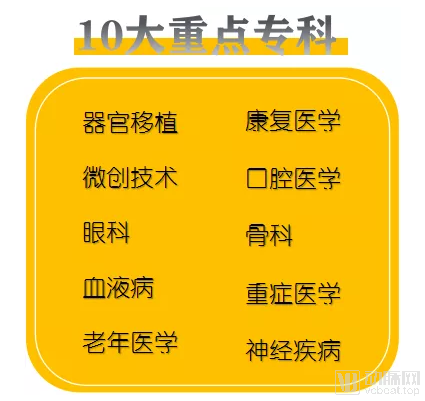
Source: Zhejiang Provincial Health Commission
Currently, Zhejiang has 51 specialties included in the National Clinical Key Specialty Construction Program. Breakthrough developments have been achieved in a range of key technologies, including human organ transplantation, treatment of major infectious diseases, interventional therapy for cardiovascular diseases, comprehensive care techniques for severe trauma and critically ill patients, and tumor diagnosis and treatment. The province’s overall capacity for comprehensive medical care ranks among the top tier nationwide, with certain technologies reaching internationally leading levels.
Monitoring data indicate that Zhejiang Province ranks among the top in China for the number of human organ transplantations. The First Affiliated Hospital, Zhejiang University School of Medicine, has established a comprehensive multidisciplinary cluster for liver, kidney, heart, lung, pancreas, and small intestine transplantation, with its transplant volume and overall graft survival rates leading the nation.
In the treatment of major infectious diseases, the “Major Innovations and Technological Breakthroughs in the Prevention and Control System for Emerging Infectious Diseases, Represented by the Control of Human H7N9 Avian Influenza” won the Special Prize of the National Science and Technology Progress Award in 2017, achieving a “zero breakthrough” for the national health system at the level of national science and technology awards.
In the field of interventional therapy for cardiovascular diseases, the transcatheter aortic valve replacement (TAVR) program conducted by the Second Affiliated Hospital of Zhejiang University School of Medicine has been acclaimed as the “Hangzhou Experience,” offering therapeutic hope to patients with aortic valve disease who are elderly, at high surgical risk, or have contraindications to surgery.
Zhejiang enjoys a high reputation both domestically and internationally in the diagnosis and treatment of oncological diseases, critical care for children, and ophthalmology.
In accordance with the co-construction agreement and work arrangements, the National Health Commission will support Shandong in coordinatingHigh-quality medical resources, including Qilu Hospital of Shandong University, Shandong Provincial Hospital, Shandong Provincial Qianfoshan Hospital, Shandong Cancer Hospital, and the Second Hospital of Shandong University, as well as the Affiliated Hospital of Qingdao University, have established National Regional Medical Centers in comprehensive categories.,Establish National Regional Medical Centers for specialized disciplines in oncology, cardiology, neurology, respiratory medicine, pediatrics, and trauma., and provide support in multiple aspects, including project funding, development platforms, medical services, scientific research and teaching, and management systems.
The Shandong Provincial Government will strengthen investment and support for hospitals affiliated with or administered by the National Health Commission and for the development of National Regional Medical Centers by reinforcing the implementation of government funding responsibilities, enhancing the coordinated planning of medical resources, and advancing comprehensive reforms in personnel compensation, health insurance payment mechanisms, and medical service pricing, thereby ensuring the full implementation and tangible results of co-construction tasks.
In the initial phase, the Health Commission of Shandong Province issued the “Opinions on Implementing the ‘Climbing Plan’ for Medical Capacity in Shandong Province.” Guided by public demand for medical services and focusing on the development of clinical specialty capabilities, the plan aims to build a “medical highland” through its implementation, thereby promoting the continuous improvement of medical service capacity and quality.
Implementing the provincial-national co-construction of National Regional Medical Centers is of great significance for pooling policy support, optimizing resource allocation, and strengthening radiating and driving effects, which will further enhance the overall level of medical services across the province. Moving forward, the Health Commission of Shandong Province will work with relevant provincial departments in accordance with the agreement to accelerate the development of National Regional Medical Centers that represent national medical standards, serve Shandong and surrounding regions, and effectively meet the public’s multi-level, high-quality healthcare needs.
The National Health Commission will collaborate with the Guangdong Provincial Government to establish one National Medical Center, one comprehensive Regional Medical Center, and six specialty-specific National Regional Medical Centers, thereby promoting tiered diagnosis and treatment and reducing cross-regional healthcare-seeking by patients. Under the cooperation agreement, eight high-level hospitals in Guangdong will undertake the joint construction tasks commissioned by the National Health Commission and the provincial government.
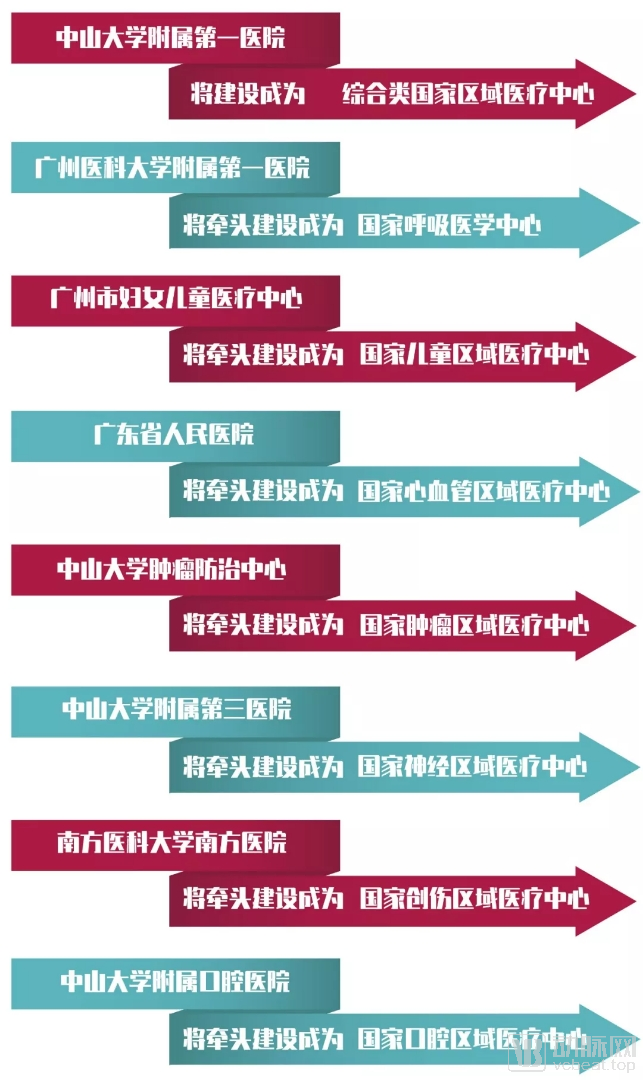
Source: Guangdong Provincial Health Commission
It is reported that in 2020, Guangdong Province will continue to advance high-level hospitals in specialties such as obstetrics and gynecology, orthopedics, infectious diseases, geriatrics, and psychiatry to meet the standards for national regional medical centers in these specialties.
During the joint establishment process by the National Health Commission and the Guangdong Provincial Government, the People’s Government of Guangdong Province will strengthen its support in fulfilling local government investment responsibilities, coordinating the planning and layout of medical resources and institutions, improving personnel and compensation policies, enhancing medical insurance support policies, and advancing reforms in medical service pricing. The National Health Commission will provide support in coordinating hospital construction and development, supporting the establishment of national regional medical centers, accelerating the enhancement of medical service capabilities, increasing research funding and support, bolstering teaching capacities, and innovating management systems and mechanisms. Universities and their affiliated hospitals shall also assume corresponding responsibilities and obligations.
Guangdong Province will establish a medical highland within the region, promote the homogenization of regional medical services, reduce cross-regional patient visits, and contribute to the development of a tiered diagnosis and treatment system. The first batch of eight hospitals selected for co-construction by the National Health Commission and the provincial government will usher in new opportunities in disciplines development and talent cultivation. These hospitals must seize these opportunities to enhance the quality and expand the capacity of high-quality medical resources, further leverage the radiating and driving role of high-level hospitals, form a four-tier medical service network spanning national, provincial, municipal, and county levels, establish a high-quality and efficient medical service system, and drive the overall improvement of medical service standards across the province and the region.
Source: National Health Commission Medical Administration Bureau, Liaoning Daily, Zhejiang Provincial Health Commission, Shandong Provincial Health Commission, Guangdong Provincial Health Commission