

Raydber Files for IPO: Aiming to Revolutionize Global TB Screening with AIMTB, the World’s First Portable and Scalable IGRA Solution
Mycobacterium tuberculosis is an ancient pathogen on Earth. Humanity has been fighting it for many years, but has yet to fully conquer it. Globally, the population with latent tuberculosis infection (LTBI) reaches as high as 1.7 billion, with approximately 10 million new cases of active tuberculosis each year. In China, the population with latent tuberculosis infection is as high as 300 million, with 5 million active tuberculosis patients and approximately 900,000 new cases annually. For individuals with latent tuberculosis infection, they remain asymptomatic and indistinguishable from healthy individuals when their immune systems are functioning normally; however, once the immune system is compromised, the risk of tuberculosis reactivation increases significantly.
Latent tuberculosis differs from active tuberculosis. Patients with active tuberculosis exhibit prominent symptoms such as cough, fever, and weight loss, whereas individuals with latent tuberculosis harbor Mycobacterium tuberculosis that is difficult to detect in the body and present no clinical symptoms. Currently, the common method for detecting latent tuberculosis in China is the Tuberculin Skin Test (TST), which involves intradermal injection of Purified Protein Derivative (PPD) and assessing the skin reaction to determine whether the patient is infected with Mycobacterium tuberculosis. A positive TST result indicates infection with Mycobacterium tuberculosis and the presence of a delayed-type hypersensitivity response in the body.
However, the purified protein derivative (PPD) antigen used in the tuberculin skin test (TST) has a complex composition and is susceptible to interference from Bacillus Calmette-Guérin (BCG) vaccination, non-tuberculous mycobacteria (NTM) infection, and certain skin test reagents. Since the majority of the population in China receives BCG vaccination during infancy and early childhood, this leads to an excessively high rate of false-positive results. Furthermore, the sensitivity of TST declines with age and impaired cellular immune function, resulting in insufficient sensitivity for patients with compromised immunity.
In contrast, interferon-gamma release assays (IGRAs), which are based on the detection of gamma-interferon produced by T cells stimulated with Mycobacterium tuberculosis-specific antigens, overcome the limitations of the tuberculin skin test (TST). IGRAs demonstrate higher sensitivity and specificity and do not cross-react with the BCG vaccine. Currently, IGRA is the most widely used method for detecting tuberculosis infection in developed countries.
Unlike the TST, IGRA requires fresh blood samples to obtain adequate cellular material, as well as sophisticated laboratory equipment and rigorously trained technicians. This makes it difficult to popularize its application in China, a country with a large population of individuals with latent tuberculosis infection. IGRA not only involves complex testing procedures but is also expensive (approximately 800 yuan per test), making it unsuitable for large-scale tuberculosis screening and difficult to implement in primary healthcare institutions across China.
Dr. Lou Jianrong, who has dedicated 20 years to the in vitro diagnostics (IVD) industry in the United States, is well aware of the gaps between China and the U.S. in the IVD field. He holds a Ph.D. in Microbiology from the University of Kentucky and completed his postdoctoral training in Molecular Biology at Johns Hopkins University. He has previously worked for several leading international IVD companies.
Regarding the differences between China and the United States in in vitro diagnostics (IVD), he summarized: “In China, the annual per capita IVD consumption is approximately $4, whereas in developed countries such as the United States, it exceeds $40. The population with latent tuberculosis infection accounts for 25% of the total population in China, compared to only 0.01% in the United States. This 2,000-fold disparity underscores the lack of early intervention for tuberculosis in China, where IVD for tuberculosis remains in its early stages of development.”
Developed countries have adopted IGRA technology for detecting tuberculosis infection, yet the widespread adoption of IGRA testing among the general population in China remains challenging. The extent of the limitations associated with TST directly reflects the market potential for IGRA in China. Addressing the pain points of existing IGRA technologies and developing a “portable, widely accessible IGRA-based tuberculosis infection detection technology” is the entrepreneurial direction identified by Lou Jianrong.
In 2013, Lou Jianrong returned to China at a time when the country’s medical industry was experiencing rapid growth, particularly in the field of immunology research, with an increasing number of pharmaceutical companies investing in this area. The fast-evolving landscape of immunotherapy research has brought both greater opportunities and challenges to the development of in vitro diagnostics (IVD). During immunotherapy, patients’ immune systems are modulated; such immune suppression can accelerate the reactivation of latent tuberculosis, with these immunotherapeutic agents increasing the incidence of active tuberculosis by more than tenfold. Therefore, screening for Mycobacterium tuberculosis prior to initiating immunotherapy is essential, creating a substantial market for tuberculosis in vitro diagnostic solutions.
To achieve widespread adoption and implementation of IGRA as a replacement for the tuberculin skin test in China, Lou Jianrong summarizes that the following key points must be addressed: First, all core raw materials for IGRA must be independently developed. Second, the cost of IGRA testing must be reduced to below the threshold for large-scale screening. Third, IGRA testing equipment must be mobile and portable. Fourth, the performance of IGRA testing products must meet international standards.
These four principles are easy to understand but challenging to implement. More than half of the LDEBIO team holds master’s or doctoral degrees. During the production of core raw materials, every step in design and R&D strategy must remain precisely on track to ensure that the final product can achieve widespread adoption. Throughout the R&D process, considerations must include how to ensure the reagent is sensitive, highly efficient, broadly covers diverse HLA populations, user-friendly, and stable over the long term, as well as how to enable its application in settings without laboratory infrastructure. The R&D challenges to truly popularize IGRA testing are numerous. After six years of dedicated effort by the LDEBIO team, the AIMTB Kit for Detecting Mycobacterium tuberculosis-Specific Cellular Immune Response (ELISA) was successfully developed.
AIMTB is a tuberculosis detection kit developed based on the principles of IGRA technology. It enables immediate testing or post-stimulation storage for centralized testing with a blood sample volume of only 1.8 mL, achieving a specificity of 93.6% and a sensitivity of 85.3%, which surpasses that of international counterparts. AIMTB is independently developed by LDEBIO and has obtained European CE certification.
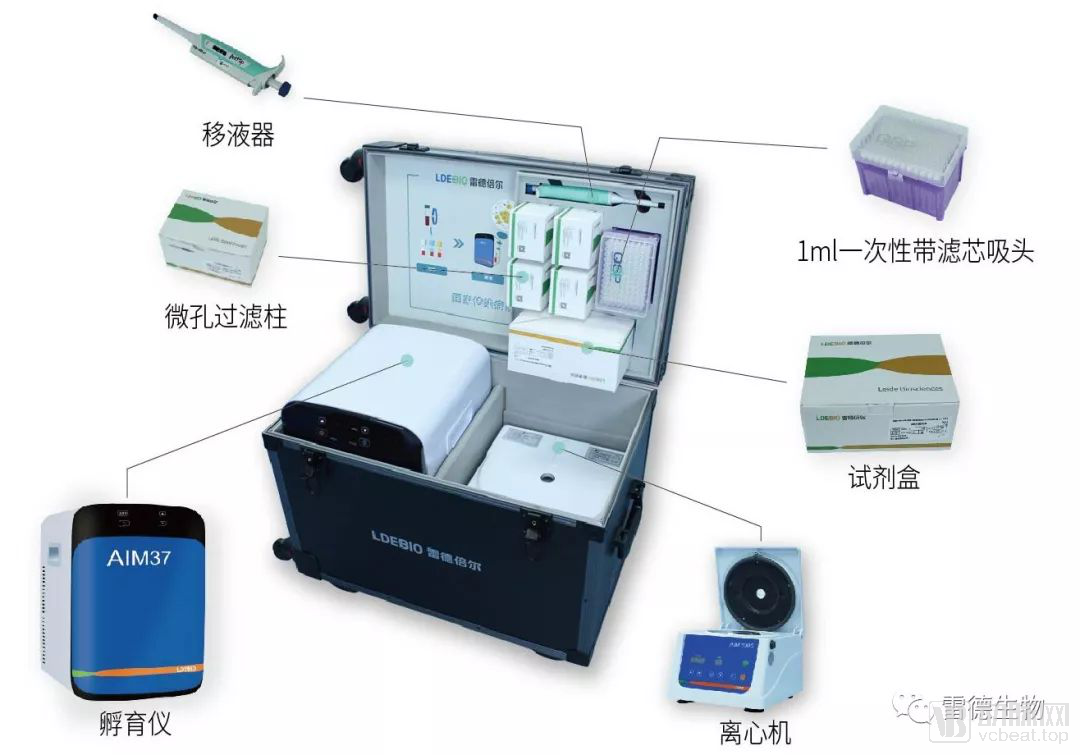
LDEBIO AIMTB Tuberculosis Infection Detection System
What is more commendable is that the AIMTB system is extremely user-friendly; healthcare professionals can master its operation after just a few minutes of training. The test delivers rapid and accurate results, with users receiving their reports within 24 hours. This device is not only suitable for assisting in the clinical diagnosis of tuberculosis but is also well-suited for screening applications, making it ideal for deployment in primary care settings such as schools and community health institutions.
Currently, LDEBIO’s AIMTB Tuberculosis Infection Detection System is being promoted in overseas markets, with a presence established in Southeast Asian and African countries, laying a solid foundation for sales. The product is expected to be launched for commercial sale in China by the end of this year.
AIMTB is LDEBIO’s flagship product; however, as a company dedicated to in vitro diagnostics (IVD), LDEBIO’s IVD portfolio extends beyond this offering. Most conventional IVD tests rely on static analysis of biomarkers as the core diagnostic approach. In contrast, Lou Jianrong has pioneered an innovative comprehensive immuno-diagnostic strategy that integrates “dynamic and static” analyses to achieve higher precision in in vitro diagnostics. Specifically, static diagnosis refers to traditional biomarker analysis, while dynamic diagnosis involves functional assessment of immune cells. The combination of both approaches provides clinicians with more comprehensive diagnostic information.
In the diagnosis of rheumatoid arthritis (RA), most international practices still rely on anti-cyclic citrullinated peptide (anti-CCP) antibodies or rheumatoid factor (RF) as biomarkers for detection. However, clinical practice has revealed that neither CCP nor RF can effectively identify all RA patients. Although anti-CCP, recommended by international guidelines, offers high specificity, 30–40% of RA patients remain undetected due to the absence of anti-CCP antibodies in their serum, leading to missed diagnoses and delayed treatment.
Through extensive comparative studies on anti-cyclic citrullinated peptide (CCP), LDEBIO screened a peptide library containing specific citrulline sites. By comparing this citrullinated peptide library with serum samples from patients with rheumatoid arthritis (RA), the company identified the protein biomarker with the strongest correlation, named RA_CP (Rheumatoid Arthritis Citrullinated Protein). Detection of this protein effectively improves the sensitivity of RA diagnosis; RA_CP can be detected in approximately 50% of clinically confirmed RA cases that are CCP-negative, thereby compensating for the limitations of negative CCP test results in RA patients. More importantly, since citrullinated protein antigens often appear prior to antibodies, RA_CP can, in principle, be used for the early diagnosis of rheumatoid arthritis.
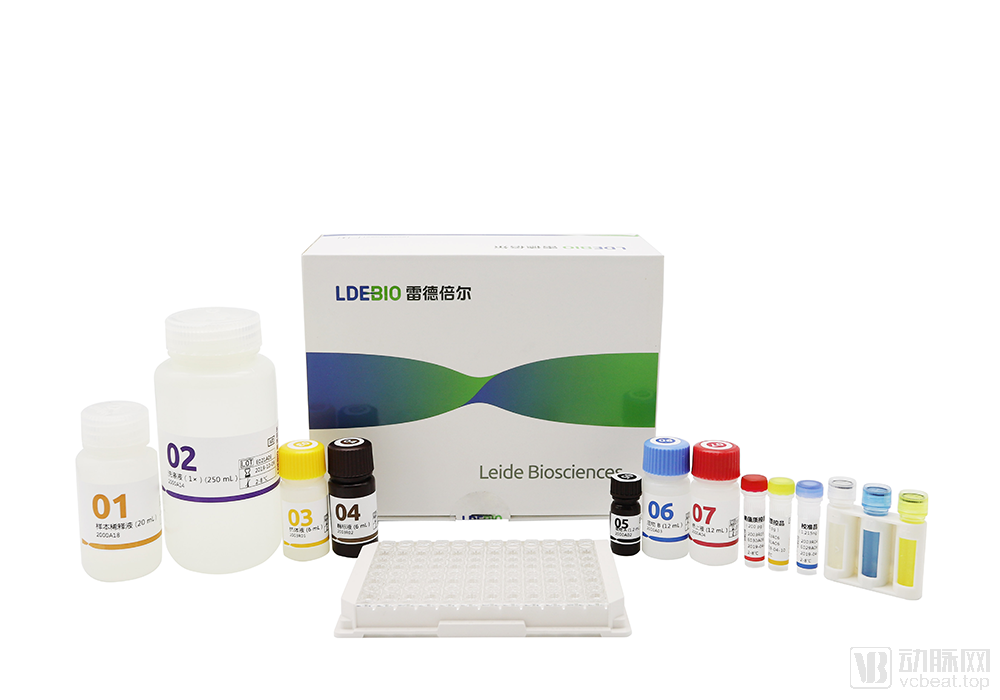
Notably, RA_CP has received approval from China’s CFDA and obtained CE certification in the European Union. As the world’s first highly sensitive innovative product for detecting rheumatoid arthritis via antigen testing, RA_CP holds a significant leading advantage in the early diagnosis and treatment of difficult cases. When used in combination with CCP, it significantly improves the detection sensitivity of the current gold standard, earning recognition from numerous authoritative experts both domestically and internationally.
Looking ahead, LDEBIO aims to build an influential IVD brand in the field of immunology on a global scale. In the near term, while ensuring large-scale production, the company continues to prioritize product quality and expand its markets both domestically and internationally. Currently, LDEBIO has completed its angel, Series A, and Series B financing rounds, with a new round of funding expected to launch next year.