

National AI R&D Platform for Precision Treatment of Women's and Children's Diseases Files Prospectus
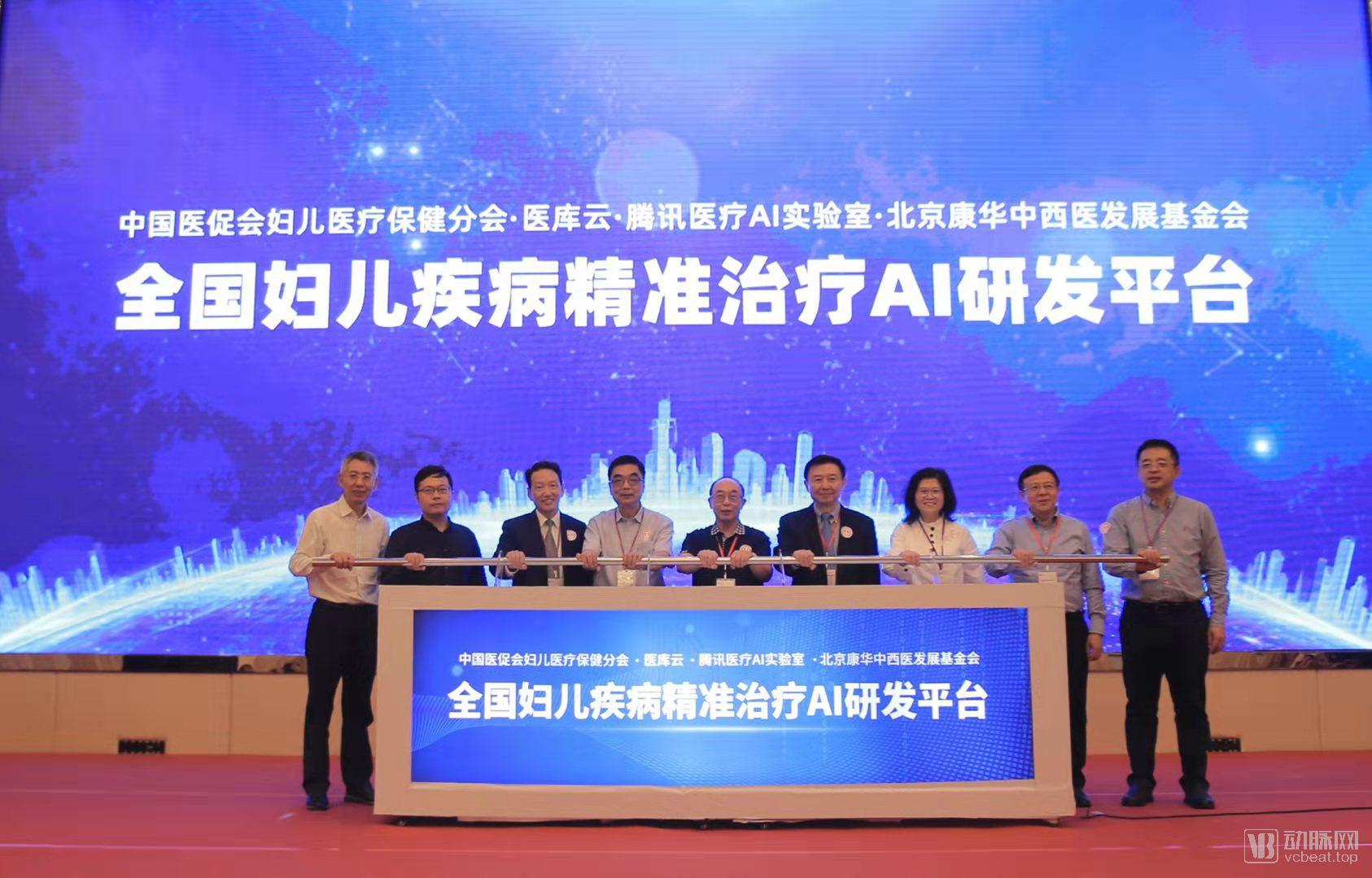
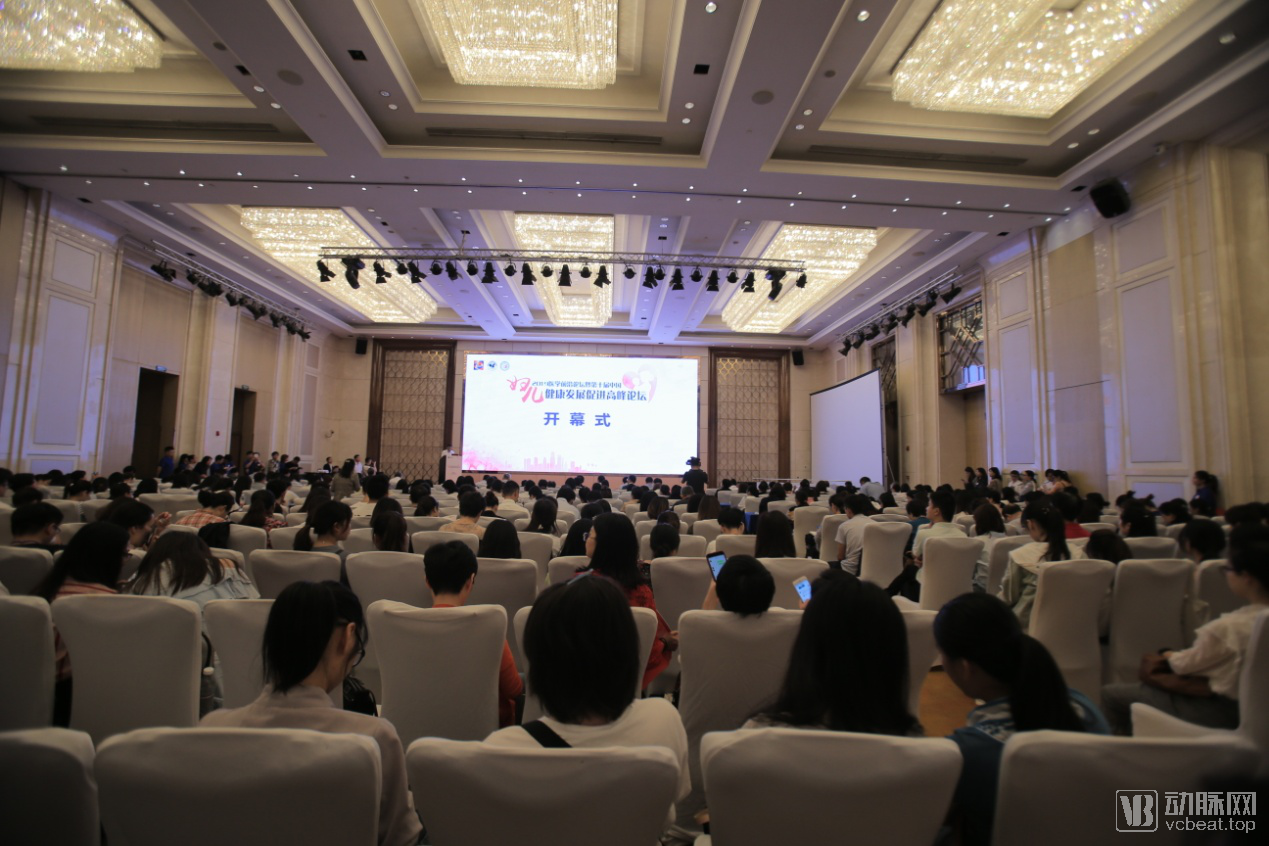
Artificial intelligence has become a national development strategy, with women’s and children’s health care representing a key area for AI research and application. On September 21, at the 2019 Frontier Medical Forum and the 10th China Summit on Promoting Women’s and Children’s Health held in Wuhan, the “National AI R&D Platform for Precision Medicine in Women’s and Children’s Diseases” was officially launched. This initiative was jointly spearheaded by the Women’s and Children’s Healthcare Branch of the China International Exchange and Promotion Association for Medicine and Healthcare (CIEPA), Yiku Cloud (Yibao Medical Technology Shanghai Co., Ltd.), Tencent Medical AI Laboratory, and the Beijing Kanghua Integrated Traditional Chinese and Western Medicine Development Foundation, with the joint initiation of dozens of tertiary hospitals’ women’s and children’s specialty departments.
Academician Ma Ding, Chairman of the Women’s and Children’s Healthcare Branch of the Chinese Medical Promotion Association and affiliated with Tongji Hospital of Huazhong University of Science and Technology; Academician Zeng Yitao of the Chinese Academy of Engineering; Professor You Suning, Vice President of the China Periodical Association; Professor Xie Xing, Chairman of the Gynecologic Oncology Branch of the Chinese Medical Association; Professor Zhou Wenhao, Head of the Neonatology Group of the Pediatrics Branch of the Chinese Medical Association; Professor Mao Meng from West China Second University Hospital of Sichuan University; Professor Song Chunsheng, Executive Vice Dean of the Graduate School of the China Academy of Chinese Medical Sciences; Professor Zhang Qunhua, Co-founder and CEO of Yiku Cloud (Yibao Medical Technology Shanghai Co., Ltd.); Dr. Tang Xiaoyu from Tencent; and Professor Song Sen, an artificial intelligence scientist at Tsinghua University, jointly took the stage to unveil the “National AI Research and Development Platform for Women’s and Children’s Diseases.” More than 500 experts from across China witnessed this emerging hotspot in the field of women’s and children’s healthcare.
The health of women and children is the cornerstone of national health, a benchmark for measuring social civilization and progress, and the foundation and prerequisite for sustainable human development. Professor Ma Ding, an academician of the Chinese Academy of Engineering, emphasizes that precision medicine, intelligent healthcare, mobile health, telemedicine, low-cost care, and low-risk care for women’s and children’s diseases will become a reality thanks to artificial intelligence (AI) technology. In particular, there is a significant “scissors gap” in China between the large number of patients with women’s and children’s diseases and the limited number of physicians. Doctors face heavy workloads and high pressure, and there are marked disparities in medical expertise between major cities and county-level hospitals. AI can drive continuous iterative improvements in physicians’ “productivity,” accelerate knowledge updates, narrow this “scissors gap,” and enable patients to receive higher-quality, precise diagnosis and treatment. Furthermore, AI can extend services to primary healthcare institutions at the county and municipal levels, thereby promoting the implementation and effective rollout of the tiered diagnosis and treatment system.
Experts and physicians attending the conference emphasized that gynecologic malignancies are the most significant malignant diseases affecting women’s health, severely impairing their quality of life. Moreover, due to environmental factors, the incidence rate has shown a year-on-year upward trend in recent years. Children represent the hope of every family; therefore, a cancer diagnosis in a child invariably inflicts a severe blow to the family. In China, the annual average growth rate of childhood malignancy incidence is 2.5%.
Currently, one in every eight couples of childbearing age in China faces fertility challenges. The prevalence of infertility ranges from 12.5% to 15%. Furthermore, the implementation of China’s universal two-child policy has accelerated overall demand for childbirth. In the face of fertility barriers, opting for assisted reproductive technologies (ART) through artificial intervention has become a natural choice. Women are the cradle of life, and children are the future of the nation. China has always prioritized improving women’s and children’s health as a fundamental national policy. Professor Song Sen of Tsinghua University believes that, as artificial intelligence is a national development strategy, it is imperative to integrate AI into healthcare for women and children.
China possesses vast amounts of big data in the field of maternal and child healthcare. Once effectively integrated with artificial intelligence (AI) and deep learning, this approach is likely to yield novel therapeutic strategies and methods for major maternal and pediatric diseases. This marks a significant step toward China achieving a leading global position in the diagnosis and treatment of such conditions. Professor Zhang Qunhua, CEO of Yiku Cloud (Yibao Medical Technology Shanghai Co., Ltd.), believes that medical AI knowledge is more critical than data. We define this knowledge as clinical experience. The development trend in medical AI research and development is shifting toward a model led by physicians, driven by AI engineers, and involving public participation.
In the diagnosis and treatment of gynecologic oncology, the capabilities of hospitals in China vary significantly. A shortage of senior specialized professionals has led to suboptimal diagnostic efficiency and less-than-ideal therapeutic outcomes. Artificial intelligence (AI), through deep learning on vast disease datasets, continuously enhances the efficiency of disease diagnosis and treatment. The research, development, and application of AI-assisted systems for the diagnosis and treatment decision-making of gynecologic tumors will elevate the clinical standards of gynecologic oncology care in China.
As a leading Chinese internet giant, Tencent provides stable and high-quality services to hundreds of millions of users. In recent years, it has made frequent strides in the field of medical artificial intelligence, undertaking key AI projects under the National Key R&D Program, and playing a pioneering role in the medical AI industry.
Dr. Fan Wei, Dean of the Tencent Medical AI Research Institute, stated, “We are delighted to jointly launch the China National AI R&D Platform for Precision Medicine in Women’s and Children’s Diseases. We aim to further leverage the multidisciplinary advantages of AI technologies in gynecologic oncology, pediatric rare diseases—including pediatric oncology—and assisted reproduction. By adopting an innovative R&D service model that integrates AI technology with cross-disciplinary clinical expertise, we will develop more AI-assisted diagnostic and therapeutic products that are well-received by both physicians and patients, thereby providing broader patient populations with more robust medical safeguards and higher-value services.”
National AI R&D Platform for Precision Treatment of Women’s and Children’s Diseases, which brings together numerous academicians, distinguished specialists in women’s and children’s healthcare, and engineers from the artificial intelligence industry to establish interdisciplinary and cross-regional collaborations. Meanwhile, leveraging the Internet-based Medical Consortium model, the platform aggregates a large pool of physicians during the AI R&D process for precision treatment of women’s and children’s diseases, harnessing their professional expertise to ensure that AI development closely addresses clinical pain points and urgent needs. It is committed to creating practical, innovative, and inclusive AI products that originate from clinical practice and are ultimately applied back in clinical settings, thereby promoting the vigorous development of women’s and children’s health care in China and contributing to the Healthy China initiative.