

FuZhi Home Elder Care: Pioneering a Safe, Community-Based Micro-Nursing Home Chain Model with Zero Safety Incidents Since Inception
The 2007 trip to Japan marked a turning point in Cai Dongdong’s career. In the following years, she founded a rehabilitation assistive device company, sold the general hospital she had personally established and operated for 13 years, and registered and established Welfare Home Care Service Co., Ltd.
Upon closer examination, this was not so much a pivot as an extension of market demand. “At the time, I visited medical device suppliers in Japan and observed that the rental model for rehabilitation assistive devices was highly developed there. Renting such devices is practical, cost-effective, and environmentally friendly. Since this model had not yet gained traction in China, I decided to give it a try upon my return,” recalled Cai Dongdong. “The initial results were very promising. Our primary users were elderly individuals with physical or cognitive impairments. Their family members told me, ‘Assistive devices truly address major challenges, but since our elderly relatives are bedridden and unable to care for themselves, we have to replace caregivers three or four times a week. The caregiving burden is even more troubling.’”
Initially, Cai Dongdong did not fully grasp the gravity of the situation until he himself faced the reality of his parents’ functional and cognitive decline. “My mother suffered bilateral hip fractures, my father was diagnosed with late-stage lung cancer six years ago, and my mother-in-law experiences delusions. All three of them suffer from dementia. I have come to deeply understand the hardships faced by children caring for their aging parents.”

Cai Dongdong, Founder of Welfare Home (Image source: Provided by the company)
“I also tried hiring nannies—two at a time—but I still had to get up three or four times a night. I also looked into nursing homes, but public facilities had long waiting lists, while private ones were located in remote areas where I couldn’t keep an eye on my parents, which made me uneasy.” To ensure her parents could reside in a nursing home that offered peace of mind, Cai Dongdong opened the first micro-nursing home in her own community in April 2014. To her surprise, all seven beds were quickly filled.
Following the success of the pilot project, an increasing number of families sought out its services by reputation. In January 2016, Cai Dongdong formally registered and established Beijing Welfare Home Care Service Co., Ltd. (hereinafter referred to as “Welfare Home”). Primarily serving elderly individuals with partial or total disabilities, Welfare Home is positioned as a community-based micro nursing home, dedicated to integrating medical care into elderly care services to truly achieve the combination of medical and custodial care.
Initially, to care for her parents, Cai Dongdong converted a room in her home into a care space and hired two caregivers to look after the elderly couple. However, the caregiving methods and their outcomes gave her considerable distress. “My father weighs over 50 kilograms. When the caregivers lifted him, they truly had no proper technique—hugging his neck, pulling his legs, with his clothes bunched up around his neck. It looked as if they were about to drop him on the floor.”
“This awkward ‘hug-and-lift’ method is not only uncomfortable for the elderly but also physically demanding for caregivers.” As a result, Cai Dongdong began to step in personally, providing hands-on training to caregivers. “First, call out to the elderly person to rouse them. Before assisting them up, ensure the wheelchair is positioned flush against the bedside and flip up the footrests. Then, help the elderly person sit up, making sure to adjust their clothing properly once they are upright. Next, wrap your arms around the elderly person’s waist, gripping their waistband, and rest their head against your shoulder. Finally, position one foot forward and the other back to create a pivot point, using leverage to transfer the elderly person onto the wheelchair.”
“After trying this method twice, the caregiver also became happier, saying, ‘I used to dread lifting the elderly, but now it’s much easier,’” said Cai Dongdong. “In fact, this is just a matter of technique. With the right techniques, work becomes easier and morale improves, thereby preventing incidents of verbal or physical abuse against the elderly.”
Seemingly basic tasks such as repositioning patients and lifting the elderly actually encompass a wide range of specialized techniques. Cai Dongdong, who has a medical background, skillfully integrates medical expertise into caregiving practices. To teach caregivers these techniques, Cai personally appears in a series of instructional videos based on his own curriculum, demonstrating each movement step by step.
In the video content, Cai Dongdong will inform caregivers of the "points" where safety accidents are prone to occur during care. For example, elderly individuals who are bedridden for long periods are susceptible to choking. Therefore, caregivers should raise the head of the bed by 30 centimeters during feeding, position the elderly person's head toward the side from which food is being offered, and feed them in a lateral position.
Nearly 30 episodes of this video tutorial series have been produced to date, with each lesson lasting approximately 10 minutes. Cai Dongdong revealed that many industry peers are interested in purchasing the course. She is currently upgrading the curriculum and plans to offer it for sale once the enhancements are fully implemented, thereby enabling more elderly individuals to access medical-grade services.
In the elderly care industry, talent attrition is a major challenge to confront. In recruiting and retaining talent, Beijing Welfare Home Care Service Co., Ltd. has developed its own “best practices.”
In terms of “open-sourcing,” Welfare Home has entered into a project cooperation agreement with the Lüliang region in Shanxi Province, establishing a caregiver training base to channel trained nursing staff into Welfare Home’s internal workforce. Regarding “cost containment,” Welfare Home implements an annual salary progression system for its caregivers: for each full year of service, the monthly salary increases by RMB 100. For some caregivers, this annual increment alone amounts to RMB 300 per month, resulting in an additional RMB 3,600 per year.
Cai Dongdong stated that, beyond compensation, the most critical factor in retaining caregivers is to afford them respect and transform nursing homes into a "home for caregivers." Furthermore, it is essential to provide caregivers with learning opportunities, enabling them to deliver care with increasing ease and professionalism.
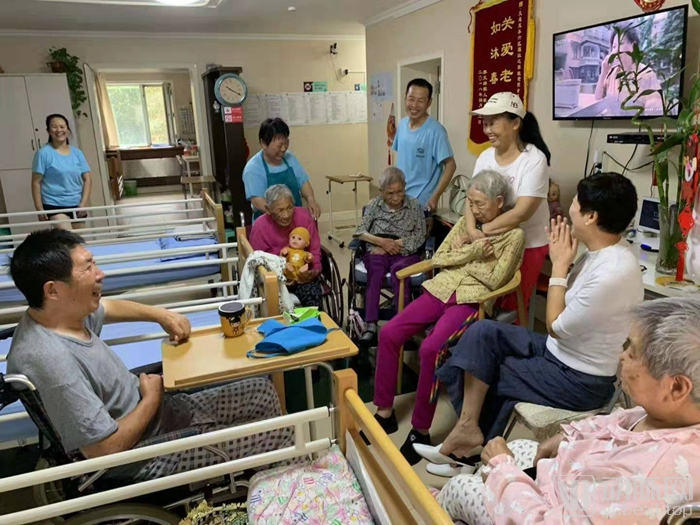
Interior Photos of Welfare Home (Image Source: Provided by the Company)
Caregivers at Welfare Home receive both public welfare certification training organized by the China Aging Development Foundation and proprietary training programs developed by Welfare Home itself, with internal corporate training focusing more on practical skills. “I personally authored and filmed these training materials, as most of our caregivers have limited formal education and find video-based training more accessible.”
Caregivers arriving at Welfare Home undergo different types of training based on their prior nursing experience. First, they receive video-based training; second, they undergo professional ethics training; and finally, their comprehensive competencies are evaluated through practical observation of their caregiving performance.
It is worth mentioning that Welfare Home has independently developed a suite of intelligent software with independent intellectual property rights. Compared to other intelligent software solutions, Cai Dongdong stated that this software is better suited for elderly individuals with disabilities or partial disabilities, offering more “practical” functionality. For instance, if an elderly resident with diabetes is found to have blood glucose levels above the average during morning checks, the care staff will report the finding, while the system will simultaneously trigger an alert and send the resident’s weekly blood glucose data to the physician. Upon reviewing the information, the physician will promptly call the care staff to provide specific instructions and precautions.
Through preliminary exploration, Welfare Home has created a new model of community-based elderly care services with Chinese characteristics. Targeting seniors with disabilities or partial disabilities, it has established a micro-chain community elderly care service system that is anchored by community-based care, centered on home-based care, and supported by complementary medical services, while also developing a robust profitability model.
The decision to opt for a micro-scale community nursing home was the result of research and calculations conducted by Cai Dongdong. The survey results indicated that the permanent resident population in the community was no less than 4,000–5,000, with disabled elderly individuals accounting for 2.8% of the total. Based on the minimum standard, the number of disabled residents was calculated to be 112. The number of nursing beds was set at 8–10% of this calculated figure, resulting in a provision of 10 to 15 beds. The ratio of care staff to residents was established at 1:3.
Community-based micro nursing homes are rooted in the community and individual households. Welfare Home focuses on creating a "nursing home without walls," mutually driving traffic with community micro nursing homes to achieve seamless integration. This enables an integrated, professional, and smart home-based elderly care model featuring caregiver dispatch, rehabilitation equipment rental, and shared intelligent devices.
Since 2007, when Cai Dongdong introduced the concept of rehabilitation assistive device leasing to China, years of exploration have led to the development of a sustainable operational model for rehabilitation equipment leasing. This model provides equipment support for home-based elderly care services, integrating leasing, sales, and recycling into a unified service system.
It is worth mentioning that, for the disinfection process—whether for internal facilities or equipment—Welfare Home has introduced non-toxic and odorless disinfectants from Japan. “Although this has increased costs, it truly ensures safety.”
In terms of integrating medical and elderly care services, Welfare Home fully leverages diagnostic and treatment resources by signing green-channel cooperation agreements with multiple hospitals and establishing a wholly-owned clinic. It rationally implements fragmented management of healthcare professionals’ spare time, embeds itself within the resident communities, and provides regular, nearby outpatient visit services, ensuring that minor illnesses are treated on-site while serious conditions are promptly transferred to specialized hospitals.
Cai Dongdong stated that to avoid the idleness and waste of medical resources, Welfare Home does not operate an in-house laboratory; instead, it collaborates with community hospitals, with all testing conducted by these facilities. Community-based elderly care should prioritize custodial care, while medical services should focus on chronic disease management. By introducing professional teams to handle specialized tasks, we must ensure that hospitals are not converted into nursing homes, nor nursing homes into hospitals, but rather foster strong partnerships between the two.
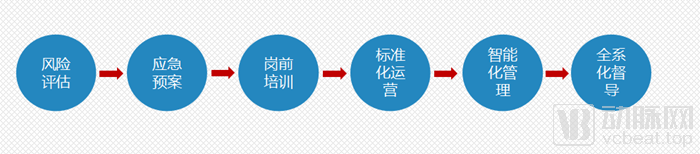
Welfare Home’s Risk Control System (Image source: Provided by the company)
Having accumulated years of operational experience in the industry, we have developed a comprehensive risk control framework. Furthermore, all staff members are covered under third-party liability insurance for elderly care services. Since 2014, there have been no safety liability incidents, and not a single complaint has been filed by the families of residents who passed away due to natural causes.
Cai Dongdong often says, “Quality nursing stems from quality management. Effective management is not rigid; rather, it adapts flexibly to the specific conditions of each elderly resident.”
Regarding future plans, Beijing Welfare Home Care Service Co., Ltd. will upgrade its training videos and promote them externally. The care management software will undergo further upgrades, adding new modules such as caregiver profile integration and caregiver dispatch services. Additionally, the company will establish connections with more hospitals to facilitate the subsequent expansion of its nursing home operations.
It is reported that Beijing Welfare Home Care Service Co., Ltd. is currently conducting its pre-A round of financing, with a target amount of RMB 7 million. Interested institutions are requested to contact Xiao Yun, VCBeat’s Financing Assistant, at: DongMai_Investent