

Junshi Biosciences Showcases New Multi-Tumor Breakthroughs with Toripalimab at 2019 CSCO Annual Meeting
Recently, Junshi Biosciences announced that data from its Phase II studies of toripalimab (brand name: Tuoyi), a self-developed anti-PD-1 monoclonal antibody, for two indications—bladder urothelial carcinoma and non-small cell lung cancer—were presented at the 22nd National Clinical Oncology Conference and the 2019 CSCO Academic Annual Meeting, achieving remarkable interim results. This marks another exciting advancement in Junshi Biosciences’ multi-tumor indication strategy.
The annual CSCO Academic Annual Conference is a grand academic feast, characterized by its high standards, strong authority, and cutting-edge research findings. It brings together top domestic experts in the field of oncology for academic exchange, effectively promoting the development of the discipline. This year’s theme is “Innovative Precision Research, Exploring Smart Healthcare.”
Bladder urothelial carcinoma is one of the most common malignant tumors in urology, posing a serious threat to patients’ survival time and quality of life. In China, treatment options for patients with advanced urothelial carcinoma who have failed standardized therapy are very limited. The emergence of immunotherapy, represented by anti-PD-1 monoclonal antibodies, has brought hope to these patients. Notably, the POLARIS-03 study, which evaluated toripalimab for metastatic urothelial carcinoma after failure of systemic therapy, yielded encouraging results. This study was also presented at this year’s ASCO Annual Meeting, garnering attention and recognition from the international academic community.
The POLARIS-03 study is a multicenter, open-label, Phase II registration trial co-led by Professor Guo Jun from Peking University Cancer Hospital and Professor Huang Yiran from Renji Hospital, Shanghai Jiao Tong University School of Medicine. The study aims to evaluate the efficacy and safety of toripalimab monotherapy in patients with advanced locally progressive or metastatic bladder urothelial carcinoma who have failed standard treatment. The study planned to enroll 150 subjects, and enrollment has now been completed.
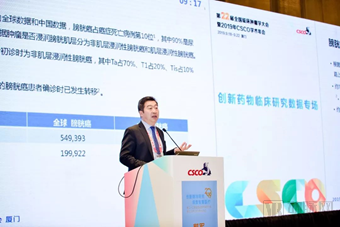
Professor Guo Jun at the Special Session on Clinical Research Data for Innovative Drugs
Updated study data once again drew attention at this conference.Studies have shown that as of September 5, 2019, among 106 evaluable patients, the overall objective response rate (ORR) for toripalimab was 26.4%, the disease control rate (DCR) was 50.9%, and the median time to response was 9.03 weeks.。
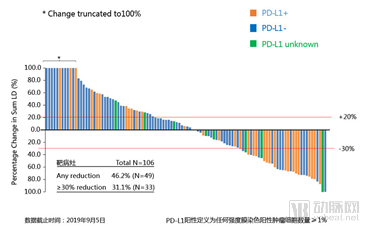
Change in Target Lesions from Baseline to Best Response (N=106)
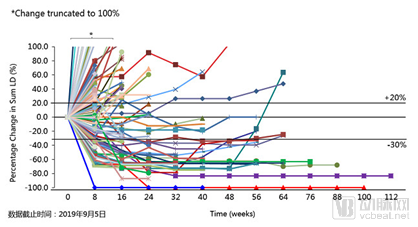
Change in Target Lesions Over Time in Evaluable Patients (N=106)
The response rate to immunotherapy in PD-L1-positive patients is as high as 42.4%,It is the highest among publicly available data on PD-1/PD-L1 monotherapy both domestically and internationally.。
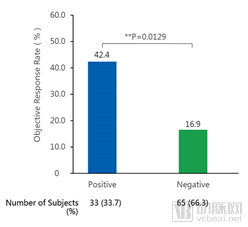
Analysis of ORR by PD-L1 Expression Status
Professor Guo Jun from Peking University Cancer Hospital stated that previous international clinical studies on monotherapy with immune checkpoint inhibitors after the failure of first-line chemotherapy for metastatic urothelial carcinoma showed an objective response rate of around 20% in most cases. In comparison, the clinical efficacy demonstrated in POLARIS-03 has been significantly improved, which makes Chinese experts proud and fills us with confidence regarding future research and application prospects. This also indicates that Junshi Biosciences' independent R&D capabilities in developing anti-PD-1 monoclonal antibodies have reached international standards.
Lung cancer is the malignant tumor with the highest incidence and mortality rates in China. Non-small cell lung cancer (NSCLC) accounts for more than 85% of all lung cancer cases, and the majority of patients are diagnosed at an advanced stage. Among these patients, there is a high proportion of those with EGFR mutation-positive NSCLC. First-line treatment for such patients typically involves EGFR tyrosine kinase inhibitors (EGFR-TKIs); however, subsequent treatment options are extremely limited after treatment failure. Data from multiple studies indicate that immunotherapy monotherapy yields poor efficacy in patients with EGFR mutations, leaving a significant unmet medical need.
To overcome this challenge and improve treatment strategies, Professor Zhou Caicun from Shanghai Pulmonary Hospital affiliated with Tongji University led the first clinical study in China targeting EGFR mutation-positive non-small cell lung cancer (NSCLC). The study combined toripalimab with the chemotherapy drugs pemetrexed and carboplatin. The Phase II clinical trial results were presented as an oral report at this year’s World Conference on Lung Cancer (WCLC), marking the debut of toripalimab in the field of lung cancer.
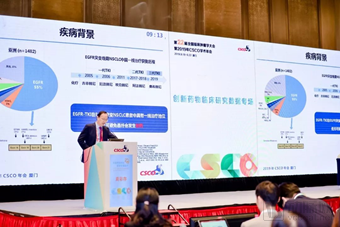
Professor Zhou Caicun at the Special Session on Clinical Research Data of Innovative Drugs
The study enrolled 40 patients, with an objective response rate (ORR) of 50% and a disease control rate (DCR) of 87.5%. The median duration of response (DoR) was 7.0 months, and the median progression-free survival (PFS) in the overall population was 7.0 months. Subgroup analysis showed that among PD-L1-positive patients, the ORR was 60%, and the median PFS reached 8.2 months.
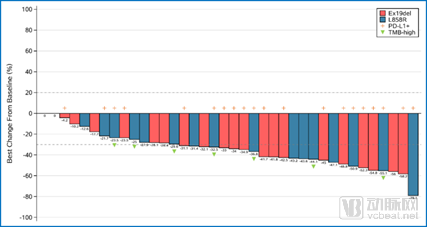
Efficacy Results – ITT Population
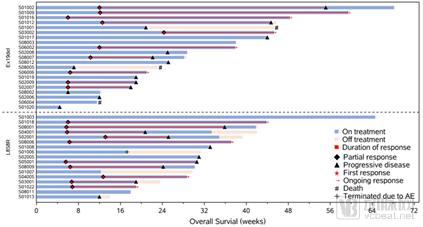
Efficacy and Duration of Response
Professor Zhou Caicun, the lead investigator of the study, stated that compared with historical chemotherapy alone, which yielded an objective response rate (ORR) of approximately 30% and a progression-free survival (PFS) of around 4 months, the combination of immunotherapy and chemotherapy exerts a synergistic effect, significantly enhancing therapeutic efficacy and providing new treatment strategies for patients with EGFR-mutated non-small cell lung cancer (NSCLC). The Phase II data have given us the confidence to proceed with further Phase III clinical trials, and we look forward to achieving even more encouraging results.This newly announced Phase II clinical study is also the first of its kind conducted in China in the field of EGFR mutation-positive non-small cell lung cancer (NSCLC)., Junshi Biosciences is currently at the forefront in this field and hopes to benefit more Chinese lung cancer patients in the future.
As the first domestically developed, original anti-PD-1 monoclonal antibody approved in China, Tuoyi has gradually become the leading domestic PD-1 monoclonal antibody since its market launch last year.
Including the currently approved indication for melanoma, Tuoyi has conducted more than 30 clinical studies across 14 tumor types—including nasopharyngeal carcinoma, urothelial carcinoma, breast cancer, lung cancer, liver cancer, and esophageal cancer—in China, the United States, Singapore, and other countries and regions, achieving outstanding results in clinical trials for multiple tumor types.
Meanwhile, to achieve further breakthroughs in indications where anti-PD-1 monotherapy has limited efficacy, Junshi Biosciences has also embarked on explorations of combination therapies involving Tuoyi with conventional treatments and innovative drugs/therapies. Among the 14 key registrational clinical trials currently being conducted by Junshi Biosciences, the majority are combination therapy studies, some of which have achieved groundbreaking progress. For instance, the combination of toripalimab and the anti-angiogenic drug axitinib for mucosal melanoma, which is highly prevalent in Asian populations, demonstrated an objective response rate (ORR) of 51.7% (per irRECIST criteria). This result, far exceeding the historical ORR of no more than 20%, surpassed expectations and holds promise to become the new first-line treatment standard for advanced mucosal melanoma. The research findings were recently published in the prestigious international journal Journal of Clinical Oncology (JCO). Furthermore, the combination therapy of Junshi Biosciences’ independently developed global first anti-BTLA blocking antibody for cancer treatment with its PD-1 monoclonal antibody is poised to become a leading global immuno-combination therapy.
Junshi Biosciences’ multi-tumor indication strategy continues to set new records. Professor Guo Jun stated, “I believe that a high-quality product must demonstrate sustained efficacy, deliver superior survival benefits to patients, and be available at an affordable price. As clinical trials progress, toripalimab will provide more evidence-based medical data to support the future of immunotherapy in China.”
About Tuoyi (Toripalimab Injection)
Tuoyi (toripalimab injection), the first domestically developed anti-PD-1 monoclonal antibody approved for marketing in China, has received support from the National Major Science and Technology Project. In March 2018, the National Medical Products Administration (NMPA) formally accepted its marketing application and included it in the priority review and approval program to expedite the evaluation process. Clinical trial results demonstrated that among patients with unresectable or metastatic melanoma who had failed prior systemic therapy, the objective response rate was 17.3%, the disease control rate was 57.5%, and the one-year survival rate was 69.3%. The approval of this product holds positive significance for expanding clinical treatment options for cancer patients in China.
Since its initiation of clinical development in early 2016, Tuoyi has conducted more than 30 clinical trials across multiple countries, including China and the United States, covering 14 tumor types. The drug is being actively investigated for efficacy in indications such as nasopharyngeal carcinoma, urothelial carcinoma, lung cancer, gastric cancer, esophageal cancer, liver cancer, and breast cancer. Collaborations with leading innovative pharmaceutical companies worldwide on combination therapies are also underway, with the aim of providing Chinese patients with access to state-of-the-art cancer immunotherapy.
About Junshi Biosciences
Junshi Biosciences (NEEQ: 833330, HKEX: 01877) was founded in December 2012 by a team of graduates from prestigious universities in China and the United States, with extensive experience in cross-border technology transfer and industrialization.
Junshi Biosciences focuses primarily on the development of therapeutic antibodies, specializing in the research, development, and commercialization of innovative monoclonal antibody drugs and other therapeutic protein drugs. The company boasts a robust pipeline of investigational products, including 17 innovative drugs and two biosimilars. Junshi Biosciences is the first Chinese company to receive marketing approval from China’s National Medical Products Administration (NMPA) for an anti-PD-1 monoclonal antibody. It is also the first domestic company to obtain NMPA approval for Investigational New Drug (IND) applications for anti-PCSK9 and anti-BLyS monoclonal antibodies. Furthermore, it secured the world’s first IND approval from the U.S. Food and Drug Administration (FDA) for an anti-BTLA blocking antibody for cancer treatment. Currently, the company employs over 1,000 people worldwide, with operations in San Francisco and Maryland in the United States, and Shanghai, Suzhou, Beijing, and Guangzhou in China.