

MIIT Releases Draft Guidelines to Promote the Elderly Products Industry, Targeting Over RMB 5 Trillion in Total Scale by 2025
VCBeat (WeChat: vcbeat) reported that on September 23, the Ministry of Industry and Information Technology publicly solicited opinions on the “Guiding Opinions on Promoting the Development of the Elderly Products Industry,” proposing that the overall scale of the elderly products industry exceed RMB 5 trillion by 2025.
In light of the characteristics of geriatric diseases and rehabilitation needs, accelerate the integrated application of emerging technologies—such as artificial intelligence, brain science, and virtual reality—in rehabilitative assistive devices, thereby enhancing their capacity for adjunctive therapeutic rehabilitation. Priority development should be given to rehabilitative assistive devices and medical materials, including exoskeleton robots, bionic prostheses, care equipment for cognitive impairment rehabilitation, artificial joints and spinal implants, 3D-printed orthopedic implants, materials for induced regeneration and repair of tissues and organs, implantable left ventricular assist devices, deep brain stimulators, cochlear implants, dental implants, intraocular lenses, and hemodialysis membranes.
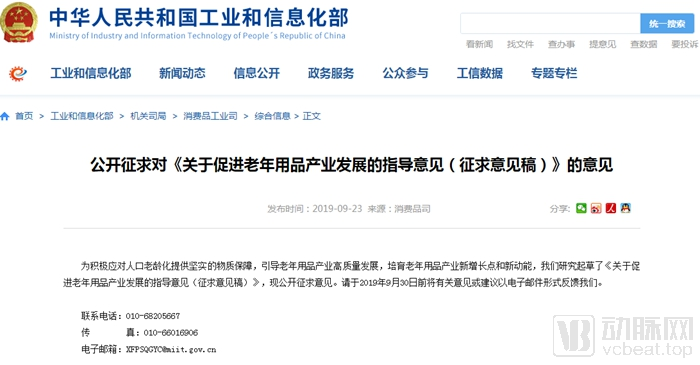
The full text of the policy is as follows:
Guiding Opinions on Promoting the Development of the Industry for Elderly Products
(Draft for Comments)
The elderly products industry, a vital component of the silver economy, is a manufacturing sector that serves the elderly population by providing food, pharmaceuticals and medical devices, health management products, clothing and apparel, daily necessities, electronic appliances, and other goods tailored to their physiological characteristics and lifestyle needs. Promoting the development of this industry is a significant measure to expand consumption in the new era and an essential requirement for meeting people’s growing needs for a better life. As population aging intensifies in China, demand for elderly products from the rapidly expanding senior population is growing swiftly. However, market vitality remains underutilized, and effective supply capacity fails to meet the diverse consumption needs of the elderly. To provide solid material support for actively responding to population aging, guide the high-quality development of the elderly products industry, and cultivate new growth points and drivers, the following opinions are hereby proposed.
I. Guiding Ideology, Basic Principles, and Development Goals
(I) Guiding Principles
(II) Basic Principles
Market-led, government-guided. Give full play to the decisive role of the market in resource allocation, and mobilize the enthusiasm and creativity of all types of market entities. Better leverage the government’s role in strategy, planning, policy formulation, and market regulation to stimulate the endogenous momentum of industrial development and optimize the environment for industrial growth.
Improve Supply, Enhance Quality and Efficiency. Centered on the key tasks of expanding product variety, improving quality, and building brands, advance supply-side structural reform, support enterprises in developing products and services that meet the consumption needs of the elderly population, strengthen effective supply capacity, and improve the quality and efficiency of supply.
Innovation-Led, Integrated Development. Vigorously cultivate market entities driving innovation, enhance the industry’s capacity for innovative development, improve product standards and technical service systems, and promote innovation in key technologies and service models. Deepen the integrated development of the internet, big data, cloud computing, and artificial intelligence with the elderly care products industry.
(3) Development Goals
By 2025, the overall scale of the elderly care products industry will exceed RMB 5 trillion. The industrial system for elderly care products will be basically established, with continuous expansion in industry size, sustained optimization of the market environment, and the formation of a well-coordinated development pattern encompassing technology, products, services, and applications.
Innovation capacity has been significantly enhanced. The R&D expenditure of key enterprises as a percentage of their main business revenue has exceeded 4%. The enterprise-led technological innovation system has been further improved, accelerating innovation in products, technologies, and business models. Positive progress has been made in intelligent manufacturing, service-oriented manufacturing, and “Internet+” collaborative manufacturing.
Supply levels have significantly improved. Product varieties have become more diverse, and quality has markedly enhanced. The systems for product quality standards, inspection and testing, and certification and accreditation are gradually aligning with international practices, with the consistency rate of major products in key fields with international standards exceeding 85%.
Brand building has accelerated significantly. Brand added value, market influence, and consumer recognition have continued to rise; the number of brands in key sectors has increased markedly; regional brands have developed rapidly; and a brand system adapted to market demands has been established.
The market environment has been significantly optimized. Product standards, regulations, and policy measures have been further improved, market supervision has been continuously strengthened, the government's public service capacity has been markedly enhanced, and both market competition order and the consumer environment have seen substantial improvements.
II. Development Direction
(1) Foods for the Elderly
In light of the physiological characteristics of the elderly, vigorous development should be promoted for various easy-to-consume foods and nutritionally formulated foods for seniors intended for daily dietary use. These products—including prepackaged foods for special dietary uses, ready-to-eat products, standardized meal solutions, and meal replacement foods—should be provided through diverse consumption channels and scenarios such as households, community service centers, convenience stores, elderly care institutions, and meal delivery services. Development of nutritional supplement foods for the elderly should be advanced to compensate for nutrients that are difficult to obtain adequately through regular diet, thereby improving overall health status. Actively develop health foods for the elderly with specific health benefits or designed to supplement vitamins and minerals, so as to meet specific functional needs. Encourage traditional Chinese medicine (TCM) enterprises to leverage China’s unique TCM culture, capitalize on the concept of “medicine and food sharing the same origin” and the characteristics of medicated diets, and integrate regional tonic dietary habits to promote the development of distinctive TCM-based health foods. Based on epidemiological survey results and changes in the national disease spectrum, formulate and develop specialized formula foods tailored to elderly patients.
(II) Pharmaceuticals and Medical Devices
For common and age-specific diseases in the elderly, develop essential geriatric medications, novel specialty drugs, rehabilitation aids and devices, and implantable and interventional medical materials. For degenerative osteoarthritic conditions in the elderly, prioritize the development of generic versions of clinically urgent drugs whose patents have recently expired, thereby improving the accessibility of essential geriatric medications. For neurodegenerative diseases, develop novel specialty drugs characterized by low immunogenicity, high stability, strong targeting capability, long-acting effects, and high bioavailability, with a focus on accelerating the market launch and industrialization of targeted therapies for Alzheimer’s disease and Parkinson’s disease. In line with the characteristics of geriatric diseases and rehabilitation needs, accelerate the integrated application of emerging technologies such as artificial intelligence, brain science, and virtual reality in rehabilitation aids and devices to enhance their adjunctive therapeutic and rehabilitative capabilities. Priority areas include exoskeleton robots, bionic prostheses, care and rehabilitation equipment for cognitive impairment, artificial joints and spinal implants, 3D-printed orthopedic implants, materials for induced regeneration and repair of tissues and organs, implantable left ventricular assist devices, deep brain stimulators, cochlear implants, dental implants, intraocular lenses, and hemodialysis membranes.
(3) Health Management Products
In response to the health and elderly care needs across various settings such as households, communities, and institutions, develop intelligent health management products including wearable health management devices, portable health monitoring devices, self-service health screening devices, smart elderly care monitoring equipment, and home service robots. Prioritize the development of health bands, smartwatches, and wearable monitoring devices that enable real-time, continuous monitoring of physiological parameters and health status indicators—such as blood pressure, blood glucose, blood oxygen saturation, electrocardiogram (ECG), and sleep patterns—to facilitate online immediate management and early warning. Focus on advancing self-service intelligent health screening devices for use in communities and public spaces. Actively promote intelligent monitoring and caregiving equipment, such as smart monitoring beds, for home-based and institutional elderly care, and develop high-precision indoor and outdoor positioning terminals to prevent wandering among older adults with cognitive impairments. Addressing the needs of elderly and disabled individuals, develop products such as assistive robots for people with disabilities and advance their commercialization and clinical application. Catering to personal and household living needs, develop intelligent service robot products, including domestic chore robots, assisted caregiving robots, emotional companion robots, entertainment and leisure robots, and security surveillance robots.
(4) Textiles, Garments, and Apparel
In light of the physiological characteristics, psychological needs, health conditions, and living environments of older adults, efforts should be strengthened to enhance the functionality, convenience, comfort, and fashionability of clothing and textile products for this demographic. Improvements should focus on fabric materials, style and structure, aesthetic colors, and assistive devices. Emphasis should be placed on enhancing functional properties such as moisture-wicking, quick-drying, easy care, and stretch recovery, as well as on designing age-appropriate structures. The application of photosensitive materials, UV-resistant materials, and high-performance fibers in elderly clothing should be increased to develop garments with safety protection and heat-retention capabilities. Through intelligent design and the use of smart materials, sensory assistance functions should be integrated into apparel, with vigorous development of wearable smart clothing featuring interactivity, perceptibility, and automatic alarm capabilities. Age-appropriate home textile products that combine comfort and functionality should be developed to improve performance in water repellency, breathability, antibacterial and deodorizing properties, and health promotion. Additionally, personalized clothing for specific groups such as elderly patients, along with nursing textiles including diapers, care pads, nursing wet wipes, and ulcer rehabilitation textiles, should be developed.
(V) Daily Household Utensils
Catering to the daily living needs of the elderly population, with an emphasis on detailed design and user-centric experiences, we will develop visual, auditory, and mobility aids such as reading glasses, hearing aids, and canes, as well as elderly care products like incontinence devices and commode chairs. In response to the specific requirements for safety, practicality, and comfort in kitchen and bathroom products, we will promote items such as stoves with safety protection features, integrated cabinetry, adjustable washstands, seated shower units, thermostatic showerheads, accessible bathtubs, and height-adjustable toilets. Aligning with the physiological characteristics and lifestyle habits of older adults, we will develop sit-lie furniture with assistance functions for standing, sitting, and lying down; cabinet furniture with height-adjustment and lighting capabilities; and leaning furniture with safety protection features. We will optimize smart home environments by developing new age-friendly smart home products, including intelligent lighting, smart speakers, and smart toilets. Taking into full consideration factors such as the oral and dermatological physiological characteristics of the elderly, and integrating traditional Chinese medicine (TCM) nursing culture, we will utilize functional plant-based ingredients to research and develop herbal toothpastes, mouthwashes, and other oral hygiene products, as well as skincare and personal care cosmetics for seniors featuring skin conditioning, moisturizing, and antioxidant properties. To meet the fitness and leisure needs of the elderly, we will expand the range of home exercise equipment such as multi-functional home gym sets, treadmills, and walking machines; outdoor path equipment including air walkers, lower back massagers, and joint exercisers; cultural supplies such as the Four Treasures of the Study; and musical instruments like the sanxian, guzheng, and erhu.
(VI) Electronics and Electrical Appliances
In light of the behavioral characteristics and limitations of older adults, develop age-friendly home appliances such as color televisions, refrigerators, washing machines, air conditioners, water heaters, rice cookers, microwave ovens, air purifiers, and robotic vacuum cleaners. Strengthen features like voice control and one-touch automation to enhance product safety, ease of use, and intelligence. Prioritizing practicality and operability, develop smartphones and computers that align with the visual and auditory habits of older users, and provide functions such as fraud prevention, health management, remote assistance, and accessibility support through pre-installed software and services. Aim to enrich the daily entertainment lives of older adults by developing products such as radios, opera-playing devices, and e-readers with large fonts. In response to the gradual decline in physical functions among older adults, develop cognitive-enhancing electronic products such as gaming consoles and interactive electronic toys designed for seniors. For seniors living alone or with limited mobility, develop tracking devices and emergency call systems for location tracking and emergency alerts.
III. Key Tasks
(I) Enhancing Industrial Innovation Capabilities
Promote mass entrepreneurship and innovation in the elderly products industry, and establish an independent innovation system with enterprises as the main body and close integration of government, industry, academia, research, and application. Carry out joint research on key generic technologies and priority products to promote the cross-integration of basic research and industrial applications in the field of elderly products. Advance the construction of technological innovation platforms for the elderly products industry, leveraging their critical role in technology transfer, achievement commercialization, R&D, resource sharing, and enterprise incubation. Strengthen the development of high-level talent teams by vigorously cultivating urgently needed professionals in technical R&D, product design, and management innovation for the growth of the elderly products industry. Actively develop producer services that support capacity building for innovation in the elderly products industry, such as R&D outsourcing, industrial design, and technology trading and consulting.
Box 1 Key Core Technologies Foods for the Elderly. Strengthen the integrated application of technologies such as metabolomics, evidence-based medicine, and big data in geriatric nutrition research; enhance studies on dietary patterns and food nutrient composition concerning the promotion of digestion and absorption, regulation of gut microbiota, enhancement of bone mineral density, and improvement of immune function; and achieve breakthroughs in key technologies such as efficient delivery systems for functional components and precision manufacturing of health foods. Pharmaceuticals and Medical Devices. Priority development will be given to large-scale, high-expression antibody production technologies; novel antibody preparation technologies such as antibody-drug conjugates (ADCs) and bispecific antibodies; and technologies for long-acting recombinant protein formulations. Accelerate the research and development of bioengineering products, represented by tissue-inducing biomaterials, next-generation implantable and interventional medical devices, and artificial organs. Strengthen the research and development of key technologies in Traditional Chinese Medicine (TCM), including preventive treatment of disease (“Zhi Wei Bing”), precision medication with TCM compound formulas, and sustained- and controlled-release drug delivery systems for TCM. Health Management Products. Focus on achieving breakthroughs in key technologies such as wearable monitoring, the Internet of Things (IoT) for health, and intervention in health risk factors. Develop low-power, miniaturized smart sensing technologies, high-capacity, miniaturized power supply technologies, and low-power, high-performance microprocessors suitable for intelligent health and elderly care products. Textiles and Apparel. Focusing on the specific demands of elderly apparel for new materials, accelerate the breakthrough and application of functional textile material technologies. In particular, promote the industrialization and application of technologies such as high-performance fibers and composites, bio-based fibers, gel-based anti-fall materials, superabsorbent resin materials, and flexible wearable smart textile materials. Daily household appliances. Accelerate the research and development of advanced technologies for smart home integration platforms, such as radio frequency (RF) and embedded systems, with a focus on key technologies including structured cabling, network communications, security protection, automatic control, and audio-video transmission, to deliver one-stop comprehensive smart home solutions. Electronics and Electrical Appliances. In response to the elderly’s need for user-friendly electronic and electrical products, promote the research, development, and application of voice control technology, microcomputer-based fuzzy control technology, and digital audio-visual technology, so as to enhance the accessibility of human-computer interaction in age-appropriate electronic and electrical products. |
(II) Accelerate the Development of a Standard System
Comprehensively organize and improve the standard system for industries related to products for the elderly. Develop and revise a batch of critical and urgently needed product and technical standards in areas such as nutritional formula foods for the elderly, nutritional supplements for the elderly, functional textiles, health detection and monitoring products, home service robots, rehabilitation assistive devices, age-friendly smart home systems, and household appliances, while strengthening the adoption of international standards. Encourage the development of group standards with leading and promotional roles, improve the mechanism for converting group standards, and establish a new type of standard system characterized by synergistic development and coordinated support between government-led standards and market-driven standards.
Box 2: Building a Standard System Foods for the Elderly. Refine the development of standards for various categories of foods for the elderly, such as convenience foods, nutritionally formulated milk powders, and dairy beverages, provide clear quality control indicators, and promote product standardization. Health Management Products. Develop product standards for health and elderly care devices, establishing unified standards for device interfaces, data formats, transmission protocols, and testing and metrology. Prioritize the development of product and data service standards for intelligent detection devices that monitor five major categories of common physiological health indicators: blood pressure, blood glucose, blood oxygen saturation, heart rhythm, and electrocardiogram (ECG). Textiles and Apparel. Improve standards for key products, with a focus on advancing identification and evaluation standards for the safety and functionality of garment fabrics and products, and encourage third-party institutions to carry out publicity and implementation efforts for these standards. Daily household items. Research design standards for elderly-friendly furniture products in terms of raw and auxiliary materials, functionality, and appearance, as well as safety standards regarding mechanical properties and limits on hazardous substances. Improve industry standards for elderly-oriented kitchen and bathroom products, smart home devices, and fitness equipment, enhancing the age-appropriateness of these products in terms of safety, functionality, and intelligence. Electronics and Electrical Appliances. Determine the safety, functional, and performance-related indicators and parameters for smart home appliances suitable for the elderly, formulate general technical standards for age-friendly smart home appliance products, and achieve system compatibility, information sharing, and interconnectivity across different brands. |
(3) Enhancing the Level of Quality Assurance
Focusing on the development trends of segmented markets within the six major sectors of the elderly care products industry, efforts should be made to enhance the efficacy, performance, safety, and aesthetic design of elderly care products. By leveraging the modular and integrated characteristics of product production and manufacturing, this approach aims to drive the innovative development of new manufacturing models, including intelligent manufacturing, flexible manufacturing, and networked manufacturing. Strictly implement enterprises’ primary responsibility for quality, actively promote and apply advanced quality management technologies and methods such as lean manufacturing, total quality management, and performance excellence, and carry out activities including quality benchmarking, key quality problem-solving, and quality improvement. Establish standardized and specialized third-party quality testing platforms to conduct quality evaluation, verification, and certification of elderly care products, and develop technical methods for testing and evaluating product information and privacy security.
Box 3 Enhancing the Level of Quality Assurance Elderly Food. Guide enterprises to establish a quality and safety traceability system for elderly food, build an information-based quality traceability platform, and strengthen the demonstration and promotion of full-process traceability. Promote the integration of quality and safety inspection and testing resources for elderly food and health supplements, and encourage the establishment of demonstration centers for quality and safety testing technologies in food enterprises. Pharmaceuticals and Medical Devices. Enhance the quality of generic drugs commonly used by the elderly, and improve formulation production technologies and quality control standards in conjunction with the consistency evaluation of generic drug quality and efficacy. Strengthen the application of new technologies such as artificial intelligence and virtual reality to enhance the performance of rehabilitation assistive devices in intelligent services and personalized fitting, thereby promoting product upgrades and iteration. Health Management Products. In light of the networked and innovative development trends of health management products, accelerate the construction of high-quality production lines and smart factories. Conduct assessments and evaluations of human comfort and ease of use from the perspectives of safety, stability, and convenience. Textiles and Apparel. Support enterprises in adopting advanced technological equipment for production, enhancing the design capabilities and comfort of clothing products for the elderly, and establishing an intelligent production process encompassing body measurement, design, fitting, and manufacturing. Improve the quality standards of flexible wearable textiles and novel fibers, and standardize functional requirements for product features such as sensing, thermal insulation, and antibacterial properties. Daily Living Aids. Strengthen quality control across the entire process, from raw material procurement to production and sales, promote online monitoring systems for process parameters and quality, and enhance product performance stability and quality consistency. Establish a number of national or third-party quality control and technical evaluation laboratories to facilitate improvements in product quality. Electronics and Electrical Appliances. In the field of home appliances and electronic products designed for the elderly, we will leverage testing and inspection institutions to conduct comparative physical tests between domestic and foreign products. We will guide enterprises in improving and upgrading their offerings in terms of industrial design, functional features, and performance parameters, striving to bring the quality of physical products close to or on par with that of developed countries. |
(4) Promoting the Application of Intelligent Products
Accelerate the in-depth application of next-generation information technologies, such as artificial intelligence, the Internet of Things, cloud computing, and big data, as well as intelligent hardware, in the field of products for the elderly. Support the research and development of key technologies, including intelligent interaction, intelligent operation, and multi-device collaboration, to enhance the intelligence level, practicality, and safety of age-appropriate products such as rehabilitation assistive devices, health monitoring products, elderly care monitoring systems, home service robots, wearable clothing and accessories, and daily household appliances. Conduct pilot programs across various application scenarios, including nursing homes, communities, hospitals, and households, and establish a batch of testing, evaluation, and application demonstration projects for intelligent products.
(5) Strengthen the development of well-known brands
Guide enterprises to strengthen brand strategy management, clarify brand positioning, promote the integration of brands with the elderly care service industry and high-tech industries, and enhance the value-added and cost-effectiveness of branded products. Support brand enterprises in innovating business models and cooperating with large-scale elderly care institutions, communities, hospitals, and senior cultural centers to conduct unified price negotiations and centralized procurement, thereby facilitating the alignment of production and sales. Encourage local governments and industry associations to leverage industrial clusters and national demonstration bases for new-type industrialization to actively cultivate regional brands, and compile brand development reports for industries with mature conditions. Support brand-building activities such as exhibitions for elderly care products and design competitions, and strengthen brand promotion through effective communication channels including new media.
(6) Cultivating Industrial Clusters and Demonstrations
Encourage key regions and industry enterprises to focus on application demands in six major sectors, including food and health supplements as well as textiles, clothing, and apparel, accelerate the research and development of key core technologies in priority areas, promote the integration of government, industry, academia, research, and application, and carry out application demonstrations for local specialty elderly care product industries. Support local governments and enterprises in organizing and implementing a batch of application projects for the elderly care products industry, with a focus on cultivating specialized industrial clusters for elderly care products in fields such as home appliances, health management products, domestic service robots, and rehabilitation assistive devices. Leverage their demonstrative, leading, and radiating roles to explore scalable and replicable industrial application and business models, promptly summarize advanced experiences, and promote them nationwide.
IV. Safeguard Measures
(I) Strengthen communication and coordination, and advance the implementation of work in a coordinated manner
Relevant departments, including the Ministry of Industry and Information Technology (MIIT), the Ministry of Civil Affairs (MCA), the National Health Commission (NHC), and the State Administration for Market Regulation (SAMR), shall strengthen coordination and enhance communication and collaboration on policies, standards, and industry management. They shall jointly study and address major issues encountered during the implementation of these opinions and provide stronger guidance to local authorities. Provincial-level industrial and information technology authorities in regions with an established industrial base, in conjunction with their counterparts in civil affairs, health, and market regulation at the same level, shall formulate industrial plans and related policy measures tailored to local conditions. They shall encourage application demonstrations and model innovation, treating the effective promotion of the elderly care products industry as a key component of the in-depth implementation of the “Three Products” strategy—expanding varieties, improving quality, and building brands—in the consumer goods manufacturing sector.
(2) Increase investment in innovation and enhance product supply capabilities
Leverage existing funding channels, including special funds for technological transformation, the Advanced Manufacturing Industry Investment Fund, and the National Science and Technology Support Program, to support the research and development of key technologies and products for elderly care goods, the conversion of scientific and technological achievements, service innovation, and application promotion, thereby cultivating and strengthening backbone enterprises. Support the cultivation of “Specialized, Refined, Differential, and Innovative” (SRDI) Little Giant enterprises and National Technological Innovation Demonstration Enterprises in the field of elderly care goods, strengthen collaborative innovation among industry, academia, research, medical care, and elderly care institutions, and promote the industrialization of key generic technologies. Encourage local governments to cooperate with social capital to establish industrial funds that support the innovative development of the elderly care goods industry.
(3) Improve industrial policies and promote industry-wide application
Establish a national catalog of products for the elderly in China to promote the application and dissemination of high-quality products. Launch pilot demonstration projects for key products, strengthen follow-up research and supervisory guidance, and conduct timely assessments of the implementation effectiveness of these demonstration projects. Prioritize the inclusion of elderly care products with unique functions or usage value into the guidelines for upgraded and innovative consumer goods. Develop promotional and exhibition platforms to provide consumers with convenient purchasing guidance. Establish insurance schemes for selected products, pilot subsidy programs for the purchase and use of rehabilitative assistive devices, and encourage and support elderly care service institutions across various regions to offer rental services for such devices. Strengthen financial support for the elderly care product industry. Support the development of public service platforms for elderly care product industrial clusters; where conditions permit, local governments should support the construction of these platforms through government procurement of services, non-repayable grants, operational rewards, and other measures tailored to local circumstances.
(4) Optimize the consumer environment and cultivate a standardized consumer market
Establish a standardized information service platform for elderly care products to improve the efficiency of developing and revising urgently needed standards, thereby enhancing the supportive role of standards in industrial development. Regulate market conduct, strengthen market supervision, and severely crack down on the production and sale of counterfeit and shoddy goods. Strengthen the protection of intellectual property rights, including trademarks, unique names of well-known commodities, packaging and decoration, industrial designs, and invention patents; combat infringements upon intellectual property rights and the legitimate rights and interests of enterprises, so as to safeguard the rights and interests of the elderly. Regulate advertising and related information dissemination for pharmaceuticals, medical devices, food, and health supplements; severely crack down on false publicity and inaccurate reporting to create a favorable healthy consumption environment for the elderly. Enhance promotion and consumer guidance for elderly care products to invigorate the consumer market.
(5) Leverage the Role of Industry Associations to Enhance Service Capabilities in the Sector
Leverage the advantages of industry associations in their deep understanding of the sector and close proximity to enterprises, enabling them to play an active role in policy research, formulation and revision of standards, promotion, exhibition and display of new products, and international exchange and cooperation, thereby jointly advancing industrial development. Encourage industry associations to strengthen research on industrial development trends and lead the high-quality development of the elderly care products industry. Support industry associations in enhancing their service capabilities and strengthening self-discipline by organizing activities such as quality and credibility commitments, maintaining a good industry reputation, promptly reflecting enterprise appeals, and providing feedback on the implementation of policies.