

Crystal Nova Mammography System Achieves Screening of 140 Patients in 8 Hours, Addressing Grassroots Breast Cancer Screening Challenges
Effective early screening and diagnosis of breast cancer can help mitigate the high incidence and mortality rates associated with the disease.
On September 20, 2019, GE Healthcare China officially launchedDesigned Specifically for Screening and Diagnosis of Dense Breast DiseaseSenographe Crystal Nova digital mammography diagnostic system.
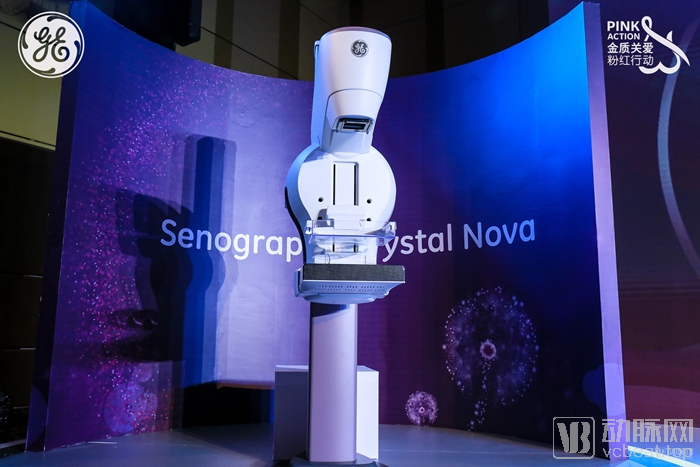
The Crystal Nova mammography system not only integrates an innovative platform for breast image acquisition, processing, and comprehensive diagnosis, but also features GE Healthcare’s classic original cesium iodide (CsI) flat-panel detector. This ensures high image quality while enabling precise imaging at lower radiation doses, significantly improving the detection rate of early calcified lesions. Furthermore, it meets the demands for high-volume continuous exposure, substantially enhancing clinical examination efficiency and outpatient throughput.
Moreover, GE Healthcare has established the production of its Crystal Nova mammography systems and the R&D of certain post-imaging processing platforms in China, creating its first mammography product production line in the country. This move aims to respond more rapidly and comprehensively meet the large-scale demand for breast cancer screening at the grassroots level, including in third- and fourth-tier cities, thereby facilitating the implementation of tiered diagnosis and treatment.
40 Years of Deep Commitment to the Chinese Market
Making Significant Contributions to Breast Cancer Screening and Diagnosis in China
In recent years, the incidence and mortality rates of breast cancer in China have shown a year-on-year increase, with the age of onset becoming progressively younger. Compared to the 80% early detection rate for breast cancer in European and American countries, China’s early detection rate remains below 20%. This disparity is attributed to factors such as the high prevalence of dense breast tissue among Chinese women, the lack of standardized screening pathways, and low public awareness.
Breast cancer ranks first among female malignancies worldwide in terms of both incidence and mortality, posing significant challenges to healthcare economics, living standards, and women’s health. In addressing the challenges of breast cancer, GE HealthCare has remained at the forefront of the industry. Since entering the Chinese market in 1979, GE HealthCare has made substantial contributions to the early screening, diagnosis, and treatment of breast cancer in China.
September 18, GE Healthcare China 2019“Golden Care, Pink Action” Large-Scale Public Welfare Campaign for Breast Cancer Prevention and TreatmentOfficially Launched. This is an initiative that GE HealthCare has upheld for 14 years. Dai Ying, Chief Innovation Officer of GE HealthCare China, stated, “This initiative is committed to leveraging technological innovation as its foundation and industry collaboration as its driving force to enhance early clinical screening and precise diagnosis. It aims to assist the industry in establishing standards and norms, while joining forces with medical institutions, employee volunteers, and various sectors of society to conduct public welfare health activities such as high-quality screening free clinics and public science education. By advocating for regular, high-quality breast cancer screening concepts and actions, we strive to comprehensively raise public awareness of breast health centered on ‘early prevention, early detection, and early treatment,’ thereby contributing our part to the implementation of the ‘Healthy China’ strategy.”
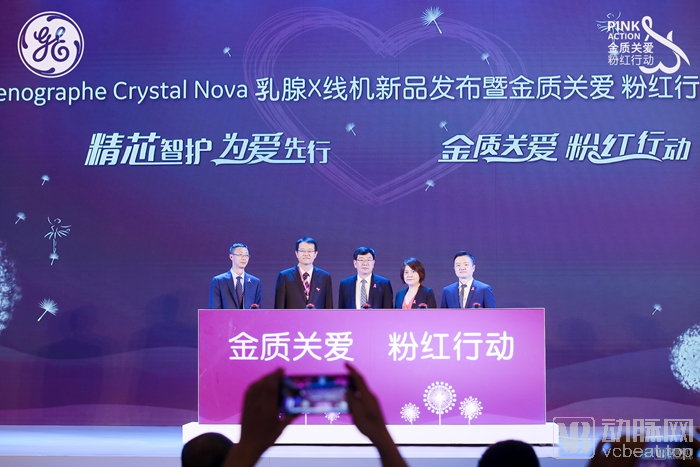
Zhong Luyin, Director of Strategic Marketing and Corporate Communications at GE Healthcare China, stated, “Over the past decade, the ‘Golden Care Pink Action’ public welfare campaign has provided more than 50,000 free clinical consultations. We hope this initiative will raise breast cancer screening awareness among more women.”
Furthermore, in view of the lack of national-level, standardized, and authoritative guidelines for breast cancer screening in China, the National Cancer Center, the National Quality Control Center for Oncology, and GE Healthcare jointly authored and released the “Chinese Guidelines for Breast Cancer Screening and Early Diagnosis and Treatment” in 2018.This guideline recommends a screening strategy combining mammography and ultrasound, supplemented by magnetic resonance imaging when necessary, based on the physiological characteristics and disease profiles of Chinese women., which can further standardize breast cancer screening, early diagnosis, and early treatment in China, thereby improving the early diagnosis rate of breast cancer in the country.
This year, in addition to continuing its collaboration with the National Cancer Center to advance the standardization of breast cancer screening and early diagnosis and treatment, GE HealthCare will join forces with a wide range of “Pink Partners”—including authoritative clinical experts, private healthcare partners, GE employees, and volunteers. Through online initiatives such as video stories and popular science live streams, they will conduct educational campaigns on breast cancer prevention and control, covering topics such as quality screening pathways, diagnostic and treatment standards, screening methods, and disease prevention. Together, they will promote the early-health concept of “early detection, early diagnosis, and early treatment.”
Achieved a patient examination volume of 140 in 8 hours
More Aligned with the Needs of Chinese Patients
GE Healthcare’s comprehensive new lineup of breast imaging products, tailored to the characteristics of dense breast tissue in Chinese women, provides comprehensive coverage for breast diseases.Screening, Diagnosis and Treatment, Re-examination, Follow-upComprehensive product technologies spanning the entire disease continuum deliver more precise, high-quality solutions for breast cancer screening, early diagnosis, and early treatment, thereby enhancing the quality and efficiency of screening and diagnosis, facilitating earlier detection of breast cancer, and reducing missed and misdiagnoses.
It is understood that the new family of breast care products includes the Invenia ABUS 2.0 Automated Breast Ultrasound System, the Senographe Crystal Nova Digital Mammography System, the Versana ultrasound series, and the SIGNA™ Works–GE 1.5T/3.0T MRI breast imaging solutions. This demonstrates that GE HealthCare offers a comprehensive product portfolio spanning ultrasound, mammography, and magnetic resonance imaging.
Within GE Healthcare’s new lineup of breast imaging products, the Crystal Nova mammography system, launched on September 20, embodies nearly 60 years of GE Healthcare’s expertise in mammography system development.
As a digital mammography system integrating screening, diagnosis, and localization, Crystal Nova is equipped with an amorphous silicon cesium iodide flat-panel detector—a patented innovative hardware technology from GE Healthcare. This technology enhances the efficiency of examining dense breast tissue and improves the capability for early detection of minute lesions. The system also integrates a more precise 2D stereotactic positioning platform and an advanced professional image acquisition and processing platform, providing clinicians with four different types of contrast-enhanced diagnostic images. This ensures successful screening and diagnosis for diverse patient populations, significantly strengthening the capacity of primary healthcare institutions to achieve early screening, early diagnosis, and early treatment of breast cancer.
Breast cancer screening requires acquiring images in four standard views, a process characterized by prolonged acquisition times, complex workflows, and heavy workloads. Given the tight timelines and substantial demands of breast cancer screening programs, improving patient throughput across hospitals at all levels has become an urgent challenge. To further enhance clinical diagnostic and therapeutic efficiency, the Crystal Nova mammography system is equipped with a rapid “N”-key automatic positioning system and a new AOP (Automatic Exposure Control) system. These features enable comprehensive intelligence and automation throughout the entire workflow, including positioning, full-breast scanning, parameter setting, dose management, and image acquisition. The system facilitates rapid imaging in various positions, ensuring high image quality while utilizing lower radiation doses. With its streamlined workflow and accelerated examination speed, the system significantly improves clinical examination efficiency and outpatient throughput.Capable of screening more than 140 patients within an 8-hour workday.
It is worth noting that Asian women, particularly Chinese women, predominantly have dense breast tissue, characterized by a high proportion of glandular tissue and low fat content. To address this, the Crystal Nova mammography system incorporates a novel AOP (Automatic Exposure Control) system. Unlike conventional AC technology, this system targets local tissue for detection, automatically assessing breast density and thickness to determine the optimal imaging parameters. This ensures the highest image quality while delivering precise exposure at the lowest possible radiation dose.
Additionally,GE Healthcare has established the production of its Crystal Nova mammography system, along with R&D for certain image post-processing technologies, at its Beijing imaging equipment manufacturing base. By conducting R&D and production in close proximity to substantial market demand, the company can rapidly respond to the significant needs driven by the high incidence of breast cancer in China., comprehensively meeting the needs of central hospitals in third- and fourth-tier cities and county-level maternal and child health centers for women’s health care and large-scale breast cancer screening, thereby facilitating the further implementation of the Chinese government’s “Two-Cancer Screening” program.
According to Wang Chunbo, Marketing Director of GE Healthcare China’s Diagnostic X-ray Product Division, “The Beijing production line currently has an annual capacity of 500 units, which is gradually increasing. Notably, more than 30% of the total shipments from this production line are supplied to the Chinese market.”
Zhang Yi, General Manager of the Diagnostic X-ray Products Division at GE Healthcare China, stated: “As the inventor of the world’s first mammography system, GE Healthcare continues to deepen its technological innovation in breast imaging. Over the years,”GE Healthcare has been actively engaged in the research, development, and production of value-driven products tailored to local needs in China, meeting the demands for clinical screening, early detection, and precise diagnosis.This year, during the “Golden Care Pink Action” campaign, GE Healthcare launched Crystal Nova, a digital mammography system specifically designed for breast cancer screening and diagnosis. This launch represents another breakthrough innovation that integrates GE’s global resource platform with Chinese innovative expertise, demonstrating a tangible commitment to supporting the effective prevention and control of severe breast diseases in China.
Empowering Grassroots Breast Cancer Screening
Crystal Nova Mammography System Empowers Breast Specialty Services at Primary Care Hospitals
Zhangjiajie Yongding District Maternal and Child Health Hospital is located in a rural county-level district. It is a Level II specialized hospital for maternal and child health care, focusing on the diagnosis and treatment of common, frequently occurring, and complex diseases among women and children. In 2016, the hospital was designated as a national pilot center for cervical and breast cancer screening.
Ma Fei, Director of the Department of Medical Oncology at the Cancer Hospital of the Chinese Academy of Medical Sciences and the National Cancer Center, stated, “The screening programs for cervical and breast cancer in grassroots areas have helped China establish a positive image in public health and hygiene, earning high praise from the international community as ‘a tangible step in China’s war on cancer.’” Records show that between 2017 and 2019, the Yongding District Maternal and Child Health Hospital provided free screening for cervical and breast cancer to a cumulative total of 30,843 women.
In breast cancer screening, the Yongding District Maternal and Child Health Hospital utilizes GE Healthcare’s Crystal Nova mammography system for diagnostic screening. Through the Hunan Provincial Maternal and Child Health Consortium, acquired images are directly interpreted by experts at the Provincial Maternal and Child Health Hospital.
Luo Mengchun, Director of the Yongding District Maternal and Child Health Hospital, stated, “The standardized pathway for ‘two-cancer’ screening stipulates that breast cancer screening consists of three steps: first, clinical palpation; second, ultrasound screening; and third, diagnostic follow-up for positive cases using a mammography system.” Prior to the acquisition of the Crystal Nova mammography system, patients with positive ultrasound findings had to seek further evaluation at municipal or provincial hospitals, thereby increasing the burden on patients. Since the installation of the Nova mammography system, more than 30,000 individuals have undergone screening. Nearly 800 were identified as suspected positives, with approximately 10 ultimately confirmed diagnoses.
President Luo Mengchun remarked, “GE Healthcare enjoys high visibility and recognition in the medical industry. The Crystal Nova mammography system offers high screening accuracy, meeting the requirements for early breast cancer screening and diagnosis, and thus provides significant support to hospitals in advancing their breast cancer screening programs.”
Dean Luo Mengchun also stated, “The Crystal Nova mammography system and the National Pilot Center for Breast and Cervical Cancer Screening present a valuable opportunity that has significantly advanced our hospital’s breast surgery practices, driving the construction and development of our breast surgery discipline.”