

Decoding the Southwest China Elderly Care Market: Six Differentiated Business Models for Reference
“Market economy research tends to focus on metropolitan circles. Indeed, when examining economic development in Southwest China, all eyes are on Sichuan Province, and within Sichuan, the spotlight is on the Chengdu-Chongqing region. However, I prefer to view the elderly care markets of Chengdu and Chongqing from the broader perspective of the entire Southwest region. This is because, in a niche segment like elderly care, no single city alone possesses sufficient scale to support the emergence of a unicorn enterprise. Therefore, the comprehensive consumption capacity and strength of Sichuan Province, and indeed the entire Southwest region, represent the true growth potential for the elderly care industry,” said Cao Zhuojun, Business Partner at Hejun Health & Elderly Care Division, speaking confidently on stage.
At the three-day Third China (Sichuan) International Elderly Care Service Industry and Elderly Care Industry Development Forum (hereinafter referred to as the “Sichuan International Elderly Care Development Forum”), participants ranging from government officials and experts to entrepreneurs and investors engaged in discussions on the aging industry and related sectors in the Sichuan-Chongqing region and Southwest China.
As a key component of the nationwide strategic layout for elderly care enterprises, Southwest China has attracted prominent domestic elderly care groups, real estate brands, and insurance-backed firms to establish their presence in Chengdu in recent years. Companies such as Taikang, Vanke, Poly, Sino-Ocean, Da'ai City, and Jiuru City are leveraging these initial footholds to expand into the broader Southwest market.
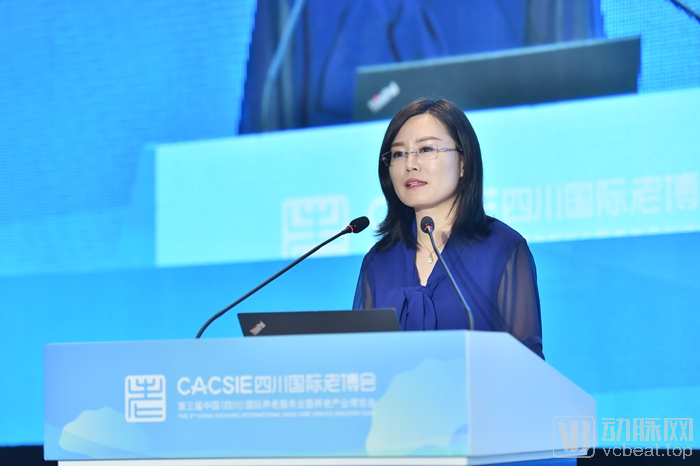
Cao Zhuojun, Business Partner of Hejun’s Health and Elderly Care Division (Image source: Provided by the organizer)
From the perspectives of demographics, policy, supply, and industry, what locational advantages does Southwest China possess? What are the development opportunities and challenges in this region? And what are the future development trends? With these questions in mind, VCBeat (WeChat ID: vcbeat) has compiled the transcript of Cao Zhuojun’s speech on “The Southwest Market and Opportunities in China’s Elderly Care Landscape.”
The Southwest region constitutes the second tier of China’s elderly care industry, following the Beijing-Tianjin-Hebei and Yangtze River Delta regions. Its development momentum has become increasingly evident in recent years. In addition to national chain enterprises, locally developed chain institutions have also emerged. Unlike other regions, the Southwest exhibits significant internal disparities and a more scattered, point-like distribution pattern. Driven by Sichuan Province and Chongqing Municipality as growth engines, key cities are spearheading regional industrial upgrading.
A more prominent feature is that the health and wellness industry in Southwest China has become more diversified and integrated. It has expanded from elderly care into a series of related sectors, including health preservation, leisure agriculture, cultural tourism, ecological wellness, and traditional Chinese medicine, along with specialized business formats within the associated industrial chain, representing a highly inclusive development model.
Economic Development Perspective
Administratively, Southwest China comprises five provincial-level divisions: Sichuan, Chongqing, Yunnan, Guizhou, and Tibet. In 2018, the combined GDP of these five regions reached RMB 9.52 trillion, ranking fifth among China’s seven major administrative regions (ahead of Northeast and Northwest China, but still significantly behind North China, which ranked fourth). Nevertheless, their economic growth rate led the nation.
From the perspective of economic development in southwestern China, there is a clear urban stratification. Chengdu and Chongqing rank among the top in terms of economic scale in western China, with their influence radiating across the entire western region. They serve as vital hubs for economy, technology, cultural and creative industries, international exchanges, and comprehensive transportation.
Therefore, from the perspective of economic development, it is more about seeking industrial opportunities by following the time-lag trajectory of regional economies. Regions that are more advanced in terms of demographic structure, economic scale, and industrial foundation (such as Chengdu and Chongqing in Southwest China) will inevitably develop first. This principle and pattern apply equally to the elderly care industry.
Population Perspective
Compared with other economic regions, the Southwest region’s greatest potential lies in its total population of over 200 million, ranking third among China’s seven major administrative divisions. In fact, over the past decade, this large population base has been a fundamental driver behind the region’s leading economic growth rate nationwide. In contrast to the total population is the elderly population; the aging rates across the five provinces and municipalities in the Southwest vary significantly, spanning three distinct tiers of aging.
In Sichuan and Chongqing, the population aged 65 and above exceeds 12%, classifying them as aging societies. Along with Shandong, Liaoning, and Jiangsu, they belong to the first tier of provinces and municipalities with the highest aging rates in China, far exceeding the national average.
In Yunnan and Guizhou, the proportion of the population aged 65 and above ranges from 8% to 10%, classifying them as aging societies and placing them in the third tier nationwide;
Tibet’s aging rate is below 8%, classifying it as an adult society and placing it in the fourth tier nationwide.
Differing demographic structures imply varying underlying needs; therefore, at this stage, each region will have distinct development priorities, as the disparities in demand are particularly pronounced.
Policy Perspective
Policy support varies across the five southwestern provinces and municipalities, with certain differences in policy implementation.
Sichuan places greater policy emphasis on supporting the development of the “One Zone, Two Areas, and Three Belts” framework, focusing on integrating elderly care institutions with medical facilities, as well as fostering convergence with local distinctive ecological resources—such as sunlight and forests—and other industrial assets.
Chongqing’s policies place greater emphasis on the “Thousand-Hundred Project,” which involves establishing 100 community-based elderly care service centers dedicated to providing community elderly care services and supporting the national initiative for the healthy development of traditional Chinese medicine.
Yunnan boasts abundant and distinctive tourism resources, with its policy framework focusing on health and wellness, seasonal migration tourism, and long-stay travel.
Guizhou places greater emphasis on integrating elderly care with big data and the internet.
Tibet places greater emphasis on livelihood projects and basic social safety nets.
Breakdown by Five Provinces and Municipalities: Sichuan and Chongqing Rank Among the National First Tier in Terms of Policy Subsidy Intensity and National Pilot Status:
In terms of construction and operational subsidies, Sichuan and Chongqing offer construction subsidies ranging from 5,000 to 10,000 yuan per bed and operational subsidies between 150 and 200 yuan, placing their subsidy intensity in the first tier nationwide. The subsidy model is gradually shifting from “subsidizing beds” to “subsidizing individuals.”
In terms of the implementation of integrated medical and elderly care, Sichuan’s designated medical insurance institutions rank fifth nationwide, far surpassing other provinces and municipalities in the Southwest region;
From the perspective of the long-term care insurance pilot programs, Chengdu in Sichuan Province and Chongqing Municipality were both among the first batch of national pilot cities, playing a leading and demonstrative role;
From the perspective of home- and community-based elderly care pilot programs, multiple cities/districts in Sichuan Province and Chongqing Municipality were selected for the first to fourth national batches, ranking among the top in China.
Supply-Side Perspective
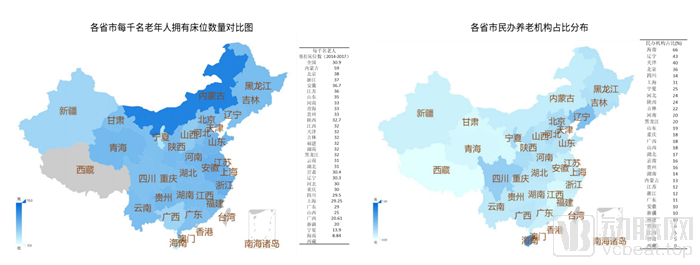
Source: "Report on the Development of China's Health and Elderly Care Industry (2019)"
As shown in the figure above, the supply of hospital beds in the Southwest region exceeds the national average. The total number of beds in elderly care institutions has been steadily increasing, with a significant rise in those operated by private entities under private ownership.
Contrary to the anticipated “blue ocean,” the gradual saturation of elderly care institutions and beds has led to increasingly fierce competition. In the next phase, competition among enterprises will hinge on product strength and brand power, focusing on how to achieve profitability at the individual facility level, how to standardize and scale operational models, how to acquire assets and property resources at low cost in the early stages, and how to leverage capital to enhance the efficiency of acceleration and chain expansion.
Policy Opportunities: Seize the opportunities presented by the national universal benefit system pilot and the first batch of long-term care insurance pilots.
At the national level, China is promoting high-quality development of the elderly care industry across the country by using pilot programs and experiments as models to drive broader implementation. To date, there have been 42 pilot programs for reforming the elderly care service sector, four batches comprising a total of 90 pilot programs for community-based home elderly care services, 90 national pilot programs integrating medical and elderly care services, 15 pilot programs for long-term care insurance, and two batches of pilot smart elderly care cities.
This presents a significant development opportunity for Southwest China. Taking inclusive elderly care projects as an example, a subsidy of RMB 20,000 per bed is merely a drop in the bucket for cities like Beijing and Shanghai, yet for Southwest China, this funding can effectively reduce upfront construction investments.
Based on an analysis of the 10 successfully approved inclusive projects in Southwest China, there are no regional restrictions for elderly care service institutions; all regions are treated equally. Selection is based solely on competitive merit among service-providing enterprises, with priority support given to those with strong capabilities, high-quality projects, and a track record of honesty and integrity.
At the same time, Chengdu and Chongqing are also among the first batch of pilot regions for long-term care insurance.
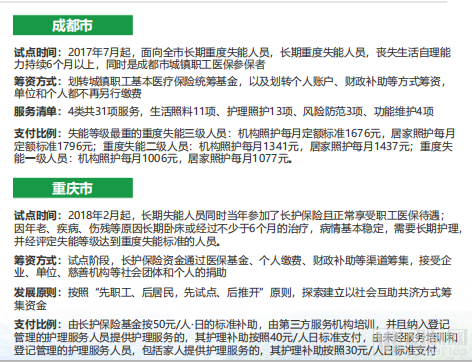
Source: Hejun Health and Elderly Care
During the pilot implementation of long-term care insurance, it was found that this subsidy effectively stimulates effective demand among the public, further boosts consumption, cultivates consumer habits, and simultaneously shortens the overall investment payback period for the program.
Market Opportunities: Large enterprises are flocking to Sichuan, while Chongqing, Yunnan, and Guizhou still present market opportunities.
Major competitors continue to enter Sichuan’s elderly care industry, particularly in Chengdu’s elderly care services market, which is nearing saturation and characterized by intense competition among enterprises;
Chongqing is characterized by the gradual expansion of local enterprises, with room for further development;
Yunnan and Guizhou have relatively low aging rates, and their senior living tourism market has room for development thanks to their natural resource advantages;
Tibet has a low aging rate, and its elderly care industry primarily serves as part of the “People’s Livelihood and City Stability” strategy, focusing on improving basic service infrastructure. For social enterprises, a cautious approach to market entry is advisable at this stage.
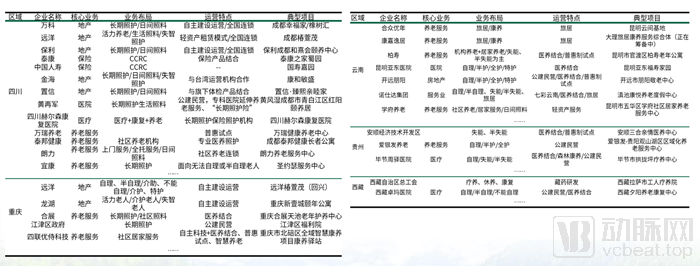
Selected Elderly Care Service Enterprises and Institutions in Southwest China (Source: Hejun Health and Elderly Care)
Capital Opportunities: Guided by Regional/Urban Cluster Layout, Integrating Industry and Finance to Extend the Full Industrial Chain
Currently, some capital firms and listed companies have taken notice of the region and market in Southwest China. These entities can be broadly categorized into two types. From the perspective of listed companies, there are 41 elderly care companies listed on the main board, with several billion-yuan-scale elderly care enterprises already beginning to establish a presence in the Southwest Chinese market. Currently, three such companies have been identified as having established operations in the Southwest region: Jiuyuan Yinhai, which specializes in smart elderly care; Taiji Group, which focuses on elderly care real estate and sojourn-based senior living; and Yunnan Metropolitan Real Estate Investment & Development Co., Ltd. (Yunnan Chengtou).
In the future, expansion, acquisitions, and mergers in the capital market will become a normalized trend. As one of the key regions where investors are actively positioning themselves, Southwest China has drawn significant attention to its integrated medical and elderly care projects. For instance, in 2016, Singapore-based Perennial Holdings acquired a 49.9% stake in Renshoutang for RMB 740 million to establish a presence in the Southwest region; in 2018, China Resources Weilin acquired Bu’en Tang, followed by the acquisition of Chongqing Hezhan Elderly Care in 2019.
Capital investors have accelerated their deployment in the Southwest region, contingent upon three prerequisites: First, individual facilities must achieve profitability with strong profit margins exceeding the industry average. Second, under a chain-operation model, enterprises must establish their own operational brand, system, team, and expertise. Third, companies must implement standardized management; those with relatively standardized practices in finance, human resources, and overall management are more likely to attract capital interest.
Market Perspective: Six Innovative Business Models for Reference
National Chain’s Southwest Expansion: Taikang Community·Shuyuan
Taikang’s CCRC model focuses on suburban areas of major cities; its Chengdu project is located in Wenjiang District, a non-central area where land acquisition costs are relatively low. Furthermore, Taikang Community has implemented localized adaptations in Chengdu, encompassing both architectural style and pricing strategy.
Taking pricing as an example, there are two ways to move into Taikang Community in Chengdu. First, purchasing insurance or holding a Letai Card entitles residents to a 30% discount. Second, individuals may choose not to purchase a Letai Card and instead pay relatively higher monthly fees for residency. This non-insurance-based model is unique to the Chengdu region. As local residents tend to have lower savings rates, the monthly fee structure aligns well with their preferences. This approach lowers the rigid entry barriers and increases occupancy rates.
Introducing Advanced Experience from Developed Regions: Chengdu Kanghe Minsheng
Kanghe Minsheng was jointly invested and established by Sichuan Jinhai Dingsheng Industrial Co., Ltd. and Panzhihua Yangcheng Jinhai Tourism Investment Co., Ltd.
Kanghe and Minsheng have introduced mature operational partnership resources from Taiwan, with a strategic focus on community-based institutions. Initially leveraging small-scale facilities as entry points and foundational units, the company has established a chain of 12 such micro-institutions in Chengdu and Panzhihua to serve as frontline community traffic gateways. Additionally, it operates the Puda Sunshine Health and Elderly Care Base in Panzhihua, which has been designated as a key ecological health and wellness project in Sichuan Province.
Centering on small and micro institutions as the core layout, with ecological wellness bases as the long-term strategic foundation, we aim to build brand recognition, enhance value, and highlight unique selling points, thereby realizing an integrated online-offline model characterized by a central hub complemented by distributed satellite nodes.
Central-Local Cooperation: Smart Huachuan
Smart Huachuan is a nationwide health and elderly care platform enterprise established by China Hualu Group, a central state-owned enterprise, and Sichuan Chuantou. The innovation of its model lies in effectively integrating the demands of three stakeholders—government, enterprises, and the elderly—by linking them through a unified value chain.
The government portal integrates regulatory functions, the institutional portal connects service provisions, and the elderly portal addresses care needs. The integration of these three portals forms a smart elderly care service platform. By combining medical and elderly care, leveraging smart elderly care solutions, and implementing a tripartite model, the enterprise has adopted localized strategies to establish a nationwide branded and chain-based service network.
Rapid Regional Expansion Driven by Capital: Hezhan Elderly Care
Hezhan Elderly Care, established in 2012, is a regional leader specializing in the operation of elderly care services. Adopting a social capital operational model, it introduced China Cinda Wind Investment Management Co., Ltd. as an investor as early as 2015. This year, Cinda Wind exited its investment, and Hezhan was acquired by China Resources Weilin.
International High-End Medical Care + Hotel-Style Service for a Full-Lifecycle Medical Mall: Perennial International
Perennial Holdings is a Singapore-listed conglomerate specializing in integrated real estate and healthcare. The Chengdu project marks Perennial’s first integrated complex in China, combining a healthcare center with retail commerce.
Furthermore, by leveraging resource connectivity to build a platform, Perennial has assembled top-tier international healthcare brands—such as Parkway Pantai, Gleneagles Rehabilitation and Plastic Surgery, BGI Genomics, and postpartum care centers—thereby establishing a shared healthcare platform model.
In this way, multi-site practice for physicians is enabled. Doctors can engage in medical practice on this healthcare platform through a “turnkey” approach, without the need to separately apply for licenses to establish medical and health institutions. Furthermore, the complex shares medical testing facilities and equipment, consumable supplies, as well as back-end management and services, which significantly reduces costs while also facilitating the sharing of patient resources.
Leveraging Natural Resources to Develop Sojourn-Based Elderly Care: Yunnan Chengtou
Yunnan Chengtou is a state-owned listed company and also a government investment platform. First, the enterprise adopts an ambitious strategy to position itself as a comprehensive service provider for green health and wellness in the Southwest region. Yunnan Chengtou has transitioned from real estate development to the health and elderly care sector, and its operational model offers valuable lessons for other real estate companies undergoing similar transformations.
Furthermore, with sojourn-based elderly care as its entry point, it has introduced three strategic product systems: “Green Wellness Community · Kangzhou,” “Health Complex · Fangzhou,” and “Wellness Apartments · Yunzhou.” It aims to build a smart, integrated health community by establishing a platform-based, networked, intelligent, and full-industry-chain healthy living ecosystem.
It is undeniable that the further development of the elderly care industry in Southwest China still faces certain difficulties and challenges. For instance, in terms of top-level design architecture, comprehensive planning is required to provide strategic guidance. The current industrial development is inevitably confronted with the dual shortages of funding and land resources.
Compared with policy-leading regions such as the Yangtze River Delta and the Jiangsu-Zhejiang-Shanghai area, the Southwest region still faces challenges in the effective implementation of preferential subsidies and funding. Land supply is also subject to certain restrictions; for instance, most new projects are located in remote suburban areas, making it difficult to secure prime locations.
At the second level, while the number of elderly care beds is gradually increasing, there is an insufficient effective supply of elderly care services, and imbalances persist between urban and rural development. The number of county-level elderly care institutions remains low, public-private partnerships are only in their infancy, and the overall diversification of service supply is relatively limited.
At the third level, the uneven distribution of supply resources is highly pronounced, with most concentrated around core urban areas. For instance, in rural areas surrounding cities such as Chongqing, Chengdu, and Kunming, as well as in regions with concentrated ethnic minority populations and impoverished border mountainous areas, healthcare services remain largely at an initial stage. Currently, the market still predominantly adopts a approach focused on providing basic coverage.
Fourth, the uneven distribution of medical resources directly affects and constrains the development of integrated medical and elderly care services. High-quality medical resources are severely scarce. This scarcity limits the development, effectiveness, and close integration of such services, making it difficult to implement integrated medical and elderly care on a comprehensive scale.
The fifth dimension, which is also a nationwide issue, concerns the spending power and consumption levels of the elderly. This problem is even more pronounced in the Southwest region. The spending power of the elderly falls below the national average. Taking Sichuan Province, which is relatively well-off, as an example, the monthly pensions for retired enterprise employees are around RMB 1,900, lower than the national average, while rural pensions stand at RMB 665. In contrast, the average monthly cost for residing in elderly care facilities in Sichuan ranges from RMB 1,500 to RMB 4,000. This explains why it is often said that while there is demand for elderly care, there is no viable market; the core issue is insufficient effective demand.
Sixth, there is a shortage of talent in the elderly care service sector, and the workforce structure remains inadequate. This issue is prevalent across China, but it is particularly pronounced in the southwestern region. Most caregivers in elderly care institutions are older in age and possess relatively low professional competence.
At the seventh level, there are still shortcomings in fully leveraging natural advantages. The integration of elderly care and tourism remains in its early stages of development, and as of now, no projects with significant influence have emerged.
Finally, an effective pattern of regional industrialization has yet to take shape. Compared with more developed regions, the number of relatively mature market leaders entering the Southwest region remains limited. In terms of regional coverage and synergy, a cohesive industrialized development framework has not been established. Admittedly, this situation is a double-edged sword; for many enterprises, it signifies substantial room for market expansion.
Identifying Opportunities from Challenges: Four Key Development Trends
At the first level, on the policy front, strengthen top-level design and use planning to guide the development of the elderly care industry in Southwest China. This will help form a development pattern in which basic services are guaranteed for the low-end market, support is provided for the mid-end market, and guidance is offered for the high-end market in the future.
At the second level, gradually develop regional characteristics by integrating high-quality medical and tourism resources with the elderly care industry to achieve regional concentration.
At the third level, future development trends will gradually focus on strategic layouts that integrate industry with finance, support leading enterprises, and cultivate talent hubs, thereby driving quality improvement and upgrading of the elderly care industry through corporate leadership.
Finally, concentrate high-quality resources and capital in the region, leveraging talent and financial capital as drivers of development. This approach will stimulate and extend the industrial chain, attract high-quality enterprises from outside the province, and promote overall regional development through cluster-based growth.
Leveraging Policy Pilots, Achieving Regional Concentration, Integrating Industry and Finance, and Extending the Industrial Chain