

Pharmaceutical Traceability System Gains Momentum: Three Key Trends Emerge from Ground-Up Infrastructure Development
Acceleration in the Construction of Drug Information Traceability Systems! Recently, the National Medical Products Administration (NMPA) released five draft documents for public consultation, including the "Basic Data Set for Traceability by Drug Manufacturers (Draft for Comment)."
The five draft guidelines propose standardized requirements for the basic data sets used by drug manufacturers, distributors, healthcare providers, and consumers for inquiry purposes, and specify the basic technical requirements for data exchange. This marks a further step forward in the development of standards and specifications for the drug informatization traceability system.
In fact, this is not the first time a drug traceability system has been established in China. Starting in 2006, the former China Food and Drug Administration (CFDA) began implementing electronic drug supervision, using “electronic drug supervision codes” to monitor the status of drugs during production and distribution. However, this approach was ultimately suspended in 2016 due to concerns such as data security.
In 2018, the National Medical Products Administration issued the "Guiding Opinions on the Construction of an Information-based Drug Traceability System," which defines the "Information-based Drug Traceability System" as an integrated framework that leverages information technology to connect all stakeholders in drug traceability, enabling tracking and tracing across all stages of drug production, distribution, and use.
So, which stakeholders are specifically involved in the informatized drug traceability system? What impacts will it have on each party? And what is the current progress? VCBeat (WeChat ID: vcbeat) provides an analysis.
Drug traceability efforts have not proceeded smoothly. To understand the current state of affairs, it is necessary to examine their historical evolution. From the perspective of policy changes, China’s drug traceability work has roughly undergone three stages.
The first phase, from 2006 to 2016, saw the widespread implementation of electronic drug supervision codes.
In 2006, the former China Food and Drug Administration (CFDA) began implementing electronic drug supervision, with CITIC 21st Century responsible for the construction and operation and maintenance of the supervision network;
By the end of February 2012, electronic supervision had been extended in three phases to cover all varieties of narcotic drugs, psychotropic substances, blood products, traditional Chinese medicine injections, vaccines, and essential medicines.
In 2014, Alibaba Group joined hands with Yunfeng Capital to acquire CITIC 21st Century, making AliHealth the actual operator of the Drug Electronic Supervision Network;
In 2015, the former China Food and Drug Administration issued the "Announcement on Matters Concerning the Comprehensive Implementation of Electronic Drug Supervision by Drug Production and Operation Enterprises" (Announcement No. 1 of 2015), requiring that all domestic pharmaceutical preparation manufacturers and imported drug manufacturers be fully integrated into the China Electronic Drug Supervision Network by December 31, 2015.
The electronic drug supervision code serves as the unique identifier for pharmaceutical products. It is a digital barcode printed on drug packaging, allowing consumers to scan and verify production and distribution information. Regulatory authorities can monitor the production and distribution status of drugs, or promptly intervene, trace sources, and assign accountability for problematic products in the event of drug safety incidents. The original intent of implementing electronic drug supervision was to ensure drug safety by monitoring the entire lifecycle of pharmaceuticals, from production and distribution to sales.
However, the electronic drug supervision code has long been controversial. On one hand, enterprises are required to install equipment for the electronic supervision code system, and the subsequent operation and maintenance entail a heavy workload and high costs. On the other hand, data related to the electronic supervision code can reflect the purchase, inventory, and sales activities of operating enterprises. Companies are concerned about the risk of data leakage, which has even led to lawsuits directly targeting regulatory authorities, compelling them to take action.
Phase II (2016–2018): The former China Food and Drug Administration (CFDA) suspended the electronic supervision code system, prompting some enterprises to establish drug traceability systems either independently or through third-party technical service providers.
In 2016, the former China Food and Drug Administration (CFDA) issued an announcement to suspend the implementation of the provisions on electronic drug supervision stipulated in Announcement No. 1 of 2015, marking the discontinuation of the long-standing electronic drug supervision code system. In the same year, the former CFDA issued the “Opinions on Promoting Food and Drug Producers and Traders to Improve Their Traceability Systems.”
In the same year, during the transition of operations for the Drug Electronic Supervision Network, Alibaba Health launched the “Ma Shang Fang Xin” (Code Assured) platform to provide traceability technology services to pharmaceutical-related enterprises. The platform is compatible with the technical standards of the supervision network, enabling enterprises to continue using drug electronic supervision codes.
As of March 1, 2017, the Drug Electronic Supervision Network ceased updates.
During this period, the primary responsibility for drug traceability has gradually shifted to drug manufacturers and distributors. Regulatory authorities are prohibited from mandating that food and drug producers and operators accept traceability services provided by designated professional information technology enterprises. Nevertheless, many enterprises continue to implement drug traceability systems to ensure drug quality, safeguard their own rights and interests, prevent counterfeit and substandard drugs from entering distribution channels, and avoid parallel trading (“cross-regional diversion”) in the drug distribution process.
The third phase, from 2018 to the present. The National Medical Products Administration issued significant guidance, marking a substantive step forward in transitioning from the electronic drug supervision system to an informatized drug traceability system.
In November 2018, the National Medical Products Administration issued the “Guiding Opinions on the Construction of an Informatized Drug Traceability System,” which clarified the direction for building such a system and served as a key phased policy in drug traceability work.
In April 2019, the National Medical Products Administration (NMPA) issued two informational standards regarding the informatization standards of the traceability system: the "Guidelines for the Construction of Drug Informatization Traceability System" and the "Coding Requirements for Drug Traceability Codes."
In August 2019, the National Medical Products Administration issued three standards for vaccine traceability: Basic Data Set for Vaccine Traceability, Basic Technical Requirements for Vaccine Traceability Data Exchange, and Basic Technical Requirements for Drug Traceability Systems.
In September 2019, the National Medical Products Administration (NMPA) released five draft standards for public consultation, including the “Basic Data Set for Drug Traceability by Pharmaceutical Manufacturers (Draft for Comment),” focusing on drug traceability.
This year, frameworks and information technology standards for traceability systems have been successively released. In addition, the introduction of two important laws this year—the Vaccine Administration Law and the newly revised Drug Administration Law—has legally affirmed the significance of establishing traceability systems for vaccines and drugs.
These changes make it clear: drug traceability is imperative.
According to the informatization standard document *Guidelines for the Construction of Drug Informatization Traceability System* formulated by the National Medical Products Administration, the drug informatization traceability system consists of three components: the regulatory system, the collaborative service platform, and the traceability system.
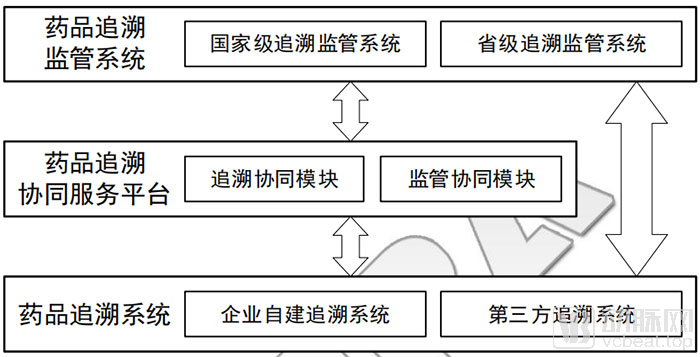
Basic Composition of the Drug Information Traceability System, Source: "Guidelines for the Construction of the Drug Information Traceability System"
The regulatory system comprises the national and provincial drug traceability regulatory systems. These systems collect data and monitor drug distribution channels in accordance with their respective regulatory requirements, and shall incorporate functions such as traceability data acquisition, statistical analysis, data analytics, intelligent early warning, recall management, and information dissemination.
The Collaborative Service Platform, established by the national drug regulatory authority, comprises a Traceability Collaboration Module and a Regulatory Collaboration Module. The Traceability Collaboration Module serves enterprises and consumers, while the Regulatory Collaboration Module supports regulatory activities. The platform shall provide accurate basic information on drug products and enterprises, filing and management services for drug traceability code encoding rules, and directory services for various drug traceability systems, thereby facilitating interconnectivity among different drug traceability systems.
The traceability system encompasses traceability information across the entire lifecycle of pharmaceuticals, including production, distribution, and usage. It features capabilities for the collection, storage, and sharing of such information, and can be categorized into two main types: enterprise-built traceability systems and third-party-provided traceability systems.
Only through the organic integration of these three components can a complete system be established. Based on the operational mechanisms of these three components, and in conjunction with other relevant policies and standards issued by the National Medical Products Administration (NMPA), we have outlined the stakeholders, key stages, and processes involved in the drug informatization traceability system.
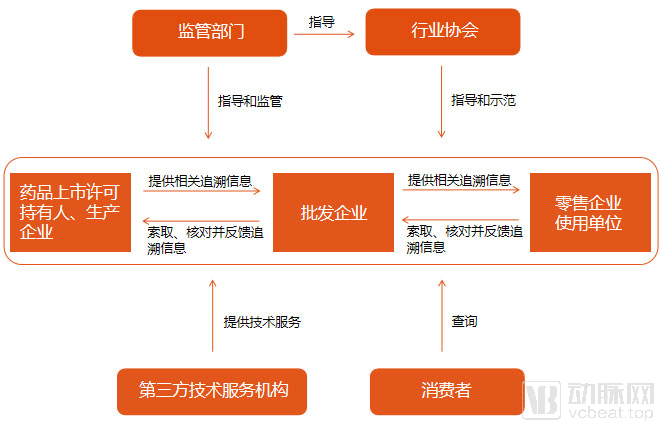
Key Stages and Participants in the Drug Traceability System | Graphic by VCBeat
As illustrated in the figure above, the pharmaceutical informatization traceability system involves key stakeholders, including regulatory authorities, pharmaceutical manufacturers, wholesalers, retailers, and third-party technology providers. It also entails multi-directional information exchange and communication among these parties, with each stakeholder playing an indispensable role within the system.
Pharmaceutical Companies Bear Primary Responsibility for the Traceability System
In accordance with policy requirements, pharmaceutical manufacturers bear the primary responsibility for establishing drug traceability systems. Drug distributors and end-user institutions shall cooperate to build a comprehensive drug traceability system and fulfill their respective traceability obligations. This clear allocation of responsibilities is well justified. On one hand, since pharmaceutical manufacturers are responsible for the research, development, and production of drugs, it is only reasonable that they assume primary accountability for drug quality. On the other hand, the presence of counterfeit or substandard drugs in the market would directly damage the brand reputation of the corresponding manufacturers; therefore, pharmaceutical manufacturers also have a responsibility to prevent such occurrences.

Electronic Supervision Code on Drug Packaging, Photo by VCBeat
To establish a traceability system, pharmaceutical companies must not only cover the upfront costs of hardware infrastructure—such as computers, barcode scanners, and encryption devices—but also bear the expenses for software development, ongoing maintenance, and the hiring of qualified professionals, implying that costs will be incurred on a continuous basis.
However, we have observed that even in the absence of mandatory national requirements for an extended period, a significant number of pharmaceutical companies have recognized the importance of traceability systems. As previously mentioned, many enterprises continued to utilize electronic drug supervision codes after their official discontinuation. Furthermore, some companies have adopted various drug traceability codes to identify their products, such as internationally standardized product barcodes and proprietary enterprise coding systems. The presentation formats of these codes have also diversified beyond one-dimensional barcodes to include two-dimensional QR codes and other forms.
Following the introduction of the latest national policies, the primary concern for enterprises already involved in building traceability systems is whether their existing equipment and systems can comply with the new regulations, and whether substantial additional investment will be required for retrofitting or reconstruction.
The good news is that the National Medical Products Administration (NMPA) has proposed general principles in the "Coding Requirements for Drug Traceability Codes," namely: traceability codes should be designed or selected based on coding rules widely used by drug marketing authorization holders, manufacturers, distributors, and user entities, while fully considering the technical requirements for system integration with upstream and downstream enterprises, third parties, or regulatory authorities. Meanwhile, the format of drug traceability codes has been clearly specified, allowing options such as one-dimensional barcodes, two-dimensional barcodes, or RFID tags, and the drug traceability codes should be readable by both devices and the human eye. This means that the existing investments of many enterprises can continue to play a role.
Pharmaceutical distributors also need to protect themselves
While pharmaceutical manufacturers bear the primary responsibility for the traceability system, drug wholesalers and retailers appear to merely serve as connecting or transitional links in the traceability chain. In the past, these drug distribution enterprises demonstrated limited enthusiasm for participating in traceability efforts. Does this mean that the traceability system is optional for them? Not at all.
The newly revised Drug Administration Law stipulates that victims who suffer damages due to drug quality issues may claim compensation from the drug marketing authorization holder or the drug manufacturer, and may also claim compensation from drug distributors or medical institutions. In other words, the national top-level design more clearly defines the responsibilities to be borne by each link in the entire process of drug production and distribution.
Imagine a scenario where a drug safety incident occurs. Although the pharmaceutical R&D and manufacturing enterprise has implemented comprehensive traceability measures and can demonstrate the quality of its products, gaps in the traceability chain exist at the wholesale or retail stages. In such cases, the relevant enterprises will inevitably find themselves unable to clearly establish their position. Therefore, for companies involved in distribution, perfecting traceability systems is equally a prerequisite for regulatory compliance and self-protection.
Third-Party Tech Firms See Major Opportunities
The accelerated advancement of the drug informatization traceability system has greatly encouraged third-party technology companies. When it comes to third-party technology companies, Alibaba Health must be mentioned.
During the era of the Drug Electronic Supervision System, Alibaba Health exclusively provided operation and maintenance services for the Drug Electronic Supervision Network. After the drug electronic supervision codes were suspended, Alibaba Health leveraged its years of accumulated experience in drug traceability to announce the establishment of “Ma Shang Fang Xin,” an open, market-oriented third-party traceability platform. Compatible with the technical standards of the former drug electronic supervision codes, this platform enabled many pharmaceutical companies to continue using these codes thereafter.
How has Alibaba Health’s “Ma Shang Fang Xin” business performed after more than three years of operation? According to Alibaba Health’s 2017 annual report (covering the period from April 2016 to March 2017), revenue from its traceability services reached RMB 96.305 million. During this period, the “Ma Shang Fang Xin” traceability platform was launched, while the China Drug Electronic Supervision Network remained operational. The revenue was primarily derived from providing operational services for the China Drug Electronic Supervision Network platform.
Since March 1, 2017, the China Drug Electronic Supervision Network system has ceased updates. According to data from Alibaba Health’s 2018 annual report (covering the period from April 2017 to March 2018), revenue from its traceability business amounted to RMB 24.355 million. Following the suspension of updates to the supervision network system, Alibaba Health experienced a significant decline in revenue from its traceability operations. As the use of drug electronic supervision codes was no longer mandatory, and regulatory authorities could not compel enterprises to adopt services from any specific third-party technology provider, the company suffered a loss of clients. In response, Alibaba Health implemented certain measures, such as expanding its business into non-pharmaceutical sectors, providing more value-added services to participating enterprises, offering more comprehensive and innovative solutions, and achieving greater synergies with its other business lines.
Alibaba Health’s 2019 annual report (covering the period from April 2018 to March 2019) revealed that its drug traceability business generated RMB 38.72 million in revenue, with the “Ma Shang Fang Xin” platform demonstrating an upward performance trend. This highlights the effectiveness of Alibaba Health’s business expansion strategy and indicates that a growing number of pharmaceutical companies are placing greater emphasis on traceability systems.
For over three years, Alibaba Health’s “Ma Shang Fang Xin” platform has expanded beyond pharmaceutical traceability to cover various non-pharmaceutical sectors, including imported food, maternal and infant formula, nutritional supplements, cosmetics, agricultural products, and general merchandise and fresh produce. Leveraging unique item-level coding technology, the platform tracks products and aggregates information on production, transportation, customs clearance, inspection declarations, and third-party testing.
“‘Ma Shang Fang Xin’ is fully compatible with the original national standards. Marketing authorization holders, manufacturers, distributors, and user entities that use the Ma Shang Fang Xin traceability system for code assignment and scanning do not need to undertake additional modifications to their hardware or software for code assignment and data collection. They can thereby access services such as integration with regulatory platforms at all government levels, commercial data acquisition, and end-user queries,” stated Yu Zewei, Senior Director at Ali Health.
The construction and operation of a drug traceability system is a long-term process, and the entire drug information-based traceability framework constitutes an extensive network. Equipment installation and system deployment represent only the initial phase; ongoing maintenance, data management, and other tasks are required thereafter. In addition to Alibaba Health, companies such as iCreate Technology, Jiahua Huicheng, and Ziyun Shares also provide information technology services for drug traceability systems.
As drug regulations become increasingly stringent and distribution channels diversify, the demand for drug traceability technologies will continue to grow. Third-party technology firms can leverage concentrated high-quality resources to develop, replicate, and customize systems, thereby reducing costs—a feat difficult for individual enterprises to achieve through in-house development. We anticipate that most companies will opt for third-party technical services rather than building their own systems.
For third-party technology enterprises, the primary considerations are as follows: reducing construction and operational costs for clients through optimized processes and design, while empowering them with additional practical value-added services; enhancing technical interoperability to enable seamless integration of enterprise traceability systems with regulatory authorities’ collaborative and supervisory platforms; and establishing robust data storage mechanisms under stringent security management to prevent data breaches, thereby providing enterprises with genuine peace of mind.
In accordance with the plan of the National Medical Products Administration (NMPA), the drug information traceability system will be implemented in phases. Drug regulatory authorities of all provinces (autonomous regions, and municipalities) may formulate implementation plans based on actual regulatory conditions, and promote the construction of the drug information traceability system step by step according to drug dosage forms and categories. Key products such as vaccines should take the lead in establishing the drug information traceability system.
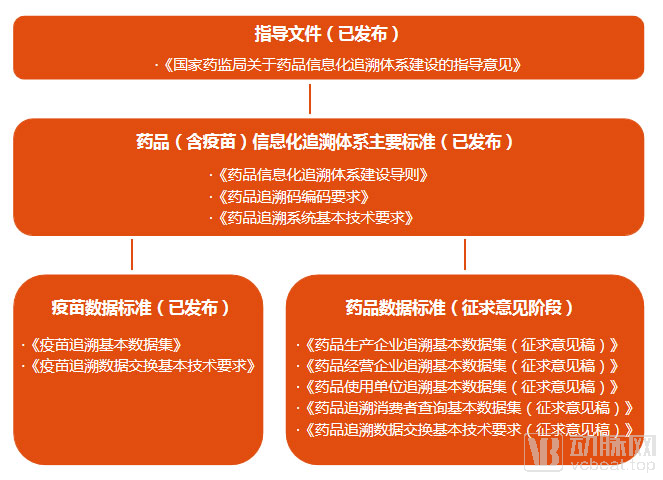
Progress in the Implementation of the Drug Information Traceability System | Chart by VCBeat, Based on Data from the National Medical Products Administration Website
As shown in the figure above, after issuing guidance documents on the drug informatization traceability system, the National Medical Products Administration (NMPA) formulated several key standards for system construction. These standards specify the basic components and functional requirements of the drug informatization traceability system, detailed requirements for drug traceability codes, and specific requirements for system functionality, data storage, and secure operation and maintenance.
Compared with other pharmaceuticals, vaccines have unique characteristics in terms of distribution channels, storage conditions, and administration methods. Incidents such as the Shandong substandard vaccine scandal have made the establishment of a vaccine traceability system increasingly urgent. In August this year, the National Medical Products Administration (NMPA) released data standards for vaccine traceability, marking the full implementation of all necessary standards for building an informatized vaccine traceability system. It is reported that the Collaborative Service Platform for Vaccine Traceability will be officially launched by the end of March next year.
Recently, the National Medical Products Administration (NMPA) has once again opened for public comment several data standards related to drug traceability, with the consultation period set to end on October 11. Once preparatory work is fully completed and the relevant data standards are finalized and promulgated, the informatized drug traceability system will enter a substantive phase of implementation.
Meanwhile, local authorities are also advancing the development of regulatory systems. For instance, on April 20 this year, Hebei Province launched its drug traceability system, with 13 wholesale enterprises qualified for modern pharmaceutical logistics and two headquarters of pharmaceutical retail chains becoming the first entities to join the network. In 2018, Shanghai developed an integrated management information system for vaccines and vaccination, enabling end-to-end traceability throughout the entire vaccine lifecycle.
It is worth noting that regarding the timeline for the development of the drug informatization traceability system, the National Medical Products Administration (NMPA) proposed in last year’s “Guiding Opinions on the Development of the Drug Informatization Traceability System (Draft for Comment)” that full coverage of the system would be basically achieved by the end of 2022. However, this deadline was omitted from the final version of the Guiding Opinions. With respect to implementation progress, beyond requiring that key products such as vaccines take the lead in establishing the drug informatization traceability system, and that essential medicines and medicines reimbursed under medical insurance schemes establish such systems as soon as possible, the ultimate objective is stated as “gradually incorporating other drugs into the drug informatization traceability system.”
We believe that the message conveyed by this change is:
1. It is difficult to achieve full coverage of the traceability system in the short term. After years of exploration, drug traceability efforts are being advanced by regulatory authorities, pharmaceutical manufacturers and distributors, and third-party technology companies; however, there is a lack of unified standards. Establishing unified standards and achieving information interoperability require balancing the interests of various stakeholders, which will take considerable time.
2. Key drugs, essential medicines, and medical insurance-covered drugs face tight deadlines, while other drugs have more time but still require preparation. As the vaccine information-based traceability system is gradually improved, other key drugs, essential medicines, and medical insurance-covered drugs will soon be prioritized once the data standards for the drug information-based traceability system are finalized. Drug traceability is an inevitable trend and an effective means of strengthening drug supervision. Although enterprises involved with other drugs may not be mandatorily included in the traceability system in the short term, they should still make necessary preparations.
3. Third-party technology enterprises must continuously innovate to better empower pharmaceutical manufacturers and distributors, thereby securing greater market share. As there is currently no mandated timeline for the full coverage of the traceability system, the risk of hasty implementation is mitigated. This scenario effectively serves as a test of survival of the fittest for all stakeholders, particularly third-party technology providers. To establish a solid foothold, these enterprises must demonstrate how they can reduce costs for their clients—and even generate additional value—while ensuring data security.