

Ascentage Pharma Completes HKEX Hearing, Poised to Become First Original Small-Molecule Drug Company Listed on Hong Kong Stock Exchange
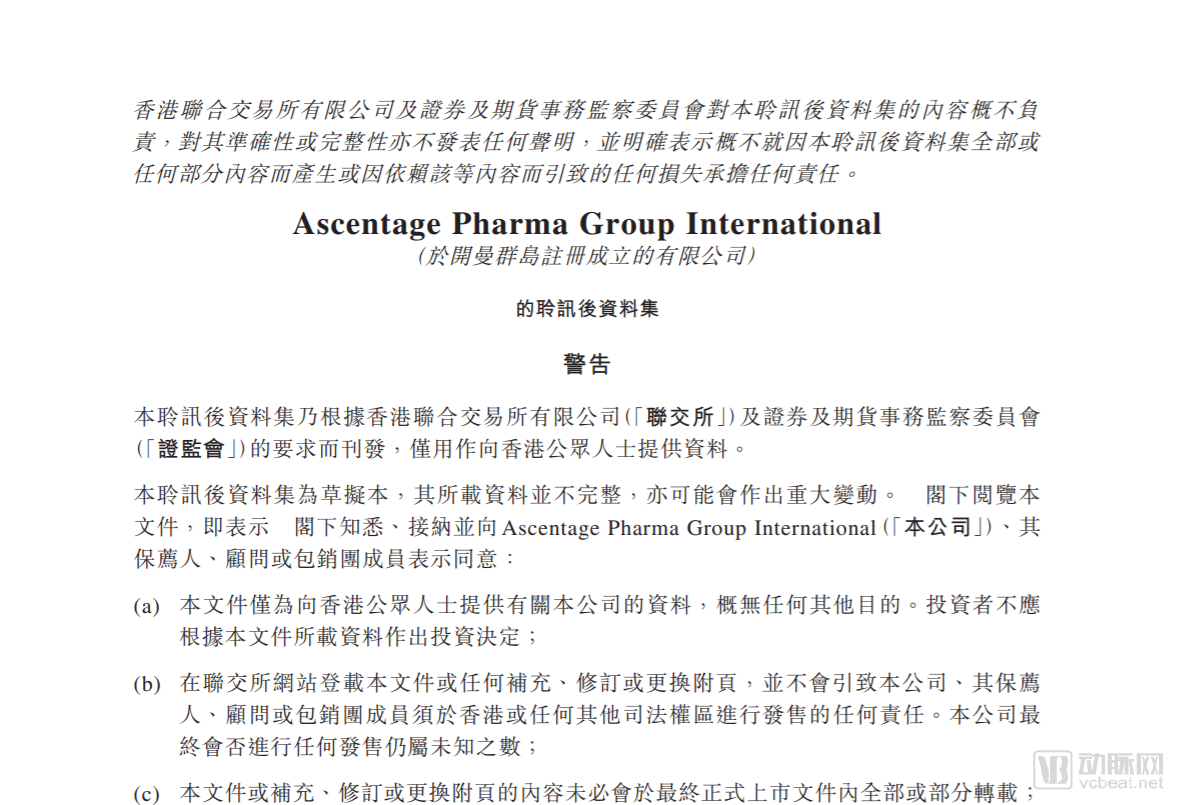
On September 24, 2019, according to information disclosed by the Hong Kong Stock Exchange (HKEX), Ascentage Pharma, a Chinese innovative drug R&D enterprise, has recently completed the posting of its post-hearing materials. This signals substantial progress in its listing application, making it highly likely to become the first original small-molecule new drug company to list on the Hong Kong stock market.
Ascentage Pharma is a global, clinical-stage biotechnology company dedicated to developing novel therapies for cancer, hepatitis B virus (HBV), and age-related diseases. Leveraging its technical expertise in drug design and innovative drug discovery, the company has built a robust R&D pipeline that includes eight small-molecule candidate drugs in clinical development.
R&D Pipeline: 28 Ongoing Clinical Trials
Apoptosis is the process of programmed cell death, during which a series of specific biochemical reactions operating in a controlled sequence ultimately lead to cell demise. However, in many cancers and other diseases, the normal apoptotic process is disrupted. Research has found that multiple intracellular protein–protein interactions (PPIs) play a key role in regulating apoptosis. Therefore, selectively targeting specific PPIs within apoptotic pathways represents an innovative therapeutic solution for cancers and other diseases arising from dysregulated apoptosis.
Public information indicates that Ascentage Pharma is currently the only company actively pursuing clinical programs targeting all three known key regulators of apoptosis. Specifically, the company’s current pipeline includes three clinical-stage compounds targeting Bcl-2 family proteins: APG-1252 (for small cell lung cancer [SCLC] as well as other solid tumors and lymphomas, currently in Phase I), APG-2575 (for B-cell malignancies, currently in Phase I), and AT-101 (for chronic lymphocytic leukemia [CLL], currently in Phase II). In addition, two other apoptosis-targeting compounds are in Phase I or Phase II clinical trials: APG-1387 (a pan-IAP inhibitor) and APG-115 (an MDM2-p53 inhibitor). Beyond oncology, Ascentage Pharma is conducting a Phase I clinical trial in China to evaluate APG-115 (MDM2-p53 inhibitor) for the treatment of hepatitis B virus (HBV) infection. Furthermore, Ascentage Pharma is committed to the research and development of next-generation tyrosine kinase inhibitors (TKIs).
Tyrosine kinase inhibitors (TKIs) are a class of clinically validated and approved targeted drugs that inhibit tyrosine kinases. Tyrosine kinases play an indispensable role in regulating cellular functions, and their dysregulation can promote the development and progression of diseases, including cancer. HQP1351 is the most important candidate drug among Ascentage Pharma’s TKI pipeline. This product is a third-generation BCR-ABL inhibitor that targets various BCR-ABL mutants, including those with the T315I mutation. Currently, HQP1351 is undergoing pivotal Phase II clinical trials in China for the treatment of patients with TKI-resistant chronic myeloid leukemia (CML). Furthermore, as HQP1351 is also a potent inhibitor of the KIT receptor tyrosine kinase, Ascentage Pharma is concurrently investigating its potential for treating gastrointestinal stromal tumors (GIST) that are refractory to existing therapies.
As of June 30, 2019, Ascentage Pharma had a total of 28 ongoing Phase I or II clinical trials and eight drug candidates in countries and regions including the United States, Australia, and China.
Three Major Markets: Oncology, Hepatology, and Age-Related Diseases
According to Frost & Sullivan, there were 181 million new cancer cases globally in 2018, equivalent to an average of 49,500 people being diagnosed with cancer each day. Based on a compound annual growth rate (CAGR) of 2.4%, the number of new cancer patients worldwide is projected to reach 241 million by 2030. Correspondingly, the global oncology drug market is expected to grow from $128.1 billion in 2018 to $390.4 billion in 2030, driven primarily by innovative targeted therapies.
In China, the number of new cancer cases in 2018 reached 4.3 million, accounting for approximately 23.7% of the global total. Research by Frost & Sullivan indicates that China’s oncology drug market lags behind other major industrialized nations due to the limited availability of novel therapies. With increasing regulatory support for domestic antineoplastic drug development and the introduction of imported foreign drugs, China’s oncology drug market is projected to grow from USD 23.8 billion in 2018 to USD 99.8 billion by 2030.
Additionally, Ascentage Pharma’s pipeline includes products targeting hepatitis B virus (HBV) infection and aging-related diseases—two global pharmaceutical markets with large and growing patient populations.
Hepatitis B virus (HBV) infection is an epidemic with distinct characteristics in China. Frost & Sullivan estimates that more than 260 million people worldwide were infected with HBV in 2018, approximately one-third of whom resided in China. The global market for HBV therapeutics was valued at approximately USD 3.5 billion in 2018; based on a compound annual growth rate (CAGR) of 4.7%, it is projected to reach USD 4.4 billion by 2023 and further grow to USD 5.9 billion by 2030. There is also substantial unmet therapeutic demand in the market for age-related diseases, such as dry age-related macular degeneration (dry AMD). To date, there are no effective treatments for dry AMD available globally. In 2018, the number of patients with dry AMD worldwide was approximately 179.5 million.
As an innovative drug development company based in China with a global outlook, Ascentage Pharma has always conducted its research and development from a global perspective. In a 2016 interview with VCBeat, Yang Dajun, Chairman of Ascentage Pharma, revealed the company’s plans for an initial public offering (IPO) in the United States. However, following the Hong Kong Stock Exchange’s (HKEX) opening to biotechnology innovation companies in 2018, Ascentage Pharma subsequently filed its prospectus with the HKEX, formally announcing its intention to list in Hong Kong. The recent posting of materials following the completion of the listing hearing marks another step closer to Ascentage Pharma’s IPO and signifies that the HKEX is poised to welcome its first original small-molecule novel drug enterprise.