

True Technology Stands the Test of Clinical Validation: Exploring the Right Approach to 'Clinical + Technology' Through HepGenuity's Collaboration with Shanghai Chest Hospital
Beneath the layers of medical, cultural, and metaphorical understandings that have persisted for centuries lies an undercurrent of biological insight into this disease—an insight that has undergone fundamental transformations as time has progressed.
——Siddhartha Mukherjee, The Emperor of All Maladies
"The Emperor of All Maladies" chronicles the history of humanity’s fight against cancer, from surgical treatments in the early 20th century and radiation therapy in the 1920s to the 1990s, when genuine understanding of tumors remained scarce. In 2006, genomics began to emerge in clinical science, enabling researchers to understand cancer at the molecular level. During this process, next-generation sequencing technology played a pivotal role.
From the discovery of tumor driver genes to drug development, medication guidance, and clinical diagnostic support, next-generation sequencing (NGS) technology covers every aspect of oncology research, spanning basic science, clinical studies, pharmacological research, and clinical diagnosis and treatment. Since the breakthrough in sequencing costs in 2014, cancer-related sequencing research has achieved significant advancements across scientific, clinical, and regulatory domains. Various technology companies have prepared a diverse array of new technologies and products, eager to apply their innovative solutions to patient care as soon as possible.
The leap from basic research to clinical translation is a milestone. However, on the other hand, practice is the sole criterion for testing truth; transforming a product into a high-quality one still requires validation in the clinical setting.
Among the myriad cancer detection companies in China, Berry Oncology stands out as a shining star. Established in 2017 and backed by Berry Genomics, the company has already built a solid technological foundation. The prospective clinical study on early liver cancer screening, PreCar, launched in 2018, has also drawn significant attention from the industry.
However, as previously mentioned, technologies that have not undergone clinical validation can hardly be deemed “good technologies.” To validate its own technologies and products, and to conduct further testing on tumors, Berry Oncology recently announced the establishment of the “Shanghai Chest Hospital–Berry Oncology Precision Medicine Research Center” at Shanghai Chest Hospital.
This marks another collaboration in the oncology field for Berry Oncology, following its joint initiation of the PreCar project—a large-scale early liver cancer screening cohort involving 10,000 participants—with the National Center for Liver Cancer and Nanfang Hospital of Southern Medical University in Guangzhou. It will also establish China’s first large-scale precision research center for thoracic tumors.
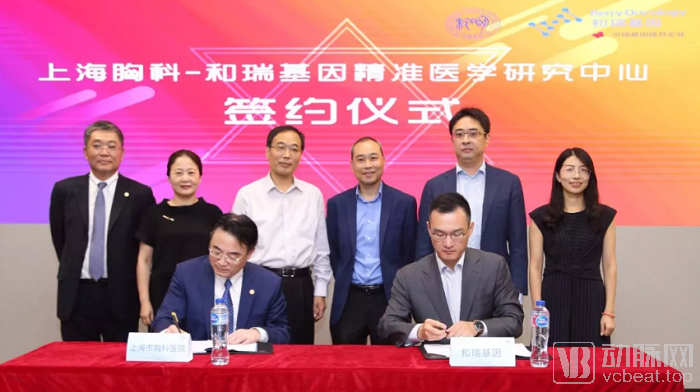
“The establishment of the Precision Medicine Research Center in collaboration with Shanghai Chest Hospital, China’s largest thoracic oncology hospital, marks another significant step forward in Berry Oncology’s strategic layout in the field of oncology,” stated Dr. Zhou Daixing, Director of Berry Oncology and General Manager of Berry Genomics, at the signing ceremony with Shanghai Chest Hospital. Unlike the PreCar project, the purpose of this collaboration extends beyond early cancer screening; it aims to leverage the hospital’s clinical strengths and Berry Oncology’s technological advantages to jointly conduct clinical and cutting-edge research on precision therapy for thoracic tumors, thereby uncovering greater clinical value of genetic testing technologies.
The Paradox: Polarization of Resources and Technology, Win-Win Through Cooperation
With changes in the environment and lifestyle, thoracic tumors, particularly lung cancer, have become the most prevalent cancers worldwide and are the leading cause of cancer incidence and mortality in China. Although cancer incidence rates cannot be directly controlled, advancements in medical capabilities can still improve public health. “How to effectively leverage the abundant clinical resources and therapeutic experience in thoracic medicine to provide robust knowledge and expertise for the development of precision medicine, thereby promoting advances in medical science and technology, is an issue we have consistently focused on and reflected upon,” stated Pan Changqing, President of Shanghai Chest Hospital. Founded in 1957, Shanghai Chest Hospital ranks first in China in terms of the volume of thoracic tumor surgeries performed.
The concept of precision medicine was first proposed in President Obama’s State of the Union address in January 2015, where he emphasized that, given the current state of human clinical medicine, it is time to enter an era of personalized treatment through precision medicine.
Over the past few years, precision medicine has brought substantial, even revolutionary, changes to clinical medicine. However, numerous challenges persist in its development: silos exist across various research stages, making integration difficult, and there is a significant disconnect between clinical research and industrial application. Institutions with clinical resources lack technological platforms, while companies with technological platforms lack clinical resources and, more critically, high-quality clinical data. The polarization between resources and technology has become increasingly pronounced.
“This was our original intention in collaborating with the Thoracic Hospital. We lack clinical resources, but many technologies require clinical validation,” said Zhou Jun, CEO of Berry Oncology.
For hospitals, they are also leveraging the power of new technologies such as molecular biology to make clinical diagnosis and treatment more precise. Although genetic testing has already brought value to the precision treatment of tumors, cancer is a complex disease. In the real world, some patients may develop drug resistance after an initial period of efficacy from prior medication, while others may exhibit poor response from the outset. Throughout this process, patients may require repeated testing, with limitations becoming increasingly apparent in later stages.
“It remains an exploratory endeavor to identify the beneficial components within the ‘vast ocean’ of data,” stated President Pan Changqing. To conduct scientific research based on such clinical information, hospitals require greater technological investment. In partnering with Berry Oncology, Shanghai Chest Hospital was particularly drawn to the company’s accumulated expertise in genetic testing technologies and its big data platform.
“Previously, clinical institutions and enterprises operated in silos, without meaningful integration. Now, we aim to collaborate closely, leveraging clinical data and technological advantages to conduct in-depth exploration, extract valuable insights, and industrialize them after clinical validation, thereby benefiting more patients,” he added.
It is understood that the research center will fully leverage the respective strengths of both parties in clinical resources, genetic testing, and big data analytics. By integrating high-quality clinical and genetic information, the center will conduct clinical research on precision therapy for thoracic tumors as well as cutting-edge scientific studies. This approach aims to drive clinical translation and technological innovation through research, enabling cancer patients to benefit from personalized precision medical services at an earlier stage.
Feature: “Two Databases and One Center” to officially launch as early as the end of this year
At the signing ceremony, Yu Yongchun, Vice President of Shanghai Chest Hospital, introduced the integrated “Two Repositories and One Center” framework for the research center: the “Two Repositories” refer to a biobank and a big data repository, while the “One Center” is a gene sequencing center. Specifically, the biobank is responsible for sample collection and storage; the sequencing center conducts multiple assays on the collected samples to generate big data; and the data repository handles the storage, subsequent analysis, and mining of all data.
The biobank’s core functions will be established in accordance with the specifications of leading research institutions both domestically and internationally. Both software and hardware systems will adhere to the highest standards, while biospecimen standards and operational procedures will comply with international guidelines. Additionally, a fully traceable clinical information system will be implemented.
It is reported that the biobank will commence construction in 2020, with a storage capacity exceeding 100,000 samples.
The data center comprises three major components: the data center network, computer cluster systems, and data center storage. Upon completion, it will be capable of performing data analysis, interpretation, report generation, and data backup for approximately 20,000 cases per year of whole-genome sequencing (WGS), whole-exome sequencing (WES), and large-panel sequencing, or over 100,000 cases per year of small- to medium-panel gene sequencing. The data center meets the Level 3 Classified Protection of Cybersecurity requirements for information security, with storage capacity and transmission speeds sufficient to meet current and foreseeable future demands.
A key function of database systems is information mining, which is accomplished through bioinformatics platforms. Here, all seemingly disorganized data are systematically transformed into new knowledge via bioinformatics analysis systems. Meanwhile, the bioinformatics system analyzes patients’ pathological information, clinical indicators, and genetic data, thereby enabling the provision of individualized diagnostic and therapeutic regimens for each patient. This represents the advancement of precision medicine, offering decision support to clinicians.
The construction of the sequencing center primarily adopts second-generation sequencing technology based on the Illumina platform, with its core equipment being the NovaSeq 6000 sequencer, currently the fastest in the world and capable of generating the largest data output per run. In addition, other technical platforms are employed, such as Berry Genomics’ high-throughput NextSeq CN500 sequencer, as well as capillary electrophoresis and quantitative fluorescent PCR for quality control.
Shanghai Chest Hospital has revealed that, following the successful completion and operational launch of Phase I of its sequencing center—which has already yielded tangible results—the hospital will proceed with Phase II construction. Compared to Phase I, Phase II will prioritize the addition of a single-cell sequencing platform, a proteomics platform, and an NGM map analysis platform.
“We believe that after the completion of two phases of construction, Shanghai Chest Hospital will become one of the very few clinical institutions in the industry with comprehensive capabilities in gene analysis and protein analysis. This will undoubtedly drive further development of thoracic medicine as a discipline and enhance clinical capabilities in thoracic care,” said Zhou Jun, CEO of Berry Oncology.
It is reported that the platform’s operations will be rolled out in three phases over a three-year period. Phase I, scheduled for Q3–Q4 2019, will complete laboratory renovation and equipment installation. Phase II, in Q4 2019, will finalize commissioning and commence formal operations. Phase III, in Q2 2020, will initiate and complete the establishment of the biobank. Phase IV, in 2022, after two to three years of operation, will achieve accreditation under quality management systems such as ISO and CAP, ensuring full compliance with international standards.
Clinical Value: Exploring Technological Gaps to Deliver Precision in Every Detail
It was only after genomics was applied to cancer research that the true complexity of tumors, far exceeding previous expectations, was fully recognized. Currently, experts worldwide have reached a consensus that the comprehensive integration of precision medicine approaches, such as genetic testing, can enable earlier, more accurate, and improved diagnosis and treatment of malignant tumors. Tumor differential therapy based on individual genetic testing has become a significant trend. Furthermore, through in-depth mining and application of big data, personalized precision companion diagnostics for cancer patients and real-time dynamic monitoring of prognosis can be achieved.
In traditional oncology treatment protocols, surgical intervention and chemoradiotherapy are typically the first-line options. If the tumor progresses to stage II or III, pharmacological interventions such as targeted therapy are then employed. However, the currently proposed “neoadjuvant therapy” (NHT) involves the concept of advancing the timing of drug administration. A key question remains whether tumors should be shrunk with medication prior to surgery, or whether surgery should be performed first followed by pharmacological treatment. This area represents a current gap in research, requiring further clinical data for validation.
“The clear trend is that the timing of genetic testing intervention is shifting earlier, as there is a growing desire to achieve precision medicine as early as possible,” said Zhou Jun. “Many technologies still require clinical validation.”
Furthermore, clinical practice is not devoid of special cases where genetic testing reveals mutations yet treatment proves ineffective, or where no mutations are detected but patients still respond to therapy. Are there other associated factors beyond mutation sites that influence patients’ diagnostic and therapeutic responses? These are the questions Berry Oncology and Shanghai Chest Hospital aim to answer through their collaboration.
“There are still many technological gaps, as the lack of data and the failure to integrate data systems have left numerous areas unexplored,” Zhou Jun added.
“Under current theories, most tumors are caused by genetic mutations. Overall, the scope of genetic testing is not yet sufficiently broad; we need to collaborate with leading companies on exploratory initiatives,” stated President Pan Changqing.
Early Diagnosis and Treatment of Tumors Is the Optimal Strategy
In addition, early diagnosis of tumors is also an important aspect of this collaboration.
“Current cancer prevention and treatment are passive; our goal is to shift from this reactive state to taking proactive measures,” Pan Changqing stated in an interview. Currently, genetic testing is primarily applied after tumor onset. He hopes that, in the future, the integration of genetic testing will enable earlier intervention for cancer prevention and control.
For most cancer treatments, the timing of tumor detection has a significant impact on patients’ five-year survival. Taking lung cancer as an example, the five-year survival rate for stage IA lung cancer after treatment can reach 90%, whereas for mid- to late-stage lung cancer, the five-year survival rate is less than 5% (due to variations in data sources, this figure ranges from 5% to 16% across different reports; however, whether it is 5% or 16%, it remains vastly lower than 90%).
The five-year survival rate for lung cancer patients in the United States is significantly higher than that in China, with the U.S. holding advantages in drug variety and pharmaceutical R&D. However, in other treatment modalities, particularly surgical interventions, China’s clinical standards are by no means inferior. According to Yu Yongchun, the primary reason for the disparity in five-year survival rates between the two countries lies in the stronger public health awareness in the United States, which leads to earlier tumor detection. “From a staging perspective, most lung cancer cases in the U.S. are diagnosed at an early stage,” Yu stated. In contrast, lung cancer in China is generally detected at a later stage, resulting in lower five-year survival rates.
In the “Implementation Plan for Cancer Prevention and Control under the Healthy China Initiative (2019–2022),” jointly issued by ten departments—including the National Health Commission, the National Development and Reform Commission, the Ministry of Education, the Ministry of Science and Technology, the Ministry of Finance, the Ministry of Ecology and Environment, the National Healthcare Security Administration, the National Administration of Traditional Chinese Medicine, the National Medical Products Administration, and the State Council Leading Group Office of Poverty Alleviation and Development—with the approval of the State Council, early detection, early diagnosis, and early treatment of tumors were strongly emphasized. “Another key focus of our work is to strive to develop new products, particularly those for early cancer diagnosis, enabling more patients to detect tumors at Stage Ia and thereby receive timely and appropriate treatment,” added Yu Yongchun.
Recently, at the 2019 CSCO Annual Conference held in Xiamen, Berry Oncology announced interim results from the prospective study of its PreCar project for early hepatocellular carcinoma (HCC) screening: the project identified patients with very early-stage HCC 6–12 months earlier than the current diagnostic gold standard, and the incidence of progression to cancer was enriched more than 13-fold compared with the overall cancer conversion rate among patients who completed follow-up, demonstrating superior performance in predictive screening.
Moreover, Berry Oncology has established a classification model through its PreCar program, and the experience gained will provide valuable reference for clinical research in other cancer types, accelerating progress toward multi-cancer early detection.