Weizhi Zeyi Seeks Co-founders: 2019 PKU Healthcare Innovation Competition Launches Call for Entries
In 1955, during the early years of the People’s Republic of China, the nation was rebuilding from scratch. A large-scale outbreak of poliomyelitis suddenly erupted in Nantong, Jiangsu Province, and rapidly spread to cities such as Qingdao, Shanghai, Jining, and Nanning, plunging the entire country into panic. At that time, Gu Fangzhou, who had returned to China after studying virology research methods in the Soviet Union, was appointed in this critical hour to assist Soviet virology experts in vaccine development.
Four years later, the first batch of live attenuated vaccines was produced in China, only to face the dilemma of being unable to secure a platform for clinical trials. Gu Fangzhou and his team tested the vaccine on themselves by drinking the initial batch of the vaccine solution. A week later, they remained healthy. Considering that the primary recipients of the polio vaccine were children, Gu Fangzhou had his one-year-old son ingest the vaccine he had developed to verify its safety and efficacy. Fortunately, these life-risking clinical trials proved successful. In 1965, the polio vaccine, later known as the “sugar pill,” was rolled out nationwide across China. Since then, poliomyelitis has been virtually eradicated among children in China.
On the 70th anniversary of the founding of the People’s Republic of China, the aircraft flying over Tiananmen Gate during the National Day parade no longer need to turn back for a second pass, and scientists striving to safeguard public health no longer need to serve as their own clinical trial subjects. Yet the medical explorations of researchers have never ceased. From empirical medicine to evidence-based medicine, and now increasingly toward precision medicine, more and more Chinese names are leaving their mark on the global stage of medical innovation.
Among them, Peking University stands out as a shining force. In 2003, Peking University and Founder Group jointly established PKU Healthcare Industrial Group, which serves as a key industry-academia-research platform for the Peking University Health Science Center and has nurtured a large number of star enterprises active in the global healthcare sector. In October 2019, the PKU Healthcare Innovation Center—the innovation vehicle of PKU Healthcare Industrial Group—is set to be unveiled, marking the beginning of a new journey and new honors.
Effective immediately, the Peking University Healthcare Innovation Competition—the domestic medical entrepreneurship contest with the highest concentration of medical expertise—has officially launched. Hosted by Peking University Healthcare Industry Group and organized by PKU Healthcare Innovation Valley, the initiative aims to fully leverage the pivotal role of enterprises in national technological innovation.
The competition aims to identify innovative projects across China, select and nurture high-quality initiatives, and leverage PKU Healthcare’s medical resources to accelerate the construction of a strategic ecosystem centered on “Quality + Innovation.” By empowering participants through four key dimensions—“Ecosystem, Capital, Technology, and Honor”—the competition fosters a robust landscape where large, medium, and small enterprises complement each other’s strengths and collaborate efficiently along the innovation chain.
Ecosystem Empowerment
Leveraging the full-industry-chain enterprise ecosystem of Peking University Medical, we provide award-winning companies with support in strategic ecosystem partnerships, clinical hospital resources, and policy assistance for business establishment. This includes guidance and扶持 in areas such as tax incentives, land allocation, talent acquisition, and government subsidies.
Capital Empowerment
Leveraging the Peking University Healthcare Fund, which includes incubation and venture capital funds, and in collaboration with Peking University Healthcare City, Shanghai Pudong Development Bank, Bank of Beijing, and Zhongguancun Technology Leasing, we use capital as a strategic lever to provide award-winning enterprises with financial support, incubation, venture capital, and loan services.
Technology Empowerment
Peking University Medical will provide support and guidance in areas such as clinical research hospital and expert resources, government approvals, and data, while also offering resource collaboration opportunities in innovative fields including hardware, software, internet, life sciences, and biotechnology.
Empowerment Through Honors
All participating projects will be included in the PKU Healthcare Innovation Project Pool, with the following awards established: First, Second, and Third Prizes will be awarded respectively in the “Angel Star” and “Growth Star” categories. The top nine finalists will receive priority access to seed funding or venture capital investment, aligned with their respective project stages.
Domain 1: Medical Devices
Sub-sectors:
1. Establish new treatment methods to significantly improve patient prognosis and clinical outcomes;
2. Improve existing treatment technologies to achieve significant enhancements in cost, efficiency, and clinical outcomes;
3. Fill domestic gaps and achieve import substitution in fields with high technical barriers.
Domain 2: Precision Medicine
Niche Segments:
1. High-throughput sequencing—applications in non-invasive prenatal testing or oncology, with a focus on liquid biopsy technology companies;
2. Chemiluminescence, novel POCT devices and reagents, infectious diseases, and rapid detection of pathogenic microorganisms;
3. Microfluidic cell separation technology, single-cell sequencing technology, and diagnostic products;
4. Immune cell therapy drugs, stem cell therapies (requiring clinical trial application);
5. Gene Therapy Technology Companies.
Domain 3: Digital Health
Niche Segments:
1. Medical Big Data Analytics Company;
2. Applications of AI-assisted medical screening and diagnosis, as well as in hospital management;
3. Structured Medical Records / DRGs Intelligent System;
4. Online Health Management Platform;
5. Disease Risk Prediction;
6. Pharmaceutical e-commerce platforms, etc.
Registration is now open, with the project submission deadline set for mid-October 2019. Participating enterprises or teams may register under the following categories based on their specific circumstances:
“Angel Star Group”
Teams aspiring to launch startups in the healthcare sector, both domestic and international—including faculty members, academic leaders, student-led entrepreneurial teams, and social entrepreneurship groups—are eligible. The core team must consist of at least three members. The company should have conducted preliminary market research and competitive analysis, possess a well-defined business model, and be at a financing stage prior to Series A.
"Rising Star Group"
Medical industry products or service projects with innovative capabilities and high growth potential. The company must be a non-listed micro or small enterprise with independent intellectual property rights, no property disputes, standardized operations, good social reputation, and no adverse records. The core team should consist of at least six members, and the company should be at Series A-B funding rounds or an excellent unfunded enterprise.
The competition is divided into three categories: “Medical Devices,” “Precision Medicine,” and “Digital Health,” and consists of two stages: the preliminary round and the National Finals. Participants are welcome to register for multiple projects if they have compelling ideas.
In the preliminary round, the competition will invite renowned experts from various disciplines within the Peking University Health Science Center system, senior executives from Peking University-affiliated medical institutions, executives of listed companies, and prominent investment firms to form a judging panel. This panel will select several high-quality projects from across China to advance to the next round of competition. (For projects not selected, the competition will maintain strict confidentiality regarding their information.)
The national finals of this competition will be held in Beijing in October 2019, at which time the judging panel will determine the final awards and rankings based on the on-site roadshow presentations of the finalist projects.
Winning projects are expected to be connected with 10 top-tier hospitals affiliated with Peking University Health Science Center.
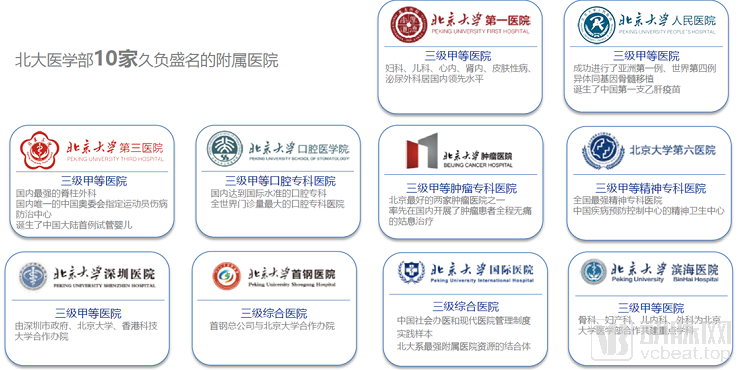
Furthermore, this competition will soon bring together renowned medical experts from various fields, including:
Peking University People's Hospital
Peking University Third Hospital
Peking University International Hospital
Anzhen Hospital
Peking University Cancer Hospital
Experts from Various Fields, Including Tiantan Hospital
The involved departments include Cardiology, Vascular Surgery, Ophthalmology, Orthopedics, Medical Oncology, Gastroenterology, Respiratory Medicine, Neurosurgery, Neurology, and Obstetrics and Gynecology.
as well as a large number of renowned top-tier professional investment institutions in China, including:
Sequoia Capital
Qiming Venture Partners
Legend Star
Peking University Medical Venture Capital Fund
Sherpa Capital
Legend Capital
SDIC Entrepreneurship
...and other well-known funds……
Participants should prepare a comprehensive business plan,
The content should include a project description and technical barriers,
Market Prospects, Business Model, Team Member Introduction,
Expected Benefits and Future Plans, etc.
and send it to the email address:
pkuventure@founder.com
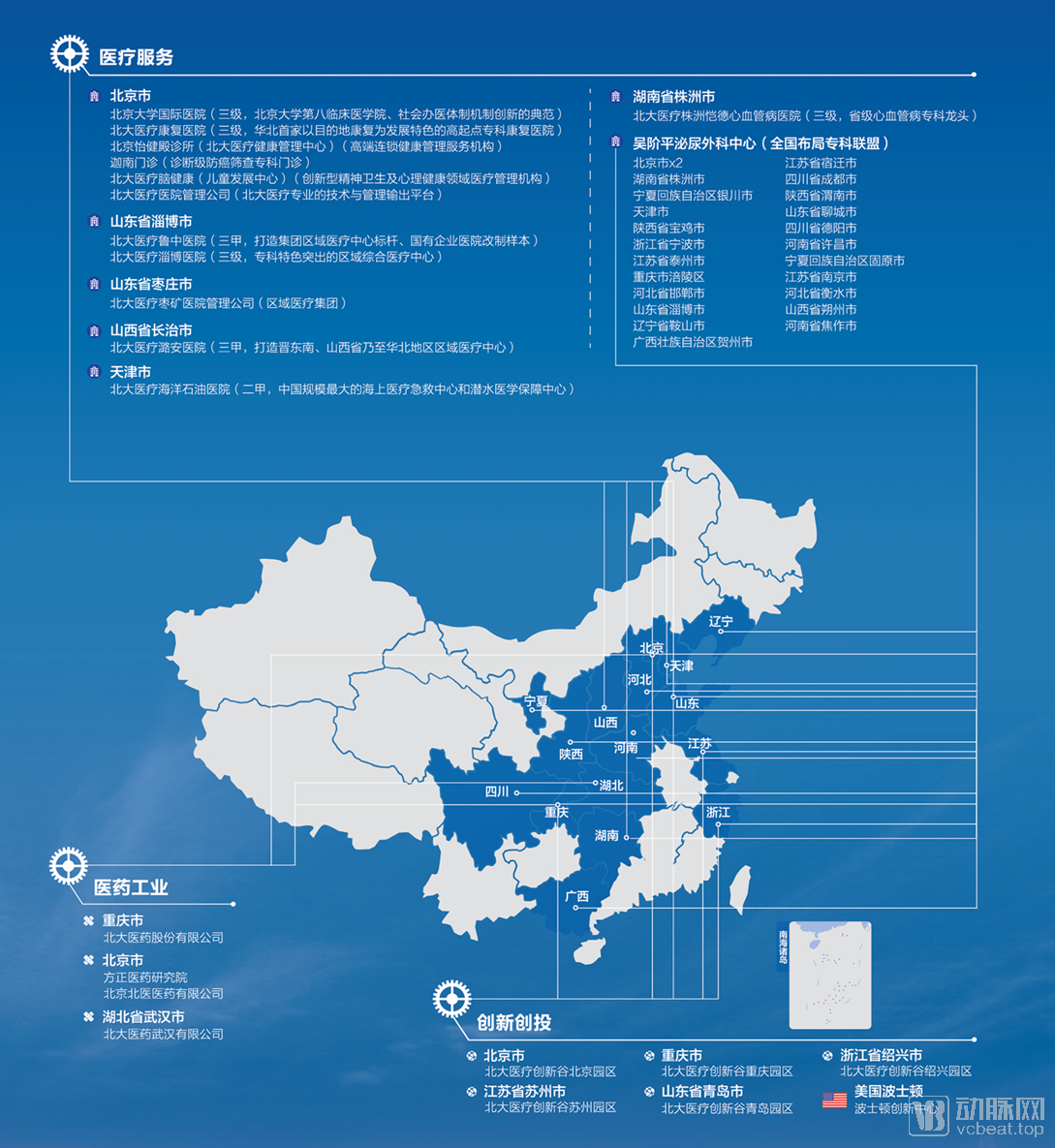
About Peking University Healthcare
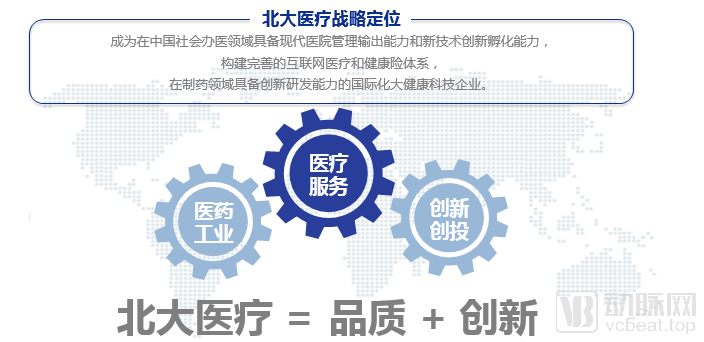
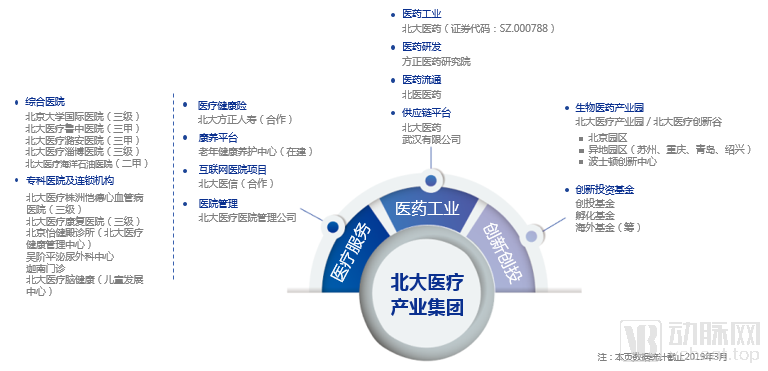
Established in 2003, Peking University Healthcare was jointly founded by Peking University and Founder Group. Leveraging Peking University’s abundant expert resources, advanced management expertise, and comprehensive system integrating medical care, education, and research, as well as Founder Group’s strong financial strength and industrial integration capabilities, Peking University Healthcare adopts “Quality + Innovation” as its core strategy. Committed to the fields of medical services, pharmaceutical manufacturing, and innovative venture capital, the company strives to build capabilities in modern hospital management output and new technology innovation incubation, construct a robust internet healthcare and health insurance ecosystem, and develop into an international large-health technology enterprise with innovative R&D capabilities in the pharmaceutical sector.
About Peking University Medical Innovation Valley
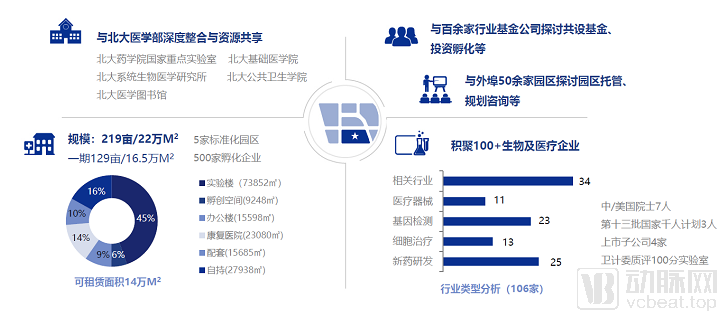
Peking University Healthcare Innovation Valley is a wholly-owned subsidiary of Peking University Healthcare Industrial Park. Anchored by the Group’s medical services and pharmaceutical manufacturing sectors, and grounded in space operations and project incubation services, the company focuses on cutting-edge technological trends and leverages innovation-driven venture capital to advance technological, investment, and service innovations. It aims to synergize with the Group’s industrial ecosystem and give back to Peking University. Peking University Healthcare Innovation Valley vigorously promotes the innovative industrial model of “Base + Fund + Platform + Translation,” driving innovative development in the broader health industry, and conducts investments through socially raised and managed venture capital and incubation funds.