

Rise of National Champions: How Chinese CT and PET/CT Manufacturers Are Forging 'Heavyweight National Assets'

SinoVision
Developer and Manufacturer of High-End Medical Imaging Equipment

United Imaging
High-end Medical Device Developer
In 1951, engineers Yan Jiaying and Zhang Ximing, along with Deputy Factory Director Wen Yao and Workshop Director Zhu Dexin from the Shanghai Precision Medical Instrument Factory, began developing a 200mA four-tube single-phase full-wave rectification X-ray machine, marking the starting point for China’s independently developed medical imaging equipment. The team spent one year completing the prototype, which was finished just before the third anniversary of the founding of the People’s Republic of China; thus, the machine was named “Guoqing Hao” (National Day). This event served as the prologue to the development of integrated medical-engineering collaboration in China.
The true boom in China’s biomedical engineering sector began in the late 1970s. In 1979, inspired by information from international exhibitions, Chinese administrative authorities designated “CT” as a national key project. Following the project’s approval that same year, research institutes established task forces to tackle key technical challenges, with more than 40 institutions and over 200 leading scholars participating in the development of this CT scanner. Ultimately, in 1983, China’s first domestically developed head CT system passed appraisal in Shanghai. According to historical records, the scanning time for the first volunteer subject was as long as 3 minutes and 20 seconds.
Now marking the 70th anniversary of the founding of the People's Republic of China, domestic medical imaging equipment has undergone tremendous changes by standing on the shoulders of pioneers. With the support of technologies such as the Internet and artificial intelligence, medical imaging equipment has established a comprehensive solution centered on devices, supported by PACS systems, and assisted by AI software. It has shifted from the mere category of "images" to intelligent devices focused on "doctor-patient services."
Along the path of development for domestically produced imaging equipment, a large pool of talent has emerged. Pioneering enterprises such as Neusoft Medical, United Imaging Intelligence, Kaipu Imaging, and MinFound are exporting their technologies and products to markets across various dimensions. The field of imaging equipment, once lagging behind Western countries, is gradually demonstrating Chinese strength.
On the occasion of this 70th anniversary, VCBeat interviewed six representative medical imaging equipment companies. Through their experiences and trials, we may gain insight into how “pillars of a great nation” are forged.
As a typical capital- and technology-intensive industry, the medical imaging sector features products with high technological content, substantial upfront investment, and high profit margins, while establishing market share requires a considerable amount of time. Leveraging a century of accumulation, GPS has easily monopolized the global market for medical imaging equipment.
In contrast, China’s medical device industry started relatively late, with neither technological accumulation nor technical support in the field of imaging equipment. Nevertheless, through a model combining university-enterprise collaboration and targeted breakthroughs, domestic brands have gradually emerged.
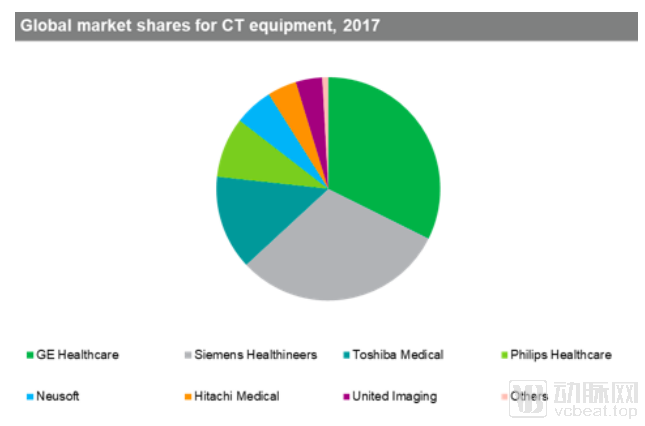
Global CT Market Share in 2017 (Image source: IHS Markit)
Taking the CT market as an example, IHS Markit’s research report lists Neusoft Medical and United Imaging, each holding a double-digit market share. Notably, Neusoft’s global market share closely trails that of Philips.
When discussing the underlying drivers, we must delve into the specifics. China and the United States are the two largest markets for CT scanner sales globally, yet their market conditions differ markedly, leading to distinctly different growth dynamics.
In the saturated U.S. market for imaging equipment, the majority of corporate sales are driven by equipment upgrades and replacements. In such a market, without breakthrough advancements, revenue generated from technological progress will continue to decline.
The Chinese market is a fertile ground yet to be fully cultivated. Encouraged by national investments in upgrading healthcare infrastructure, domestic hospitals have begun procuring medical equipment in large numbers. Data shows that in 2016, the number of domestic medical imaging equipment enterprises reached 650. The industry experienced rapid growth, with an annual growth rate exceeding 15%. The total output value of the industry reached RMB 36.9 billion in 2016, a year-on-year increase of 19.8%, further enhancing industry prosperity.
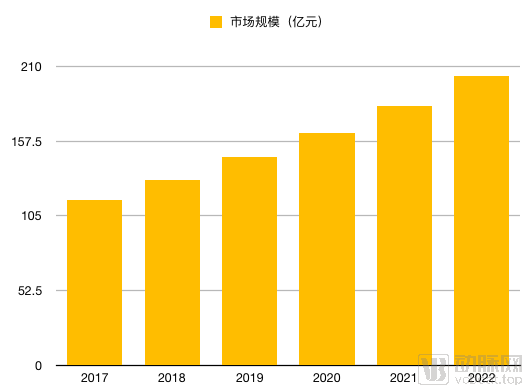
Forecast of CT Equipment Market Size (2017-2022) (RMB 100 Million) (Data Source: Zhongyan Puhua Forecast)
Amidst this opportunity, Neusoft Medical and United Imaging have leveraged their accumulated strengths to rapidly capture the market with high-quality, low-cost equipment. However, once the dividends fade, success will ultimately depend on technological prowess.
Fortunately, both industry giants possess core technologies and global ambitions, having extended their product lines overseas. Currently, both companies have established subsidiaries in Texas and Houston, and are aggressively expanding into highly promising markets such as the United States, Europe, and Southeast Asia.
Breakout efforts are also underway in products such as color Doppler ultrasound, MRI, and CT scanners, with domestic companies like Mindray, Sonoscape, and United Imaging gradually eroding the market share of European and American enterprises.
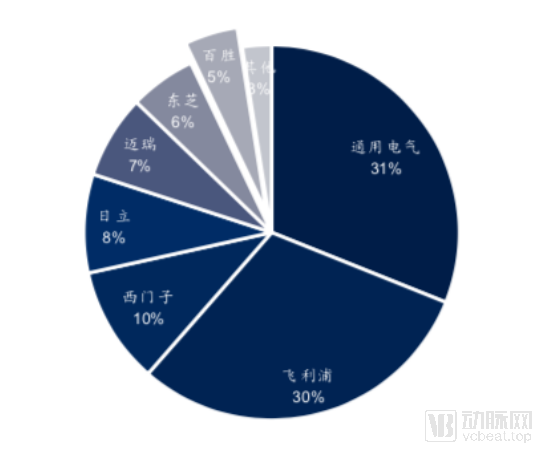
Competitive Landscape of China's Medical Ultrasound Equipment Market
(Data source: Guosen Securities research report dated December 13, 2017)
In the ultrasound sector, GE, Philips, and Siemens hold the top three positions, yet the Chinese brand Mindray has still managed to break into the top five. On December 8, 2017, Wandong Medical, Yuwell Medical, Yunfeng Capital, and other enterprises and investment funds acquired Esaote, a well-known Italian multinational corporation specializing in high-end medical equipment, for RMB 1.935 billion, further strengthening their capabilities through capital investment. Following the acquisition, Wandong Medical filled its gap in ultrasound equipment, becoming one of China’s leading domestic imaging companies with a comprehensive product portfolio.
Neusoft Medical: Multiple Chinese “Firsts” Lead the Market
To discuss Neusoft Medical, one must go back to the 1990s. At that time, China began to frequently import high-end medical equipment. However, these devices were not only expensive but also often second-hand. It was not until 1997, when the first domestically developed CT scanner made its debut, that a turning point emerged for the domestic market.
Neusoft Medical, the leader of this transformation, leveraged its strengths in computer technology to offset weaknesses by innovatively using PCs instead of array processors. This approach not only achieved a technological breakthrough in the core systems of domestically produced CT scanners but also pioneered a new wave of innovation in international CT technology.
Subsequently, foreign CT manufacturers also began to follow suit, replacing expensive array processors with cost-effective PCs. In 1994, the dream of “developing CT scanners in China” finally became a reality. In 1997, China’s first CT scanner received certification from the State Food and Drug Administration (SFDA). In 1998, Neusoft Medical Systems Co., Ltd. was officially established and launched the Neusoft CT-C2000 to the market, marking the first step toward the industrialization of domestically produced CT scanners in China.
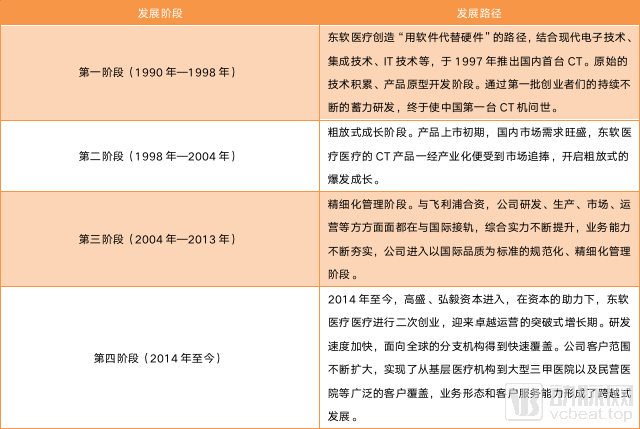
Four Stages of Neusoft Medical's Development
Over the past 21 years, Neusoft Medical has become one of the leading global providers of medical imaging equipment. Today, Neusoft Medical has established a comprehensive portfolio of nine product lines, comprising eight hardware lines—Computed Tomography (CT), Magnetic Resonance Imaging (MRI), Digital Subtraction Angiography (DSA), Digital X-ray (XR), Nuclear Medicine Imaging (PET/CT), Radiation Therapy (RT), Ultrasound (US), and In Vitro Diagnostics Laboratory Automation (IVD)—as well as its strategic MDaaS product line.
This year, Neusoft Medical has made a major launch of several new products that are now commercially available: the NeuViz Glory 256-slice wide-bore spectral CT, the rail-free ceiling-mounted seven-axis intelligent angiography system—NeuAngio 30C Hanwu DSA—and its strategic MDaaS product line.
NeuViz Glory CT, featuring an ultra-fast gantry rotation speed of 0.259 seconds, a temporal resolution of 25 ms, and advanced algorithms enabling 8 cm coverage for one-beat imaging, easily addresses medical imaging challenges such as high heart rates and arrhythmias. It offers modular applications for triple-rule-out of chest pain and stroke, facilitating efficient diagnosis by physicians. Additionally, its 60 kV low-dose imaging is particularly suitable for pediatric examinations and low-dose health screenings.
The integration of artificial intelligence has significantly enhanced physicians' efficiency. The comprehensive AI imaging system enables this CT scanner to read patient cardiac information within milliseconds and subsequently generate personalized, standardized scanning protocols.
The NeuAngio 30C Hanwu DSA, a trackless suspended seven-axis intelligent angiography system featuring an intelligent human-machine interaction interface, an AI low-dose imaging platform, a high-heat-capacity X-ray tube, and a third-generation digital flat-panel detector, meets interventional physicians’ needs for performing various prolonged and complex interventional procedures. Its intelligent noise-reduction, low-dose platform can reduce radiation dose by 60%.
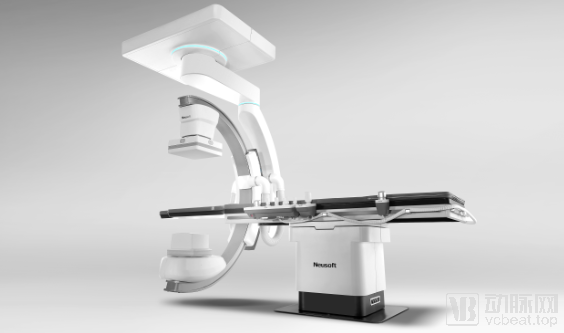
NeuAngio 30C Digital Angiography System
Furthermore, Neusoft Medical has developed MDaaS (Medical Devices & Data as a Service), a model characterized by the “internet sharing economy.” Leveraging medical devices and data, along with technologies such as the internet, big data, and artificial intelligence, MDaaS is a strategic product line designed to help healthcare institutions enhance their diagnostic and treatment capabilities and achieve operational excellence.
Over the next two years, Neusoft Medical will evolve from a provider of imaging equipment into a comprehensive solutions provider for clinical diagnosis and treatment, built upon its imaging technology. Empowering clinical practice, becoming a value creator in healthcare services, and delivering one-stop solutions for clinical diagnosis and treatment constitute the next key objectives. Neusoft Medical is steadily advancing toward this goal.
United Imaging: The Rising Star Stuns the Audience
The uEXPLORER total-body dynamic PET-CT, the “spatiotemporal-integrated” ultra-high-definition TOF PET/MR, the 3.0T Explorer MRI, the ultra-premium 640-slice CT, and the integrated CT-linac—a suite of world-first and China-first devices—are the hallmarks of United Imaging.
uExplorer: The world’s first total-body dynamic PET-CT system employs disruptive 4D real-time whole-body dynamic scanning technology to visualize the dynamic metabolic processes of all organs in the human body. At the 2019 CMEF exhibition, Xue Min, Chairman and CEO of United Imaging Group, stated, “Traditional whole-body scans, which typically take around 20 minutes, will be reduced to as little as 30 seconds. Meanwhile, it delivers an extremely low radiation dose; detector sensitivity is increased by 40-fold, while radiation exposure is reduced by 40-fold, equivalent to the radiation dose received during a trans-Pacific flight. More excitingly, it achieves, for the first time, 4D high-definition dynamic imaging of multiple tissues and organs throughout the entire body. This will unlock immense innovative potential in interdisciplinary research fields such as medicine and pharmaceuticals, providing a powerful innovation platform for personalized precision diagnosis and treatment, as well as new drug development.”
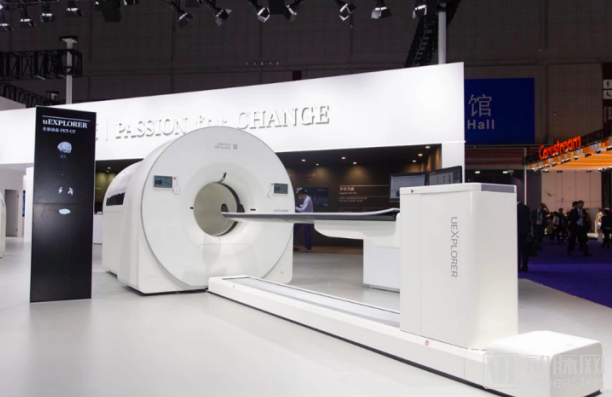
uEXPLORER Total-Body Dynamic PET-CT
The Explorer Project is a research initiative funded by the U.S. National Institutes of Health with an investment of over $15 million, marking the entry of Chinese enterprises into the international high-end medical equipment sector. In June 2019, the Explorer system was deployed in research projects in the United States, followed by mass production.
The industry’s first “spatiotemporal-integrated” ultra-high-definition TOF PET/MR system has achieved three major breakthroughs: it overcomes the limitations of imaging speed by generating complete 16-phase images in a single scan, thereby capturing lesion information across all phases, including early and late stages; it transcends the constraints of single-modality imaging by enabling the fused visualization of anatomical structural information and metabolic functional information; and it pushes the boundaries of cross-modal fusion by leveraging its 2.8 mm ultra-high resolution to precisely delineate tumor margins, detect local micro-lesions and distant metastases, and deeply mine raw fused data with high-precision “spatiotemporal synchronization,” thereby enhancing diagnostic dimensions.
Furthermore, United Imaging’s Wuhan headquarters base, with an investment of RMB 5 billion and a total floor area of 200,000 square meters, was established in Optics Valley this April. The infrastructure construction of this base is scheduled to be completed within the year, at which point it will become the largest and most distinctive R&D, production, and operational center in the industry. This signals United Imaging’s commitment to building Wuhan into a fully intelligent medical and health ecosystem covering the entire cycle of prevention, diagnosis, treatment, and rehabilitation, thereby comprehensively driving the development of Wuhan’s trillion-yuan big health industry cluster.
Having achieved the aforementioned milestones, United Imaging remains on a path of rapid development. Discussing the future, Xue Min once stated, “Over the past eight years, United Imaging has consistently adhered to independent innovation, driving the growth of both the company and the industry through innovation. We have continuously sought breakthroughs in core technologies and launched a series of ultra-high-end products to meet the higher demands of clinical practice and scientific research. Meanwhile, we have actively mobilized resources from various sectors, including industry, clinical practice, and academia, to foster an innovative ecosystem characterized by deep collaboration and symbiotic win-win outcomes. This approach aims to leverage greater innovation capacity to propel China’s medical equipment industry into truly world-class innovation and value chains.”
Sinovision: Aiming to Become One of the Top Three Domestic CT Manufacturers
Following Neusoft and United Imaging, many other domestic enterprises are also advancing toward world-class standards, with Sinovision being one of them.
To date, Sinovision has independently developed a series of CT products, including 16-slice, 32-slice, and 64-slice (128-layer) models, overcoming core technologies such as CT detectors. In the future, it will continue to achieve breakthroughs in the design and development of other key components, including X-ray tubes.
Sinovision aims to rank among the top three domestic CT manufacturers in China. Benefiting from favorable policies, Sinovision’s CT systems have achieved comprehensive coverage across primary care institutions and tertiary hospitals, as well as private and public healthcare facilities, with installations completed in all provinces, cities, and municipalities nationwide. Notably, the only domestically produced CT equipment currently used by the Department of Radiology at Peking Union Medical College Hospital—the nation’s top-ranked hospital—is the Sinovision 64-slice CT.
Under the guidance of the Belt and Road Initiative, Sinovision has installed a large number of systems in more than ten overseas countries, achieving rapid growth in market share. In May 2019, Sinovision, together with Tuma Shenwei and Dr. Li Zhong Medical Group, established the “China Intelligent Diagnosis and Treatment Alliance for Lung Cancer,” aiming to roll out across China a complete and feasible workflow for image-guided lung cancer screening and diagnosis. In addition, Sinovision collaborated with Shukun Technology to establish the Shukun & Sinovision Demonstration Training Base and Center Project, which provides rigorous and rapid imaging diagnosis for patients with heart disease, significantly reducing the incidence of missed and misdiagnoses.
Going forward, market demand for 64-slice/128-layer CT systems is poised to expand rapidly. Leveraging favorable policy tailwinds, Sinovision will not only increase its market share in CT but also explore the expansion of CT applications across more clinical departments. Rather than focusing solely on complete CT units, the company aims to foster multidisciplinary development centered on CT imaging technology. In terms of application scope, these high-end intelligent medical devices place greater emphasis on clinical utility, thereby enhancing their prospects for adoption in large tertiary Grade-A hospitals.
Sinovision’s current strategy is to seek a breakthrough from the perspective of technical clinical application. Over the next two years, in the mid-to-low-end market, Sinovision must specialize and excel in niche solutions to create differentiation, thereby achieving parity with or surpassing imported brands while maintaining its position among the top three domestic manufacturers.
MinFound: Core Competitiveness Driven by Independent R&D
In 2010, the Chinese private enterprise Mingfeng Industrial acquired FMI Medical Systems in the United States. The acquired company was located in Cleveland, known as the "Global Medical Corridor." Through this acquisition, MinFound Medical gained a team of top-tier R&D professionals specializing in CT and PET technologies.
In 2016, the first fully digital PET/CT system developed by MinFound in China received special approval for innovative medical devices. Prior to this, domestic medical equipment primarily relied on system integration, with key core components dependent on imports. MinFound broke through technological bottlenecks in critical CT detector components, specifically scintillation crystals and application-specific integrated circuit (ASIC) technology, filling a gap in the domestic market. In the field of PET/CT, its independently developed silicon photomultiplier (SiPM) technology achieved global leadership, ushering PET/CT into the digital era. Even as of 2019, no domestic competitors had developed mature SiPM technology.
Regarding import substitution, Pan Huasu, Chairman of MinFound Medical Systems Co., Ltd., stated: “The replacement of GPS by domestically produced medical devices is an inevitable trend, as this is the only way to benefit the general public. By breaking monopolies and fostering healthy market competition, prices will become more reasonable.”
“However, relying solely on system assembly and optimization is insufficient, as key components still depend on imports and remain monopolized. For instance, CT X-ray tubes and detectors require independent research and development.”
In terms of product lines, MinFound will accelerate the R&D of high-end imaging products, such as 512-slice CT, dedicated cardiac CT, and TOF-PET/CT. Pan Huasu stated, “At that time, domestic brands will once again break the monopoly of GPS in the ultra-high-end product segment.”
Kaipu Imaging: Innovating the “Medical Device R&D + Third-Party Imaging Center” Model
Beyond a microcosm of cutting-edge technology, we must also turn our attention to the grassroots level.
Driven by the tiered diagnosis and treatment system, primary healthcare institutions have become the gatekeepers of patient health management. Nowadays, many community health centers are equipped with their own CT scanners, enabling imaging acquisition to be performed at the primary care level while referring only image interpretation to higher-level hospitals.
Many domestic medical device companies have also offered their suggestions and insights for this market.
Taking Kaipu Imaging as an example, its Precision series of high-precision spectral CT scanners incorporates spectral imaging technology that was previously exclusive to equipment priced in the tens of millions. This enables small and medium-sized hospitals to acquire products comparable to cutting-edge medical devices at a cost of only a few million yuan.
The Precision 32-slice spiral CT, with its unique 32-layer spectral imaging and high-precision tomography, generates images with a slice thickness of 0.275 mm, enabling precise identification of minute lesions in areas such as the inner ear and lungs.
“We hope to reduce the prices of medical imaging equipment with high-end features by 30%–50% through our efforts, so that all healthcare institutions in the future can afford high-performance imaging devices,” Sun Zhaochang, Chairman of Kaipu Imaging, told VCBeat.
Today, Kaipu Imaging has developed corresponding imaging equipment tailored to local needs, ranging from primary healthcare facilities to Grade 3A hospitals. It is expected that next year, Kaipu Imaging will launch a series of imaging products targeting the high-end market, while keeping prices controlled to enable more hospitals to upgrade to more advanced systems at more reasonable costs.
Furthermore, Kaipu Imaging is actively building third-party medical imaging centers. Beyond their core functions, these centers facilitate the rapid deployment of Kaipu Imaging’s CT and DR equipment, enabling the identification of clinical issues that can be promptly fed back into R&D and debugging processes. This constitutes the ecological advantage of Kaipu Imaging’s full industry chain.
Stork: Reaching More Remote Rural Areas
Unlike any of the aforementioned imaging devices, portable ultrasound is like a child, yet it can reach more remote areas.
In some remote villages in China, some villagers may never have undergone a single medical examination in their entire lives. Helping them progress from zero to one, and then to continuous health management, is the original aspiration of Chengdu Stork Healthcare Co., Ltd., a manufacturer of portable ultrasound devices.
“Primary healthcare facilities must manage a wide range of diseases, and their requirements for disease complexity differ from those of tertiary hospitals; they need products that can effectively address clinical challenges. Our product modules are designed to serve common conditions encountered in primary care settings,” said Zhang Zhuo.
Chengdu Stork Healthcare’s first-generation handheld ultrasound product features 32 channels, distinguishing it from similar compact ultrasound systems that typically offer only 8 or 24 channels. Built on its proprietary underlying algorithm platform, the technical architecture supports up to 128 physical channels. By leveraging self-developed GPU technology for image data processing, this ultrasound device enables high-quality image transmission and integrates advanced functionalities into its miniaturized handheld form factor.
Currently, Chengdu Stork Healthcare Co., Ltd. has developed four types of handheld ultrasound devices with different probes based on grassroots needs. These devices integrate the chips and components of large color Doppler ultrasound probes into handheld units, enabling routine hospital examinations of the liver, gallbladder, pancreas, spleen, and kidneys. Additionally, they are suitable for examining superficial structures, such as the thyroid, breast, systemic superficial blood vessels, muscles, certain bones, the musculoskeletal system, and pediatric applications. Leveraging Wi-Fi/4G networks, Stork’s remote transmission system enables real-time image synchronization, supporting remote consultations by specialists within medical consortiums.
The technical issues have been resolved. However, for Chengdu Stork Healthcare Co., Ltd. to achieve growth, it must address not only patient care challenges but also the continuing education needs of primary care physicians. By leveraging remote expertise, the company aims to comprehensively enhance the clinical skills and diagnostic judgment of healthcare providers at the grassroots level.
Over the past decade or so, we have witnessed heartening changes in the development of these enterprises, with Chinese presence now spanning from the most remote villages to the highest peaks around the world. However, in terms of market share, the path toward import substitution for medical imaging equipment is far less mature than that for high-value consumables.
Following this wave of policy-driven benefits, hospital procurement behavior will become more rational and gradually shift toward “equipment upgrades.” In this phase, medical device companies can better serve physicians and patients with superior products and services only by finding the optimal balance between technology and cost.
However, the substitution of imports with domestically produced alternatives is a gradual process, and China’s medical imaging equipment manufacturers have already made significant strides. As for future development, companies must adjust their strategic direction in accordance with technological trends, targeting their served markets to formulate appropriate strategies and plans.