

Key Priorities for Deepening China's Healthcare Reform: National Medical Center Development,医保 Payment Reform, and Pharmaceutical Policy Enhancement
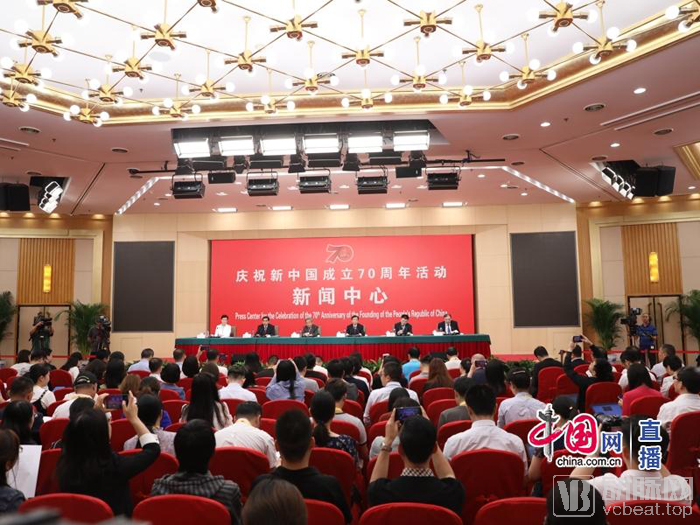
On September 27, the second press conference held by the Press Center for the Celebrations of the 70th Anniversary of the Founding of the People’s Republic of China took place at the Media Center in Beijing. Ma Xiaowei, Director of the National Health Commission, outlined the major changes in the healthcare sector over the past 70 years and highlighted key priorities for further deepening healthcare reform, including advancing the establishment of National Medical Centers, enhancing the capabilities of county-level hospitals, promoting reforms in health insurance payment methods, and improving pharmaceutical policies. VCBeat (WeChat ID: vcbeat) has compiled these highlights.
Over the past 70 years, the health status of Chinese residents has continuously improved. Life expectancy at birth has increased from 35 to 77 years, the infant mortality rate has declined from 200‰ to 6.1‰, and the maternal mortality ratio has dropped from 1,500 per 100,000 live births to 18.3 per 100,000 live births. Major health indicators now surpass the average levels of upper-middle-income countries. By investing relatively fewer resources, China has addressed the healthcare needs of one-sixth of the world’s population, forging a distinctively Chinese path in medical and health services. After seven decades of unremitting efforts, the nation’s healthcare sector has undergone transformative changes, primarily in the following aspects:
First, the healthcare delivery network has been continuously strengthened, significantly improving service accessibility.China has established a three-tier medical prevention and healthcare network covering urban areas (provinces, cities, and counties) and rural areas (counties, townships, and villages), making it possible for all citizens to have access to basic medical and healthcare services. The pace of development in socially run medical institutions is also accelerating; in 2018, private hospital beds accounted for more than 26% of the national total. The number of medical and health institutions nationwide exceeded 990,000, with a total of 8.4 million hospital beds. The total number of personnel in the health system reached 12.31 million, with 2.59 doctors and 2.94 nurses per 1,000 population, surpassing the average level of middle-income countries.
Second, health care investment has continued to increase, gradually alleviating the financial burden on the public for seeking medical consultation and treatment.In 2018, China’s total health expenditure accounted for 6.6% of its GDP. Fiscal subsidies for basic medical insurance for urban and rural residents and per capita funding standards for basic public health services have been continuously increased. Adhering to the principles of low-level benefits, broad coverage, and sustainability, the basic medical security system has covered more than 1.3 billion people, with a stable participation rate of 95%. Within a relatively short period, the country has established the world’s largest basic medical security network. The share of out-of-pocket personal health spending in total health expenditure has declined to 28.6%, reaching the lowest level of this century.
Third, we have adhered to the principle of prevention first, and major diseases have been brought under control.Launch patriotic health campaigns to significantly improve urban and rural sanitary conditions. Implement a planned immunization program, reducing vaccine-preventable infectious diseases to very low levels. Prioritize the control of major diseases, bringing HIV/AIDS, tuberculosis, schistosomiasis, and hepatitis B under control. Remarkable progress has also been made in the prevention and treatment of occupational and endemic diseases. The country has established a comprehensive emergency response team and system for public health emergencies, successfully managing major outbreaks such as SARS and H7N9 avian influenza.
Fourth, healthcare service capabilities continue to improve.The public’s sense of gain has continued to strengthen. China has achieved new breakthroughs in key medical technologies, yielding a number of internationally leading outcomes, with new technologies, equipment, and methods being widely promoted and applied. New progress has been made in expanding the supply of medical services, improving the quality of care, and strengthening medical ethics and professional conduct. In 2018, the total number of outpatient and emergency visits nationwide exceeded 8.3 billion, and hospital discharges surpassed 250 million. Vigorous efforts were undertaken in health-focused poverty alleviation, safeguarding the health of priority populations—including women, children, the elderly, persons with disabilities, and people living in poverty—while continuously enhancing the equity of health services.
Fifth, leverage the distinctive advantages of Traditional Chinese Medicine to promote its inheritance and innovation.Strengthen the training of TCM professionals, select and honor National Masters of Traditional Chinese Medicine, promote appropriate TCM technologies, and advance the overseas development of Traditional Chinese Medicine.
Sixth, expand international health exchanges and participate in global health governance.A total of 26,000 medical team members have been dispatched to 71 countries, providing diagnosis and treatment to 280 million patient visits. China has strengthened cooperation with international organizations, supported West Africa in combating the Ebola hemorrhagic fever epidemic, and signed and implemented more than 160 health cooperation agreements with international organizations, relevant countries, and regions.
Moving forward, we will continue to advance the Healthy China strategy, promote high-quality development of medical and health services, and better serve the people’s health.
Addressing the difficulties and high costs associated with accessing medical care is a major, long-term challenge for the healthcare sector.
Overall, the prominent contradiction in the healthcare sector lies between the people’s growing and multi-tiered demand for medical services and the insufficient total supply of medical resources, characterized by an irrational structural allocation and a scarcity of high-quality resources. In particular, the distribution of medical resources is marked by unbalanced and inadequate development across regions, between urban and rural areas, among hospitals, and across medical disciplines.
To further deepen healthcare reform and address the difficulty patients face in accessing medical care, it is essential to tackle the issue primarily from the perspectives of resource allocation and sectoral development. In addressing this challenge, four key considerations are outlined:
First, steadily advance the construction of National Medical Centers.Enhance the level of healthcare and medical services in each province, strengthen discipline construction, and enable every province to address the treatment of complex and critical cases within its own jurisdiction, rather than having all such patients seek care in Beijing, Shanghai, and Guangzhou. Recently, the Central Committee for Comprehensive Deepening Reform reviewed and approved the pilot work plan for the establishment of regional medical centers, and signed agreements with four provinces on the joint development of regional medical centers by provincial and ministerial authorities. This initiative will facilitate the diversion of patient flow from Beijing, Shanghai, and Guangzhou to various provinces and regions, representing the first step toward reducing cross-regional medical visits and promoting regionalized healthcare delivery.
Step 2: Continue to implement the project for enhancing the capabilities of county-level hospitals.Since 2004, when the health authorities, in conjunction with the Ministry of Finance, launched the “Ten Thousand Doctors Supporting Rural Areas” initiative to promote paired assistance from tertiary Grade A hospitals to county-level hospitals, the development of rural healthcare has hinged critically on the capabilities of these county hospitals. If county hospitals can effectively manage complex and severe cases within their regions, rural residents will not necessarily need to travel to major cities for such care. Therefore, addressing the difficulties and high costs of medical access for hundreds of millions of rural residents requires that the majority of their healthcare needs be met within the county level. Only by establishing county hospitals as platforms for comprehensive multidisciplinary practice and enhancing their clinical capabilities can we achieve the goal of “minor illnesses treated within the village, major illnesses not requiring travel to the city.” Consequently, paired assistance from urban tertiary Grade A hospitals to county-level institutions will continue to be advanced. Currently, 500 county hospitals have reached the standards of tertiary hospitals. The next step is to help another 500 county general hospitals and 500 county traditional Chinese medicine (TCM) hospitals attain tertiary hospital standards by 2020.
The third approach is to integrate regional healthcare institution resources.The current situation is that patients with both serious and minor illnesses flock to large hospitals, with individuals from both urban and rural areas seeking care at these major institutions. As a result, large hospitals are overcrowded, while smaller ones remain nearly empty. The primary difficulty in accessing medical care in China lies in the challenge of securing appointments with specialists at major hospitals. If the competency level of primary care institutions cannot be improved, patients will inevitably continue to gravitate toward large hospitals, perpetuating the difficulty of accessing care. Therefore, it is essential to strengthen primary healthcare infrastructure. In urban areas, Medical Alliances should be established, whereby large hospitals support smaller ones. In rural areas, Medical Consortia should be developed, linking county-level hospitals with township health centers to achieve integrated management across county-township and township-village levels. This approach will help elevate the quality of primary care, facilitate the vertical flow of medical resources, and alleviate the difficulty of accessing medical services by enabling the treatment of serious illnesses at hospitals, minor ailments in communities, and rehabilitation back in community settings, thereby accelerating the construction of an integrated healthcare service system. Hospitals at different levels must clearly define and fulfill their respective functional roles.
The fourth aspect is to promote the reform of medical insurance payment methods.Patient triage is closely linked to payment mechanisms. The costs incurred and the economic leverage exerted differ significantly between seeking care at large hospitals versus smaller facilities. Reforms in payment methods are currently being advanced to ensure that acute conditions are treated at acute-care hospitals with corresponding pricing, while chronic diseases and rehabilitation cases are managed at other institutions with distinct price structures. For instance, reimbursement rates are higher for primary care visits, lower for tertiary hospital visits, and even lower for out-of-province care. This differentiated payment system guides patient flow. Meanwhile, Grade 3A hospitals have recently begun offering day-surgery services, allowing many procedures that previously required inpatient admission to be completed on an outpatient basis. These surgeries often utilize minimally invasive techniques, resulting in less pain, lower costs, reduced expenses, and better outcomes, and their adoption is being actively promoted.
To further advance the tiered diagnosis and treatment system and promote patient diversion, we must leverage and revitalize existing resources across four dimensions; this addresses the issue from the perspective of stock. From the perspective of incremental growth, a significant measure in this round of healthcare reform is the implementation of standardized residency training. Medical students typically complete five years of study before entering the workforce. By adding three years of standardized clinical training at major hospitals, the competency levels of physicians in rural areas, large hospitals, and small hospitals will become comparable. When physician competency is balanced across regions, between urban and rural areas, and among different hospitals, patient flow can be effectively controlled. Providing equitable medical services requires providing equally competent physicians. Standardized residency training aims to fundamentally address the imbalance in physician competency within medical education and training.
Regarding the issue of “high medical costs,” three main aspects are considered:
One is to develop the national medical security system.China’s basic medical insurance system is characterized by low benefit levels, broad coverage, and sustainability. It has expanded rapidly in both development and population reach; however, its protective capacity remains limited, particularly against the financial risks posed by catastrophic illnesses. Currently, risk pooling is primarily conducted at the municipal level, resulting in relatively small insurance pools and a low degree of consolidation. Elevating pooling to the provincial level would create deeper risk pools, thereby better addressing the issue of high medical costs, although this would require an increase in funding levels. Meanwhile, the development of commercial health insurance should be advanced. Given the underdevelopment of commercial and supplementary insurance, basic medical insurance alone cannot alleviate the economic burden of all complex and severe diseases. Further development in these areas is essential to enhance overall financial protection.
The second is to improve drug policies.As everyone has observed in recent days, the expansion of the “4+7” volume-based procurement program is continuing to advance. The State Council and relevant departments have adopted robust measures to drive this reform, which can even be regarded as a significant breakthrough in China’s healthcare reforms in recent years. The first measure involves price reductions for imported patented drugs; through national negotiations, 17 anti-cancer drugs have seen their prices lowered and been included in the national medical insurance coverage. The second measure is the “4+7” centralized tendering and volume-based procurement, which reduces transaction costs, particularly those associated with intermediary links. Addressing the issue of artificially inflated drug prices has implications for both the pharmaceutical industry and the medical services sector. Effectively resolving this issue will play a crucial role in promoting strategic restructuring and fostering healthy competition within China’s pharmaceutical industry. It will also significantly contribute to strengthening hospital management, standardizing medical practices, and improving medical ethics and professional conduct. Meanwhile, it is essential to ensure that public hospitals at all levels actively use the winning bid drugs and to organize drug production and distribution effectively, so as to prevent the recurrence of the phenomenon where winning bidders fail to supply (“winning bid death”). Current progress in drug distribution and utilization is promising, allowing the general public to benefit from the dividends of reduced drug prices.
The third is to strengthen hospital management.First, strengthen education on medical ethics and professional conduct for physicians; second, enhance industry oversight. The General Office of the State Council recently issued guidelines on performance assessment for tertiary public hospitals. Effective implementation will drive China’s large hospitals to transition from scale-driven expansion to quality- and efficiency-oriented development, from extensive management to intensive management, and from prioritizing investment in hospital construction to optimizing income distribution, thereby improving overall hospital effectiveness. Addressing the difficulty of accessing medical care primarily involves revitalizing and upgrading healthcare resources. Addressing the high cost of medical care mainly requires resolving issues related to compensation mechanisms and management.
Source: Official Website of the National Health Commission