

Zhang Ziwei of Shouci Elder Care: Effective Supply as the Core Competitiveness of Elder Care Institutions
As one of the organizers of the 3rd China (Sichuan) International Elderly Care Service and Industry Expo (hereinafter referred to as the “Sichuan International Elderly Care Development Forum”), Shouci Elderly Care not only participated in the three-day exhibition (September 20–22) but also articulated the rationale behind its bold strategy of “venturing into Chengdu to ‘claim market share’” at the concurrent forum.
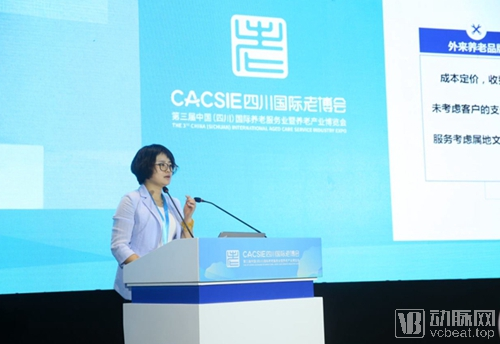
Zhang Ziwei, General Manager of the Chain Operations Center of Shouci Health Elderly Care Co., Ltd. (Image source: Provided by the organizer)
In a relatively saturated market, how can effective supply be achieved? What aspects of the market need to be understood before implementation? What does the investment calculation look like behind each bed? With these questions in mind, VCBeat (WeChat: vcbeat) has compiled the transcript of Zhang Ziwei’s speech titled “Building Core Competitiveness of Elderly Care Institutions Through Effective Supply.” Zhang Ziwei is the General Manager of the Chain Operation Center at Shouci Kangjian Elderly Care Co., Ltd.
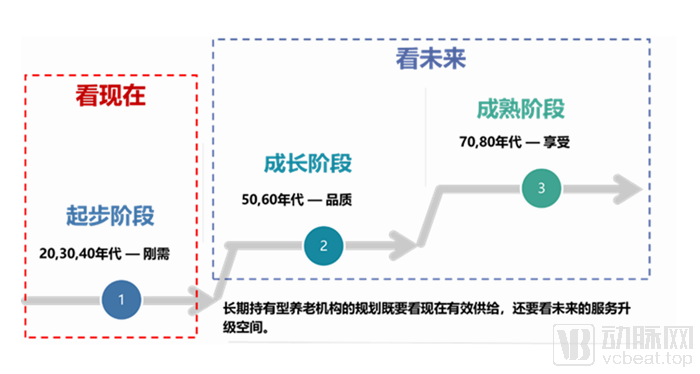
As the supply and demand for elderly care services grow, the demand has gradually shifted from a basic necessity stage to one emphasizing professionalism and quality enhancement. The planning of long-term hold elderly care institutions should consider not only the current effective supply but also the potential for future service upgrades. During the initial positioning and design planning phase, projects must address the needs of these two customer segments and allow room for service adjustments and upgrades.
Focusing on Chengdu, the city’s elderly care policy prioritizes the development of nursing beds alongside community-based elderly care services. It promotes elderly care institutions specializing in custodial care, skilled nursing, dementia care, and hospice care, while encouraging these institutions to achieve scaled development and pursue branding, large-scale operations, and chain expansion.
Major enterprises have actively responded to the government’s call, yet there remains a gap between expectations and actual operational implementation. In the realm of integrated medical and elderly care, the number of such institutions in Chengdu is currently very limited due to high medical investment requirements, insufficient management experience, difficulties in recruiting medical professionals, and unclear policies for nursing homes. Regarding community-based home elderly care services, the depth of service delivery is constrained by the scarcity or even absence of beds in community service agencies, lack of institutional support, and inadequate guarantees for service personnel and resources.

Focusing on enterprises engaged in elderly care, external elderly care brands, unfamiliar with the local payment capacity in Chengdu, adopt cost-based pricing, resulting in high fees and insufficient consideration of local cultural factors in their services. Local elderly care brands have small-scale individual bed capacities, lack service quality and innovation, and face limitations in chain development. Therefore, Chengdu does not lack beds for elderly care but rather lacks effective supply of beds.
Elderly care is a necessity of life. It requires daily payments, and the ability to pay is constrained by the overall household income level (including the elderly person’s own pension and their children’s income). This service is continuous, with a consumption period lasting 5 to 8 years.
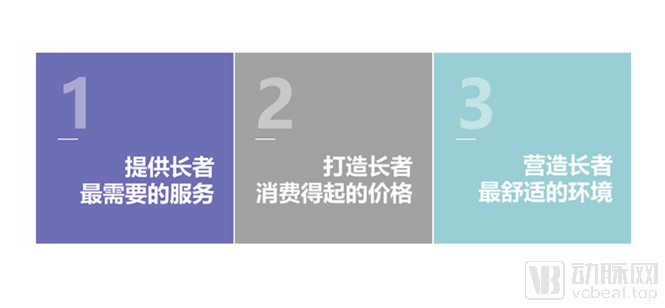
Amid sustained consumer demand, it is particularly crucial to provide the services most needed by older adults, offer prices they can afford, and create the most comfortable environment for them. The elderly care sector is a buyer’s market; understanding who the customers are and their preferences and needs, and developing products that meet these needs, are desirable, and affordable, constitutes effective supply.
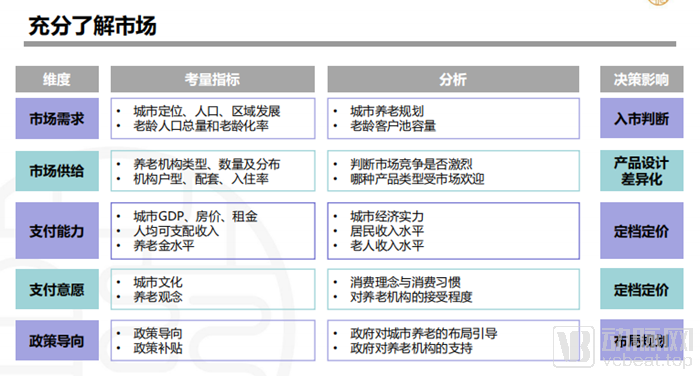
First, it is essential to understand the market and assess customer needs, then determine project positioning based on those needs, thereby defining service offerings, project design, hard finishing, and other elements. During this process, consideration must also be given to customers’ payment capacity to set pricing structures and further control costs.
After thoroughly understanding these issues, the first step is to establish a precise positioning for the project, encompassing both its scale and target customer segment. Based on industry experience, the project must achieve a minimum viable scale for economic efficiency: community-based small-scale facilities should have more than 130 beds, while integrated medical-nursing care institutions should operate at approximately 500 beds.
Regardless of size, every project requires a dean, a director of nursing, a chef, as well as administrative and logistical management staff; these costs are fixed. Beyond fixed investments, the scale of the physical space must also be taken into account. Otherwise, two scenarios may arise: high pricing with discounts leads to full occupancy but no profit; low pricing with small scale also results in full occupancy yet still no profit.
Regarding project positioning, precision is paramount. Self-care seniors prioritize cultural and recreational activities, while those requiring nursing care focus on medical services. For an institution with 150 beds, the facility typically spans 5,000 to 6,000 square meters. Within such a footprint, it is impossible to deeply integrate two or three different service models simultaneously.
In a limited space, the amount of area an enterprise allocates to supporting facilities corresponding to its type (care-based or self-care-based) determines the depth of services it provides in that particular category.
Therefore, it is recommended that enterprises focus on three core dimensions when determining their market positioning: First, customer purchasing power, which determines the level of project quality, such as whether to target the high-end or inclusive segment. Second, a relatively uniform level of care, which enables more precise allocation of supporting services; for instance, public areas for independent-living residents should primarily feature cultural and recreational facilities, those for assisted-living residents should focus on rehabilitation and physiotherapy, and those for skilled-nursing residents should prioritize medical and nursing care. Third, a relatively homogeneous cultural background among customers, which allows for more concentrated demand and facilitates the creation of niche, community-based elderly care ecosystems.
From the perspective of customer service needs, the needs of the elderly are categorized into four levels, from low to high: daily living care, medical rehabilitation, cultural and recreational activities, and sense of value.
Among these, the sectors of daily living care and medical rehabilitation can achieve standardization, institutionalization, and process optimization. In terms of cultural and recreational activities, it is essential to integrate local cultural elements and enhance supporting services for dining and entertainment to address social and spiritual-cultural needs. Fostering a sense of value is a key link in building corporate core competitiveness; enterprises must develop distinctive or flagship products to meet personalized demands.
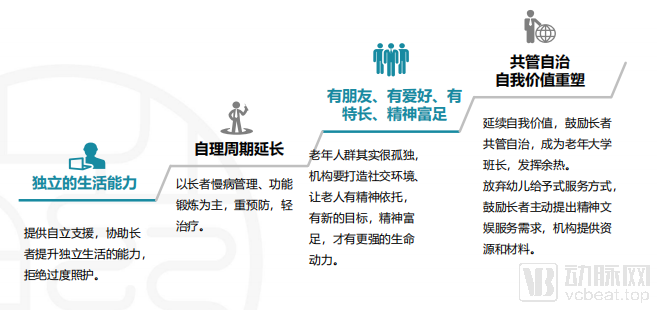
Based on its research, Shouci Elderly Care has concluded that the payment capacity in the Chengdu market ranges from RMB 4,500 to RMB 6,500. With this understanding of market affordability, the challenge lies in developing a cost-effective product that meets the needs of seniors, remains affordable for them, and allows the enterprise to control costs while ensuring profitability.
When there is a ceiling on customer payments, reduce inputs rather than increase customer costs. Under this logic, implement full-process cost control across the early, middle, and late stages. The cost structure consists of two categories: the first is one-time upfront investment costs, and the second is operational costs.
Initial investment costs include renovation costs and hard/soft furnishing costs. Regarding renovation costs, long-term operations must be considered; when investing in basic infrastructure and facilities, future energy consumption should be taken into account. As for hard and soft furnishing costs, a pragmatic approach is required, prioritizing soft furnishings over hard fixtures to provide what seniors truly need.
Operational costs in the later stages include rent, labor, and energy consumption. Regarding rent, the focus should be on the cost per bed rather than the cost per square meter, as rent is closely correlated with occupancy rates and bed utilization rates. Labor costs constitute the most significant expense for elderly care institutions. Effective control of labor costs is achieved through precise project positioning to minimize unnecessary labor waste, as well as through optimized design and management practices to reduce overall labor expenditures.
From the perspective of overall operational costs, efficiency must be driven through design. For instance, in terms of labor allocation optimization, placing administrative offices adjacent to service and consultation areas allows administrative staff to serve as backup for front-desk roles, thereby reducing headcount from three to one. Regarding operational energy consumption control, engage in operational consultations during the initial infrastructure design and equipment procurement phases. Examples include incorporating underfloor heating to avoid excessive energy consumption by air conditioning systems in winter, and selecting equipment with high energy efficiency ratios to minimize unnecessary energy waste in later stages.
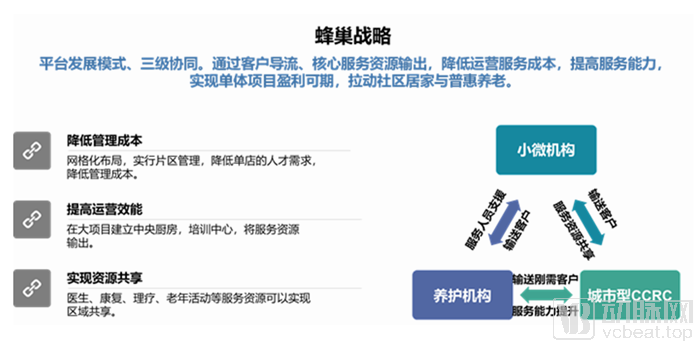
Shouci Elderly Care implements a three-tier grid layout, promoting the integrated development of home-based, community-based, and institutional elderly care. It has established three product lines: “Urban Wellness Centers,” “Medically Integrated Nursing Centers,” and “Small-Scale Community Home-Based Facilities.” By adopting a hive strategy—leveraging customer referral flows and exporting core service resources—the company reduces operational service costs, enhances service capacity, and ensures the profitability of individual projects.
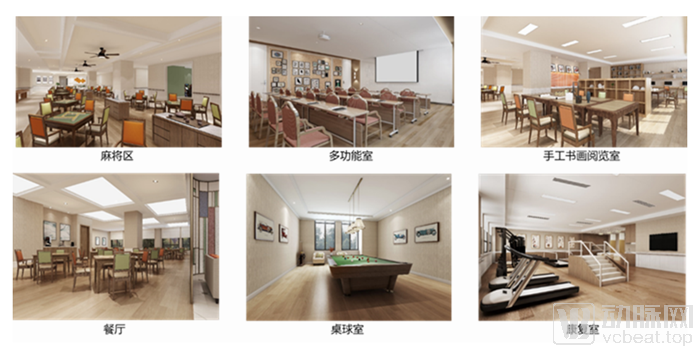
Shouci Elderly Care adheres to a buyer’s market benchmark and a customer-needs-oriented approach, creating affordable products for its clients. In terms of dining, it adopts a small-portion dish format to meet the multi-level and diverse dietary preferences of seniors. Regarding ambiance, it features care-level living rooms to foster a “home-like” atmosphere. For integrated medical and elderly care, it includes an on-site medical rehabilitation area to address three tiers of needs: daily wellness, rehabilitation, and medical security. In terms of amenities, it combines local cultural characteristics to provide the most popular cultural and recreational activities, while encouraging senior community leaders to help elders reshape their sense of value.
Shouci has already launched three projects in Zhengzhou and Chengdu, with projects in Beijing and Shanghai currently underway. In the Chengdu market, Shouci aims to cultivate deep-rooted development within a specific region. The “Shouci (Chengdu High-Tech) Lexianghui Elderly Care Center” project is scheduled to commence operations in November 2019, followed by the launch of one or two additional nursing-care projects to foster industrial synergy.
Note: All images in this article, unless otherwise credited, are provided by the company.