

Draft Revision of the Measures for the Administration of Drug Registration (Public Comment Version) – NMPA, Feedback Deadline October 30, 2019
Source: NMPA
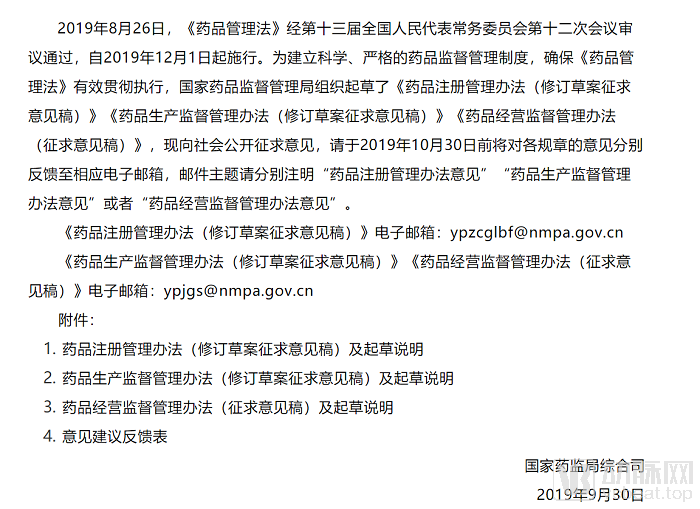
Annex 1: Administrative Measures for Drug Registration (Revised Draft for Comment) and Explanatory Notes on the Drafting
Measures for the Administration of Drug Registration
(Draft for Comments)
Chapter I General Provisions
Article 1 (Legal Basis) These Measures are formulated to regulate drug registration activities and ensure the safety, efficacy, and quality controllability of drugs, in accordance with the Drug Administration Law of the People's Republic of China (hereinafter referred to as the "Drug Administration Law"), the Traditional Chinese Medicine Law of the People's Republic of China, the Vaccine Administration Law of the People's Republic of China (hereinafter referred to as the "Vaccine Administration Law"), the Administrative Licensing Law of the People's Republic of China (hereinafter referred to as the "Administrative Licensing Law"), and the Regulations for the Implementation of the Drug Administration Law of the People's Republic of China (hereinafter referred to as the "Regulations for the Implementation of the Drug Administration Law").
Article 2 (Scope of Application) These Measures shall apply to activities related to drug development, registration, and their supervision and administration conducted within the territory of the People's Republic of China for the purpose of obtaining drug marketing authorization.
Article 3 (Definition of Drug Registration) Drug registration refers to the process whereby an applicant submits a drug registration application in accordance with statutory procedures and relevant requirements, and the drug regulatory authority conducts reviews of safety, efficacy, and quality controllability based on existing laws, regulations, and scientific knowledge, thereby making a decision on whether to approve the application.
Article 4 (Drug Registration Matters) Drug registration matters include licensing items such as applications for drug clinical trials, applications for drug marketing registration, supplemental drug applications, and drug re-registration applications, as well as other filing or reporting matters.
Article 5 (Categories of Drug Registration) Drug registration categories are classified into traditional Chinese medicines, chemical drugs, biological products, and others.
Classification of Traditional Chinese Medicine (TCM) Registrations: Innovative Drugs, Improved New Drugs, TCM Compound Preparations Based on Ancient Classic Prescriptions, Similar Drugs with the Same Formula, and TCM Drugs Marketed Overseas but Not Yet in China, etc.
Chemical Drug Registration Categories: Innovative Drugs, Improved New Drugs, Generic Drugs, and Chemical Drugs Already Marketed Abroad but Not Yet in China, etc.
Classification of Biological Products for Registration: Innovative Biological Products, Modified Biological Products, Biological Products Already Marketed in China (including biosimilars and biological products already marketed in China that are not regulated as biosimilars), and Biological Products Already Marketed Abroad but Not Yet in China, etc.
The National Medical Products Administration (hereinafter referred to as the NMPA) shall organize the formulation and publication of detailed classification categories for various types of drugs and the corresponding requirements for submission dossiers, based on the product characteristics, degree of innovation, and review and management needs of registered drugs.
Article 6 (Responsibilities of the National Medical Products Administration) The National Medical Products Administration shall be responsible for the national administration of drug registration, establish the drug registration management system and regulations, and organize drug registration review and approval as well as related supervisory and administrative activities in accordance with the law.
The National Medical Products Administration (NMPA) has established a technical review system with evaluation as the core and inspection and testing as support. The Center for Drug Evaluation (CDE) of the NMPA is responsible for accepting and reviewing drug registration matters, including applications for clinical trials, marketing authorization, supplemental applications, and re-registration of drugs manufactured abroad but marketed in China, and makes administrative licensing decisions in the name of the NMPA.
The Center for Food and Drug Inspection and Verification of the National Medical Products Administration (hereinafter referred to as the NMPA Center for Drug Inspection), the National Institutes for Food and Drug Control (hereinafter referred to as the NIFDC), the Chinese Pharmacopoeia Commission (hereinafter referred to as the ChP Commission), the Administrative Affairs Acceptance Service and Complaints and Reports Center of the National Medical Products Administration (hereinafter referred to as the NMPA Center for Acceptance and Complaints), the Center for Drug Reevaluation of the National Medical Products Administration, the Information Center of the National Medical Products Administration, and other professional technical institutions in the pharmaceutical field shall undertake tasks related to drug registration management as required by law, including drug registration inspections, testing, formulation and revision of standards, certificate issuance and delivery, monitoring and evaluation, as well as the construction, management, and maintenance of corresponding information systems or platforms.
Article 7 (Authority of Provincial Bureaus) The drug regulatory departments of the people's governments of provinces, autonomous regions, and municipalities directly under the Central Government (hereinafter referred to as "provincial bureaus") shall be responsible for the administration of drug registration within their respective administrative areas:
(I) Acceptance, review, and approval of drug re-registration;
(II) Management of Filing and Reporting Requirements for Post-Approval Changes to Drugs;
(3) Routine supervision of non-clinical drug safety evaluation institutions and clinical trial institutions, and participation in the investigation and handling of violations of laws and regulations;
(4) Participate in the drug registration inspections and testing organized by the National Medical Products Administration;
(5) Other drug registration-related matters entrusted by the National Medical Products Administration.
Article 8 (Policy Orientation for Administration) The administration of drug registration shall adhere to the principles of openness, fairness, and impartiality, be guided by clinical value, encourage the research and development of new drugs, optimize the review and approval processes, and improve the efficiency of review and approval.
Chapter 2 Basic Systems and Requirements
Article 9 (Regulatory System) Entities engaged in drug research and development and registration activities shall comply with laws, regulations, rules, standards, and norms, ensuring that information throughout the entire process is authentic, accurate, complete, and traceable. Such activities shall be conducted in accordance with established procedures and with reference to current technical guidelines. Where applicants adopt alternative evaluation methods and technologies, they shall demonstrate their scientific validity and applicability.
Technical institutions such as the Center for Drug Evaluation of the National Medical Products Administration shall formulate technical guidelines and procedures based on scientific advancements and operational needs, regularly develop and revise work plans, and make them publicly available.
Article 10 (Qualification Requirements for Applicants) Applicants shall be enterprises or drug research and development institutions capable of bearing corresponding legal liabilities. Where the applicant is an overseas enterprise or drug research and development institution, the application shall be handled by its representative office within the territory of China or by a Chinese corporate legal entity entrusted by it.
Article 11 (Drug Marketing Authorization Registration System) Prior to applying for drug marketing authorization registration, the applicant shall complete research work including pharmaceutical studies, pharmacological and toxicological studies, and corresponding clinical trials. Among these, non-clinical safety evaluation studies of drugs shall be conducted at institutions certified under the Good Laboratory Practice for Non-Clinical Laboratory Studies and shall comply with the Good Laboratory Practice for Non-Clinical Laboratory Studies; clinical drug trials shall be approved by the Center for Drug Evaluation of the National Medical Products Administration; bioequivalence studies for chemical generic drugs shall be filed with the Center for Drug Evaluation of the National Medical Products Administration, conducted at clinical trial institutions that have completed such filing, and shall comply with the Good Clinical Practice.
To apply for drug registration, authentic, sufficient, and reliable data, materials, and samples shall be provided to demonstrate the safety, efficacy, and quality controllability of the drug. Where clinical trial data and materials obtained outside China are used to support marketing authorization applications, they shall comply with the requirements of China’s drug registration regulations.
Article 12 (Drug Change System) Where there are any changes to, additions to, or cancellations of the items or content originally approved, filed, or reported in the drug registration, the applicant shall conduct adequate research and validation on the drug changes, fully assess the potential impact of such changes on the safety, efficacy, and quality controllability of the drug, and, after determining the category of the change, submit a supplemental application, filing, or report in accordance with the prescribed procedures.
Article 13 (Drug Re-registration System) The validity period of the drug marketing approval document is five years. The Marketing Authorization Holder shall continuously ensure the safety, efficacy, and quality controllability of the drug, and apply for drug re-registration six months prior to the expiration of the validity period. The re-registration of drugs manufactured domestically shall be handled by the provincial-level drug regulatory authority where the Marketing Authorization Holder is located. The re-registration of drugs manufactured overseas but marketed in China shall be handled by the Center for Drug Evaluation of the National Medical Products Administration.
Article 14 (Accelerated Marketing Authorization Registration System) Support drug innovation oriented by clinical value, and establish an accelerated marketing authorization registration system for drugs. For drug registration applications that meet the specified criteria, applicants may apply to enter the Breakthrough Therapy Drug Program, Conditional Approval Program, Priority Review and Approval Program, and Special Approval Program. During the drug development and registration process, policy support shall be provided, including technical guidance, communication throughout the entire process, priority allocation of resources, and shortened review timelines.
Article 15 (Linked Review and Approval System) A linked review and approval system shall be established. When approving drugs, active pharmaceutical ingredients (APIs) shall be reviewed and approved concurrently, and related excipients, as well as packaging materials and containers in direct contact with drugs, shall be reviewed concurrently. Specifically, APIs shall be approved concurrently during the approval of drug products; APIs for drugs already marketed in China may apply for separate review.
Establish an information registration platform for active pharmaceutical ingredients (APIs), related excipients, and packaging materials and containers that come into direct contact with drugs (hereinafter referred to as "APIs, excipients, and packaging"), register their information, and link it during the review of drug formulations.
Article 16 (System for Registration and Conversion of Over-the-Counter Drugs) Optimize the registration of over-the-counter (OTC) drugs. The Center for Drug Evaluation of the National Medical Products Administration shall formulate technical guidelines and procedures for the marketing registration of OTC drugs based on their characteristics, and make them public to the society. Prescription drugs and OTC drugs already on the market may be converted between each other after approval for marketing; the Center for Drug Reevaluation of the National Medical Products Administration shall formulate relevant technical guidelines and procedures, and make them public to the society.
Article 17 (Communication and Consultation System) A system for communication and consultation shall be established. Prior to submitting an application for a drug clinical trial, during key stages of the drug clinical trial, and prior to submitting a marketing authorization application for a drug, the applicant may submit a request for communication and consultation to technical institutions such as the Center for Drug Evaluation (CDE) of the National Medical Products Administration (NMPA) regarding major issues. During the drug registration process, technical institutions such as the CDE of the NMPA may organize communication and consultation with the applicant as needed. The procedures, requirements, and timelines for communication and consultation shall be formulated respectively by technical institutions such as the CDE of the NMPA in accordance with their functions and made publicly available.
Article 18 (Expert Consultation System) An expert consultation system shall be established. Technical institutions such as the Center for Drug Evaluation of the National Medical Products Administration shall, based on work requirements, actively solicit expert opinions during processes including review, inspection, testing, and the formulation and revision of standards, thereby fully leveraging the technical support provided by experts.
Article 19 (System of the Catalogue of Marketed Drugs) A system of the Catalogue of Marketed Drugs shall be established. The Catalogue of Marketed Drugs shall include approved marketed drugs, such as new drugs and generic drugs, and specify relevant information including drug names, active ingredients, dosage forms, strengths, whether they are reference listed drugs, and marketing authorization holders, and such information shall be made public. The procedures and requirements for inclusion in the Catalogue of Marketed Drugs shall be formulated by the Center for Drug Evaluation of the National Medical Products Administration and announced to the public.
Article 20 (Supporting the Inheritance and Innovation of Traditional Chinese Medicine) Support the inheritance and innovation of Traditional Chinese Medicine (TCM). Establish and improve a registration management system and technical evaluation framework that aligns with the characteristics of TCM, integrating the traditional advantages of TCM with the scientific requirements for pharmaceutical research and development.
Innovative traditional Chinese medicine (TCM) drugs should highlight novel therapeutic characteristics; improved new TCM drugs should demonstrate advantages in clinical application; TCM drugs derived from classic prescriptions shall be reviewed and approved under simplified standards; and natural medicines shall be reviewed and approved in accordance with modern medical standards.
Enhancing Clinical Research Capabilities for Traditional Chinese Medicine: Registration Applications Must Submit Materials on Clinical Value and Resource Assessment, Emphasizing a Clinical Value-Oriented Approach to Promote Sustainable Resource Utilization.
Encourage the research and development of traditional Chinese patent medicines using modern science and technology, promote the development of new Chinese medicines by leveraging the advantages of traditional dosage forms, and strengthen quality control of Chinese medicines.
Chapter 3 Drug Marketing Registration
Section 1 Clinical Drug Trials
Article 21 (Scope of Application) The term "drug clinical trials" as used in these Measures refers to drug studies conducted in humans to determine the safety and efficacy of drugs, for the purpose of marketing registration or in accordance with the requirements of drug regulatory authorities.
Article 22 (Phases of Clinical Trials) Drug clinical trials are generally divided into Phase I, Phase II, Phase III, and Phase IV.
Phase I Clinical Trial: A clinical trial that studies and evaluates the tolerance, pharmacokinetics, and preliminary pharmacodynamics (if possible) of a drug in humans;
Phase II Clinical Trial: A clinical trial conducted in patients with specific indications to preliminarily evaluate the efficacy and safety of a drug;
Phase III Clinical Trial: A well-controlled clinical trial with an adequate sample size, conducted after preliminary evidence of safety and efficacy has been obtained, to evaluate the overall benefit-risk profile of the investigational drug and thereby serve as a confirmatory clinical trial supporting drug marketing approval;
Phase IV Clinical Trial: The post-marketing application research stage of a new drug. Its purpose is to evaluate the efficacy and adverse reactions of the drug under conditions of widespread use, assess the benefit-risk relationship in general or special populations, and optimize dosing regimens.
Clinical drug trials are typically conducted in sequential phases; however, depending on the drug’s characteristics and research objectives, one or more phase-specific studies may be carried out, or phases may be conducted in an overlapping or interleaved manner.
Bioequivalence Study: Clinical trial research conducted to demonstrate that the differences in the rate and extent of absorption of the drug in the test formulation compared to the reference formulation fall within an acceptable range. When developing generic chemical drugs, bioequivalence studies can be used to bridge the safety and efficacy between different formulations.
Article 23 (Requirements for Clinical Trial Institutions) Drug clinical trials shall be conducted at clinical trial institutions that possess the corresponding conditions and have been filed for record. Among these, vaccine clinical trials shall also be implemented or organized and implemented by tertiary medical institutions or disease prevention and control institutions at or above the provincial level that meet the conditions prescribed by the National Medical Products Administration and the health administrative department of the State Council.
Article 24 (Application and Approval for Clinical Trials) After completing pharmaceutical, pharmacological, toxicological, and other studies supporting the clinical trial of a drug, the applicant shall submit an application for drug clinical trials to the Center for Drug Evaluation of the National Medical Products Administration (NMPA), providing relevant research data in accordance with the requirements for submission materials. The Center for Drug Evaluation of the NMPA shall conduct a formal review of the submission materials. If the materials meet the requirements, a Notice of Acceptance shall be issued; if they do not meet the requirements, a Notice of Non-Acceptance or a Notice for Correction of Submission Materials shall be issued, with reasons provided.
The Center for Drug Evaluation of the National Medical Products Administration shall organize professionals in pharmacy, medicine, and other technical fields to review accepted applications for drug clinical trials. It shall decide whether to approve the conduct of the drug clinical trial within 60 working days from the date of acceptance. For applications meeting the requirements, a “Notice of Approval for Drug Clinical Trial” shall be issued; for those not meeting the requirements, a “Notice of Review Opinion” shall be issued. The applicant shall be notified of the review result via the website. Failure to notify within the specified period shall be deemed as approval, and the applicant may proceed with the drug clinical trial in accordance with the submitted protocol.
Article 25 (Filing of Bioequivalence Studies) Where an applicant intends to conduct bioequivalence studies for generic drugs, it shall complete the filing of such studies on the website of the Center for Drug Evaluation of the National Medical Products Administration in accordance with the requirements, and then carry out the relevant research work according to the filed protocol.
Article 26 (Adding Indications During Clinical Trials) For drug clinical trials that have already been approved, if the applicant intends to add indications or functional indications, or to use the drug in combination with other drugs, the applicant shall, in principle, submit a new application for drug clinical trial to the Center for Drug Evaluation of the National Medical Products Administration. The new drug clinical trial may only be conducted after approval.
Article 27 (Conduct of Clinical Trials) The conduct of drug clinical trials shall be subject to review and approval by an ethics committee. Prior to conducting subsequent clinical trials for the same indication, the applicant shall submit the proposed protocol for the new clinical trial and related supporting materials to the Center for Drug Evaluation of the National Medical Products Administration, and may only commence the trial after updating the registration information on the Drug Clinical Trial Registration and Information Publicity Platform.
The manufacturing of investigational medicinal products for clinical trials shall comply with the relevant requirements of the Good Manufacturing Practice for Drugs.
Article 28 (Reporting During Clinical Trials) After obtaining approval to conduct drug clinical trials, the applicant shall regularly submit Development Safety Update Reports (DSURs) to the Center for Drug Evaluation of the National Medical Products Administration. In principle, DSURs shall be submitted annually, within two months after each anniversary of the approval of the drug clinical trial. The applicant may apply to the Center for Drug Evaluation of the National Medical Products Administration for adjustment of the reporting cycle. The Center for Drug Evaluation of the National Medical Products Administration may also require the applicant to adjust the reporting cycle based on its review findings.
For suspected unexpected serious adverse reactions (SUSARs) and other potential serious safety risks arising during clinical drug trials, the applicant shall submit SUSAR reports to the Center for Drug Evaluation (CDE) of the National Medical Products Administration in accordance with relevant requirements. Based on the severity of the safety risks, the CDE may require the applicant to strengthen risk control measures, such as amending the clinical trial protocol, informed consent form, and investigator’s brochure; if necessary, it may also require the applicant to suspend or terminate the clinical trial.
Article 29 (Changes During Clinical Trials) During the conduct of drug clinical trials, if there are any changes to the clinical trial protocol, non-clinical or pharmaceutical changes, or new findings, the applicant shall fully assess the impact on subject safety.
If the applicant assesses that the change will not affect subject safety, it may be implemented directly and reported in the Periodic Safety Update Report during drug development. If the change may increase safety risks to subjects, a supplemental application shall be submitted to the Center for Drug Evaluation (CDE) of the National Medical Products Administration (NMPA). The CDE shall decide whether to approve the application within 60 working days from the date of acceptance. If the application complies with regulatory requirements, an “Approval Notice for Supplemental Drug Registration Application” shall be issued; if it does not comply, a “Notice of Approval Opinion” shall be issued. Failure to notify within the specified timeframe shall be deemed as approval, and the applicant may implement the change directly.
Where there is a change in the sponsor of a drug clinical trial, the new sponsor shall assume the relevant responsibilities and obligations for the drug clinical trial.
Article 30 (Suspension or Termination) If safety issues or other risks are identified during the conduct of a drug clinical trial, the applicant shall promptly adjust the clinical trial protocol, suspend or terminate the clinical trial, and report to the Center for Drug Evaluation of the National Medical Products Administration.
Where any of the following circumstances occur, the Center for Drug Evaluation (CDE) under the National Medical Products Administration may, when necessary, order the applicant to adjust the clinical trial protocol, or suspend or terminate the drug clinical trial:
(1) Where the safety of subjects cannot be effectively ensured;
(2) The applicant fails to submit the periodic safety update report during drug development as required;
(3) The applicant fails to promptly address and report suspected unexpected serious adverse reactions;
(4) There is evidence demonstrating that the investigational drug is ineffective;
(5) Engaging in fraud or falsification in drug clinical trials;
(6) Other circumstances that violate the Good Clinical Practice for Drug Trials.
In the event of widespread, unexpected serious adverse reactions during a drug clinical trial, or when there is evidence indicating serious quality issues with the investigational drug, the applicant and the drug clinical trial institution shall immediately suspend the clinical trial. The National Medical Products Administration (NMPA) or provincial-level medical products administrations may take emergency control measures to order the suspension or termination of the drug clinical trial.
Article 31 (Resumption of Clinical Trials) Where a drug clinical trial has been ordered to be suspended, if the applicant intends to continue the drug clinical trial after resolving the issues that led to the suspension, it shall submit a supplemental application for resumption of the drug clinical trial to the Center for Drug Evaluation of the National Medical Products Administration. The drug clinical trial may only be resumed upon examination and approval. If the suspension of the drug clinical trial has lasted for three years and no application for resumption has been filed or approved, the drug clinical trial approval shall be deemed terminated.
After the termination of a drug clinical trial, if the applicant intends to continue conducting the drug clinical trial, they shall resubmit an application for the drug clinical trial.
Article 32 (Validity Period of Clinical Trial Approval) The applicant shall initiate the drug clinical trial within three years after the approval of the drug clinical trial application. If more than three years have elapsed from the date of approval of the drug clinical trial application to the date when the first subject signs the informed consent form, the approval for such drug clinical trial shall be deemed terminated. Where the applicant intends to continue conducting the drug clinical trial, it shall file a new application for the drug clinical trial.
Article 33 (Registration and Public Disclosure of Clinical Trials) The applicant shall register the drug clinical trial on the Drug Clinical Trial Registration and Information Publicity Platform of the Center for Drug Evaluation (CDE) under the National Medical Products Administration prior to initiating the clinical trial. During the course of the drug clinical trial, the applicant shall continuously update the registration information, and shall register information such as the clinical trial results upon completion of the trial. The registered information shall be publicly disclosed on the platform, and the applicant shall be responsible for the authenticity of the drug clinical trial registration information.
The specific requirements for clinical trial registration and public disclosure of information are formulated and issued by the Center for Drug Evaluation (CDE) of the National Medical Products Administration.
Article 34 (Other Provisions) For drugs currently undergoing clinical trials intended to treat diseases that seriously endanger life and for which no effective treatment is available, if medical observation indicates potential benefit and ethical principles are met, such drugs may be used for other patients with the same condition within the institution conducting the clinical trial, following review and informed consent by the ethics committee and in accordance with the relevant requirements of the competent authorities.
Section 2 Registration for Drug Marketing Authorization
Article 35 (Complete Pathway for New Drug Application [NDA] for Marketing Authorization) After completing the relevant studies in pharmaceutical sciences, pharmacology and toxicology, and clinical trials to support drug marketing registration, establishing quality standards, completing process validation at commercial scale, and preparing for on-site inspections and testing, the applicant shall submit a drug marketing registration application to the Center for Drug Evaluation (CDE) of the National Medical Products Administration (NMPA), along with the relevant study data as required by the submission guidelines. The CDE shall conduct a formal review of the submission materials. If the requirements are met, a Notice of Acceptance shall be issued; if not, a Notice of Non-Acceptance or a Notice of Request for Supplementary Information shall be issued, with reasons provided.
Article 36 (ANDA Pathway for Direct Marketing Application) For chemical generic drugs and the like, if the applicant assesses that clinical trials are unnecessary or cannot be conducted, the applicant may apply for a waiver of clinical trials and directly submit an application for drug marketing registration.
Chemical generic drugs shall be consistent with the reference listed drug in quality and efficacy. Applicants shall select an appropriate reference listed drug in accordance with the relevant requirements of the National Medical Products Administration.
Guidelines for Waiving Drug Clinical Trials shall be separately formulated and issued by the Center for Drug Evaluation of the National Medical Products Administration.
Article 37 (OTC Drug Registration Pathway) Under any of the following circumstances, an application for marketing registration of over-the-counter (OTC) drugs may be submitted directly:
(1) Drugs for which over-the-counter (OTC) medicines with the same active ingredient, indications or functional indications, dosage form, and strength have already been marketed in China;
(2) Drugs whose dosage form or specification has been changed as determined by the National Medical Products Administration, provided that the indications or functional indications, dosage, and route of administration remain unchanged;
(3) Use of new compound preparations composed of active ingredients of over-the-counter drugs determined by the National Medical Products Administration;
(4) Other circumstances for direct application of over-the-counter drugs.
Article 38 (Approval of Generic Names) For the proposed generic name of a drug under application, if it is not included in the national drug standards, the applicant shall simultaneously submit an application for approval of the generic name when filing the marketing authorization application. After the marketing authorization application is accepted, the relevant materials for generic name approval shall be transferred to the Chinese Pharmacopoeia Commission, which shall review and approve the name and then provide feedback to the Center for Drug Evaluation of the National Medical Products Administration.
For the proposed generic name of a drug under application, if it has already been included in national drug standards, and the Center for Drug Evaluation (CDE) of the National Medical Products Administration (NMPA) deems it necessary to verify the generic name during the review process, the CDE shall notify the Chinese Pharmacopoeia Commission to verify the generic name. The Chinese Pharmacopoeia Commission shall provide feedback to the CDE after verification.
Article 39 (Review for Marketing Registration) The Center for Drug Evaluation of the National Medical Products Administration shall organize pharmaceutical, medical, and other technical personnel to review accepted applications for drug marketing registration within the prescribed time limits.
During the review process, risk-based initiation of drug registration inspections and testing shall be implemented, and the relevant departments shall complete such inspections and testing within the prescribed time limits.
The Center for Drug Evaluation (CDE) of the National Medical Products Administration (NMPA) reviews the safety, efficacy, and quality controllability of drugs based on application materials, drug registration inspections, and test results. For over-the-counter (OTC) drugs, the application shall also be forwarded to the Center for Drug Reevaluation (CDR) of the NMPA for OTC suitability review.
For applications with a favorable comprehensive review conclusion, the manufacturing process, quality standards, package insert, and labeling of the drug shall be approved.
Article 40 (Approval for Market Registration) Approval for drug marketing shall be granted, and the Drug Registration Approval Document and its attachments shall be issued.
The "Drug Registration Approval" specifies information such as the drug approval number, marketing authorization holder, and manufacturing enterprise. The attachments include post-marketing study requirements, manufacturing processes, quality standards, package inserts, and labels; for over-the-counter drugs, the OTC category is indicated.
If the comprehensive review conclusion is not approved, approval shall not be granted, and a “Notice of Approval Opinion” shall be issued.
Article 41 (Changes During Marketing Authorization Review) In principle, no changes that may affect the safety, efficacy, and quality controllability of the drug shall occur during the review of a drug marketing authorization application. If such changes occur, the applicant shall withdraw the original registration application and resubmit it after completing supplementary studies.
In the event of changes that do not involve technical review, such as a change in the applicant’s name or the name of the registered address, the applicant shall promptly notify the Center for Drug Evaluation (CDE) of the National Medical Products Administration in writing and submit relevant supporting documentation.
Section 3 Joint Review and Approval
Article 42 (Registration of Active Pharmaceutical Ingredients, Excipients, and Packaging Materials) Manufacturers of active pharmaceutical ingredients, excipients, and packaging materials shall register relevant product information and research data on the Registration and Information Publicity Platform for Active Pharmaceutical Ingredients, Excipients, and Packaging Materials hosted on the website of the Center for Drug Evaluation of the National Medical Products Administration. The Center for Drug Evaluation of the National Medical Products Administration shall disclose basic information to the public, including registration numbers, product names, and enterprise names.
Article 43 (Linkage of Drug Substances, Excipients, and Packaging Materials) When an applicant for a drug product submits an application for marketing registration, or when a marketing authorization holder for a drug product changes the active pharmaceutical ingredients, pharmaceutical excipients, or packaging materials and containers in direct contact with the drug used in an already marketed drug product, it may directly select registered varieties to submit the registration application or filing; if unregistered varieties are selected, the relevant research data shall be submitted together with the drug product application.
Article 44 (Linked Review of Active Pharmaceutical Ingredients, Excipients, and Packaging Materials) When reviewing applications for drug products, the Center for Drug Evaluation of the National Medical Products Administration shall conduct a linked review of the active pharmaceutical ingredients, excipients, and packaging materials used in such drug products. If supplementary information is required, the Center shall request the drug product applicant or the registrant of the active pharmaceutical ingredients, excipients, or packaging materials to provide such information in accordance with the procedures for supplementary submissions. Where necessary, risk-based extended inspections of the manufacturers of these materials may be initiated.
Chemical active pharmaceutical ingredients (APIs) used in the manufacture of generic drug products already marketed domestically may be subject to independent review and approval.
Article 45 (Disclosure of Information on Joint Review) For active pharmaceutical ingredients (APIs), excipients, and packaging materials that have passed the joint review, or for generic chemical APIs that have passed independent review, the Center for Drug Evaluation of the National Medical Products Administration shall update the registration status indicators on the registration platform and disclose relevant information to the public. In the case of APIs, a drug approval certificate along with the approved manufacturing process and quality standards shall also be issued.
If the associated review is not passed, the application for the relevant drug product will not be approved, and the registration status of the active pharmaceutical ingredients, excipients, and packaging materials will remain unchanged.
Section 4 Drug Registration Inspection
Article 46 (Basic Requirements) Drug registration inspection refers to the inspections conducted on the applicant’s non-clinical drug studies, clinical drug trials, and the sites for production-related research and development as well as manufacturing sites submitted for approval; it also includes extended inspections, when necessary, of manufacturers, suppliers, or other entrusted institutions involved in the production of active pharmaceutical ingredients, excipients, and packaging materials related to the drug registration application.
The purpose of drug registration inspection is to verify the authenticity and consistency of the submitted documentation, assess the conditions for commercial marketing and production of the drug, and examine the compliance and data reliability of the drug development and manufacturing processes.
Upon acceptance of a drug registration application, the Center for Drug Evaluation (CDE) of the National Medical Products Administration (NMPA) shall conduct a preliminary review of the accepted application. If the review determines that a drug registration inspection is required, the CDE shall, within 40 working days after the acceptance of the drug registration application, notify the Center for Food and Drug Inspection (CFDI) of the NMPA to initiate the inspection, provide the relevant materials required for the inspection, and simultaneously inform the applicant. In principle, the CFDI shall complete the inspection before the conclusion of the evaluation.
The specific principles, procedures, timelines, and requirements for the initiation of drug registration inspections shall be formulated and issued by the Center for Drug Evaluation (CDE) of the National Medical Products Administration (NMPA); the key points and adjudication principles for drug registration inspections shall be formulated and issued by the Center for Food and Drug Inspection (CFDI) of the NMPA.
Article 47 (On-site Inspection of Drug Development) The Center for Drug Evaluation of the National Medical Products Administration shall decide whether to conduct an on-site inspection of drug registration-related development activities based on factors such as the degree of drug innovation, the inspection history of the drug research institution, and the needs of the review process.
Where the Center for Drug Evaluation (CDE) of the National Medical Products Administration (NMPA) decides to initiate an on-site inspection of drug registration and development, it shall notify the Center for Drug Inspection (CDI) of the NMPA to organize and conduct the inspection during the review period, while simultaneously informing the applicant. The CDI of the NMPA shall complete the on-site inspection within the prescribed timeframe and submit relevant materials, including inspection details and conclusions, to the CDE of the NMPA for comprehensive review.
Article 48 (On-site Inspection of Manufacturing Sites) The Center for Drug Evaluation of the National Medical Products Administration shall determine whether to initiate an on-site inspection for drug registration manufacturing based on factors such as the product under application, manufacturing process, facilities, history of previous inspections, and review requirements.
Where the Center for Drug Evaluation (CDE) of the National Medical Products Administration (NMPA) decides to initiate an on-site inspection for drug registration production, it shall notify the Center for Food and Drug Inspection (CFDI) of the NMPA to organize and conduct the inspection during the review period, while simultaneously informing the applicant. Upon completion of the on-site inspection for drug registration production, the CFDI of the NMPA shall submit written feedback, including inspection details and results, to the CDE of the NMPA for comprehensive review.
Where a Good Manufacturing Practice (GMP) inspection is required to be conducted concurrently prior to drug approval for marketing, the applicant shall, upon receiving the notice for on-site inspection of drug registration production, submit a request to the provincial-level drug regulatory authority in its locality for concurrent GMP inspection. Upon completion of the GMP inspection, the provincial-level drug regulatory authority shall submit relevant materials, including details of the GMP inspection and inspection results, to the Center for Drug Evaluation of the National Medical Products Administration for comprehensive review.
Article 49 (Coordination between On-site Production Inspection and GMP Inspection) For innovative drugs, improved new drugs, and biological products managed as new drugs, an on-site inspection for drug registration production shall be conducted. Upon notification of the on-site inspection for drug registration production, the applicant shall request the provincial medical products administration in its locality to conduct a concurrent Good Manufacturing Practice (GMP) inspection; if the applicant already holds a Drug Production License covering the corresponding production scope, it may refrain from requesting a GMP inspection.
For generic drugs and other products for which the manufacturer does not hold a Drug Production License covering the corresponding production scope, the Center for Drug Evaluation (CDE) of the National Medical Products Administration (NMPA) shall initiate an on-site inspection for drug registration production based on risk assessment. Where such an on-site inspection is initiated, the applicant shall, upon receiving the notification, request the provincial-level drug regulatory authority in its locality to conduct a concurrent Good Manufacturing Practice (GMP) inspection. Where no on-site inspection for drug registration production is required, the CDE shall notify the applicant to request the provincial-level drug regulatory authority in its locality to conduct a GMP inspection.
For generic drugs and other products that have already obtained a Drug Production License covering the corresponding production scope and have listed products of the same dosage form, on-site inspections for drug registration production are generally no longer conducted.
Article 50 (For-Cause Inspection) During the review of a drug registration application, if doubts arise regarding the authenticity of the submitted materials or if there are specific leads from reports necessitating on-site verification, the Center for Drug Evaluation of the National Medical Products Administration shall initiate a for-cause inspection and, when necessary, conduct sampling and testing.
Article 51 (Other Requirements) A drug manufacturing license covering the corresponding scope of production shall be obtained prior to the issuance of the drug approval document.
Section 5 Drug Registration Testing
Article 52 (Basic Requirements) Drug registration testing includes standard verification and sample testing.
Standard review refers to the technical assessment of the scientific validity of items specified in the drug standards submitted by applicants, the feasibility of test methods, and the rationality of quality control indicators.
Sample testing refers to laboratory testing conducted in accordance with the drug quality standards declared by the applicant or approved by the Center for Drug Evaluation of the National Medical Products Administration.
The technical requirements and specifications for drug registration testing shall be separately formulated and issued by the National Institutes for Food and Drug Control (NIFDC).
Article 53 (Division of Responsibilities) The registration testing for the following drugs shall be undertaken by the National Institutes for Food and Drug Control or by drug testing institutions designated by the National Medical Products Administration:
(1) Innovative drugs and improved new drugs (excluding traditional Chinese medicines);
(2) Biological products and radioactive pharmaceuticals;
(3) In vitro diagnostic reagents regulated as drugs;
(4) Other drugs as stipulated by the National Medical Products Administration.
The registration testing of drugs manufactured overseas and marketed domestically shall be organized and implemented by the National Institutes for Food and Drug Control (NIFDC).
Registration testing for other drugs shall be conducted by the provincial drug testing institute in the locality of the applicant.
Article 54 (Principles for Initiation) The Center for Drug Evaluation of the National Medical Products Administration shall initiate sample testing and standard verification based on risk assessment.
Sample testing and standard review shall be conducted for new drug marketing applications, first-time applications for generic drugs, and first-time applications for drugs manufactured overseas. For other drugs, sample testing and standard review shall be initiated when necessary.
If the test items and methods are consistent with those specified in the existing national standards for the same variety, or if the scientific validity, feasibility, and rationality of the drug standards can be assessed through review, re-examination of the standards may be waived.
Article 55 (Standard Verification) Upon acceptance of a drug registration application, the Center for Drug Evaluation of the National Medical Products Administration shall conduct a preliminary review of the accepted application. If standard verification is deemed necessary following the review, it shall notify the drug testing institution within 40 working days after the acceptance of the drug registration application, provide the relevant materials required for standard verification, and simultaneously inform the applicant.
Article 56 (Sample Testing Procedures) Where the Center for Drug Evaluation of the National Medical Products Administration requires sample testing upon initiating a drug registration inspection, it shall specify the testing requirements.
The National Medical Products Administration’s Center for Drug Evaluation and Inspection draws samples during the inspection of drug registration batches and arranges for their delivery to the corresponding drug testing institutions.
If the Center for Drug Evaluation (CDE) of the National Medical Products Administration (NMPA) does not require sample testing when initiating a registration inspection, the Center for Food and Drug Inspection (CFDI) of the NMPA may also initiate sample testing as appropriate.
During the review process, the Center for Drug Evaluation (CDE) of the National Medical Products Administration may initiate sample testing as needed. The applicant shall apply for sampling to the provincial-level drug regulatory authority in their locality based on the Notice of Drug Registration Testing. After the provincial-level authority conducts sampling in accordance with requirements, the applicant shall submit the samples to the designated drug testing institute for analysis.
Test samples of drugs manufactured overseas and marketed domestically shall be submitted by the applicant to the National Institutes for Food and Drug Control (NIFDC).
Article 57 (Reference Standards for Testing) During drug registration testing, if national drug reference standards are available, the drug testing institution shall use such national drug reference standards; if non-national drug reference standards are used, the applicant shall provide the reference standards when applying for drug registration testing.
Article 58 (Submission Requirements) Applicants shall, at the time of submitting a drug registration application, prepare the materials and samples required for drug registration testing. Where standard verification is required, the applicant shall provide relevant materials, samples, and reference standards within 30 working days; where sampling is required, the applicant shall cooperate with the sampling process and provide test samples, materials, and relevant reference standards.
The applicant is responsible for the authenticity of the submitted samples and materials.
Section 6 Drug Manufacturing Processes, Quality Standards, Package Inserts, and Labels
Article 59 (Approval Procedure) The drug manufacturing process, quality standards, package insert, and labels shall be proposed by the applicant when submitting the drug registration application. The Center for Drug Evaluation of the National Medical Products Administration shall approve them during the review process and issue them to the applicant upon approval of the drug registration application. The approved drug manufacturing process, quality standards, package insert, and labels shall be incorporated into the drug product dossier and updated in a timely manner according to post-marketing changes.
The general formats and drafting guidelines for drug manufacturing processes, quality standards, package inserts, and labels shall be separately formulated by the Center for Drug Evaluation of the National Medical Products Administration and made public.
Article 60 (Manufacturing Process) After a drug is approved for marketing, the Marketing Authorization Holder shall manufacture the drug in accordance with the manufacturing process approved by the National Medical Products Administration, and shall refine and implement it in compliance with the requirements of the Good Manufacturing Practice for Drugs. Where changes are made to the manufacturing process, the Marketing Authorization Holder shall conduct adequate research and validation prior to implementation, and submit a supplemental application, filing, or report in accordance with the procedures for post-approval changes to drugs as stipulated in these Measures.
Article 61 (Drug Registration Standards) The quality standards for specific drugs approved by the National Medical Products Administration and issued to applicants during the drug approval process, also known as drug registration standards.
Drug registration standards shall comply with the general technical requirements of the Chinese Pharmacopoeia and shall not be lower than the specifications stipulated therein. If the test items or specifications for the product under application are not applicable to the Chinese Pharmacopoeia, the applicant shall provide sufficient supporting data.
Article 62 (Package Inserts and Labels) The format and content of the package inserts and labels for drugs applying for marketing registration shall comply with the relevant provisions on the administration of drug package inserts and labels. After a drug is approved for marketing, the Marketing Authorization Holder shall continuously conduct studies on the safety and efficacy of the drug, and promptly file records or submit supplemental applications for revisions to the package insert based on relevant data, so as to continuously update and improve the package insert and labels; the drug regulatory department may require the Marketing Authorization Holder to revise the package insert and labels based on the results of adverse drug reaction monitoring and post-marketing evaluation, among other factors.
Chapter 4 Accelerated Registration for Drug Market Approval
Section 1 Breakthrough Therapy Drug Program
Article 63 (Scope of Application) During the clinical trial period of a drug, an innovative drug intended for the prevention or treatment of serious life-threatening diseases or conditions that significantly impair quality of life, for which no effective preventive or therapeutic measures are currently available, or for which there is sufficient evidence demonstrating a significant clinical advantage over existing treatments, may be eligible to apply for the Breakthrough Therapy Designation program.
Article 64 (Application Procedures) Applicants seeking to enter the Breakthrough Therapy Drug Program shall submit an application to the Center for Drug Evaluation of the National Medical Products Administration during the period of clinical drug trials. If the eligibility criteria are met, the Center for Drug Evaluation of the National Medical Products Administration shall include the drug in the program after public notification in accordance with established procedures.
Article 65 (Support Policies) The following policy support shall be provided for drug clinical trials included in the Breakthrough Therapy Drug Program:
(1) Applicants may submit a request for communication and consultation to the Center for Drug Evaluation (CDE) of the National Medical Products Administration (NMPA) during key stages of drug clinical trials, and the CDE shall arrange for senior reviewers to conduct such communications.
(2) The applicant may submit phased research data to the Center for Drug Evaluation (CDE) of the National Medical Products Administration (NMPA). Based on the available research data, the CDE shall provide opinions or recommendations on the subsequent study protocol and communicate them to the applicant.
(3) Those meeting the eligibility criteria may continue to be included in the conditional approval pathway and the priority review and approval pathway.
Article 66 (Termination Procedures) For drug clinical trials included in the Breakthrough Therapy Drug Program, if the applicant discovers that the criteria for inclusion are no longer met, they shall promptly submit a request to the Center for Drug Evaluation of the National Medical Products Administration to terminate the Breakthrough Therapy Drug Program; if the Center for Drug Evaluation of the National Medical Products Administration discovers that the criteria for inclusion are no longer met, it shall promptly terminate the Breakthrough Therapy Drug Program for that product and notify the applicant.
Section 2 Conditional Approval Procedures
Article 67 (Scope of Conditional Approval) During the course of drug clinical trials, drugs meeting any of the following circumstances may apply for entry into the conditional approval procedure:
(1) Drugs for the treatment of diseases that are serious and life-threatening and for which no effective treatments are currently available, where existing data from drug clinical trials have confirmed efficacy and can predict their clinical value;
(2) Drugs urgently needed for public health, where existing data from drug clinical trials demonstrate efficacy and allow prediction of their clinical value;
(3) Vaccines urgently needed to respond to major public health emergencies, or other vaccines deemed urgently needed by the National Health Commission of the People's Republic of China, for which the benefits have been assessed to outweigh the risks.
Article 68 (Application Procedures) For applications for conditional marketing approval and registration, the applicant shall communicate with the Center for Drug Evaluation of the National Medical Products Administration regarding the conditions for conditional marketing approval and the post-marketing research studies to be completed. Upon confirmation through such communication, the applicant may submit an application for drug marketing registration. For those meeting the requirements, the Center for Drug Evaluation of the National Medical Products Administration shall include them in the list after public notification in accordance with established procedures.
Upon review by the Center for Drug Evaluation of the National Medical Products Administration, if a drug meets the requirements for conditional approval for marketing, the Drug Registration Certificate shall specify the validity period of the conditional marketing approval certificate, the post-marketing studies to be completed, and the deadlines for their completion, among other relevant matters.
Article 69 (Concurrent Application for Priority Review and Approval) Where an application is filed for conditional approval, if it also meets the requirements of the priority review and approval procedure, the applicant may apply to include the drug in the priority review and approval procedure, thereby enjoying the corresponding preferential policies.
Article 70 (Post-Marketing Requirements) For drugs granted conditional approval, the marketing authorization holder shall implement corresponding risk management measures after the drug is marketed, and complete relevant studies such as clinical trials within the specified timeframe in accordance with requirements, submitting them for review and approval by the Center for Drug Evaluation of the National Medical Products Administration via a supplemental application.
For vaccines subject to further research requirements at the time of approval of their registration applications, the vaccine marketing authorization holders shall complete such studies within the specified timeframe.
Article 71 (Cancellation of Approved Documents) In any of the following circumstances, the National Medical Products Administration shall take actions in accordance with the law, up to and including the cancellation of the drug registration certificate for conditionally approved drugs:
(1) Failure to complete subsequent related studies as required within the specified timeframe;
(2) Where the review fails to demonstrate that the benefits outweigh the risks;
(3) Other circumstances that fail to meet the conditions for continued listing.
Section 3 Priority Review and Approval Procedures
Article 72 (Scope of Priority) When submitting a marketing authorization application for a drug, the following drugs with significant clinical value may apply to enter the priority review and approval process:
(1) Drugs included in the Breakthrough Therapy Designation program;
(2) Drugs included in the conditional approval for market registration;
(3) New drugs for clinically urgent shortage medicines, and for the prevention and treatment of major infectious diseases, rare diseases, and other conditions;
(4) New varieties, dosage forms, and specifications of pediatric drugs that align with the physiological characteristics of children;
(5) Vaccines urgently needed for disease prevention and control, and innovative vaccines;
(VI) Other circumstances under which priority review and approval may be implemented.
Article 73 (Application Procedures) An applicant may, concurrently with the submission of an application for drug marketing registration, submit an application for priority review and approval to the Center for Drug Evaluation (CDE) of the National Medical Products Administration. If the eligibility criteria are met, the CDE shall include the application in the priority review and approval procedure after public notification in accordance with established procedures.
Article 74 (Support Policies) The following policy support shall be provided for drug marketing registration applications included in the priority review and approval procedure:
(1) The review timeline for drug marketing registration is 120 working days;
(II) The review timeline for overseas-marketed rare disease drugs urgently needed for clinical use is 60 working days;
(3) For cases requiring examinations and tests, priority shall be given to arranging such examinations and tests;
(4) Submit materials on a rolling basis as required.
Article 75 (Termination of Procedure) If, during the review process, it is found that a drug registration application included in the priority review and approval procedure fails to meet the conditions for such priority treatment, the Center for Drug Evaluation of the National Medical Products Administration shall terminate the priority review and approval procedure for that product, return it to the standard review queue for re-sequencing, and notify the applicant.
Section 4 Special Approval Procedures
Article 76 (Special Approval Circumstances) In the event of a threat of a public health emergency or after such an emergency has occurred, the National Medical Products Administration may, in accordance with the law, decide to implement special approval for drugs required for the prevention and treatment of the public health emergency.
Article 77 (Special Approval Policy) For drug registration applications subject to special approval, the National Medical Products Administration shall expedite and concurrently conduct the acceptance, review, inspection, and testing of such applications in accordance with the principles of unified command, early intervention, rapid and efficient processing, and scientific evaluation. The circumstances, procedures, timeframes, requirements, and other aspects of special approval shall be implemented in accordance with the provisions of the Special Approval Procedures for Drugs.
Article 78 (Requirements for Special Procedures) For drugs included in the special approval procedure, their use may be required within a specified period and scope based on the specific needs of disease prevention and control.
Article 79 (Termination of Special Procedures) Where a drug included in the special approval procedure is found to no longer meet the inclusion criteria, the special approval procedure for such drug shall be terminated, and the applicant shall be notified.
Chapter 5 Post-Marketing Changes and Re-registration of Drugs
Section 1 Post-Approval Changes to Drugs
Article 80 (Post-Marketing Studies) The marketing authorization holder shall proactively conduct post-marketing studies on drugs to further verify their safety, efficacy, and quality controllability, and strengthen the continuous management of marketed drugs.
“Drug Registration Approval” and its attachments require the holder to conduct relevant research after the drug is marketed. The holder shall complete such research within the specified timeframe and submit supplementary applications, filings, or reports as required.
Article 81 (Requirements for Post-Approval Changes) Post-approval changes to drugs shall be subject to classified management based on the level of risk and impact on the drug’s safety, efficacy, and quality controllability, and are categorized as changes requiring approval, changes requiring filing, and changes requiring reporting.
The marketing authorization holder shall, in accordance with relevant regulations, comprehensively assess and validate the impact of changes on the safety, efficacy, and quality controllability of the drug.
The Guiding Principles for Post-Approval Changes to Drugs are formulated by the Center for Drug Evaluation of the National Medical Products Administration and released to the public.
Article 82 (Changes Requiring Approval) For the following changes, the marketing authorization holder shall submit a supplemental application to the Center for Drug Evaluation of the National Medical Products Administration and implement such changes only after obtaining approval:
(1) Changes that may have a significant impact on the safety, efficacy, and quality controllability of drugs during the drug manufacturing process;
(2) Changes to the efficacy-related content in the drug package insert;
(3) Changes in the transfer of drug marketing authorization by the holder;
(4) Other changes requiring approval as stipulated by the National Medical Products Administration.
Article 83 (Record-filing Changes) For the following changes, the marketing authorization holder shall implement them after filing with the provincial medical products administration where it is located:
(I) Changes that may have a moderate impact on the safety, efficacy, and quality controllability of drugs during the drug manufacturing process.
(II) Changes to supplement and improve safety information in drug package inserts;
(3) Changes to drug packaging labels;
(4) Repackaging of pharmaceutical products;
(5) Changes that do not involve the information specified in the drug approval documents subject to technical review;
(6) Other changes required to be filed as stipulated by the National Medical Products Administration.
For drugs manufactured overseas and marketed domestically, the aforementioned changes shall be implemented after filing with the Center for Drug Evaluation of the National Medical Products Administration.
Where a provincial-level bureau or the Center for Drug Evaluation of the National Medical Products Administration identifies an error in the applicant’s classification of change, it shall correct the error and provide the reasons thereof.
Article 84 (Reportable Changes) The marketing authorization holder shall report the following changes in the annual report:
(1) Changes that have essentially no impact on the safety, efficacy, and quality controllability of drugs during the drug manufacturing process;
(II) Other changes required to be reported as stipulated by the National Medical Products Administration.
Article 85 (Changes to Vaccines) Where changes are made to the manufacturing process, manufacturing site, or key equipment of a vaccine, assessment and validation shall be conducted, and filings or reports shall be submitted in accordance with the provisions on change management of the National Medical Products Administration; where such changes may affect the safety, efficacy, and quality controllability of the vaccine, approval from the National Medical Products Administration shall be obtained.
Article 86 (Inspection and Testing for Post-Marketing Supplemental Applications) For supplemental applications submitted after a drug has been marketed, if inspection and testing are deemed necessary following review, the procedures for drug registration inspection and testing as stipulated in these Measures shall be applied by reference.
Section 2 Drug Re-registration
Article 87 (Application for Renewal of Registration) The Marketing Authorization Holder shall apply for renewal of registration six months prior to the expiration of the validity period of the drug approval certificate. For domestically manufactured drugs, the application for renewal of registration shall be submitted by the Marketing Authorization Holder to the provincial medical products administration where the holder is located; for overseas manufactured drugs, the application shall be submitted by the Marketing Authorization Holder to the Center for Drug Evaluation of the National Medical Products Administration.
Article 88 (Approval for Renewal of Registration) Upon acceptance of an application for renewal of drug registration, the provincial drug regulatory authority or the Center for Drug Evaluation of the National Medical Products Administration shall review the marketing authorization holder’s post-marketing evaluation and adverse reaction monitoring activities, the conduct of related work as required by the drug approval documents, and any changes to the information specified in such documents. If the requirements are met, the registration shall be renewed, and a “Drug Registration Renewal Approval Document” shall be issued. If the requirements are not met, the registration shall not be renewed, and a request shall be submitted to the National Medical Products Administration to cancel the drug approval documents.
Article 89 (Circumstances Under Which Renewal of Registration Shall Not Be Granted) Under any of the following circumstances, renewal of registration shall not be granted:
(1) Failure to submit a renewal application within six months prior to the expiration of the validity period;
(2) Where the marketing authorization holder is unable to fulfill its responsibilities for ongoing monitoring of drug quality, efficacy, and adverse reactions within the validity period of the drug approval documents;
(3) Failure to complete the research work required by the drug approval documents within the prescribed time limit without reasonable justification;
(4) Those that, upon post-marketing evaluation, are found to have uncertain efficacy, significant adverse reactions, or pose risks to human health for other reasons;
(5) Failure to conduct adverse reaction monitoring in accordance with regulations;
(6) Where the drug approval documents shall be revoked in accordance with the provisions of the Drug Administration Law and other regulations;
(7) Other circumstances that do not comply with relevant regulations.
Except where drug approval documents are revoked for statutory reasons, drug approval documents for drugs that are not granted renewal of registration shall be cancelled upon expiration of their validity period.
Chapter 6 Acceptance, Submission of Supplementary Information, and Withdrawal of Review
Article 90 (Acceptance) Upon receipt of a drug registration application, the drug regulatory department shall conduct a formal review and handle it according to the following circumstances:
(1) Where an application does not require administrative licensing in accordance with the law, the applicant shall be immediately informed that the application will not be accepted;
(2) If the matter applied for does not fall within the scope of authority of this department in accordance with the law, a decision of non-acceptance shall be made immediately, and the applicant shall be informed to apply to the relevant administrative organ;
(3) Where there are errors in the application materials that can be corrected on the spot, the applicant shall be permitted to make such corrections on the spot;
(4) Where the application materials are incomplete or do not conform to the statutory form, the applicant shall be informed on the spot or within five working days of all the contents that need to be corrected in a single notification; if no such notification is given within the prescribed time limit, the application shall be deemed accepted as of the date of receipt of the application materials;
(5) Where the matter applied for falls within the scope of authority of this department, the application materials are complete and conform to the statutory form, or the applicant has submitted all supplementary materials as required, the drug registration application shall be accepted.
Upon review, applications that meet the requirements shall be accepted, and a “Notice of Acceptance” shall be issued. For those that do not meet the requirements, a “Notice for Correction of Application Materials” or a “Notice of Non-Acceptance” shall be issued. The applicant shall complete the correction of materials as required. If the corrected materials are not received within 30 days from the date of service of the “Notice for Correction of Materials,” the drug registration application shall not be accepted, and the reasons therefor shall be provided.
Article 91 (Requirements for Supplementary Information) The applicant shall submit all drug registration application materials in one go at the time of filing the drug registration application, in accordance with the requirements for submission materials. No new technical information may be voluntarily supplemented after the drug registration application has been accepted; except for drug registration applications that have entered the priority review and approval process, newly discovered issues involving drug safety, or cases where supplementary information is required as per regulations. If the applicant deems it necessary to supplement new technical information, they shall withdraw their drug registration application.
Article 92 (Supplementary Information as Required) During the review of a drug registration application, the Center for Drug Evaluation of the National Medical Products Administration may, based on review needs, require the applicant to provide supplementary information:
(1) Where no new technical data are required from the applicant, and only clarification or explanation of the originally submitted application materials is needed, the applicant shall be notified via the online platform to submit the relevant materials as required within five working days, and the review timeline shall not be suspended;
(2) Where the applicant is required to submit additional technical information based on the original submission, the Center for Drug Evaluation (CDE) of the National Medical Products Administration shall, in principle, list all issues in a single written notice and require the applicant to submit the supplementary materials within 80 working days, during which the review clock shall be paused. The applicant shall submit all supplementary materials in one complete package. Upon receipt of all supplementary materials from the applicant, the CDE shall resume the review, and the review timeline shall be extended by one-third of the original review period; for applications entering the priority review and approval pathway, the review timeline shall be extended by one-quarter of the original review period.
Article 93 (Circumstances Under Which New Technical Data Shall Not Be Supplemented) No new technical data shall be supplemented for an Investigational New Drug Application or a supplemental application during the conduct of clinical trials; if new studies are required, the applicant shall withdraw the current application and submit a new marketing authorization application.
Article 94 (Circumstances Where Deficiencies Cannot Be Resolved Through Supplementary Information) During the review of a drug registration application, if the Center for Drug Evaluation of the National Medical Products Administration determines that substantive deficiencies exist which cannot be addressed through the submission of supplementary information, it may directly make a review conclusion based on the existing information.
Article 95 (Procedure for Applicant’s Withdrawal of Application) After a drug registration application has been accepted, the applicant may submit a request to withdraw the application to the Center for Drug Evaluation (CDE) of the National Medical Products Administration. If the withdrawal request is approved, the CDE shall terminate the registration process and notify relevant departments responsible for drug registration inspections, testing, and other related activities. If there are suspicions of fraud discovered during the evaluation, inspection, or testing processes, the withdrawal of the registration application shall not be permitted.
Article 96 (Deemed Withdrawal of Review Procedure) Under the following circumstances, the drug registration application shall be deemed withdrawn, and the Center for Drug Evaluation of the National Medical Products Administration shall terminate its registration procedure in accordance with established procedures:
(1) The applicant failed to pay the fees within the prescribed time limit;
(2) The applicant failed to undergo examination or sample testing within the prescribed time limit.
Chapter 7 Dispute Resolution
Article 97 (Appeal Against Disputes Over Technical Content Prior to the Conclusion of Approval) During the drug registration process, if the review conclusion is negative, the Center for Drug Evaluation of the National Medical Products Administration shall inform the applicant of the reasons for rejection. The applicant may file an appeal within 15 working days. The Center for Drug Evaluation of the National Medical Products Administration shall conduct a comprehensive assessment taking into account the applicant’s appeal and provide feedback to the applicant.
If the applicant still has objections to the comprehensive assessment results, the Center for Drug Evaluation of the National Medical Products Administration shall, in accordance with regulations, organize an expert advisory committee for deliberation within 50 working days and form a final review conclusion based on the comprehensive results of the expert deliberations.
The time taken for the applicant’s appeal and for expert deliberation shall not be counted toward the review timeline.
Article 98 (Complaints Regarding Violations of Fairness and Impartiality Prior to the Conclusion of Approval) During the drug registration process, if an applicant believes that the acceptance, review, inspection, testing, or approval activities violate the principles of fairness and impartiality, they may file a complaint with the entity involved or with the NMPA’s Center for Acceptance and Complaints Reporting. The entity involved or the NMPA’s Center for Acceptance and Complaints Reporting shall handle the complaint in accordance with established procedures.
Article 99 (Circumstances for Non-Approval) A drug registration application shall not be approved under any of the following circumstances:
(1) Cases that do not comply with the provisions of the Drug Administration Law and other relevant laws and regulations;
(II) Those that do not conform to the national pharmaceutical industry development plan and industrial policies;
(3) The research data submitted for the clinical trial application of a drug are insufficient to support the conduct of the clinical trial or fail to ensure the safety of the subjects;
(4) The application materials for drug registration fail to demonstrate the safety, efficacy, and quality controllability of the drug, or the drug is assessed as having risks that outweigh its benefits;
(5) The applicant refuses to accept or intentionally delays drug registration inspection and testing;
(6) The applicant is unable to verify the authenticity of the research data;
(7) The review of comprehensive examination and test results fails to meet the requirements;
(8) Other circumstances as stipulated by the National Medical Products Administration.
Article 100 (Post-Approval Review and Litigation) Upon completion of the review and approval of a drug registration application, if the applicant has objections to the administrative licensing decision, they shall have the right to apply for administrative reconsideration or file an administrative lawsuit in accordance with the law.
Chapter 8 Time Limits for Work
Article 101 (Basic Requirements) The drug regulatory departments shall comply with the time limits for drug registration as stipulated in the Drug Administration Law, the Vaccine Administration Law, the Administrative Licensing Law, and the Regulations for the Implementation of the Drug Administration Law.
Article 102 (Acceptance) Upon receipt of a drug registration application, the drug regulatory department shall conduct a formal review and make a decision on whether to accept or reject the application within five working days.
Article 103 (Review) The time limits for the review of drug registration applications shall be implemented in accordance with the following provisions:
(1) The review timeline for applications for drug clinical trials and for supplementary applications during the conduct of drug clinical trials shall be 60 working days (including the approval timeline).
(2) The review timeline for drug marketing registration applications is 200 working days; for those approved to enter the priority review procedure, the review timeline is 120 working days; and for clinically urgent rare disease drugs already marketed overseas that are approved to enter the priority review procedure, the review timeline is 60 working days.
The review timeline for the separate application of generic chemical active pharmaceutical ingredients is 120 working days.
(3) The review timeline for supplementary applications regarding approval-related changes is 60 working days, of which the review timeline for those involving clinical trial data review is 200 working days.
(4) Time limit for approval of the generic name of a drug: 30 working days.
(5) Time limit for the suitability review of over-the-counter drugs: 30 working days.
(6) The timeline for the associated review and approval shall be consistent with that of the associated drug product.
Article 104 (Inspection) The time limits for drug registration inspections shall be implemented in accordance with the following provisions:
(1) The Center for Drug Evaluation of the National Medical Products Administration shall, within 40 working days after accepting a drug registration application, notify the Center for Food and Drug Inspection of the National Medical Products Administration to initiate an inspection, and simultaneously notify the applicant;
(2) The Center for Drug Inspection of the National Medical Products Administration shall organize on-site inspections within 30 working days after receiving the notice for drug registration inspection, and shall submit the inspection conclusions and relevant materials to the Center for Drug Evaluation of the National Medical Products Administration within 10 working days after the completion of the inspection.
Article 105 (Testing) The time limits for drug registration testing shall be implemented in accordance with the following provisions:
(1) The time limit for sample testing or standard review is 30 working days; if sample testing and standard review are conducted simultaneously, the time limit is 60 working days;
(2) The time limit for sample testing or standard review of special drugs and vaccine products is 60 working days; the time limit for concurrent sample testing and standard review is 90 working days.
(3) The time limit for submitting supplementary materials during the drug registration inspection process is 80 working days. If the applicant fails to submit the supplementary materials within the prescribed time limit, the registration application shall be deemed withdrawn.
Article 106 (Re-registration) The time limit for the review of drug re-registration is 100 working days.
Article 107 (Approval) The drug regulatory department shall make an approval decision within 14 working days.
Article 108 (Service) The drug regulatory department shall issue and serve the relevant administrative license certificates within 10 working days from the date of making the decision on approval of drug registration.
Article 109 (Circumstances for Extension of Time Limits) Where an extension of the time limit is truly necessary due to special circumstances encountered in work such as review, inspection, and testing arising from product characteristics, the extended period shall not exceed one-half of the original time limit. Upon approval by the heads of the relevant departments responsible for drug review, inspection, and testing, the department granting the extension shall inform the applicant in writing and notify the relevant departments.
Article 110 (Circumstances for Suspension of Time Counting) During the drug registration period, the following time periods shall not be included in the drug registration timeline:
(1) Time taken by the applicant to provide supplementary information, prepare test samples, prepare for on-site inspections and implement post-inspection corrective actions, and approve manufacturing processes, quality standards, and package inserts as required;
(II) Timing for the preparation and convening of the expert advisory meeting;
(3) The time consumed during the suspension of the review and approval procedures, where such suspension is mandated by laws and regulations;
(4) The time consumed by overseas inspections when such inspections are initiated.
Chapter 9 Supervision and Administration
Article 111 (Basic Requirements) The drug regulatory department shall conduct supervision and inspection of drug development activities in accordance with laws and regulations. When necessary, it may conduct extended inspections on entities and individuals that provide products or services for drug development. Relevant entities and individuals shall cooperate and shall not refuse or conceal information.
Article 112 (Product Dossier) The Information Center of the National Medical Products Administration shall be responsible for establishing drug product dossiers, compiling information on drug registration applications, safety-related reports during clinical trials, review, inspection, testing, approval, post-marketing changes, filing, and reporting, and ensuring continuous updates. It shall implement coding management for drugs to be used by drug regulatory authorities at all levels. The relevant systems for drug product dossiers and coding management shall be issued and implemented by the Information Center of the National Medical Products Administration.
Article 113 (Inspection of Research Institutions) Provincial drug regulatory authorities shall conduct routine supervision and inspections of non-clinical drug safety evaluation research institutions, clinical drug trial institutions, and other entities to ensure their compliance with the Good Laboratory Practice for Non-Clinical Drug Studies and the Good Clinical Practice for Drug Trials, thereby ensuring their continued adherence to statutory requirements. The National Medical Products Administration may initiate supervision and inspections of research institutions as needed.
Article 114 (Credit Files) Provincial drug regulatory authorities shall establish drug safety credit files for non-clinical safety evaluation institutions and clinical trial institutions of drugs, recording information such as licensing status, results of routine supervision and inspections, and handling of illegal acts; such information shall be disclosed to the public in accordance with the law and updated in a timely manner. For entities with adverse credit records, the frequency of supervision and inspections shall be increased, and joint disciplinary actions may be implemented in accordance with national regulations.
Article 115 (Information Disclosure) The National Medical Products Administration shall, in accordance with the law, make public to society the list of drug registration approvals, the legal basis, approval requirements, and processing timeframes; disclose the progress of drug registration applications to applicants; and release to the public the review conclusions and bases for approved marketed drugs, as well as any illegal or non-compliant activities identified during supervision and inspections, thereby subjecting itself to public oversight.
Publicly disclose the package inserts of approved marketed drugs to the society and update them in a timely manner. For vaccines, the label content shall also be publicly disclosed and updated in a timely manner.
Confidentiality shall be maintained regarding trade secrets known during the review and approval process.
Article 116 (Cancellation of Drug Approval Numbers) The National Medical Products Administration shall cancel the drug approval number and make a public announcement in any of the following circumstances:
(1) The validity period of the approval document has not expired, and the applicant voluntarily applies for cancellation of the drug approval number;
(2) Those not granted re-registration in accordance with the provisions of these Measures;
(3) The drug registration has been revoked or surrendered in accordance with the law;
(4) In accordance with Article 83 of the Drug Administration Law, revoke the approval documents for drugs whose efficacy is uncertain, which have serious adverse reactions, or which endanger human health for other reasons;
(5) Where an administrative penalty decision to revoke drug approval documents is made in accordance with the law;
(6) In accordance with Article 61 of the Vaccine Administration Law, vaccines that are found, through post-marketing evaluation, to cause severe adverse events following immunization or otherwise endanger human health;
(7) In accordance with Article 62 of the Vaccine Administration Law, where post-marketing evaluation reveals that the product design, manufacturing process, safety, efficacy, or quality controllability of a specific vaccine variety is significantly inferior to those of other vaccine varieties for the prevention and control of the same disease;
(8) Where the drug approval number shall be cancelled due to failure to complete the corresponding studies within the prescribed time limit as required by the drug approval documents;
(9) Other circumstances under which drug approval documents shall be revoked or withdrawn in accordance with the law.
Chapter 10 Legal Liability
Article 117 (Fraud in Drug Registration) Where an applicant, in the course of drug registration, provides false certificates, data, documents, or samples, or employs other means to fraudulently obtain approval for clinical trials or drug registration, such conduct shall be handled in accordance with Article 123 of the Drug Administration Law.
Article 118 (Vaccine Fraud) Where false data, materials, or samples are provided, or other fraudulent acts are committed, in applying for clinical trials, registration, or lot release of vaccines, the matter shall be handled in accordance with Article 81 of the Vaccine Administration Law.
Article 119 (Non-compliance with GLP and GCP) During the drug registration process, if institutions conducting non-clinical safety evaluations of drugs, institutions conducting clinical drug trials, etc., fail to comply with the Good Laboratory Practice for Non-Clinical Drug Studies, the Good Clinical Practice for Drug Trials, and other relevant regulations as required, they shall be handled in accordance with Article 126 of the Drug Administration Law.
Article 120 (Improper Handling of Issues Identified in Clinical Trials) Where safety issues or other risks are identified during the conduct of drug clinical trials, if the sponsor fails to promptly amend the clinical trial protocol, suspend or terminate the clinical trial, or report to the National Medical Products Administration, such cases shall be handled in accordance with Article 127 of the Drug Administration Law.
Article 121 (Issuance of False Inspection Reports) Where a drug testing institution, in undertaking the testing work required for drug registration, issues a false inspection report, it shall be handled in accordance with Article 138 of the Drug Administration Law.
Article 122 (Granting Approval Despite Non-Compliance with Requirements) Where approval for conducting drug clinical trials is granted to applications that do not meet the requirements, or where drug registration certificates are issued for drugs that do not meet the requirements, the matter shall be handled in accordance with Article 147 of the Drug Administration Law.
Article 123 (Legal Liability of Regulatory Authorities and Personnel) Where drug regulatory authorities and their personnel commit any violations of laws or regulations in the course of drug registration administration, they shall be dealt with in accordance with relevant laws and regulations.
Chapter 11 Supplementary Provisions
Article 124 (Requirements for Traditional Chinese Medicine) In addition to handling the registration application for traditional Chinese medicine in accordance with the provisions of these Measures, its development and registration management shall also conform to the characteristics of traditional Chinese medicine, with specific requirements to be formulated separately.
Article 125 (Requirements for Specific Products) Registration applications for narcotic drugs, psychotropic substances, medicinal toxic drugs, radioactive pharmaceuticals, drug precursor chemicals, and other drugs subject to special administrative regulations shall, in addition to complying with the provisions of these Measures, also comply with other relevant national regulations.
Article 126 (Registration of Drug-Device Combination Products) For drug-device combination products intended for registration, if similar products have already been classified as drugs through attribute determination, the application shall be submitted as a drug. If the attribute has not yet been determined, the applicant shall apply to the National Medical Products Administration (NMPA) for product attribute determination prior to submitting the registration application. Where the product is determined to be primarily a drug, registration shall proceed in accordance with the procedures stipulated in these Measures. In such cases, the review conclusions regarding the device component issued by the Center for Medical Device Evaluation (CMDE) of the NMPA shall be transferred to the Center for Drug Evaluation (CDE) of the NMPA for comprehensive review.
Article 127 (Format of Drug Approval Number) The format of the drug approval number is:
Domestically produced drugs: National Drug Approval Number H (Z, S) + 4-digit year code + 4-digit serial number; Drugs produced in Hong Kong, Macao, and Taiwan regions of China: National Drug Approval Number H (Z, S) C + 4-digit year code + 4-digit serial number; Overseas-produced drugs: National Drug Approval Number H (Z, S) J + 4-digit year code + 4-digit serial number. Here, H represents chemical drugs, Z represents traditional Chinese medicines, and S represents biological products.
Drug approval number shall not be changed due to changes in other registration matters after marketing.
Article 128 (Validity of Electronic Certification Documents) Electronic documents of drug registration approval certificates produced by the drug regulatory authorities shall have the same legal effect as printed drug approval certification documents.
Article 129 (Effective Date) These Measures shall come into force as of [Month] [Day], 20**. The Measures for the Administration of Drug Registration, promulgated by the former State Food and Drug Administration on July 10, 2007, shall be repealed simultaneously.
Explanatory Notes on the Draft for Comment of the Revised Administrative Measures for Drug Registration
As an important departmental regulation governing drug registration in China, the Measures for the Administration of Drug Registration (hereinafter referred to as the “Measures”) has played a significant role since the promulgation of its 2007 version in standardizing drug registration practices, guiding drug research and development, promoting the development of China’s pharmaceutical industry, and meeting public demand for medicines. To implement the spirit of the reforms to the drug review and approval system as directed by the Central Committee of the Communist Party of China and the State Council, to comply with the requirements of newly enacted or revised laws—including the Drug Administration Law of the People’s Republic of China (hereinafter referred to as the “Drug Administration Law”), the Law of the People’s Republic of China on Traditional Chinese Medicine (hereinafter referred to as the “TCM Law”), and the Vaccine Administration Law of the People’s Republic of China (hereinafter referred to as the “Vaccine Administration Law”)—as well as the Regulations for the Implementation of the Drug Administration Law of the People’s Republic of China (hereinafter referred to as the “Implementation Regulations of the Drug Administration Law”), and to strengthen drug registration administration and address issues encountered in practice, the National Medical Products Administration has organized revisions to the Measures, resulting in the Draft Measures for Public Comment. The key revisions are explained below:
I. Necessity of Revision
In recent years, with the issuance of the Opinions of the State Council on Reforming the Review and Approval System for Drugs and Medical Devices (Guo Fa [2015] No. 44, hereinafter referred to as “Document No. 44”) and the Opinions of the General Office of the CPC Central Committee and the General Office of the State Council on Deepening the Reform of the Review and Approval System to Encourage Innovation in Drugs and Medical Devices (Ting Zi [2017] No. 42, hereinafter referred to as “Document No. 42”), reforms to the drug review and approval system were initiated and have continued to advance. A series of new reform measures have been successively implemented, including the pilot program for the Marketing Authorization Holder (MAH) system, implied approval for clinical drug trials, associated review and approval, and priority review and approval. Following the enactment and revision of the Drug Administration Law, the Traditional Chinese Medicine Law, and the Vaccine Administration Law, new requirements have been imposed on drug registration management, such as classified management of changes during drug production, conditional approval, annual reporting, and post-marketing drug management. Currently, the existing Measures no longer meet the requirements arising from the ongoing reforms to the drug review and approval system, the newly enacted and revised laws, and the rapid development of the pharmaceutical industry, making a comprehensive revision necessary.
II. Revision Process
To implement the reforms of the drug review and approval system and to adhere to the spirit and requirements of newly enacted and revised laws, the National Medical Products Administration (NMPA) has optimized the revision approach and overall framework of the Measures, building on a comprehensive summary of previous revision experiences. Relevant content has been supplemented and improved in accordance with the newly enacted and revised Drug Administration Law, Traditional Chinese Medicine Law, and Vaccine Administration Law. During the drafting process, the Measures focused on addressing existing issues, studied and drew upon international experience, and extensively solicited feedback from the industry. Opinions from industry associations and enterprises on the revision were fully considered. Symposia were organized, field research was conducted, and special meetings were held to discuss challenging issues, ultimately resulting in the formation of the Measures (Draft for Comment).
III. Revision Approach and Key Features
(I) Revision Approach. The Measures (Draft for Comment) adhere to the principle of providing a framework, emphasizing managerial attributes. Its core objective is to clarify the institutional framework, job responsibilities, fundamental systems, basic principles, essential procedures, and the responsibilities and obligations of all parties involved in drug registration management. Specific technical guidelines and administrative regulatory requirements are no longer included in the main text of the Measures; instead, relevant provisions in the main text reserve “interfaces” for such details, which will be issued in the form of technical guidelines and adjusted as appropriate.
(II) Key Features. Compared with the 2007 version of the Measures, the Measures (Draft for Comment) have the following features:
First, implement the spirit of the review and approval reform. Summarize the reform measures for drug review and approval in recent years, and integrate and solidify the achievements made through reforms such as Document No. 42, Document No. 44, and self-inspection and verification of clinical trials, based on the actual development of the industry and regulatory practices.
Second, implement the latest legal requirements. Incorporate the most recent provisions related to drug registration management from the Drug Administration Law, the Traditional Chinese Medicine Law, and the Vaccine Administration Law, such as the Marketing Authorization Holder (MAH) system, implicit approval for clinical trials, conditional approval, priority review and approval, classified management of drug changes, and the annual reporting system.
Third, it embodies the concept of lifecycle regulatory oversight. Corresponding stages are established in accordance with this lifecycle approach. For instance, post-approval changes and renewal registration of drugs are consolidated into a single chapter with more detailed requirements; provisions for the supervision and inspection of drug research institutions and clinical trial institutions are added; and effective coordination is ensured between drug development registration and production quality regulation, thereby guaranteeing that drug registration management covers the entire product lifecycle.
Fourth, innovation is encouraged to meet urgent clinical needs. A review has been conducted of the priority review and approval measures currently implemented in China, and a new chapter on accelerated drug marketing authorization has been added. Four expedited pathways have been established: the Breakthrough Therapy Designation program, the Conditional Approval program, the Priority Review and Approval program, and the Special Approval program. The scope of inclusion, procedures, supporting policies, termination procedures, and other requirements for each pathway are clearly defined. Drugs in short supply that are urgently needed clinically, pediatric drugs, drugs for rare diseases, drugs for major infectious diseases, vaccines urgently needed for disease prevention and control, and innovative vaccines, as listed in the Drug Administration Law, the Vaccine Administration Law, and State Council documents, are all included within the scope of accelerated marketing authorization.
Fifth, implement the "four strictest" requirements and introduce new regulatory measures. For instance, leverage information technology to strengthen drug registration management and establish drug product dossiers, laying the foundation for routine supervision. In accordance with the newly revised Drug Administration Law, enhance oversight of drug research institutions and non-clinical drug research institutions, and incorporate provisions related to credit archives. Additionally, expand the scope of information disclosure, such as making public the conclusions and rationales of technical reviews, to promote collaborative governance involving all sectors of society.
Sixth, implement the requirements of “streamlining administration, delegating power, improving regulation, and upgrading services.” In accordance with the State Council’s directives on simplifying administration and delegating power, as well as the “streamlining administration, delegating power, improving regulation, and upgrading services” framework, a risk-based model for review, inspection, and testing shall be implemented to enhance efficiency. Redundant inspections of the same enterprise, production line, or time period shall be reduced, while interim and ex-post oversight shall be strengthened, and the scope of items subject to filing and reporting shall be expanded. For instance, the management of bioequivalence studies has been changed from an approval-based system to a filing-based system; minor changes are managed through annual enterprise reports; and moderate changes are filed with provincial medical products administrations. Emphasis is placed on ex-post oversight, such as clearly stipulating that holders of conditionally approved drugs must complete required post-marketing obligations, along with defining measures for handling failures to meet these requirements. Attention is also given to service enhancement, such as including drug package inserts in public information disclosures and updating them in a timely manner to facilitate public access and use.
Seventh, optimize the review and approval process. Clarify the responsibilities of various departments at each stage of drug registration management, ensure seamless coordination among acceptance, review, inspection, and testing phases, and enhance the efficiency and predictability of drug registration. For instance, implement differentiated inspection and testing models based on the degree of innovation and risk associated with the submitted products, and clearly define the initiation points and coordination requirements for reviews, inspections, and testing. Respect the principles of drug development by clarifying requirements and procedures for changes during clinical trials.
8. Scientifically design the chapters. First, content solely involving technical requirements is no longer retained. For instance, provisions in the 2007 version of the Measures regarding requirements for submitting drug registration materials, requirements for preclinical drug research, and conditions and requirements for drug testing institutions are removed. Attachments in the 2007 version of the Measures specifying submission requirements for traditional Chinese medicines, chemical drugs, and biological products, as well as requirements for re-registration applications and supplemental applications, are also removed; these will be issued subsequently in the form of supporting documents or technical guidelines. Second, content with overlapping functional positioning is no longer retained, such as provisions on new drug monitoring periods and re-examinations, which overlap or intersect with existing administrative measures.
Ninth, improve the regulatory framework. First, the spirit and content of normative documents should be incorporated into the Measures (Draft for Comments) to the greatest extent possible. Second, normative documents covering extensive content will be gradually replaced by subsequent releases of technical guidelines. Third, to encourage innovation, promptly adopt and integrate the latest advancements, and update technical standards and requirements in a timely manner. After the implementation of the Measures, technical guidelines previously issued by the National Medical Products Administration (NMPA) will instead be issued directly by institutions directly affiliated with the NMPA.
10. Accelerate the process of internationalization. The basic concepts and registration pathways outlined in the Measures (Draft for Comment) are gradually aligning with international standards. For instance, drug clinical trials correspond to the Investigational New Drug (IND) application abroad; the chapter on drug marketing registration establishes a comprehensive pathway (corresponding to the New Drug Application, NDA), a direct marketing application pathway (corresponding to the Abbreviated New Drug Application, ANDA), and an over-the-counter (OTC) drug pathway. Furthermore, the chapter on expedited drug marketing registration sets forth four accelerated registration channels: the Breakthrough Therapy Designation procedure (corresponding to the Fast Track and Breakthrough Therapy designations abroad), the Conditional Approval procedure (corresponding to Accelerated Approval abroad), the Priority Review and Approval procedure (corresponding to Priority Review abroad), and the Special Approval procedure (a China-specific accelerated registration mechanism established to respond to public health emergencies).
IV. Main Contents of the Revised Draft
The Measures (Draft for Comments), comprising 11 chapters and 129 articles:
Chapter 1: General Provisions. This chapter covers the legal basis, scope of application, definition of drug registration, matters related to drug registration, categories of drug registration, responsibilities of the National Medical Products Administration (NMPA), responsibilities of provincial-level medical products administrations, and policy guidance for administration. From a macro perspective, this chapter clarifies the administrative responsibilities, policy orientation, and fundamental principles to be followed in drug registration management.
Chapter II: Basic Systems and Requirements. This chapter clarifies the fundamental systems and requirements for drug registration administration, including the regulatory framework for drug registration, applicant qualifications, marketing authorization system, variation management system, renewal registration system, expedited marketing authorization pathways, linked review and approval system, non-prescription drug registration and switch system, communication and consultation mechanisms, expert advisory system, Approved Drug Products with Therapeutic Equivalence Evaluations (Orange Book) system, and measures to support the inheritance and innovation of Traditional Chinese Medicine.
Chapter 3: Drug Marketing Registration. This chapter clarifies the basic procedures and requirements for the application and approval of drug marketing registration. It covers clinical trials of drugs (including change management and process management during clinical trials), drug marketing registration (including marketing applications based on clinical trial data, direct marketing applications, and the OTC pathway), associated review and approval, registration inspections, registration testing, as well as manufacturing processes, quality standards, package inserts, and labeling.
Chapter 4: Accelerated Registration for Drug Market Approval. In light of China’s specific context and with reference to international experience, four expedited pathways are established: Breakthrough Therapy Designation, Conditional Approval, Priority Review and Approval, and Special Examination and Approval. This chapter outlines the scope of application, application procedures, supportive policies, and termination procedures for each pathway, as well as the interrelationships and coordination among these different pathways.
Chapter 5: Post-Approval Changes and Re-registration of Drugs. This chapter is divided into two sections, namely Post-Approval Changes of Drugs and Drug Re-registration, which clarify the registration activities and procedural requirements for drugs after market approval. First, it specifies that marketing authorization holders shall conduct post-approval studies as required, clarifies the research activities and submission pathways in accordance with the requirements stated in the drug approval documents, and defines the classification of post-approval changes as well as the pathways for submission, filing, and reporting. Second, it clarifies the procedures and requirements for drug re-registration.
Chapter 6: Acceptance, Submission of Supplementary Materials, and Withdrawal of Review. This chapter is divided into three parts: acceptance, submission of supplementary materials, and withdrawal of review. First, it specifies the procedural requirements for acceptance and the circumstances under which applications will not be accepted. Second, it regulates the submission of supplementary materials by clarifying the channels and requirements for such submissions, establishing the principle that, in general, only one request for supplementary information will be issued per registration application, outlining the procedures and requirements for submitting supplementary materials, and identifying circumstances where supplementary materials should not or cannot be submitted. Third, it clarifies the procedures for applicants to withdraw their applications from review and the circumstances under which an application is deemed withdrawn.
Chapter 7: Dispute Resolution. The resolution of technical disputes shall be advanced to the drug review and evaluation stage, replacing the existing re-examination procedure; the channels for complaints and appeals prior to the conclusion of approval, as well as the avenues for administrative reconsideration and administrative litigation after the conclusion of approval, shall be clarified. On the basis of providing applicants with ample opportunities for defense and remedies, the circumstances under which approval will not be granted shall be clearly defined.
Chapter 8: Timelines for Work. This chapter specifies the basic requirements for timelines in drug registration work, including the timelines and coordination requirements for each stage, as well as the circumstances under which timelines may be extended or timing suspended.
Chapter 9: Supervision and Administration. This chapter covers basic requirements, drug product dossiers, inspections of research institutions, credit archives, information disclosure, and cancellation of drug approval numbers. It clarifies the regulatory requirements for non-clinical drug research institutions and clinical trial institutions, as well as the requirements for establishing related credit archives. It proposes the establishment of drug product dossiers to achieve informatized supervision. It specifies the content of information to be disclosed to the public and applicants, including the requirement to disclose drug package inserts. It also defines the circumstances under which drug approval numbers shall be cancelled.
Chapter 10: Legal Liability. This chapter specifies the penalties for fraud in drug registration, outlines the penalties for institutions conducting Good Laboratory Practice (GLP) and Good Clinical Practice (GCP), and clarifies the principles for holding regulatory personnel accountable.
Chapter 11: Supplementary Provisions. This chapter clarifies matters not included in the main text, such as requirements for formulating specialized regulations for traditional Chinese medicines, registration requirements for drugs under special control, formatting requirements for approval certificates, submission pathways for drug-device combination products, and the legal validity of electronic certification documents.
V. Issues Requiring Clarification
(I) Regarding the Scientific and Efficient Review and Approval System. Drug registration administration involves multiple departments responsible for acceptance, review, inspection, testing, and the formulation and revision of standards. To clarify the responsibilities of each stage and department in the drug registration process, and to facilitate applicants’ clear identification of the specific departments responsible for various tasks, the Measures (Draft for Comments) specify the directly affiliated public institutions accountable for each specific task, rather than using the generic term “National Medical Products Administration” (NMPA). The NMPA will coordinate activities related to drug registration acceptance, review, inspection, testing, and the formulation and revision of standards, and evaluate the quality and efficiency of these operations.
(II) Supervision and Administration of Drug Development. In the Drug Administration Law and the Vaccine Administration Law, the entity designated for numerous provisions concerning regulatory responsibilities is the “drug regulatory department.” To further strengthen supervision and administration during the drug development stage, and in light of practical considerations, the Measures (Draft for Comment) further clarifies that the Provincial Medical Products Administration shall be responsible for relevant regulatory duties in the drug development stage. Specifically, it explicitly assigns to the Provincial Medical Products Administration, in accordance with the law, the responsibilities for routine oversight of non-clinical drug research institutions and drug clinical trial institutions, as well as the investigation and handling of violations and illegal acts. This approach fully leverages the capacity of provincial-level regulatory authorities and facilitates lifecycle management of drugs.
(III) Coordination among review, inspection, and testing. Currently, the technical review, on-site inspection, and sample testing are conducted by different departments under the National Medical Products Administration (NMPA). Although time limits are prescribed for each stage, the requirements regarding whether these activities can be carried out concurrently and how they should be coordinated remain unclear, resulting in considerable flexibility in the overall timeline for review and approval. Therefore, the Measures (Draft for Comment) specify that a preliminary review shall be conducted within 40 days after acceptance of the drug registration application, to determine whether on-site inspections and testing should be initiated, and to ensure effective coordination among the review, inspection, and testing processes, thereby improving the efficiency of review and approval.
(4) On the Coordination Between Drug Registration Inspection and Production Licensing. The Measures (Draft for Comments) categorize the modes of on-site inspection for drug registration based on the degree of product innovation and risk: for innovative drugs and drugs managed as new drugs, on-site inspections shall be conducted prior to marketing approval, with provincial drug regulatory authorities concurrently carrying out Good Manufacturing Practice (GMP) inspections; for generic drugs, pre-marketing on-site inspections are conducted as needed for review purposes. Meanwhile, the Measures propose coordination between pre-marketing on-site inspections and GMP inspections by provincial drug regulatory authorities, optimizing on-site inspection and testing procedures before and after marketing approval, thereby accelerating the drug marketing process while controlling risks.
(V) Regarding the review of applicants’ capabilities in quality management, risk control, and liability compensation. According to the newly revised Drug Administration Law, applicants for drug registration shall be reviewed for their capabilities in quality management, risk control, and liability compensation; vaccine applicants must additionally possess manufacturing capabilities. These capabilities constitute ongoing requirements for marketing authorization holders in post-marketing drug management, spanning all stages of the drug’s lifecycle. Therefore, the corresponding content and requirements are reflected in the administrative regulations and standards governing all links of the drug registration, production, and distribution chain, where corresponding reviews and inspections are conducted. As such, these matters are no longer included in the Measures (Draft for Comment).
(6) Regarding review timelines. The 2007 version of the Measures stipulated a review timeline of 150 days for new drug marketing applications and 160 days for generic drug marketing applications. In practice, it was difficult to complete the reviews within these timeframes. The Measures (Draft for Comments) sets a review timeline of 200 days for marketing applications, which aligns with the current reality of review work in China and is relatively reasonable.
(7) Regarding Drug Changes. The Measures (Draft for Comment) classify changes into three categories for management based on the potential impact and risk they may pose to the safety, efficacy, and quality controllability of drugs: changes with potentially significant impact and risk shall be approved by the National Medical Products Administration (NMPA); changes with potentially moderate impact and risk shall be filed with provincial medical products administrations, with changes for drugs manufactured overseas filed with the Center for Drug Evaluation (CDE) under the NMPA; changes that basically have no impact or risk shall be reported in the annual report submitted by the marketing authorization holder (vaccine products shall be managed in accordance with the Vaccine Administration Law). With respect to submission pathways for changes, technical guidelines for changes will be formulated and issued according to the specific characteristics of traditional Chinese medicines, chemical drugs, and biological products. Enterprises shall determine the category of change after conducting studies in accordance with these guidelines, and then proceed with submission, filing, or reporting as required by the applicable procedures.
(8) Regarding the Annual Reporting System. In accordance with the newly revised Drug Administration Law and Vaccine Administration Law, annual reports cover sales, post-marketing studies, risk management, and other related content. The Measures (Draft for Comment) stipulate that changes having essentially no impact on the safety, efficacy, and quality controllability of drugs during the drug manufacturing process shall be reported by the Marketing Authorization Holder in the annual report. Detailed provisions on how such changes are to be reported and the specific content required will be specified within the annual reporting system.
(9) On the Inheritance and Innovation of Traditional Chinese Medicine (TCM). The Measures (Draft for Comment) stipulate the basic systems and procedures for drug registration, reflecting the commonalities among TCMs, chemical drugs, and biological products. Therefore, no separate chapter dedicated to TCM has been included. To promote the inheritance and innovation of TCM and to establish and improve a technical evaluation system aligned with the characteristics of TCM, the National Medical Products Administration is currently formulating specialized regulatory measures, which will be issued separately as supporting documents.
(X) Regarding Re-examination. The 2007 version of the Measures placed re-examination after the completion of drug approval, resulting in some overlap between the functions and positioning of re-examination and administrative reconsideration. To streamline procedures and enhance effectiveness, the Measures (Draft for Comment) no longer establish a separate re-examination procedure after approval completion. Instead, the substantive elements of re-examination are moved to precede the conclusion of the technical review. If an applicant disagrees with the review conclusions, they may file an appeal to resolve disputed issues at an early stage. After the approval decision is made, if the applicant still has objections, they may safeguard their rights and interests through means such as administrative reconsideration and administrative litigation.
(11) On Drug Re-registration. Drug re-registration is established in accordance with the Implementation Regulations of the Drug Administration Law and has played a significant role since its implementation. The re-registration of domestically produced drugs has consistently been undertaken by provincial-level drug regulatory authorities, constituting one of their primary responsibilities and serving as a critical temporal window and management tool for achieving full lifecycle management of pharmaceutical products. In accordance with the current Implementation Regulations of the Drug Administration Law, the Measures (Draft for Comment) retain the provision for drug re-registration. Issues concerning the functional role and positioning of re-registration activities, as well as strategies to better leverage their effectiveness, will be further clarified through subsequent revisions of relevant regulations.
(XII) On the Import of Small Quantities of Drugs Urgently Needed for Clinical Use. The import of small quantities of drugs urgently needed for clinical use primarily addresses customs clearance issues; it does not require technical review, nor does it fall under the scope of expedited review and approval. Instead, it is governed by the Administrative Measures for Drug Importation. Therefore, it is not reflected in the Measures (Draft for Comments).
(XIII) On the Patent Linkage System. Document No. 42 proposes exploring the establishment of a drug patent linkage system. The core objective of this system is to minimize potential patent disputes during the approval process for generic drugs. The patent linkage system involves the interests of both drug patent holders and generic drug manufacturers, and has implications for drug accessibility and public health. In accordance with legislative requirements, the relevant principles need to be reflected in higher-level regulations; therefore, they are not included in these Measures (Draft for Comment).
(14) Regarding the New Drug Monitoring Period and Protection of Pharmaceutical Test Data. The new drug monitoring period and protection of pharmaceutical test data are already clearly stipulated in the current Implementing Regulations of the Drug Administration Law. The systems for new drug monitoring period and pharmaceutical test data protection are interconnected with other regimes such as pharmacovigilance and the patent linkage system for drugs. In light of practical operational considerations and legislative procedural requirements, the Measures (Draft for Comments) do not currently provide specific provisions on these matters; they will be considered holistically in conjunction with future amendments to relevant laws and regulations.
(15) Regarding the Catalogue of Listed Drugs. Currently, China’s Catalogue of Listed Drugs includes approved new chemical drugs and generic drugs that have passed the consistency evaluation. The Measures (Draft for Comment) adopts the current practice regarding the information included in the Catalogue of Listed Drugs, and will continuously supplement and improve the relevant information as the drug patent-related systems are refined.
(XVI) On the Management of Pharmaceutical Reference Standards. The 2007 edition of the Measures included a section on pharmaceutical reference standards. The Measures (Draft for Comments) only covers content directly related to drug registration testing. Other aspects concerning the management of pharmaceutical reference standards will be specified in relevant regulations on pharmaceutical standard management.
(XVII) Regarding Supporting Work and Documents. The Measures (Draft for Comment) no longer retain specific technical content or include annexes specifying requirements for submission dossiers; such requirements will be issued separately. Currently, the National Medical Products Administration is concurrently advancing the preparatory work and the development of supporting documents to be implemented upon the promulgation of the Measures. Priority is being given to the formulation and revision of supporting documents that require simultaneous implementation, including classification and submission dossier requirements for traditional Chinese medicines, chemical drugs, and biological products; classification and submission dossier requirements for changes; submission dossier requirements for re-registration; and procedures for the change of marketing authorization holders. Meanwhile, matters such as the management and acceptance of overseas clinical trial data and the implementation of public disclosure of clinical trial information are described in principle within the Measures (Draft for Comment), thereby leaving “interfaces” for the formulation and revision of secondary-level supporting documents.
(18) Regarding the Implementation Timeline of the Measures. Following the publication of the Measures (Draft for Comment), numerous supporting documents need to be formulated, revised, and issued in a phased manner. Meanwhile, multiple information platforms involved—such as those for drug registration applications and clinical trial registrations—require a certain period for development and construction. Both regulatory authorities and applicants need sufficient time to prepare. Therefore, a transitional period is necessary for the implementation of certain tasks after the Measures are promulgated.