

Heating Up: How 16 Gene Therapy Companies—Novartis, Pfizer, Bluebird Bio, Spark, EdiGene and Others—are Strategizing in the Rare Disease Market
Excerpted from Probe Capital’s “Industry Research on Gene Therapy for Rare Diseases” report
Rare diseases represent a key application area for gene therapy, which is regarded as the most promising solution for achieving fundamental cures. However, an analysis of current R&D pipelines across major companies reveals that research efforts remain concentrated on a limited number of monogenic disorders and certain polygenic diseases with well-defined etiologies. This scope remains exceedingly narrow compared to the vast array of rare diseases identified globally. The constraints are multifactorial: not only are the underlying pathogenic mechanisms of many conditions yet to be fully elucidated, but traditional gene delivery approaches also face limitations such as vector capacity restrictions and immunogenicity. Furthermore, novel gene-editing technologies still lack extensive validation regarding off-target effects and homologous recombination efficiency. Consequently, with advancements in scientific research, the combination of novel gene therapy techniques (including editing tools and engineered therapeutic genes) with new or continuously optimized gene delivery vectors holds significant promise for broad clinical application in rare diseases.
EvaluatePharma released a report earlier this year, projecting that approximately 60 gene therapy products will be approved over the next six years. Sales of these drugs are expected to reach $14.6 billion in 2024, accounting for about 1.2% of total global pharmaceutical revenue. Despite current challenges facing rare disease gene therapies—such as limited indications, high prices, and accessibility issues—the scalability of this novel therapeutic technology across other treatment areas, its anticipated efficacy, and support from regulatory agencies worldwide have garnered widespread attention. Meanwhile, its substantial future market potential has attracted significant investment.
According to statistics from the VCBeat knowledge base, a total of 20 gene therapy companies worldwide secured financing in 2018, with the total amount reaching $1.7 billion. In the first half of 2019, 13 pharmaceutical companies in the gene therapy sector obtained financing, totaling $1.2 billion. Furthermore, an increasing number of large pharmaceutical companies, such as Novartis, Biogen, Roche, and Pfizer, as well as firms like Thermo Fisher Scientific and CROs, are expanding or introducing their own gene therapy business segments through mergers and acquisitions or deep collaborations with gene therapy drug developers. By mastering core technologies and production capabilities, these companies aim to ensure their competitiveness in this field.
Based on the core technologies of different companies, gene therapy firms can be broadly categorized into gene delivery companies, which focus on rAAV/lentiviral delivery systems, and gene editing companies, which center on gene editing technologies. Currently, most representative foreign companies in this field have already gone public or been acquired, while a large number of others are at various stages of financing. In China, due to a later start, there are fewer related companies, and they are generally in earlier stages of financing. The table below summarizes the financing, merger and acquisition (M&A), and initial public offering (IPO) status of domestic and international companies in this field.
Profiles of Representative Companies in the Field of Gene Therapy for Rare Diseases
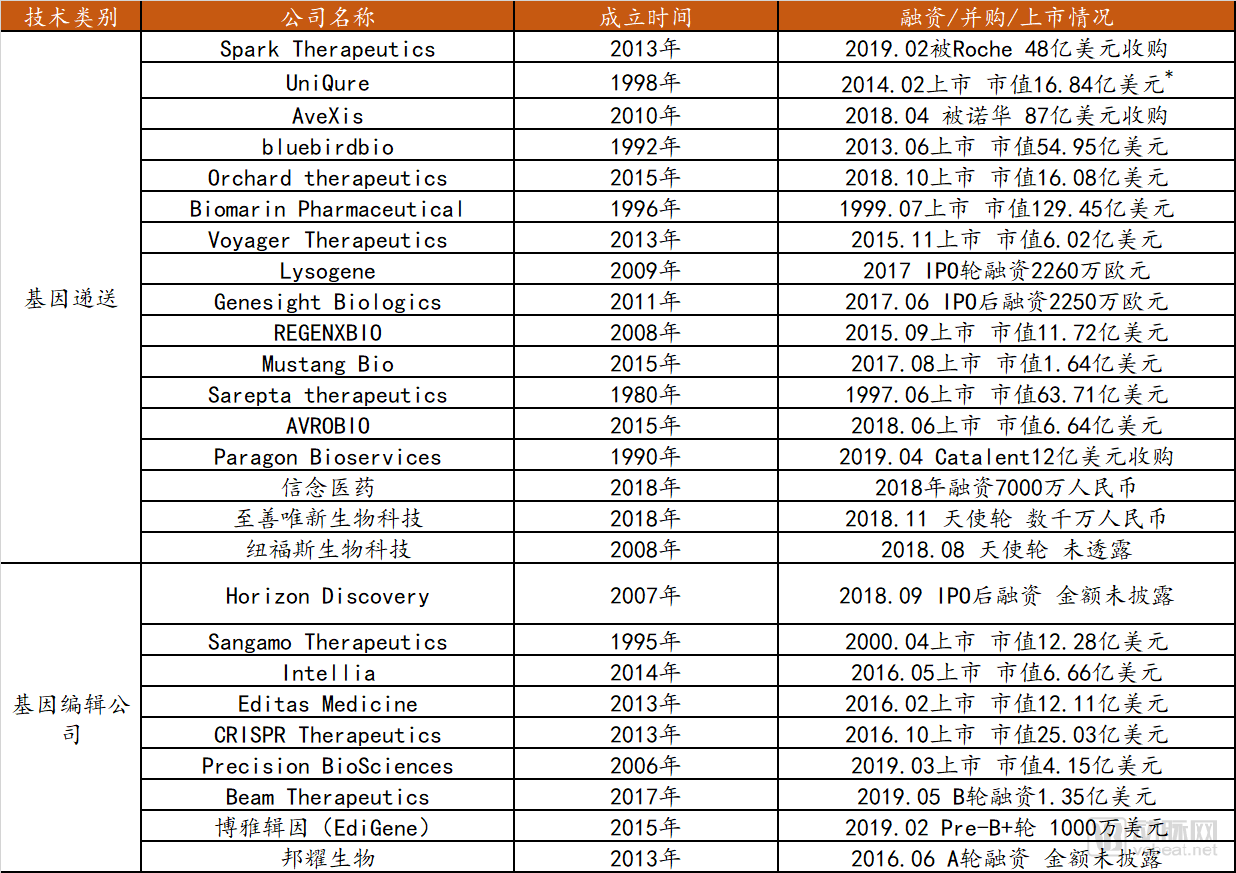
Source: Compiled from public information
Gene Delivery Company
Novartis has been continuously expanding its footprint in the gene therapy sector over the past two years through collaborations and acquisitions. In January 2018, Novartis entered into a licensing and supply agreement with Spark Therapeutics, securing the rights to develop, register, and commercialize Luxturna—a therapy approved by the FDA in 2017 for the treatment of inherited retinal dystrophy due to RPE65 mutations (commonly known as Leber congenital amaurosis)—in markets outside the United States. In April 2018, Novartis acquired AveXis for $8.7 billion.
AveXis was founded in 2010 and is headquartered in Illinois. It went public on the NASDAQ in February 2016. Its core technology involves gene therapy using AAV9 as a vector, with a focus on developing novel gene therapies for spinal muscular atrophy (SMA). The company’s flagship product, Zolgensma, received approval from the U.S. FDA in May 2019. Consequently, Novartis’ acquisition of AveXis granted it access to the first and only gene therapy for pediatric patients with spinal muscular atrophy (SMA).
AveXis Financing Information

Data source: Crunchbase
In May 2018, Novartis announced a series of strategic initiatives to divest certain business units, refocusing its efforts on transformative medicines with an emphasis on cell and gene therapies. In August 2018, the European Union approved Novartis’s CAR-T cell therapy; in November 2018, the EU approved Novartis’s Luxturna. To date, Novartis holds half of the globally approved cell and gene therapy products, firmly establishing itself as a leading powerhouse in regenerative medicine. The company’s pipeline includes CGF166, a hearing loss therapeutic, and CPK850, for the treatment of retinitis pigmentosa, both of which have entered clinical trials.
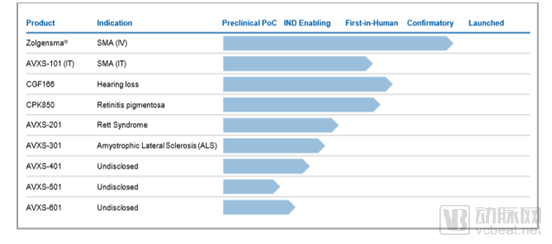
Figure 17. Novartis’ Gene Therapy R&D Pipeline (Source: Company Website)
Spark Therapeutics, founded in 2013, is a gene therapy company that went public on the NASDAQ in 2015. In February 2019, Roche acquired Spark Therapeutics for $4.8 billion and announced plans to invest in its product portfolio. Spark Therapeutics will continue to operate as an independent company within the Roche Group structure.
Spark Therapeutics Financing Information

Data source: Crunchbase
Jeffrey Marrazzo, CEO of Spark Therapeutics, brings years of R&D experience in the field of genetic disease therapies. The company’s core technology centers on adeno-associated virus (AAV)-based gene therapy, with drug development focused on inherited retinal diseases (IRDs), neurodegenerative disorders, and hematologic conditions. Spark employs over 320 specialized professionals in the field. Its state-of-the-art cGMP manufacturing facility in Philadelphia, spanning 48,000 square feet, produces AAV vectors using six production lines to support clinical trials across more than 12 clinical trial sites, ultimately formulating final drug products to meet clinical demands.
In December 2017, Luxturna, a drug for retinal dystrophy, was approved by the U.S. FDA for marketing, marking it as the first one-time gene therapy for mutations in the RPE65 allele. In November 2018, through collaboration with Novartis, Luxturna also received approval in the European Union.
Currently, the two fastest-advancing drug candidates in Spark’s R&D pipeline are in Phase III clinical trials for hemophilia B and hemophilia A. Among them, SPK-9001, the therapy for hemophilia B, has been granted Orphan Drug and Breakthrough Therapy designations by the U.S. Food and Drug Administration (FDA), and has also received PRIME designation from the European Medicines Agency (EMA).
In July 2018, Spark Therapeutics reached an agreement with Pfizer, under which Pfizer would assume responsibility for the Phase III clinical trial, subsequent regulatory affairs, manufacturing, and global commercialization of SPK-9001. The incidence of hemophilia A is four times that of hemophilia B, thereby offering a broader market potential. SPK-8011, a gene therapy targeting hemophilia A, initiated its Phase III clinical trials in late 2018. If this gene therapy proves successful, it will help Roche expand its influence in the hemophilia A sector, thereby intensifying competition with Takeda Pharmaceutical, Sanofi, and other players.
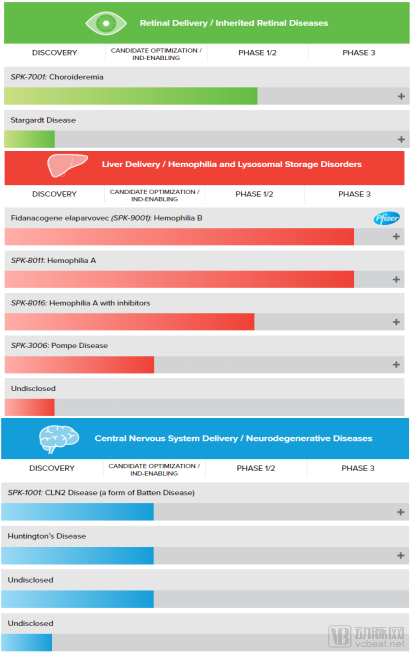
Spark Therapeutics’ R&D Pipeline (Source: Company Website)
Nightstar Therapeutics, founded in 2013 and headquartered in the United Kingdom, is a developer of gene therapies focused on adeno-associated virus (AAV)-based treatments for inherited retinal diseases. The company went public on the NASDAQ in 2018. In 2019, Biogen acquired all of its shares for $877 million.
Nightstar Therapeutics Financing Information

Data Source: Crunchbase
The company has currently launched two gene therapies for the treatment of retinal diseases. The lead product, NSR-REP1, is in Phase III clinical trials for choroideremia, a rare retinal disease for which there are currently no available treatments. Another candidate, NSR-RPGR, targeting X-linked retinitis pigmentosa (XLRP), is in Phase 1/2 clinical trials. In addition, Nightstar boasts a robust preclinical pipeline, including NSR-ABCA4 for Stargardt disease (an autosomal recessive disorder associated with ABCA4 gene mutations) and NSR-BEST1 for Best vitelliform macular dystrophy.
In the competitive landscape for choroideremia, Nightstar Therapeutics’ strongest rival was Spark Therapeutics. However, as Spark’s related pipeline remained in Phase I/II clinical trials, Nightstar appeared to hold a more favorable position. With both companies subsequently acquired by Biogen and Roche, respectively, this therapeutic area has evolved into a competition between the two pharmaceutical giants, Roche and Biogen.
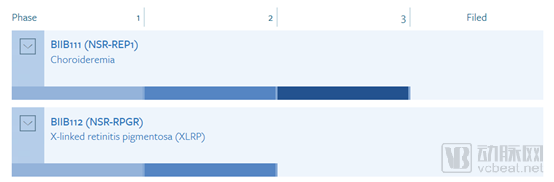
Nightstar Therapeutics’ Gene Therapy Pipeline (Source: Company Website)
Pfizer’s series of acquisitions and collaborations in the field of gene therapy over the past five years have demonstrated the company’s determination to become a leader in this area.
As early as 2014, Pfizer entered into a strategic agreement with Spark Therapeutics to jointly develop SPK-9001, a gene therapy for hemophilia B. Starting in 2017, Pfizer signed an agreement with Sangamo, a leader in zinc finger nuclease (ZFN) technology, for the development of gene therapies for hemophilia A, with potential milestone payments totaling up to $475 million. Of this amount, $300 million is tied to milestones related to the development and commercialization of SB-525, while the remaining $175 million is allocated to milestones for other gene therapies targeting hemophilia A. In addition, Pfizer will pay double-digit royalties on future sales of products resulting from this collaboration.
In 2018, Pfizer partnered with Sangamo for the second time, acquiring its gene therapy for amyotrophic lateral sclerosis (ALS). In March 2019, Pfizer invested $636 million to acquire a 15% stake in the French company Vivet Therapeutics, jointly developing VTX-801V, a gene therapy for Wilson’s disease (WD) based on a novel engineered AAV vector.
In 2019, Pfizer entered into a research and development licensing agreement with REGENXBIO, a company possessing a technology platform of more than 100 novel AAV vectors. Under the agreement, Pfizer gained the right to use REGENXBIO’s proprietary AAV9 vector to develop gene therapies for the treatment of Friedreich’s ataxia (FA). This rare disease has an incidence of approximately 1 in 50,000 and is characterized by a range of complications, including loss of coordination and balance, muscle weakness, visual impairment, hearing and speech disorders, scoliosis, diabetes, and cardiomyopathy. In the same month, Pfizer announced a $500 million plan to expand its gene therapy manufacturing facilities in Sanford, North Carolina, thereby enhancing its capacity to manufacture highly specialized, custom rAAV vectors to support its gene therapy research and development.
Voyager Therapeutics, founded in 2013 and headquartered in Cambridge, was co-founded by Dr. Guangping Gao, a Chinese-American scholar. The company went public on the NASDAQ in 2015 and secured a $65 million strategic investment from Neurocrine Biosciences in February 2019.
Voyager Therapeutics Financing History

Data source: Crunchbase
Voyager’s core technology is AAV gene therapy, with innovations in vector optimization engineering, delivery technologies, and process development and manufacturing, focusing on developing treatments for patients with severe neurological disorders.
Voyager’s flagship product, VY-AADC, delivers the AADC gene directly to putaminal neurons where dopamine receptors are located, bypassing substantia nigra neurons. This enables putaminal neurons to express the AADC enzyme, converting levodopa into dopamine. Currently, the FDA has accepted Voyager’s pivotal Phase II and III clinical trial plan for VY-AADC, an innovative therapy for Parkinson’s disease. If the Phase II trial yields positive results, Voyager may directly submit a marketing application for VY-AADC. The Phase II clinical trial is expected to be completed by the end of 2020. Other preclinical studies are shown in the figure below.
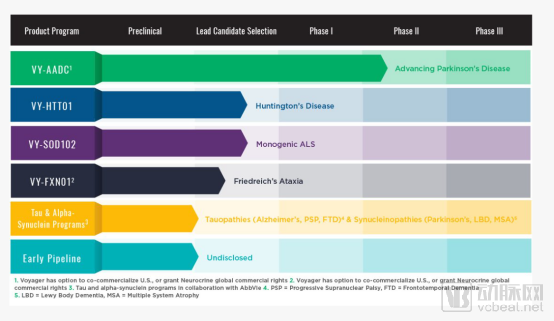
Voyager Therapeutics’ Pipeline (Source: Company Website)
In 2018, Voyager partnered with AbbVie to develop AAV vector-based gene therapies for neurodegenerative diseases such as Alzheimer’s disease. In early 2019, the two companies reached another agreement focusing on gene therapy for Parkinson’s disease. Additionally, Voyager has entered into strategic collaboration agreements with Sanofi Genzyme, the University of Massachusetts, and MRI Interventions.
Bluebird Bio was founded in 1992, formerly known as Genetix Pharmaceuticals, Inc., and adopted its current name in September 2010. Headquartered in Cambridge, Massachusetts, USA, the company has 479 full-time employees and is a clinical-stage biotechnology firm that went public on the NASDAQ in 2013. Bluebird Bio is dedicated to developing revolutionary gene therapies for the treatment of severe genetic and rare diseases, with its core technology being lentiviral gene therapy.
Bluebird Bio Financing Status
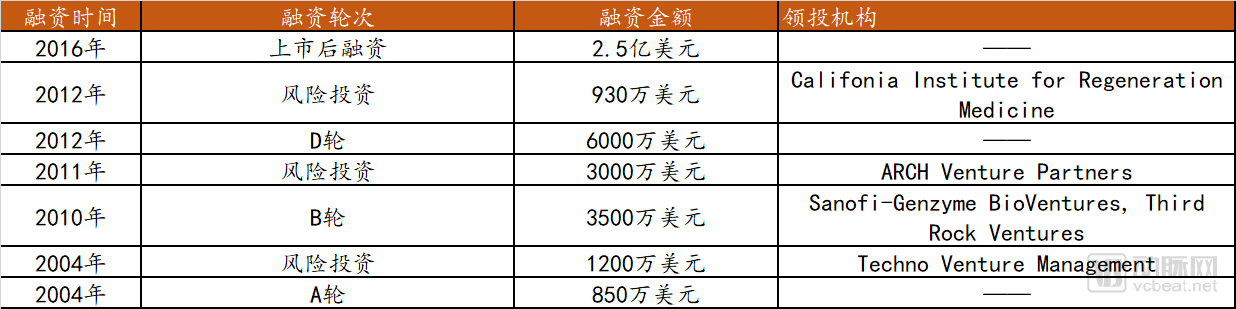
Data Source: Crunchbase
In June 2019, Bluebird Bio announced that the European Commission (EC) had granted conditional marketing authorization for its gene therapy Zynteglo (formerly known as LentiGlobin™) for the treatment of transfusion-dependent beta-thalassemia in patients aged 12 years and older. Zynteglo is the world’s first gene therapy for this condition.
In addition to Zynteglo mentioned above, the fastest-moving asset in the company’s pipeline is Lenti-D. This gene therapy introduces a functional ABCD1 gene into the patient’s own hematopoietic stem cells, facilitating the production of fully functional ALDP enzyme. The enzyme effectively degrades very long-chain fatty acids, thereby mitigating the neurodegenerative symptoms associated with cerebral adrenoleukodystrophy (CALD) and treating adrenoleukodystrophy-related cerebral demyelination. In May 2018, the U.S. FDA granted Lenti-D Breakthrough Therapy Designation.
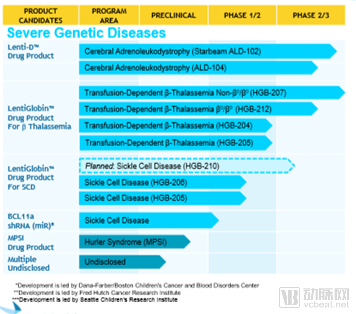
Bluebird Bio Gene Therapy R&D Pipeline (Source: Company Website)
Founded in 1998 and headquartered in the Netherlands, uniQure went public on the NASDAQ in 2014. The company’s core technology is AAV-based gene therapy, and it holds exclusive global rights to AAV5 for therapeutic products targeting delivery to the brain or liver. uniQure primarily focuses on gene therapies for rare diseases.
Uniqure's Financing History

Data Source: Crunchbase
The company’s first product was Glybera, indicated for the treatment of lipoprotein lipase deficiency (LPLD). Approved by the European Medicines Agency in October 2012, the drug has since been withdrawn from the market due to its high price and niche patient population. The company’s current pipeline focuses on hemophilia, Huntington’s disease, and other conditions. AMT-061, a candidate therapy for hemophilia B and Huntington’s disease, utilizes an AAV5 variant (serotype) as its vector and is currently undergoing Phase II/III clinical trials. Another product, AMT-130, leverages the company’s proprietary miQURE™ silencing technology; it employs an AAV5 vector carrying artificial microRNA (miRNA) designed specifically to silence the huntingtin gene for the treatment of Huntington’s disease. The U.S. Food and Drug Administration (FDA) approved its Investigational New Drug (IND) application in January 2019.
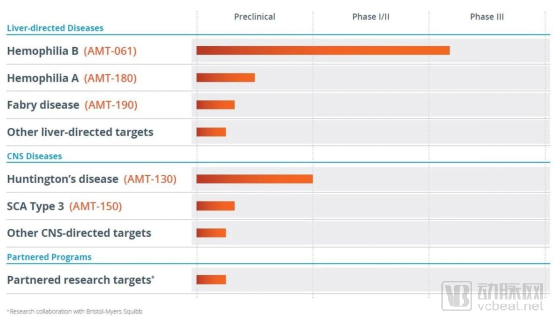
Uniqure’s Pipeline (Source: Company Website)
BioMarin, founded in 1996 and headquartered in California, USA, was listed on the NASDAQ in 1999. BioMarin is a global pharmaceutical company whose core technology is AAV gene therapy, focusing on providing medical assistance to patients suffering from critical rare genetic diseases.
The company’s marketed products encompass replacement therapies for a variety of rare genetic disorders, primarily including Vimizim® for the treatment of Morquio A syndrome, Firdapse® for Lambert-Eaton myasthenic syndrome, and Naglazyme® for mucopolysaccharidosis VI (MPS VI).®, Kuvan for phenylketonuria (PKU)®and Aldurazyme for mucopolysaccharidosis I (MPS I)®。
In the field of gene therapy, the flagship product is valoctocogene roxaparvovec (BMN 270), which is currently undergoing Phase III clinical trials for the treatment of hemophilia A. Valoctocogene roxaparvovec utilizes adeno-associated virus serotype 5 (AAV5) to deliver the functional human coagulation factor VIII gene into patients, thereby restoring normal secretion of human coagulation factor VIII. The company plans to submit applications for accelerated approval to the U.S. Food and Drug Administration (FDA) and the European Medicines Agency (EMA) in the fourth quarter of 2019. This product is expected to become the first hemophilia gene therapy to enter the regulatory review stage. In May 2018, BioMarin’s enzyme replacement therapy for phenylketonuria (PKU) was approved by the FDA. In this therapeutic area, the company’s gene therapy candidate, BMN 307, is currently in preclinical testing, with an Investigational New Drug (IND) application planned for submission in the second half of 2019.
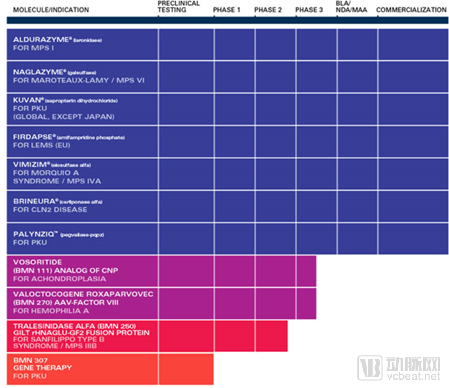
BioMarin’s R&D Pipeline (Source: Company Website)
Orchard Therapeutics, founded in 2015, is a UK-based biotechnology company with an office in Los Angeles, United States. The company went public on the NASDAQ in 2018.
Orchard Therapeutics Financing History

Data Source: Crunchbase
Orchard Therapeutics focuses on rare diseases, with a particular emphasis on autologous hematopoietic stem cell gene therapies. Its core technologies are ex vivo autologous stem cell gene therapy and lentiviral vectors. In 2018, Orchard acquired GSK’s rare disease gene therapy portfolio (including OTL-200 and OTL-103) in exchange for a 19.9% equity stake, thereby obtaining Strimvelis, an ex vivo gene therapy already approved by the EMA. The company’s current pipeline includes drug development programs targeting three categories of rare diseases:
1. Transfusion-dependent beta-thalassemia (TDT); this drug was granted Priority Medicines (PRIME) status by the EMA in 2018;
2. Primary immunodeficiency diseases, including ADA-SCID, WAS, and X-CGD;
3. Projects for hereditary metabolic diseases, such as Mucopolysaccharidosis type IIIA (MPS-IIIA) and type IIIB (MPS-IIIB). OTL-201 for MPS-IIIA has entered clinical trials, while OTL-102 and OTL-300 are also in the late stages of clinical trials.
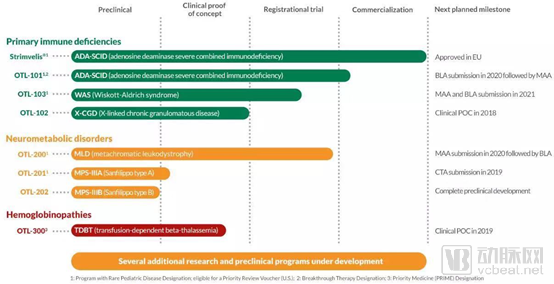
Orchard Therapeutics’ Product Development Pipeline (Source: Company Website)
After her daughter was diagnosed with a rare neurodegenerative disease, Karen Aiach founded Lysogene in 2009. The company completed a $2.2 million Series A financing round in 2014. In 2017, aided by a small initial public offering on the Euronext Paris stock exchange, the company raised funds for its gene therapy targeting GM1 gangliosidosis.
Lysogene Financing History

Data source: Crunchbase
Lysogene is currently the only biotechnology company in the world dedicated to intracerebral gene therapies for the treatment of central nervous system (CNS) disorders. It demonstrates the efficacy of safely delivering genetic material to the CNS by developing adeno-associated viral vectors, aiming to develop breakthrough treatments for severe genetic pathologies involving the CNS and addressing high unmet medical needs.
The company’s flagship products are LYS-SAF302 and rAAV-rh.10 carrying human N-sulfoglucosamine sulfohydrolase (hSGSH). Administered via direct intracerebral injection, the product stimulates the production of enzymes that break down heparan sulfate. Its current indications include Mucopolysaccharidosis Type IIIA (MPS IIIA), also known as Sanfilippo Syndrome Type A. The company is preparing to initiate pivotal Phase II/III clinical trials using its next-generation gene therapy formulation. Additionally, an AAV-based gene therapy for GM1 gangliosidosis is in the preclinical development stage.
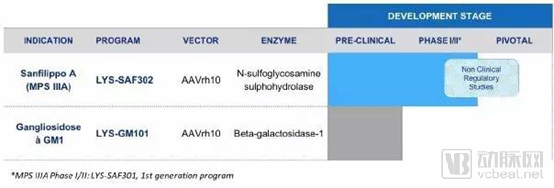
Lysogene’s R&D Pipeline (Source: Company Website)
In 2018, Lysogene and Sarepta Therapeutics entered into a collaboration agreement, under which the former holds exclusive rights to commercialize LYS-SAF302 in markets outside the United States and Europe, while the latter holds exclusive rights to commercialize LYS-SAF302 in Europe.
Belief Therapeutics was founded in 2018. Its founder, Xiao Xiao, has long been engaged in the research and development (R&D) and application of gene therapy drugs and their vectors, with a particular focus on the improvement of adeno-associated virus (AAV) vectors, high-titer and high-purity manufacturing processes, and the R&D of simple, safe, and efficient gene vectors and direct injection technologies. He possesses over 15 years of experience in research and industrial development within the field of gene therapy. The company is dedicated to the R&D and industrialization of gene therapy drugs and their vectors. The Series A financing details are as follows: Berry Genomics contributed RMB 20 million, Sherpa Capital Fund I contributed RMB 40 million, and Jichuang Jinyuan contributed RMB 10 million.
Gene Editing Company
Sangamo, formerly known as Sangamo Biosciences, was founded in 1995. Headquartered in Richmond, California, the company went public in 2000. Its core technologies include zinc finger nuclease (ZFN) gene editing and ZFP-TF gene regulation technologies, with a focus on developing therapeutics for inherited metabolic disorders, hematologic diseases, and central nervous system disorders. Its product candidate SB-913 is the first in vivo ZFN gene-editing therapeutic currently being evaluated in Phase I/II clinical trials for the treatment of mucopolysaccharidosis type II (MPS II, also known as Hunter syndrome).
Sangamo Therapeutics Funding History

Data Source: Crunchbase
Leveraging its relatively most mature technologies and patents in the field of gene editing, the company has established collaborations with multiple pharmaceutical enterprises.
In addition to the two collaborations with Pfizer mentioned above, in February 2018, Kite, a Gilead company, and Sangamo Therapeutics announced that they had entered into a global collaboration to develop next-generation ex vivo cell therapies for cancer using Sangamo’s zinc finger nuclease (ZFN) technology platform. Sangamo will receive an upfront payment of $150 million. Subject to the achievement of development, regulatory, and commercial milestones for more than 10 products utilizing Sangamo’s technology, Sangamo is eligible to receive potential payments of up to $3.01 billion.
In May 2018, Sangamo partnered with Bioverativ, a subsidiary of Sanofi, to develop BIVV003, an ex vivo gene therapy candidate for the treatment of sickle cell disease. Meanwhile, Sangamo is collaborating with the UK pharmaceutical giant Shire to develop a gene therapy targeting the huntingtin protein (HTT). This therapy is currently in preclinical studies, and Shire will be responsible for clinical development activities, including the Investigational New Drug (IND) application.
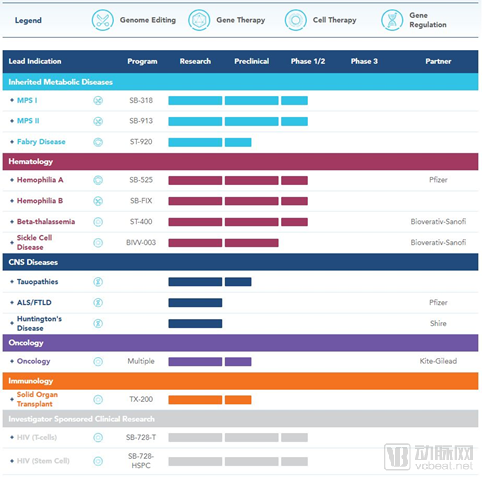
Sangamo’s Product Pipeline (Source: Company Website)
Editas Medicine, founded in 2013 and headquartered in Massachusetts, USA, was co-founded by leading figures in CRISPR technology development, including the Chinese-American scientist Feng Zhang. The company went public on NASDAQ in 2016. According to its prospectus, Editas Medicine holds 21 patents in relevant fields, with an additional 200 patent applications pending; its core patents are licensed from Feng Zhang. Leveraging the CRISPR/Cas9 gene-editing platform, the company is dedicated to treating diseases by modifying patients’ disease-causing genes. Its current pipeline spans multiple therapeutic areas, including ocular, muscular, and blood disorders, as well as liver diseases, pulmonary conditions, and cancer.
Editas Medicine Financing History

Data Source: Crunchbase
In July 2019, Editas Medicine and Allergan jointly announced the official launch of the Phase I/II clinical trial for the CRISPR therapy AGN-151587. The trial plans to enroll 18 patients with Leber congenital amaurosis type 10 (LCA10) to evaluate the safety, tolerability, and efficacy of the CRISPR therapy. This trial marks the first-in-human CRISPR gene-editing study worldwide.
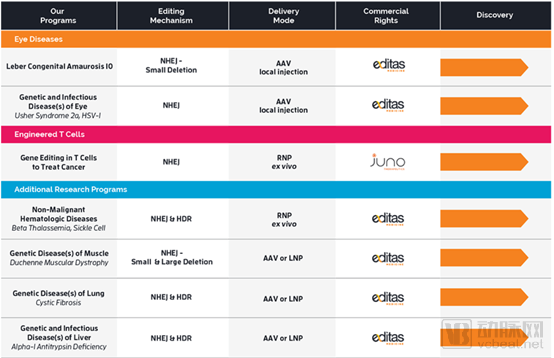
Editas Medicine Product Pipeline (Source: Company Website)
CRISPR Therapeutics was founded in 2013 by CRISPR technology pioneer Emmanuelle Charpentier. Headquartered in Switzerland, with its R&D center located in Massachusetts, USA, the company went public in 2016. CRISPR Therapeutics’ product pipeline leverages CRISPR/Cas9 gene-editing technology to treat a variety of diseases, including blood disorders, muscular conditions, and cancers.
CRISPR Therapeutics Financing History

Data Source: Crunchbase
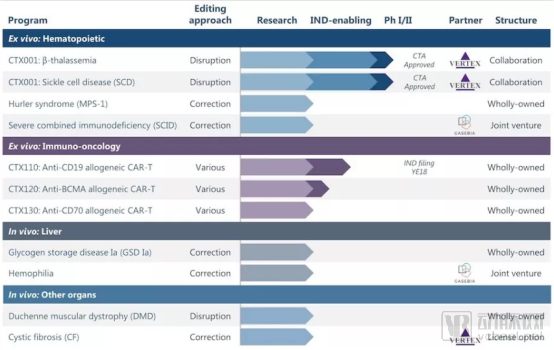
CRISPR Therapeutics’ R&D Pipeline (Source: Company Website)
CRISPR Therapeutics and Vertex signed an agreement in 2015, under which Vertex could secure rights to up to six CRISPR therapies, with CTX-001 being the first. The two companies will jointly develop and commercialize this therapy, sharing global R&D costs and profits equally.
CTX-001 is administered by ex vivo electroporation to introduce the CRISPR system into patients’ CD34+ hematopoietic stem cells (HSCs), followed by reinfusion, for the treatment of transfusion-dependent β-thalassemia (TDT) and sickle cell disease (SCD). In August 2018, the Phase I/II clinical trial of this therapy was officially launched in Europe, marking the first pharmaceutical company-sponsored clinical trial approved by the European Union. In October of the same year, the U.S. Food and Drug Administration (FDA) approved the Investigational New Drug (IND) application for CTX-001 for the treatment of SCD. In January and April 2019, the FDA granted Fast Track designation to CTX-001 for the treatment of SCD and TDT, respectively.
CRISPR Therapeutics has also established a 50-50 joint venture with Bayer, Casebia Therapeutics, which has currently initiated preclinical studies for hemophilia A and SCID.
In addition to the aforementioned product development pipeline, CRISPR Therapeutics announced in September 2018 an agreement with ViaCyte, a company dedicated to regenerative medicine for diabetes, to combine their respective technologies and develop stem cell-derived islet replacement therapies capable of effectively curing type 1 diabetes, thereby expanding the potential applications of gene-editing technology in other autoimmune diseases.
Intellia Therapeutics was founded in 2014 and is also headquartered in Massachusetts, USA. Its founders include CRISPR pioneer Jennifer Doudna, and the company went public in 2016.
Intellia Therapeutics' Financing History

Data Source: Crunchbase
In January 2015, Intellia Therapeutics entered into a five-year research and development collaboration with Novartis to jointly leverage CRISPR technology for the study of hematopoietic stem cell-related disease treatments and CAR-T cell therapy products, with indications including T-ALL and SCD. In December 2018, Intellia expanded its cell therapy partnership with Novartis to include ocular stem cell products.
The collaboration with Novartis has provided Intellia with unique lipid nanoparticles (LNPs) as delivery vehicles for in vivo gene editing. Preclinical data have partially demonstrated the efficiency of LNP delivery and CRISPR/Cas9 editing, and the sickle cell disease (SCD) program under this partnership is in the late preclinical stage.
In April 2016, Intellia entered into a six-year collaboration agreement with Regeneron. Under the terms of the deal, Regeneron paid Intellia a $75 million upfront fee and agreed to invest $50 million in Intellia’s next equity financing round. Currently, the collaborative product targeting transthyretin amyloidosis (ATTR) is in the preclinical development stage.
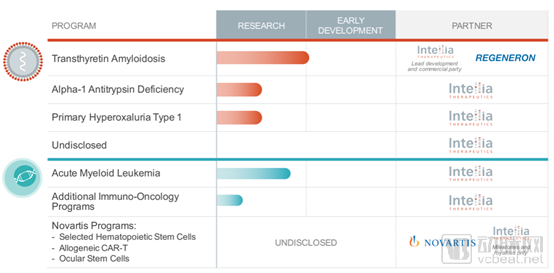
Intellia Therapeutics’ R&D Pipeline (Source: Company Website)
Founded in 2015 by Wei Wensheng, a researcher at Peking University, EdiGene leverages its proprietary patents related to in vitro and in vivo gene editing technologies. The company has established multiple product development pipelines, including treatments for genetic disorders such as beta-thalassemia and universal CAR-T therapies for malignant tumors. Furthermore, EdiGene has built a GMP-compliant facility spanning thousands of square meters for the development and experimental production of gene-editing therapeutics.
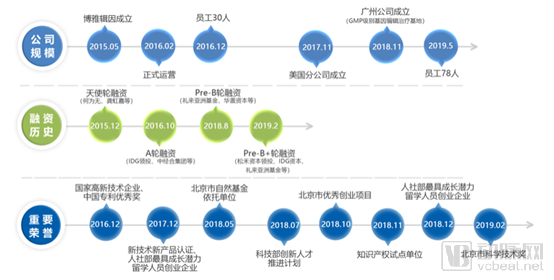
EdiGene Company Profile (Source: Official Company Website)
As its R&D pipeline continues to mature, EdiGene has established stable research and development collaborations with multiple hospitals and clinical teams. In drug development, EdiGene possesses a high-throughput genomic screening platform integrated with AI technology, along with extensive independent intellectual property rights related to gene editing. The biological big data generated by this screening platform can efficiently and accurately identify disease targets for drugs and therapies, while precisely stratifying patient populations. This enhances efficiency and saves time and labor costs for innovative pharmaceutical companies during early-stage drug development and later-stage clinical trials. The company is currently undergoing Pre-B round financing.
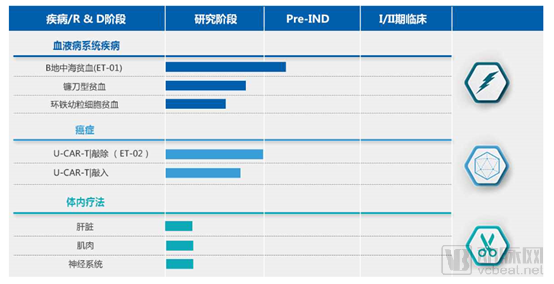
EdiGene’s R&D Pipeline (Source: Company Website)
Key References
1. Wang D, Tai PWL, Gao G. Nat Rev Drug Discov. 2019 May;18(5):358-378.
2. Anguela XM, High KA. Annu Rev Med. 2019 Jan 27;70:273-288.
3. High KA, Roncarolo MG. N Engl J Med. 2019 Aug 1;381(5):455-464.
4. Gaj T, Gersbach CA, Barbas CF 3rd. Trends Biotechnol. 2013 Jul;31(7):397-405.
5.Dunbar CE, High KA, Joung JK, Kohn DB, Ozawa K, Sadelain M. Science. 2018 Jan 12;359(6372).
6. Miller JC, Patil DP, Xia DF, Paine CB, Fauser F, Richards HW, Shivak DA, Bendaña YR, Hinkley SJ, Scarlott NA, Lam SC, Reik A, Zhou Y, Paschon DE, Li P, Wangzor T, Lee G, Zhang L, Rebar EJ. Nat Biotechnol. 2019 Aug;37(8):945-952.
7. Paschon DE, Lussier S, Wangzor T, Xia DF, Li PW, Hinkley SJ, Scarlott NA, Lam SC, Waite AJ, Truong LN, Gandhi N, Kadam BN, Patil DP, Shivak DA, Lee GK, Holmes MC, Zhang L, Miller JC, Rebar EJ. Nat Commun. 2019 Mar 8;10(1):1133
8. Miller JC, Tan S, Qiao G, Barlow KA, Wang J, Xia DF, Meng X, Paschon DE, Leung E, Hinkley SJ, Dulay GP, Hua KL, Ankoudinova I, Cost GJ, Urnov FD, Zhang HS, Holmes MC, Zhang L, Gregory PD, Rebar EJ. Nat Biotechnol. 2011 Feb;29(2):143-8
9. Wang H, La Russa M, Qi LS. Annu Rev Biochem. 2016 Jun 2;85:227-64.
10. Fellmann C, Gowen BG, Lin PC, Doudna JA, Corn JE. Nat Rev Drug Discov. 2017 Feb;16(2):89-100
11. Gammage PA, Viscomi C, Simard ML, Costa ASH, Gaude E, Powell CA, Van Haute L, McCann BJ, Rebelo-Guiomar P, Cerutti R, Zhang L, Rebar EJ, Zeviani M, Frezza C, Stewart JB, Minczuk M. Nat Med. 2018 Nov;24(11):1691-1695
12. Bacman SR, Kauppila JHK, Pereira CV, Nissanka N, Miranda M, Pinto M, Williams SL, Larsson NG, Stewart JB, Moraes CT. Nat Med. 2018 Nov;24(11):1696-1700