

Mapqi Medical: A Disruptor in China's Billion-Dollar Interventional Device Market, Leveraging Technology Import and Localization to Bridge the Domestic Guidewire and Catheter Supply Gap
With the rapid rise of minimally invasive therapies, guidewires and catheters have increasingly become a lucrative “gold mine” that companies in China are vying to capture within the domestic medical consumables market.
Although it has high popularity,Due to constraints in materials science and manufacturing processes, it is not easy for domestic companies to fully achieve independent research, development, and production of guidewire catheters.“Most of the guidewires and catheters currently used in hospitals are still imported from developed countries such as Japan, Europe, and the United States, relying on imports,” pointed out Liu Xianhe, Sales Director at Mapuchi Medical.
How Can Domestic Companies Penetrate the Interventional Device Market to Secure a Share? How Can Chinese-made Guidewires and Catheters Achieve “Import Substitution”? Recently, dedicated to the innovative R&D of interventional access products such as guidewires and catheters,Shenzhen Mapuchi Medical Technology Co., Ltd.(hereinafter referred to as “Mapuchi”) was interviewed by VCBeat. Liu Xianhe, Sales Director of Mapuchi Medical, provided insights into the company’s development journey.
The past decade can be described as the “Golden Decade” for medical consumables. Driven by the widespread adoption of minimally invasive and interventional procedures, demand for medical consumables has surged, with single-use items such as stents, balloons, catheters, and guidewires becoming the largest expense on patients’ bills.Relevant data indicate that the annual domestic consumption of contrast guidewires and therapeutic guidewires exceeds 8 million units, with domestically produced products accounting for less than 5%. Meanwhile, the global market size for interventional access guidewires and catheters has reached tens of billions of RMB in total sales, maintaining an annual growth rate of approximately 15%.Therefore, some domestic companies have also entered this field, aiming to get a share of the pie.
“Access devices are the first step in interventional procedures and the foundation for successful surgeries. However, domestic products remain unsatisfactory in terms of materials and manufacturing processes. Consequently, despite strong external pressures such as import substitution policies and medical insurance reimbursement ratios, imported access devices continue to firmly monopolize the Chinese market,” said Liu Xianhe.
Technology and markets are firmly controlled by multinational corporations; the rise of domestic products requires sustained accumulation and development.Taking cardiovascular stent implantation as an example, approximately one million such procedures are performed annually in China. However, the majority of essential devices used in these procedures—including expandable balloons, and interventional cardiology guidewires, therapeutic guidewires, angiographic catheters, guiding catheters, and microcatheters—are imported from the United States and Japan.
Industry insiders have pointed out that,Although domestic enterprises have intensified their R&D efforts in interventional guidewires and catheters in recent years, the resulting products are predominantly low-end and low value-added. There have been few breakthroughs in high value-added medical catheters and guidewires designed for specialized clinical applications.
In the face of the brand trust long established by imported products, domestic enterprises have been sparing no effort to drive the process of import substitution. Some high-quality companies have even broken through barriers in materials and processes through independent R&D, gradually gaining a voice in the market.
“The battle for domestic substitution has already begun; those who rise to the challenge will be the first to seize the market,” said Liu Xianhe.
Shenzhen Mapuchi Medical Technology Co., Ltd. was established in 2015.
“Established four years ago, Mapuchi has been dedicated to the research and development, production, and sales of high-end interventional medical devices, with R&D centers in both Shenzhen and Japan.“Introduced Liu Xianhe. Currently, the company has obtained the ISO 13485 international quality management system certification for medical devices issued by TÜV Germany, and other products are successively obtaining CE, NMPA, and FDA certifications.”
In terms of product lines, MapuchiThe company has completed the R&D and mass production of its full range of guidewires, including hydrophilic-coated guidewires, Zebra guidewires, and micro-guidewires, as well as the product development of its full range of catheters, including guiding catheters, angiographic catheters, and microcatheters. Mass production of the entire catheter product line is expected to be achieved in 2020. Notably, the “hydrophilic-coated guidewire” obtained EU CE certification in June last year, securing its “entry ticket” to the European market.
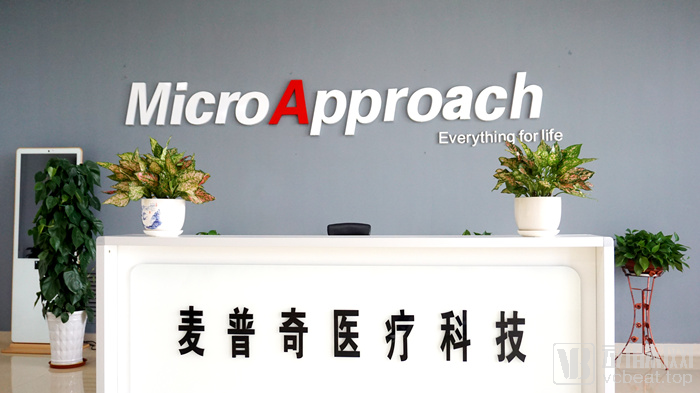
Liu Xianhe told VCBeat that, in order to overcome the technical bottlenecks in high-end interventional devices, Mapuchi’sThe core operational model is to achieve product commercialization through the introduction of advanced technologies combined with local adaptation.“We have established in-depth collaboration with cutting-edge Japanese enterprises. Our core team comprises both Japanese and local professionals, enabling the production of high-quality products through technology introduction and secondary R&D,” said Liu Xianhe.
It has been reported that,Cardiovascular devices are currently the most in-demand products among global biomaterials, ranking first in the high-end consumables segment of the global medical device market.Among these, in the field of intracardiac intervention, domestically produced coronary stents account for more than 70% of the market share; while in the fields of cardiac, peripheral, and neurovascular intervention,Imported guidewires and catheters account for 90% of the market share, indicating substantial potential and room for import substitution.
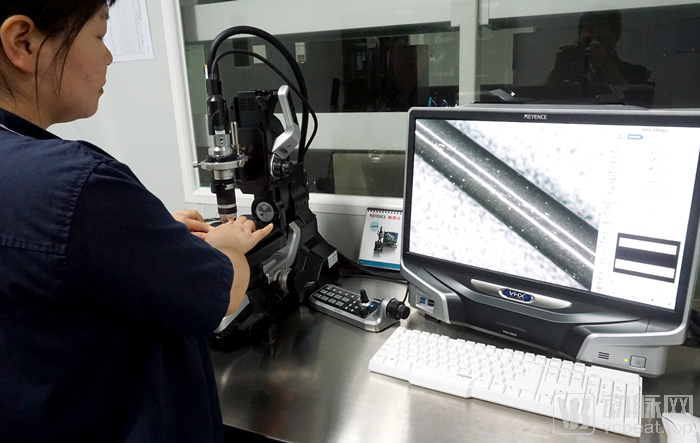
Image provided by Mapuchi
Introduction to Liu XianheThe guidewires manufactured by Mapuchi are primarily used in cardiology, vascular surgery, neurology, neurosurgery, and interventional radiology for guiding catheter insertion during angiographic diagnosis or interventional therapeutic procedures. These procedures are performed under X-ray guidance using standard vascular sheath, angiographic catheter, and guidewire placement techniques to navigate the catheter to the target vessel location.“Compared with domestically produced PCI guidewires, our products offer superior support and torque performance, comparable to imported alternatives.“Liu Xianhe said. ‘The fields of cardiology, vascular surgery, neurology, neurosurgery, and interventional devices for interventional medicine boast significant market potential and rapid growth, which represents our opportunity.’”
In addition,In the category of catheter products, Mapuchi’s angiographic catheters offer three major advantages over similar homogeneous products: ease of operation, excellent torque control, and thin-walled large lumen.Specific features include: a soft-tip design to effectively prevent vascular injury; various tip shapes for excellent maneuverability; appropriate catheter stiffness for easy navigation through tortuous vessels; use of stainless steel flat wires to reduce wall thickness and increase the inner lumen diameter; compatibility with standard contrast agent injection flow rates and imaging quality required by operators; design based on the anatomical characteristics of the human aorta and the ostia of the left and right coronary arteries; and good radiopacity.
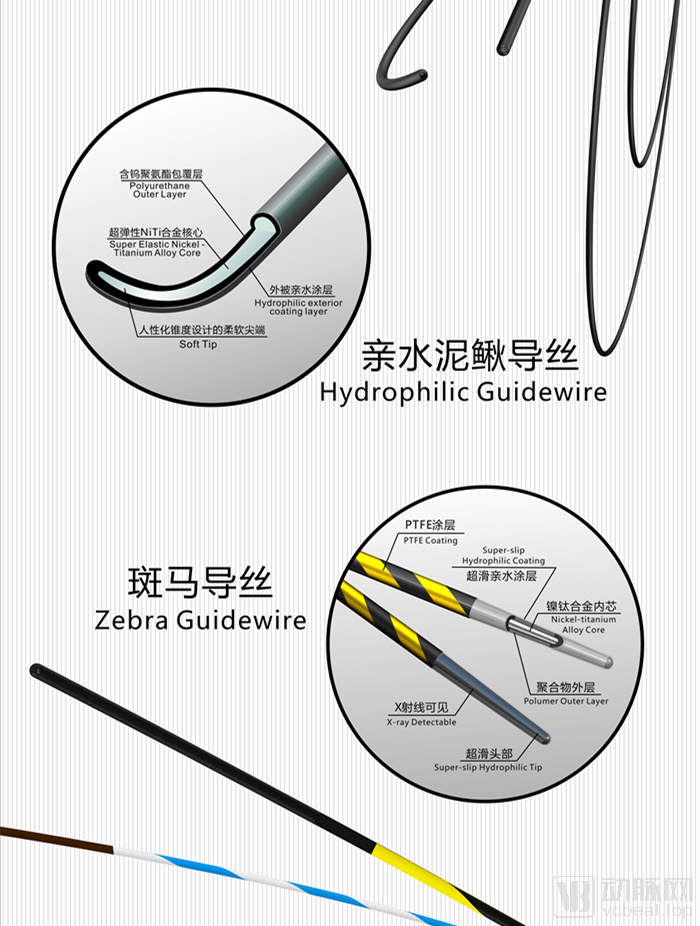
Image courtesy of Mapuchi
“Our guidewire catheters have reached an internationally advanced level in both technology and quality. In terms of cost, we have implemented strict controls and automated production, resulting in lower costs than imported products.“Liu Xianhe pointed out that although importing has become a widely accepted standard practice for many medical institutions, Mapuchi’s products offer a user experience nearly indistinguishable from imported alternatives, yet at a lower price. For medical institutions, this undoubtedly represents a superior choice.”
Leveraging its advantages of high quality and low price, Mapuchi has gained increasing recognition in the industry and rapidly achieved industrialization.Currently, Mapuchi has established a standard manufacturing and modern office space covering over 3,000 square meters in Shenzhen, along with GMP-compliant cleanrooms classified as Class 10,000 and Class 100,000.Meanwhile, Mapuchi has established collaborations with multiple medical institutions and brand companies.
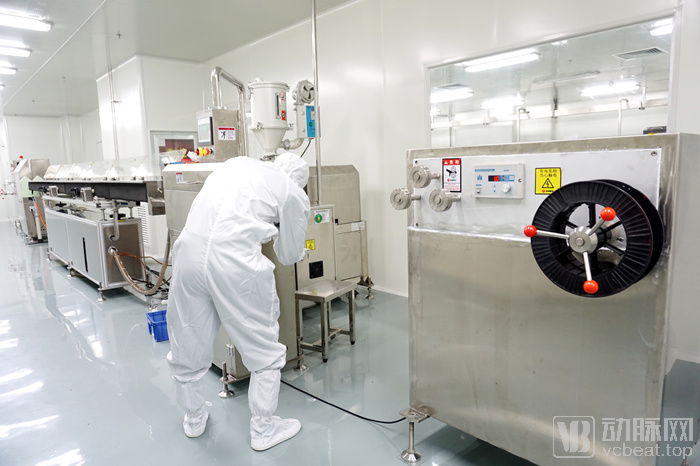
Photo provided by Mapuchi
"The R&D threshold for guidewires and catheters is not low, requiring substantial investment. The R&D and production of guidewires and catheters abroad have reached a highly mature technological stage."Filling domestic market demand through the introduction and localization of technologies is a viable pathway for import substitution.“Liu Xianhe said.”