

Pusikang Biotech: Pioneering Centrifugal Microfluidic Technology for Multi-Patient, Multi-Parameter Coagulation Testing
China accounts for approximately 20% of the global population, yet its in vitro diagnostics (IVD) market represents less than 5% of the global market. According to statistics from China Industry Information Network, the per capita consumption of IVD products in China is $4.6, which is below the global average of $8.5.
In terms of future market capacity, according to a Business Wire report, the global POCT market size was $18.6 billion in 2016 and is projected to reach $35.3 billion by 2024, representing a compound annual growth rate (CAGR) of 8.4% from 2016 to 2024. Within the specialized POCT segments, coagulation testing is the fastest-growing segment.
Since 2012, the global market size for microfluidics technology has grown rapidly. According to Yole’s recently released report, “Status of the Microfluidics Industry – 2019 Edition,” the global market size for microfluidics products reached US$8.7 billion in 2018 and is projected to reach US$17.4 billion by 2024, representing a compound annual growth rate (CAGR) of nearly 11.7% from 2019 to 2024. One of the key application areas of microfluidics technology is point-of-care testing (POCT).
The coagulation diagnostics sector is an emerging industry. China’s coagulation testing market started relatively late, beginning in 2000. The sector experiences substantial annual growth and is one of the high-growth segments within the in vitro diagnostics (IVD) industry, with a compound annual growth rate (CAGR) of up to 30%. The domestic market is dominated by Werfen (IL), Sysmex Corporation, and Stago Group, while other foreign companies, such as Sekisui Medical and BE Diagnostics, hold smaller market shares.
Foreign companies have secured a dominant position through their robust sales networks, specialized academic promotion, comprehensive after-sales service, and stringent cost control. Consequently, the market share of domestically produced products remains very low. Compared with foreign markets, China currently offers a limited variety of coagulation testing assays, primarily focusing on the 4-item and 5-item coagulation panels, which fall far short of meeting clinical demands. This gap indicates substantial room for growth. In contrast, international competitors also produce test reagents for various other analytes, including clotting factors and heparin.
The blood coagulation market still holds substantial room for growth and substitution in the future. Point-of-care testing (POCT) for coagulation represents a relatively untapped “blue ocean” market with significant potential.
Driven by the implementation of policies such as tiered diagnosis and treatment and the development of “Three Centers,” the in vitro diagnostics (IVD) market continues to expand, ushering China’s IVD industry into a golden age of growth. For domestic IVD companies, this presents a dual opportunity: rapid industry expansion and accelerated import substitution.
Amidst the tide of the times, in 2014, a postdoctoral fellow at the U.S. National Center for Nanotechnology and Engineering also decided to leave his overseas position and return to China to start a business. Dr. Yu Bo studied under Professor L. James Lee, a pioneer in international centrifugal microfluidic diagnostics. He was recognized as a Zhejiang Province Overseas High-Level Specially Appointed Expert, has published more than 60 academic papers in domestic and international journals, and has filed over 50 patent applications.
After returning to China, Dr. Yu Bo founded Shaoxing Pushkang Biotechnology Co., Ltd. (hereinafter referred to as "Pushkang"). Over the past five years, Pushkang has established a centrifugal microfluidic platform and, based on this platform, developed three major technology platforms: microfluidic coagulation, microfluidic chemiluminescence, and microfluidic biochemistry. Currently, Pushkang’s MC500 microfluidic coagulation analyzer and reagents, as well as the MI600 microfluidic chemiluminescence analyzer and reagents, have obtained regulatory approval. Its biochemical products are currently undergoing registration, and the portable mini coagulation analyzer MC100 is being prepared for submission for regulatory testing in the near future, forming a comprehensive product portfolio.
Since its founding in 2014, Puskang has undergone a journey of early-stage trial and error, followed by mid-stage transformation, refocusing, and breakthroughs. Although the process was challenging, Puskang has steadily carved out a differentiated path and established its product advantages. Currently, leveraging its disc-based microfluidic chips—which feature multi-analyte, multi-sample capacity and are well-suited for whole blood separation—the company is strategically focusing on the coagulation testing market.
At the outset of his entrepreneurial journey, Dr. Yu Bo’s original aspiration was to develop a chemiluminescence analyzer that was “versatile, fast, high-quality, and cost-effective.” However, during the R&D process, Pushikang took a detour in its early stages; although the first product achieved technological breakthroughs, it failed to gain market acceptance.
Yu Bo said, “We tech founders share a common flaw: we always strive to build a perfect 100-point product and aim to tackle complex problems. This mindset often leads to products that are out of touch with market demands. Moreover, in the early stages, when the team has not yet been tempered by experience, what we perceive as a flawless product may end up delivering failing results in the marketplace.”
After gaining a clear understanding of market demand, Pushikang embarked on the development of the MC500, a fully automated microfluidic coagulation analyzer, in 2015.
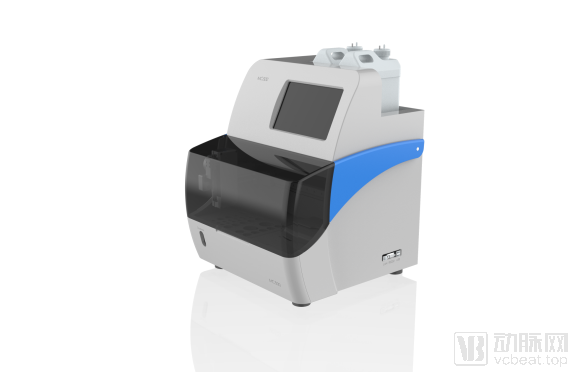
The primary application of coagulation analyzers is the testing of the four- or five-item coagulation panel. Generally, before hospitalized patients undergo surgery, physicians routinely require blood samples to perform the four-item coagulation test. The four-item coagulation panel includes Prothrombin Time (PT), Activated Partial Thromboplastin Time (APTT), Thrombin Time (TT), and Fibrinogen (FIB). The purpose is to assess whether the patient has any hemostatic deficiencies prior to surgery, thereby enabling appropriate preparatory measures to prevent excessive intraoperative bleeding.
Based on Pushkang Biotechnology’s disc-based microfluidic technology, the MC500 can simultaneously process samples from six individuals within 12 minutes. By enabling multiplexed, multi-analyte detection for multiple patients on a single chip, it offers significant cost advantages.
Compared with other microfluidics companies’ products, which are mostly single-test kits, Pushikang can perform multi-analyte testing for multiple samples. Compared with many large instruments, which primarily use plasma samples, Pushikang enables direct whole-blood loading.
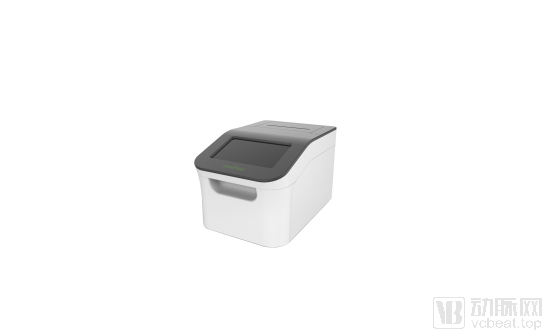
After the completion of the MC500, Dr. Yu set his sights on the field of portable coagulation testing. Market research revealed significant potential in this sector. Taking dental clinics as an example, coagulation testing is essentially a standard prerequisite before procedures such as dental cleaning and tooth extraction. Thus, portable coagulation devices can expand application scenarios from in-hospital operating rooms, emergency departments, and ICUs to out-of-hospital settings, including dental and medical aesthetics clinics, thereby greatly broadening the utility of coagulation analyzers. With 65,000 dental clinics alone in China, the advantages of whole-blood testing, rapid results, compact size, full automation, and low cost facilitate deeper penetration into the clinic market. Consequently, Pusikang commenced the development of the MC100.
In the POCT coagulation market, several domestic and international companies have already initiated R&D efforts. Foreign handheld coagulation devices employ electrochemical methods, with the Roche CoaguChek® XS system as a representative example; it measures only a single parameter for monitoring oral anticoagulant therapy (PT/INR).
Domestic manufacturers have expanded their offerings to include the four- or five-item coagulation panel; however, the low yield rate of coagulation testing chips poses a significant challenge to ensuring accuracy.
Under these circumstances, the Pushikang team decided to adopt optical coagulation technology to transform the handheld device into a portable one, launching the MC100. The MC100 enables whole-blood loading and fully automated testing of four or five coagulation parameters, or even more. Currently, the MC100 is being prepared for submission for regulatory registration testing.
After five years of development, Pushikang has established a well-structured and experienced sales and R&D team. Taking into account market competition and other factors, Pushikang will fully leverage its technological advantages in disc-based microfluidic chips to deepen its expertise in the coagulation field, focusing on areas such as microfluidic coagulation testing, microfluidic thromboelastography, and microfluidic platelet function analysis. Moving forward, Pushikang will continue to strengthen its presence in the coagulation market with a comprehensive product portfolio.
Leveraging the advantages of its microfluidic coagulation products to gain market entry, the Procan team accumulated substantial experience and, in 2018, developed the MI600 Microfluidic Chemiluminescence Analyzer.
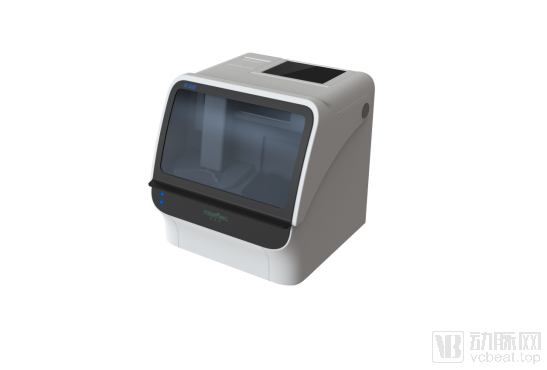
Dr. Yu stated, “It took us only two years to develop our microfluidic chemiluminescence products. As a technology rather than an assay method, the greatest challenge in microfluidics lies in the integration of the instrument, reagents, and microfluidic chips. When applying microfluidic technology to the in vitro diagnostics industry, it is essential to select an appropriate microfluidic technical solution based on the specific application scenario. Much like internet technology, if it cannot be integrated with industry, its application value remains very limited.”
“As entrepreneurs with engineering backgrounds, we often focus solely on perfecting microfluidic chips and miniaturizing instruments when solving problems. However, for hospitals, the key lies in what problems the product actually solves. Hospitals do not pay for technology per se. The primary challenge is to identify which clinical pain points can be addressed using microfluidic technology.”
Once application scenarios are selected, talent is still needed to drive the implementation of technology. The development team for microfluidic products requires expertise in instrumentation, reagents, and microfluidic design, yet professionals with such specialized skills remain scarce across the entire industry.
Dr. Yu Bo himself studied under Professor L. James Lee, a pioneer in international centrifugal microfluidic diagnostics. In terms of technological innovation, the Pushkang team combined microfluidic chip technology with immunomagnetic bead technology. Through efforts to improve the repeatability and stability of immunoassay results, they increased the throughput of disc-based microfluidic chips to 24 units, achieved fully automated reagent dispensing throughout the detection process, and laid the foundation for disc-based microfluidic chips.
During the process of achieving technological breakthroughs, Dr. Yu Bo believes that the most challenging aspect is the industrialization of microfluidic chips. As microfluidic devices are non-standard products, mass production and automated packaging of these chips present a significant challenge to the industry.
In Dr. Yu Bo’s view, there are significant differences between the domestic and international POCT markets. Abroad, POCT is translated as “Point-of-Care Testing,” whereas in China it is defined as “Immediate Diagnostic Testing.” Although this distinction involves only a two-character difference in Chinese, it reflects substantial underlying market disparities. Overseas, POCT products are primarily used in hospital clinical departments and home-care settings, thus demanding high portability and accuracy. In contrast, domestic POCT applications are mainly concentrated in hospital laboratory departments and primary healthcare markets, where “immediate diagnostic testing” emphasizes the timeliness of diagnosis and a certain level of testing throughput.
Yu Bo told VCBeat that China’s POCT market is primarily policy-driven, with the robust implementation of tiered diagnosis and treatment policies unlocking the primary care market, and the establishment of stroke centers, chest pain centers, and trauma centers opening up the emergency care market.
Therefore, in terms of product development and market strategy, Pushikang is more optimistic about niche blue-ocean segments such as the primary care and emergency markets. The company is also monitoring the home-use market, although it remains far from mature in China at present.
The 1st International Annual Conference on Clinical Diagnostics and Industry of Microfluidic Chips—Academic Conference on Coagulation Microfluidic Testing, organized by Puskang, will be held in Shanghai on October 17, 2019. Professionals from the industry, investment, and academic sectors in the fields of blood coagulation and microfluidics are welcome to attend and exchange ideas.