

NHS Clinical Informatics Expert-Founded UK Firm Nine Health Global Brings AI Diagnostic Tools to China Market

NHG
Healthcare Big Data Company
In September 2019, at the Mingyu Shangya Hotel in Wuhou District, Chengdu, Nine Health Global (hereinafter referred to as NHG) signed a cooperation agreement with the Wuhou Maple Tree Primary Care Transformation Research Center to jointly explore innovative projects for next-generation primary healthcare. Elaine Taylor-Whilde, CEO of NHG, told VCBeat that the following day she would travel to Wuxi to attend the 2019 World Internet of Things Exposition, where she would showcase Diagbot, an auxiliary diagnostic system developed in collaboration with Hangzhou Langtong to assist primary care physicians in diagnosis, as well as a new sleep-aid product called “The Sleep Infuser.”
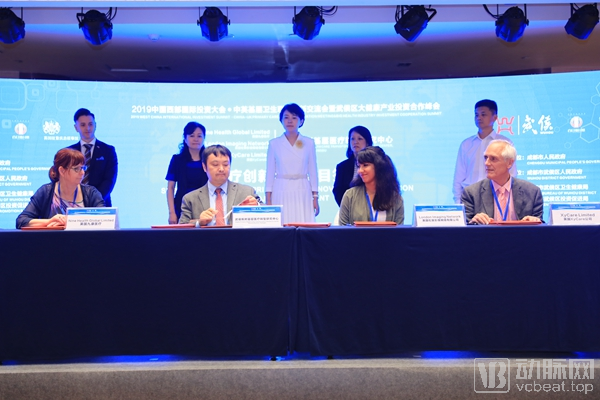
NHG Signs Cooperation Agreement with Wuhou Maple Tree Primary Care Transformation Research Center (Elaine Taylor-Whilde, CEO of NHG, is on the far left)
NHG is a healthcare big data company headquartered in Leeds, UK. The company was founded by clinicians and senior executives from the UK’s National Health Service (NHS). CEO Elaine is a member of the Royal Society of Medicine, a former researcher at the University of Sheffield, and previously served as a clinical research manager at the NHS Information Centre. She is also an expert in clinical informatics, technology development, and evaluation research in health and related fields, and holds key positions on the International Advisory Board of Leeds University Business School and the Translation Technology Advisory Committee. The core team at NHG largely comprises individuals with advanced degrees in both clinical medicine and computer information technology. NHG is an NHS-approved processing center for healthcare data in the UK and Europe.
NHG has established close collaborations with numerous universities and other organizations in the United Kingdom, Europe, and Asia. In Europe, NHG collaborates with 22 partners from eight countries on the Virtual Physiological Human (VPH) project. Funded by the European Union and officially launched in early 2006, this initiative aims to develop comprehensive data models of the human body across all physiological levels—from organs, tissues, cells, and molecules down to genes—thereby creating a “digital human.” This enables clinicians, researchers, and pharmaceutical companies to test drugs and therapies on the “digital human,” thereby avoiding adverse effects while ensuring optimal treatment for patients.
NHG’s initial foray into the Chinese market began in 2014. Through collaborative research and development with Hangzhou Langtong, the two parties successfully launched Diagbot, a clinical decision support system based on deep learning, by the end of 2015. Diagbot incorporates hundreds of thousands of medical terms, covering terminology related to symptoms, treatment plans, laboratory results, and disease diagnoses across pre-diagnosis, intra-diagnosis, and post-diagnosis stages. Leveraging natural language processing technology, it aims to assist primary care physicians in making accurate diagnoses. “Diagbot primarily applies AI technology to support clinical practice in two ways: first, by automatically generating diagnostic recommendations based on national disease diagnosis guidelines; and second, by automating tedious and mechanical tasks in clinical workflows,” said Elaine. For instance, identifying changes in cell shape and size in medical images or live detection slides through visual inspection is highly labor-intensive, whereas NHG’s AI tools can easily detect patterns or abnormalities in these images. Additionally, these AI tools can enhance the clarity of medical images, enabling physicians to make more precise decisions.
All software and device development related to Diagbot has been completed by Langtong, while NHG leverages its AI-powered data analytics tools to support R&D. The product has already been deployed at Hangzhou First People’s Hospital and is in use at more than 2,500 primary-care hospitals and clinics. According to Elaine, Diagbot achieves an 85%–90% diagnostic accuracy rate for common diseases. Currently, the NHG team continues to collaborate with Langtong to update Diagbot by incorporating national-level standard diagnosis and treatment guidelines—including the “2018 Chinese Guidelines for the Diagnosis and Treatment of Heart Failure”—to further standardize primary-care clinical workflows.
“The Sonic Sleep Aid” is a bedside device jointly launched by NHG and Cambridge Sound Technologies, designed to address the root causes of difficulty falling asleep, light sleep, and trouble maintaining sleep. The “Sonic Sleep Aid” uses specific ultrasonic waves to reset brainwaves. “Each night, the ‘Sonic Sleep Aid’ guides users through five sleep cycles, progressing from light sleep to deeper restorative sleep, and then gradually returning to lighter sleep stages. Upon completion of all necessary sleep cycles, users wake up feeling refreshed and revitalized. Our product simply helps the brain ‘recall’ its long-forgotten natural sleep patterns, offering a natural and healthy approach to inducing sleep,” introduced Elaine. “Users of the ‘Sonic Sleep Aid’ have experienced a 62% increase in sleep duration.”
In addition, NHG is developing an AI tool that automatically identifies tissue samples under a microscope, thereby improving the efficiency of physicians’ analysis of such samples.
“Our strength lies in applying AI to data analytics,” said Elaine. As a foreign medical big data company, NHG leverages its Oscar platform and various other big data tools to conduct risk analysis and predictive modeling on clinical data. Specific initiatives include: digitizing historical clinical data; embedding machine-readable code into digitized data to facilitate discovery and utilization; establishing clinical and related databases to store, analyze, and leverage both current and historical data; decoding and encoding data from diverse sources such as X-ray and CT images, and embedding machine-readable code into imaging data to enhance its utility; integrating data from different sources and types to derive clinically meaningful insights and conclusions; and remotely connecting devices and sensors to central IT systems to capture generated data, which is then used to improve clinical services.
Leveraging its technological strengths, NHG offers a more diversified product portfolio rather than being confined to single categories such as medical devices, wearable devices, or medical software. “We do not directly access healthcare data; instead, we collaborate with enterprises that have obtained data usage rights, utilizing our AI tools to jointly develop clinical AI diagnostic and therapeutic products. Consequently, the form of our products is largely determined by local partners and market demand.”
For example, Diagbot, jointly developed by NHG and Langtong, can be flexibly deployed across mobile apps, WeChat Mini Programs, and desktop software. Currently, NHG is seeking collaborations with microscope manufacturers for its AI-powered histopathological biopsy tool under development. NHG plans to integrate this AI tool directly into microscopes, enabling real-time alerts for abnormalities as physicians examine slides. Furthermore, NHG has partnered with Aurora (Shanghai Yiai Aoluorui) to co-develop AI tools that enhance the efficiency of breast cancer screening. Aurora utilizes mobile, breast-specific MRI screening equipment and, through collaborative operations, aims to establish a standardized diagnostic screening service system, providing women with precise breast cancer screening services.
NHG has signed a memorandum of understanding with Tsinghua University’s Big Data Base D-Lab (Qingshu D-Lab), under which NHG will assist D-Lab in conducting research on medical big data systems in several major Chinese cities.
Currently, NHG has established a subsidiary in Hong Kong and plans to develop a series of clinical AI products for heart disease, osteoporosis, HIV/AIDS, and cerebral aneurysms through joint ventures. Meanwhile, NHG will set up wholly foreign-owned enterprises in Guizhou, Beijing, Wuxi, and other locations to cultivate talent proficient in the latest IT programming languages. NHG has also partnered with Shangyi Medical to establish an incubator and is currently seeking seed-round financing.